
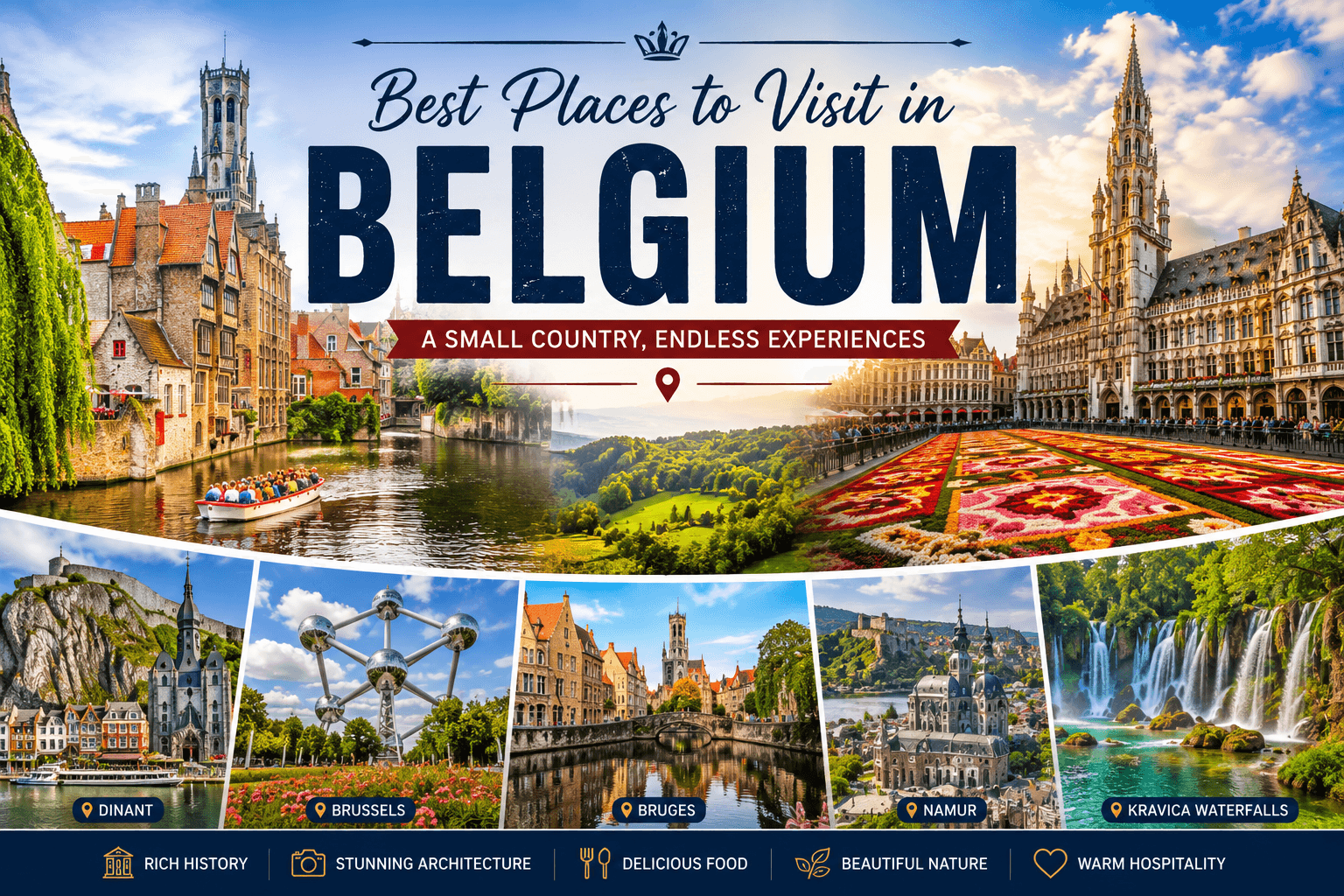
Belgium may be one of Europe’s smaller countries, but it offers an impressive variety of historic cities, medieval architecture, art museums, castles, canals, coastal towns, and natural landscapes. Its compact size and efficient rail network make it possible to visit several destinations during a relatively short trip.
Brussels, Bruges, Ghent, and Antwerp are the main stops for most first-time visitors. However, Belgium also has smaller cities such as Leuven, Mechelen, Dinant, and Namur, as well as the forests and valleys of the Ardennes. This guide covers the best places to visit in Belgium for culture, history, food, architecture, and nature.
Why Visit Belgium?
Belgium combines several travel experiences within a small area. Visitors can explore medieval city centers, see works by Flemish masters, visit Gothic cathedrals, tour historic castles, and discover local food traditions without spending long hours traveling between destinations.
The country is particularly well suited to train travel. Brussels is centrally located, while Bruges, Ghent, Antwerp, Leuven, and Mechelen can all be reached easily by rail. This makes Belgium a practical choice for both short city breaks and longer multi-city itineraries.
Belgium is also known for chocolate, waffles, fries, beer, comic art, and regional cuisine. These experiences are part of the trip rather than separate attractions, especially in Brussels, Bruges, Ghent, and Antwerp.
Most Popular Cities to Visit in Belgium
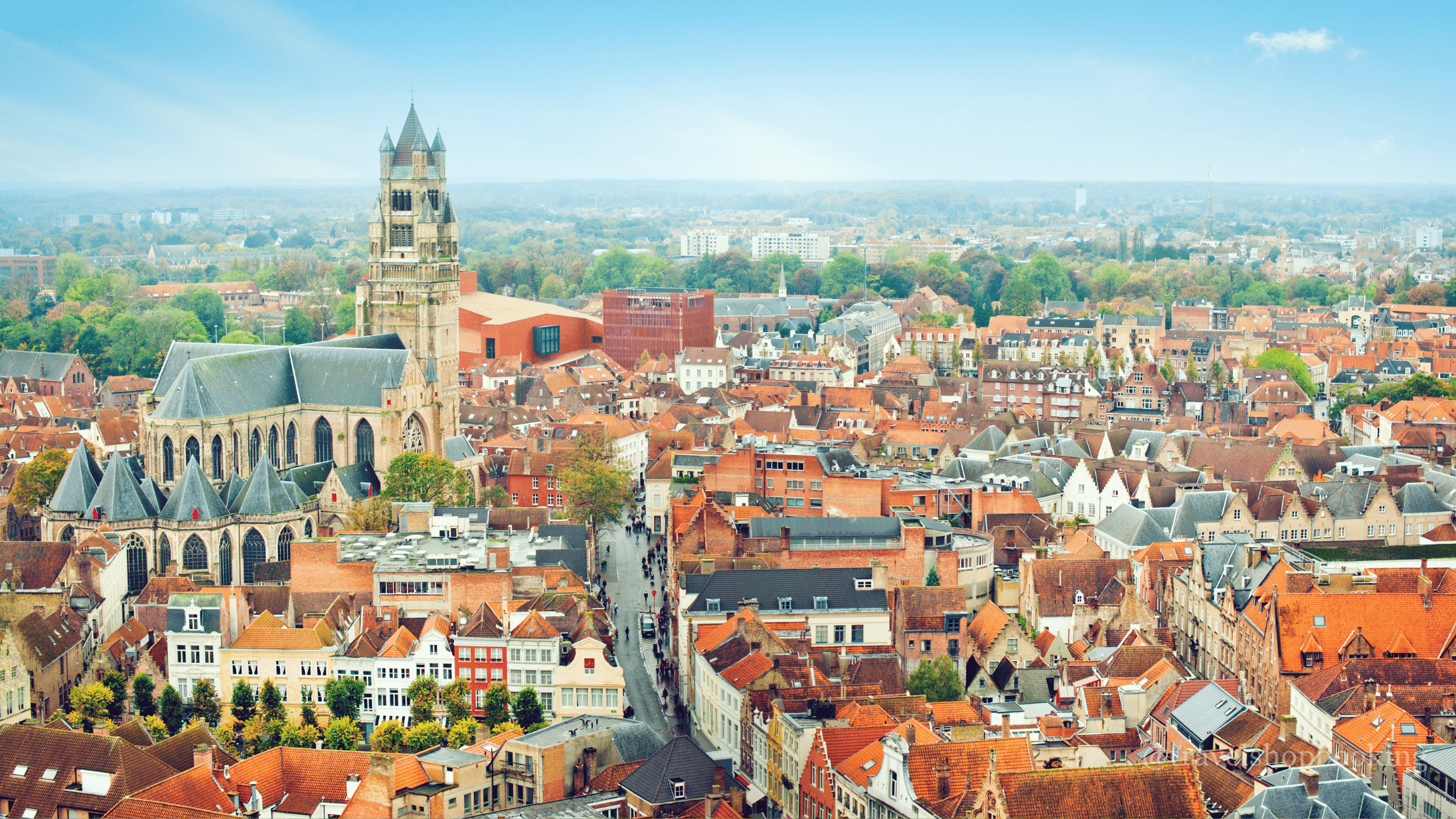
Belgium’s main cities each have a distinct identity. Brussels is the political and cultural center, Bruges is known for canals and medieval architecture, Ghent combines history with a lively local atmosphere, and Antwerp is associated with art, fashion, and diamonds.
Brussels
Brussels is the capital of Belgium and the main starting point for many visitors. The city combines historic architecture, European institutions, art museums, shopping streets, and international neighborhoods.
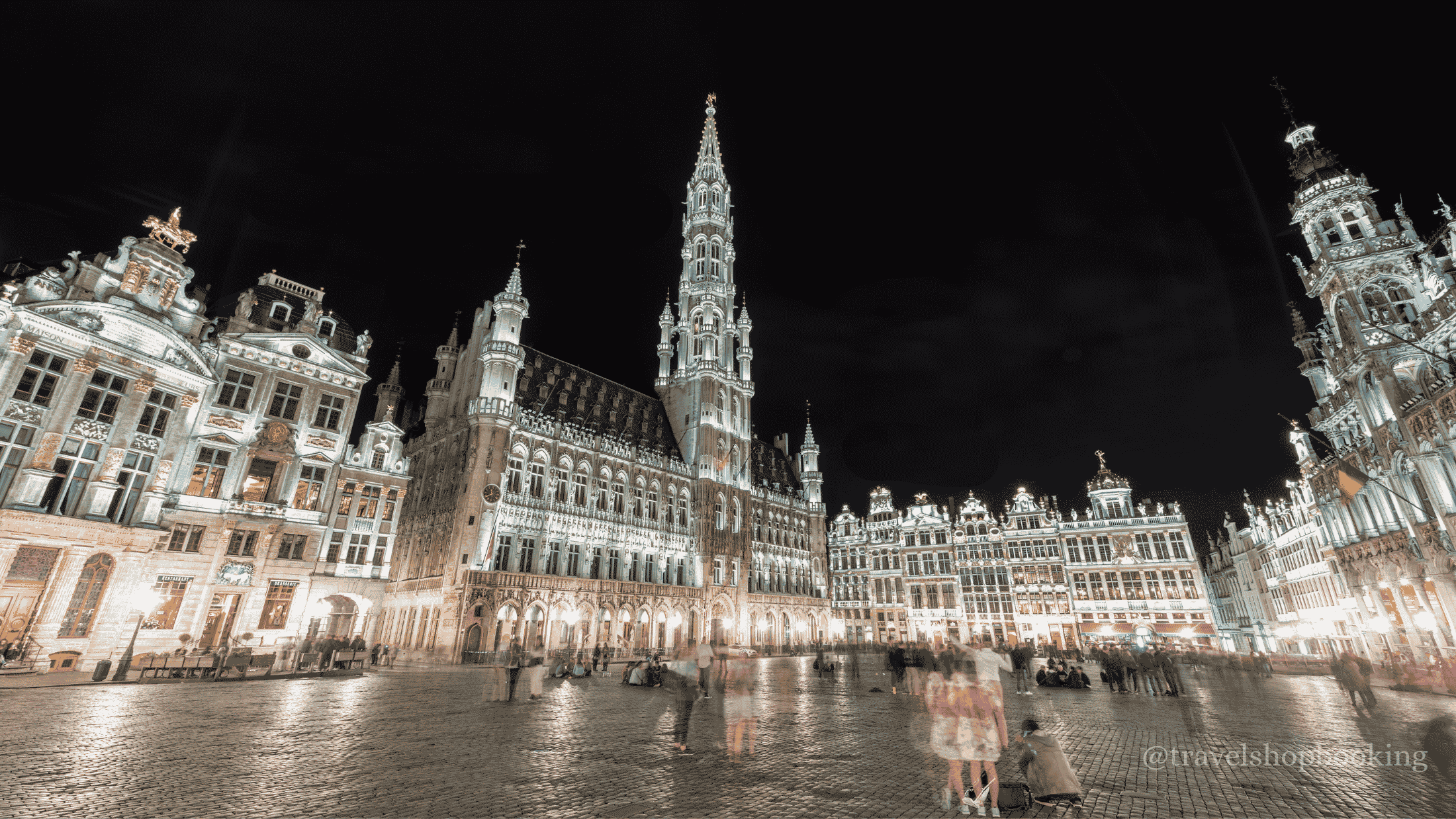
Grand Place is the city’s central landmark, surrounded by ornate guild houses and the Gothic Town Hall. Nearby attractions include Manneken Pis, the Royal Galleries of Saint Hubert, the Mont des Arts, and the Cathedral of St. Michael and St. Gudula.
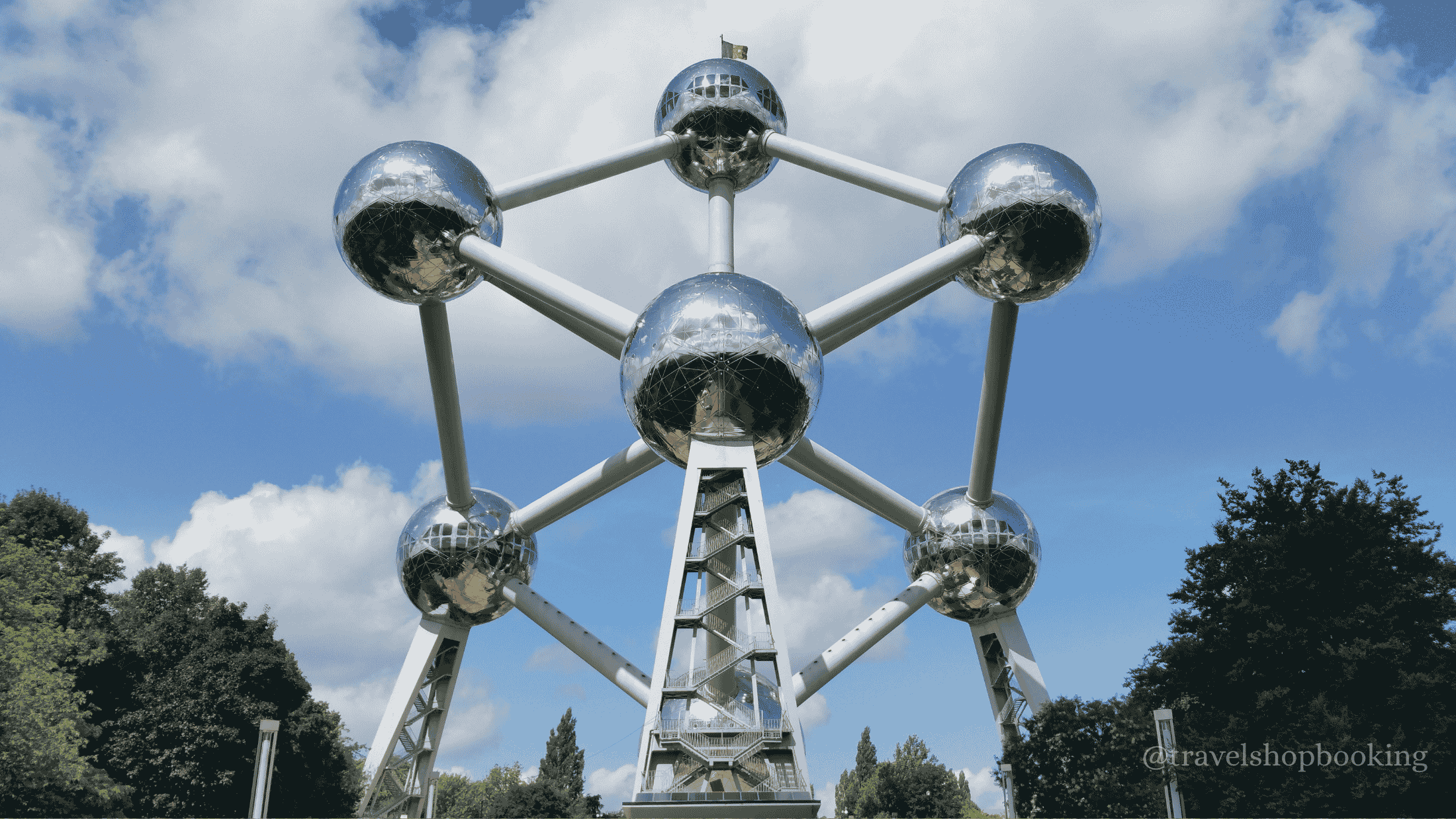
The Atomium and Mini-Europe are located outside the historic center and are especially popular with families. Brussels is also one of the best places in Belgium for chocolate shops, traditional beer cafés, comic murals, and museums.
Bruges
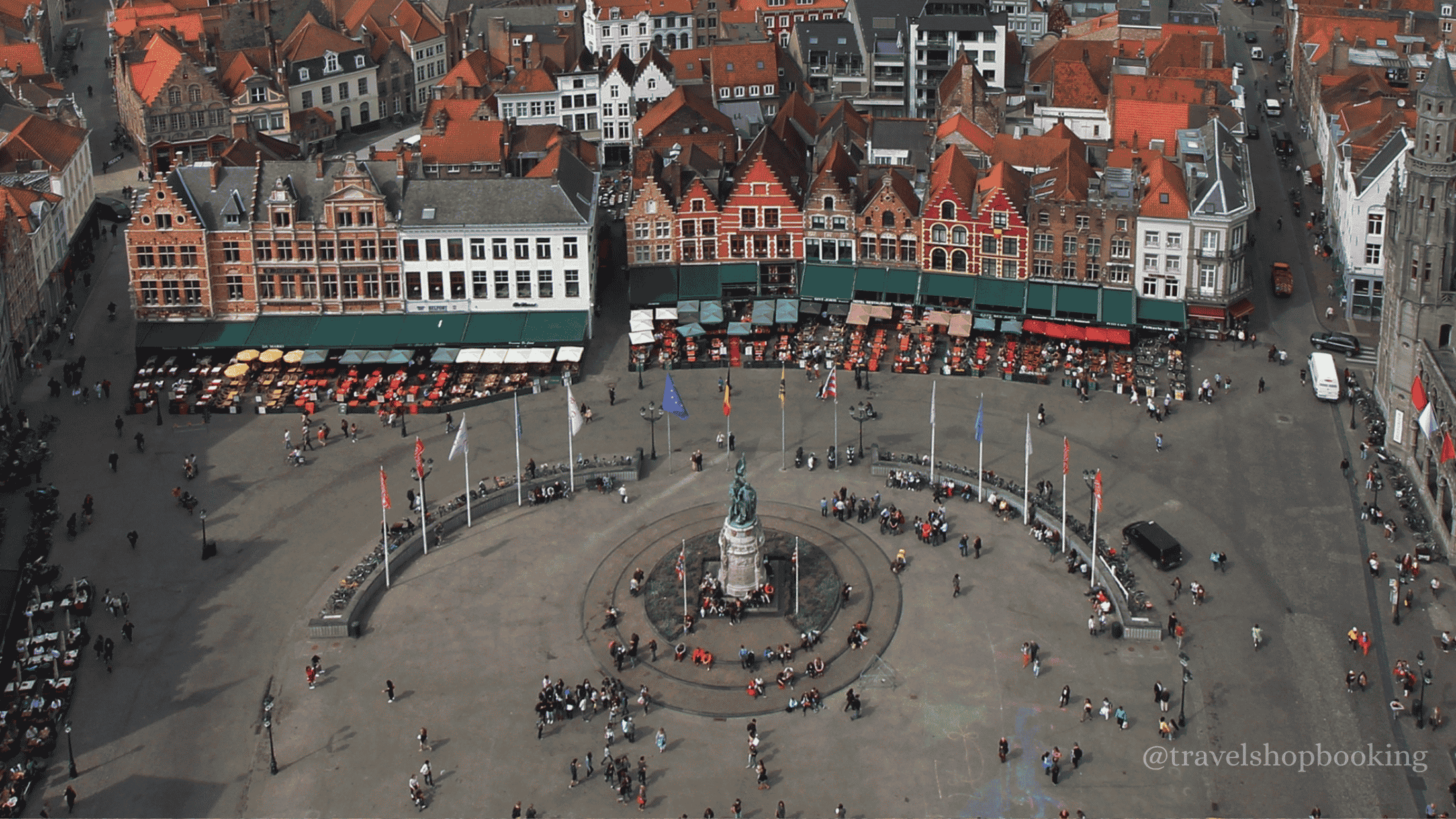
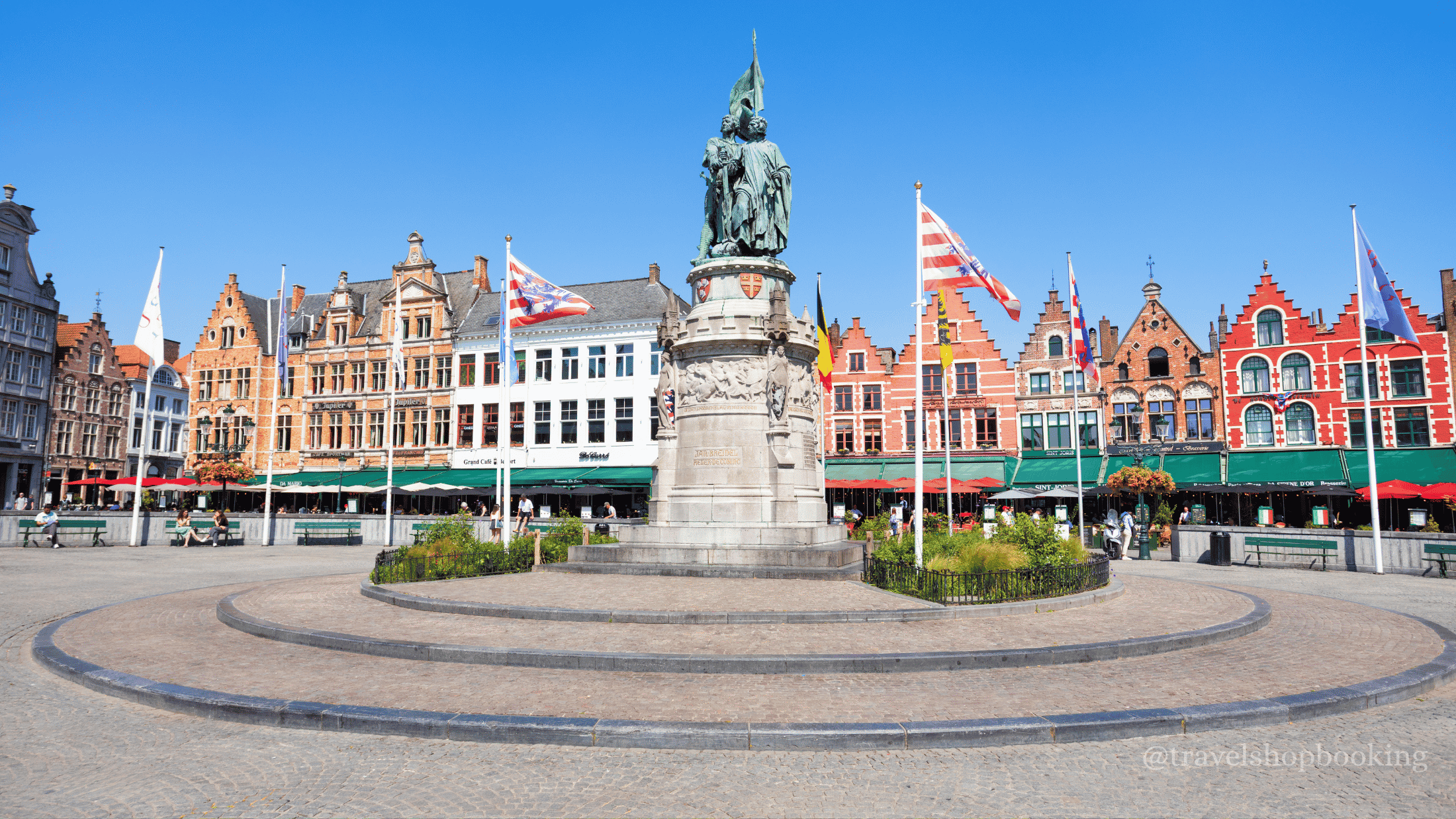
Bruges is one of the best-preserved medieval cities in Europe. Its canals, cobbled streets, historic houses, churches, and market squares make it one of Belgium’s most visited destinations.
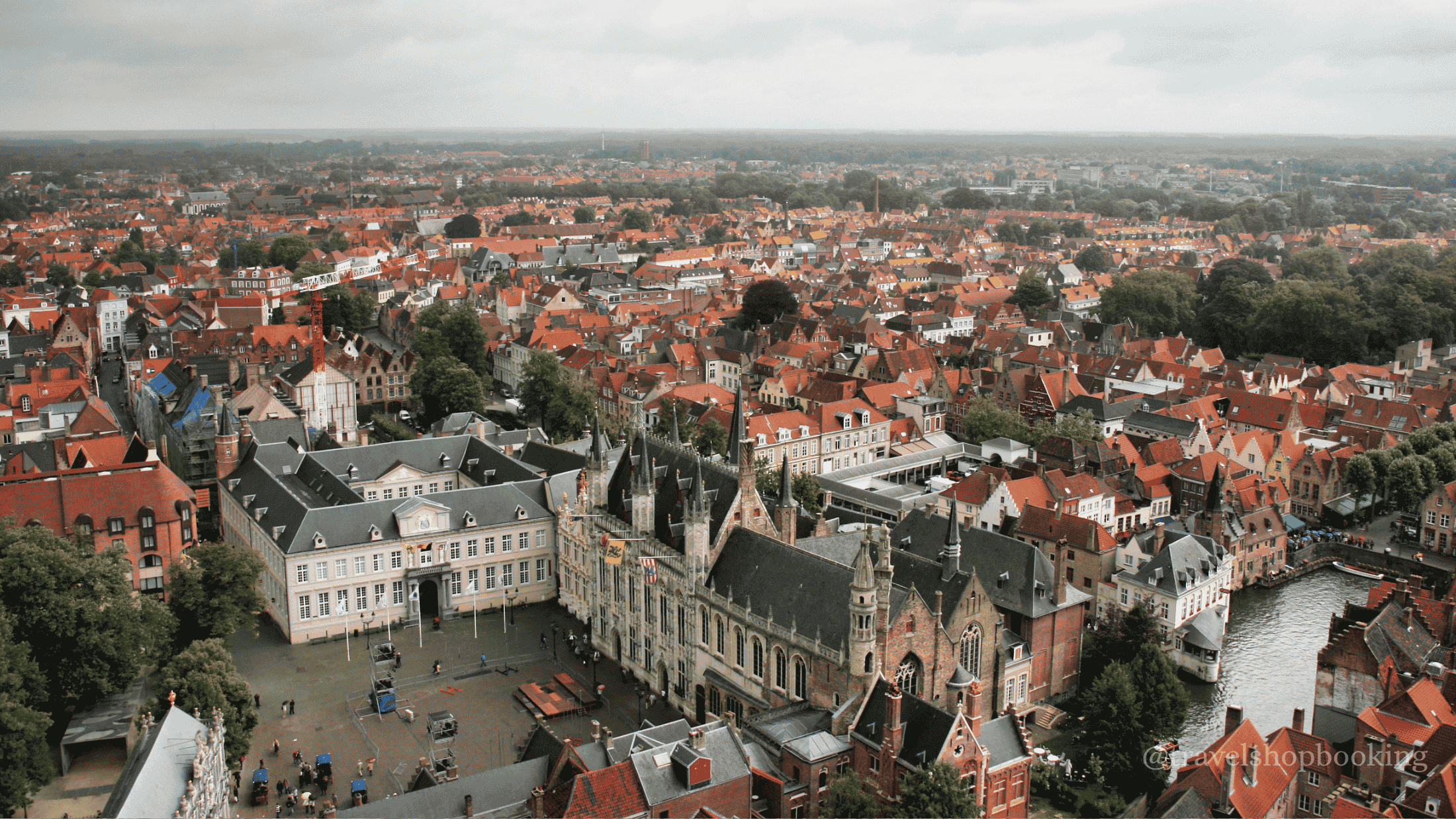
The Markt is the center of the old town and is dominated by the Belfry of Bruges. Visitors can climb the tower for views across the city or explore nearby Burg Square, the Basilica of the Holy Blood, and the canals around Rozenhoedkaai.
Boat tours provide a different view of the city, while quieter areas such as the Beguinage and Minnewater Park offer a break from the busiest streets. Bruges can be visited as a day trip, but staying overnight allows travelers to see the city after the daytime crowds leave.
Ghent
Ghent combines medieval architecture with a younger and more active local atmosphere. It is less dependent on tourism than Bruges, which makes it suitable for travelers looking for both historic attractions and everyday city life.
The Graslei and Korenlei waterfronts form one of the city’s most attractive areas. Other major landmarks include Gravensteen Castle, St. Bavo’s Cathedral, the Belfry of Ghent, and St. Nicholas’ Church.
St. Bavo’s Cathedral houses the Ghent Altarpiece, one of the most important works of European art. Ghent also has a strong restaurant, nightlife, and cultural scene, making it suitable for more than a short day trip.
Antwerp
Antwerp is Belgium’s main port city and one of its leading centers for art, fashion, architecture, and diamonds. Its historic center is built around Grote Markt and the Cathedral of Our Lady.
The cathedral contains important works by Peter Paul Rubens, who spent much of his career in Antwerp. Visitors can also explore the Rubens House area, the Museum aan de Stroom, the Plantin-Moretus Museum, and the fashion district.
Antwerp Central Station is one of the city’s most impressive buildings and is often considered one of Europe’s most beautiful railway stations. The city is a strong choice for travelers interested in museums, shopping, design, and urban culture.
Best Historical and Cultural Places in Belgium
Belgium’s history is visible in its medieval towers, battlefields, churches, town halls, castles, and museums. Several important historical destinations are located outside the four main cities.
Grand Place in Brussels
Grand Place is one of Belgium’s best-known landmarks and the historic center of Brussels. The square is surrounded by elaborate guild houses, the Town Hall, and the King’s House.
The architecture reflects different periods, but the overall appearance is remarkably unified. The square is especially impressive in the evening when the buildings are illuminated.
Several streets around Grand Place lead to chocolate shops, cafés, galleries, and smaller historic sites, making it the natural starting point for exploring central Brussels.
Belfry of Bruges
The Belfry of Bruges rises above the Markt and has served as a symbol of the city for centuries. Visitors can climb the narrow staircase to the upper level for views over Bruges.
The tower also contains a historic carillon. The climb can be physically demanding, but it provides one of the best perspectives of the old town and surrounding countryside.
Because entry numbers may be limited during busy periods, visiting earlier in the day is often more convenient.
Gravensteen Castle
Gravensteen is a medieval castle located in the center of Ghent. Its stone walls, towers, courtyard, and defensive features provide a clear impression of medieval fortress architecture.
The interior includes exhibitions connected to the castle’s history and past uses. Visitors can also walk along elevated sections for views of Ghent’s rooftops and church towers.
Its central location makes it easy to combine with the Graslei, Korenlei, and other attractions in the historic center.
Waterloo Battlefield
The Battle of Waterloo took place south of Brussels in 1815 and marked the final defeat of Napoleon Bonaparte. The site includes the Lion’s Mound, museums, memorials, and preserved battlefield areas.
Visitors can climb the mound for a panoramic view and learn about the battle through exhibitions and multimedia displays.
Waterloo can be reached from Brussels and works well as a half-day or full-day historical excursion.
Ypres
Ypres is one of Europe’s most important First World War destinations. The city was heavily damaged during the war and later reconstructed.
The In Flanders Fields Museum, located in the Cloth Hall, explains the history of the conflict in the region. The Menin Gate Memorial commemorates missing soldiers and hosts the Last Post ceremony.
Nearby cemeteries, memorials, and battlefield sites make Ypres an important stop for travelers interested in modern European history.
Best Small Cities and Towns in Belgium
Beyond Brussels, Bruges, Ghent, and Antwerp, Belgium has several compact cities that are suitable for day trips or quieter overnight stays.
Leuven
Leuven is a university city located a short train journey from Brussels. It is known for its lively center, historic university buildings, cafés, and impressive Gothic town hall.
The Oude Markt is lined with cafés and is sometimes described as one of Europe’s longest bars. Other attractions include St. Peter’s Church, the university library, and the Great Beguinage.
Leuven combines historic architecture with a strong student atmosphere, making it livelier than many similarly sized European cities.
Mechelen
Mechelen is located between Brussels and Antwerp and is often overlooked by international visitors. Its historic center includes St. Rumbold’s Cathedral, a large market square, canals, and several museums.
Visitors can climb St. Rumbold’s Tower for wide views across the city. Mechelen is also known for its beguinages, traditional houses, and family-oriented attractions.
Its compact size and lower visitor numbers make it a practical alternative to Belgium’s busier destinations.
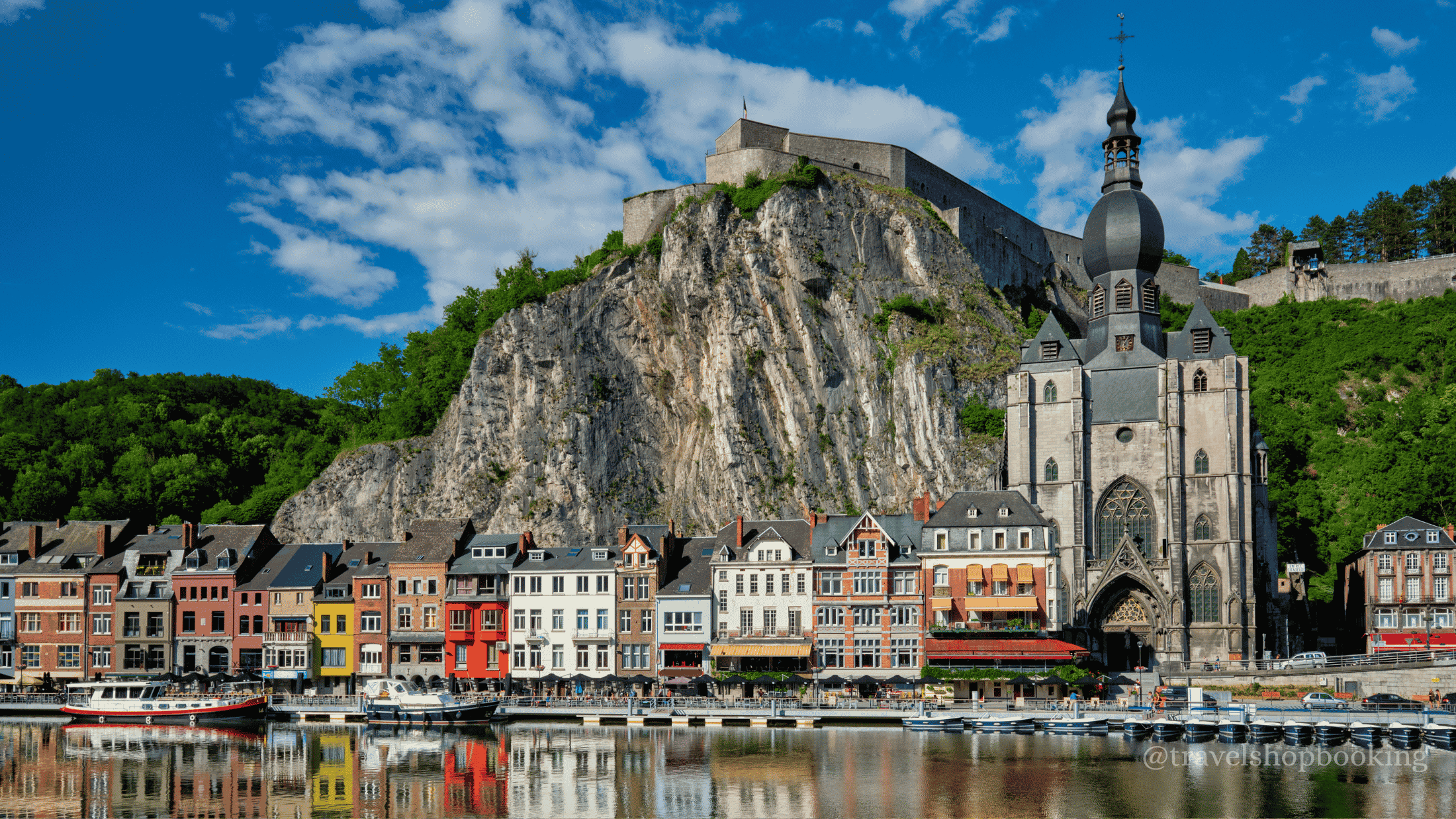
Dinant
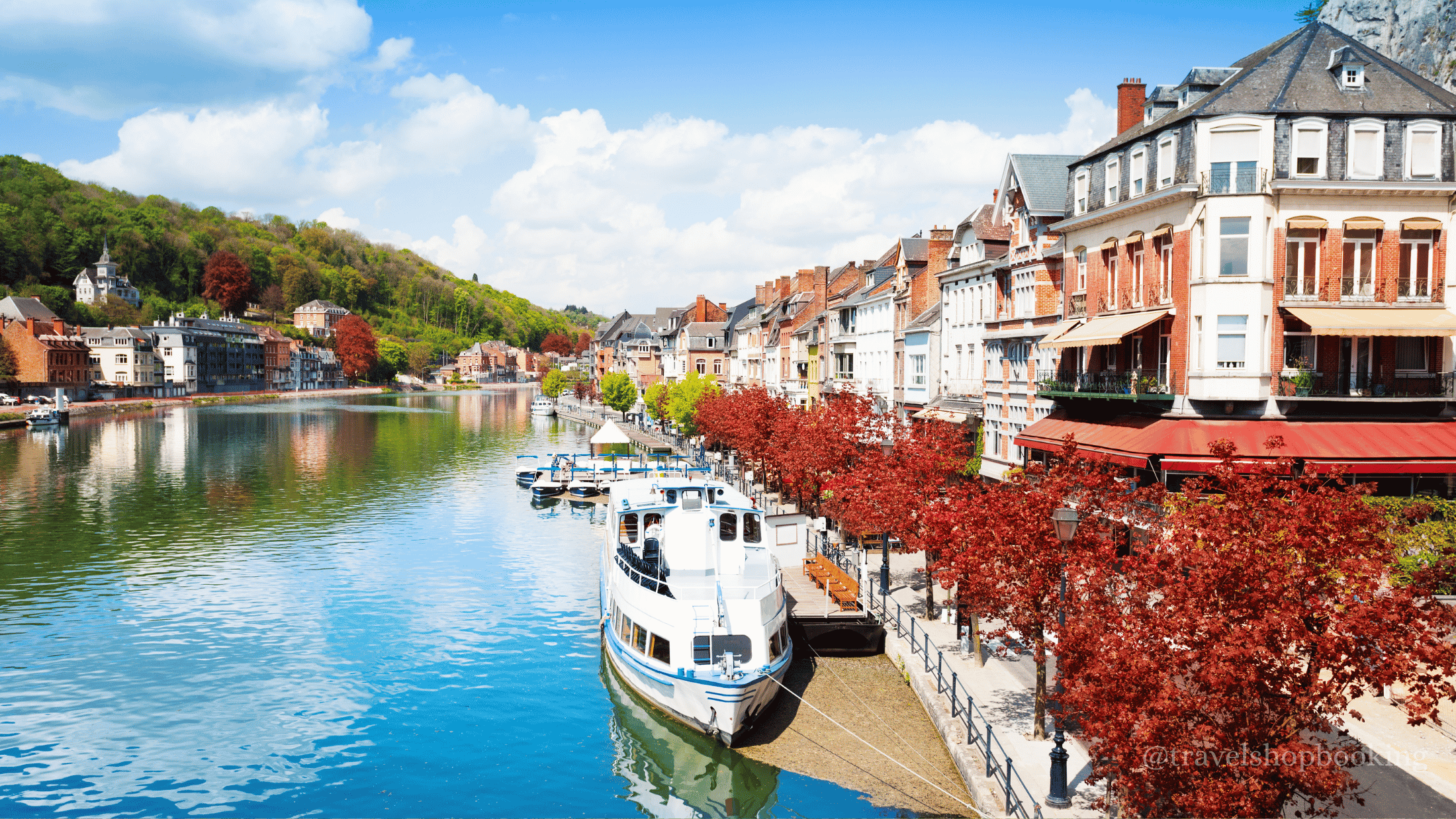
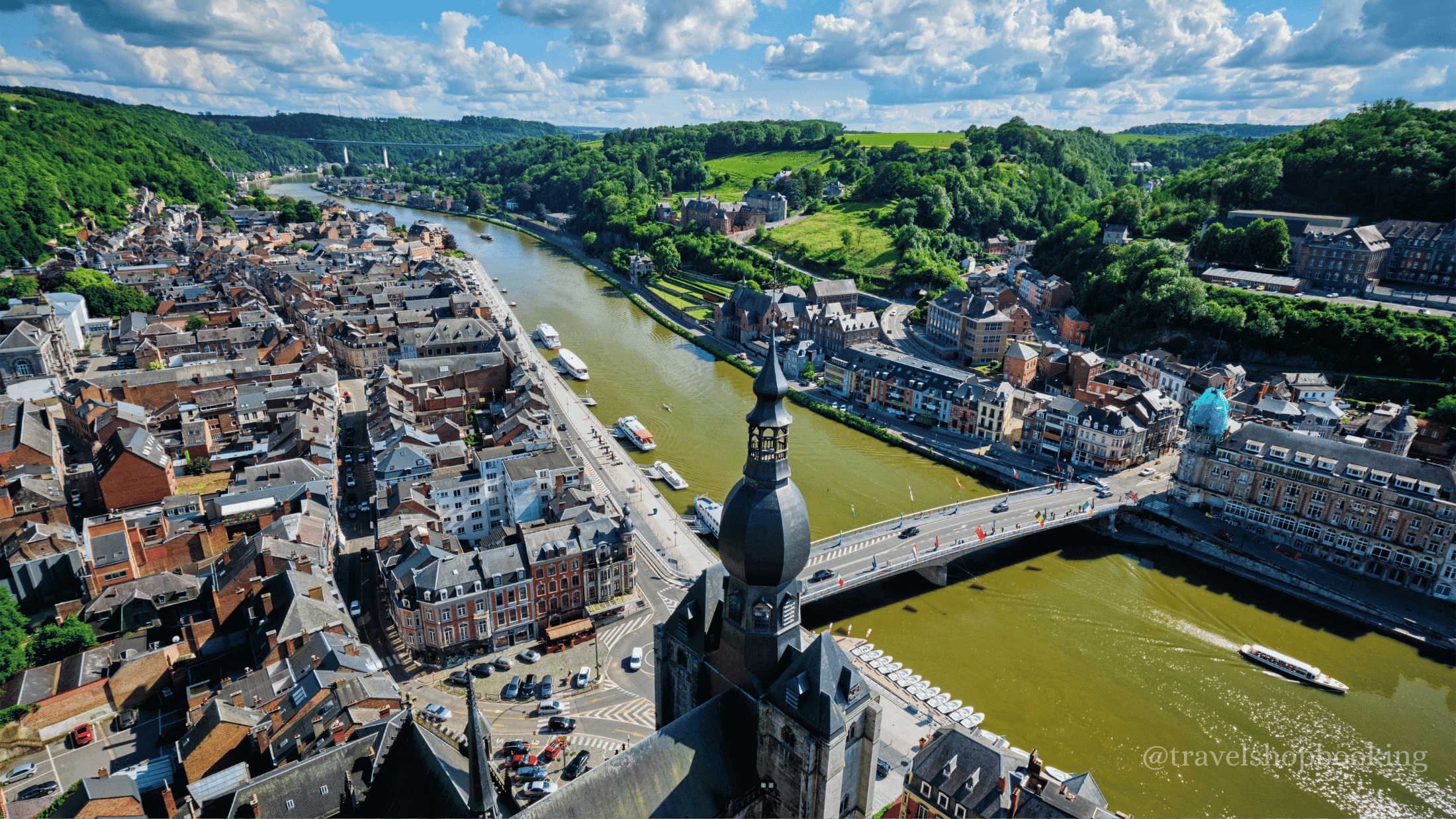
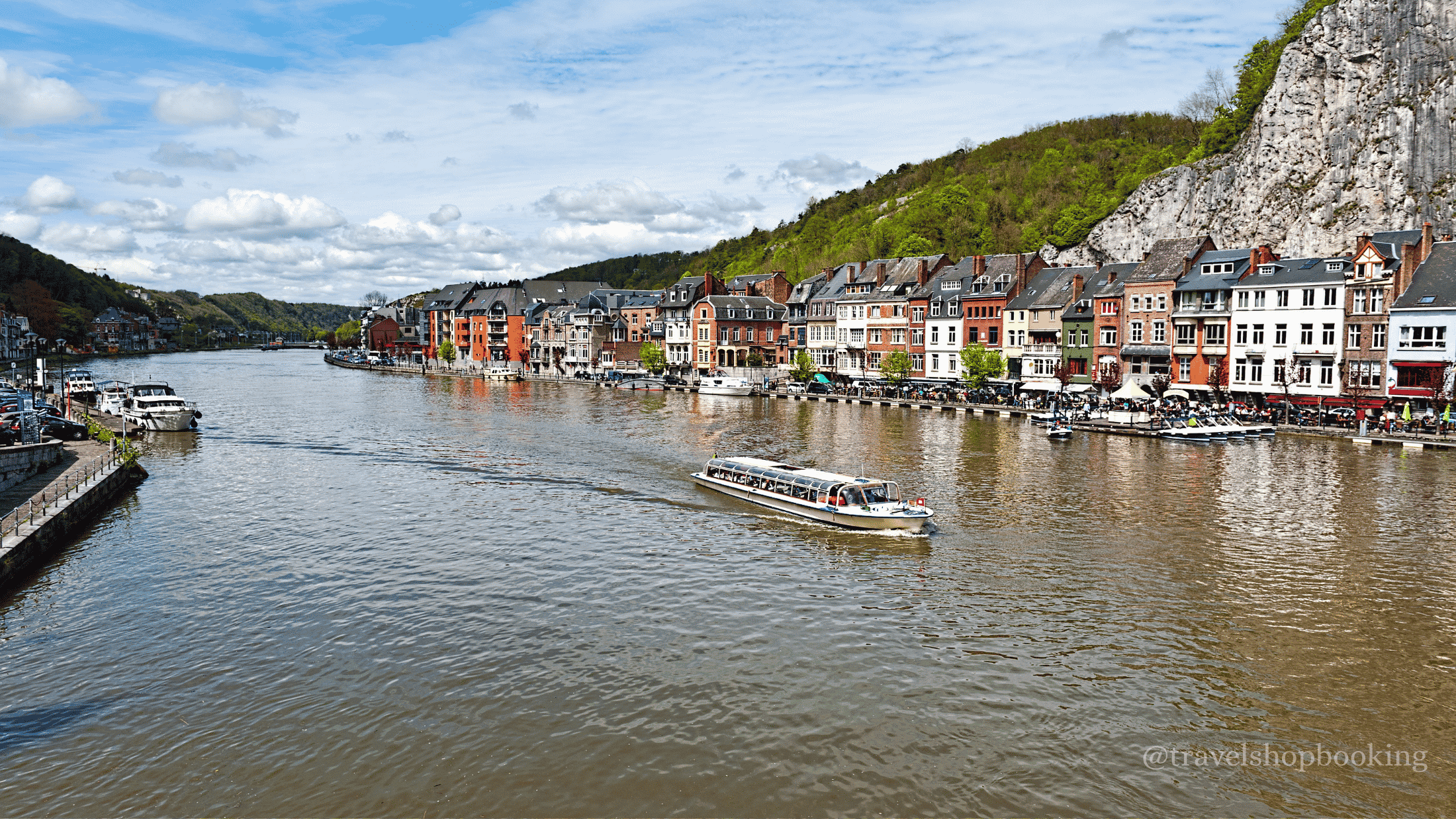
Dinant is set along the Meuse River beneath steep cliffs. The town is known for its riverside setting, colorful buildings, Collegiate Church of Notre Dame, and hilltop citadel.
Visitors can reach the citadel by cable car or stairs. The town is also associated with Adolphe Sax, the inventor of the saxophone, and several musical installations can be found around the center.
Dinant works well as part of a wider trip through Wallonia and the Ardennes.
Namur
Namur is the capital of Wallonia and is located where the Sambre and Meuse rivers meet. Its main attraction is the Citadel of Namur, which overlooks the city and river valleys.
The historic center contains pedestrian streets, churches, museums, cafés, and restaurants. Namur has a calmer atmosphere than Brussels or Antwerp and is suitable for travelers interested in a slower city experience.
It can also serve as a base for exploring Dinant and other parts of the Meuse Valley.
Durbuy
Durbuy is a small historic town in the Ardennes region. It is known for stone buildings, narrow streets, restaurants, and a scenic riverside setting.
The town is popular for weekend trips, especially during autumn and winter. Outdoor activities such as hiking, kayaking, and cycling are available in the surrounding area.
Although Durbuy promotes itself as one of the world’s smallest cities, its main attraction is the combination of historic atmosphere and access to nature.
Best Natural Attractions in Belgium
Belgium is better known for cities than landscapes, but the Ardennes, coastal areas, forests, caves, and river valleys offer several worthwhile nature destinations.
Belgian Ardennes
The Ardennes cover much of southeastern Belgium and offer forests, hills, rivers, caves, and small towns. The region is suitable for hiking, cycling, kayaking, and countryside road trips.
Popular bases include Durbuy, La Roche-en-Ardenne, Spa, Bouillon, and Malmedy. Autumn is particularly attractive because of the forest colors, while winter can bring colder and occasionally snowy conditions.
A car is useful for exploring the region because many natural attractions and villages are not directly connected by frequent public transport.
High Fens
The High Fens form one of Belgium’s most distinctive natural landscapes. Located in the east of the country, the area contains peatlands, forests, boardwalks, and open moorland.
Walking routes vary in length and difficulty. Weather conditions can change quickly, and parts of the reserve may close during high fire risk or difficult winter conditions.
The landscape feels very different from Belgium’s urban centers and is suitable for visitors looking for quiet hiking routes.
Caves of Han
The Caves of Han are among Belgium’s best-known natural attractions. The cave system includes underground chambers, limestone formations, and guided routes.
The surrounding domain also includes a wildlife park where European animals can be seen in a semi-natural environment.
The site is suitable for families and can be included in a road trip through Wallonia or the Ardennes.
Belgian Coast
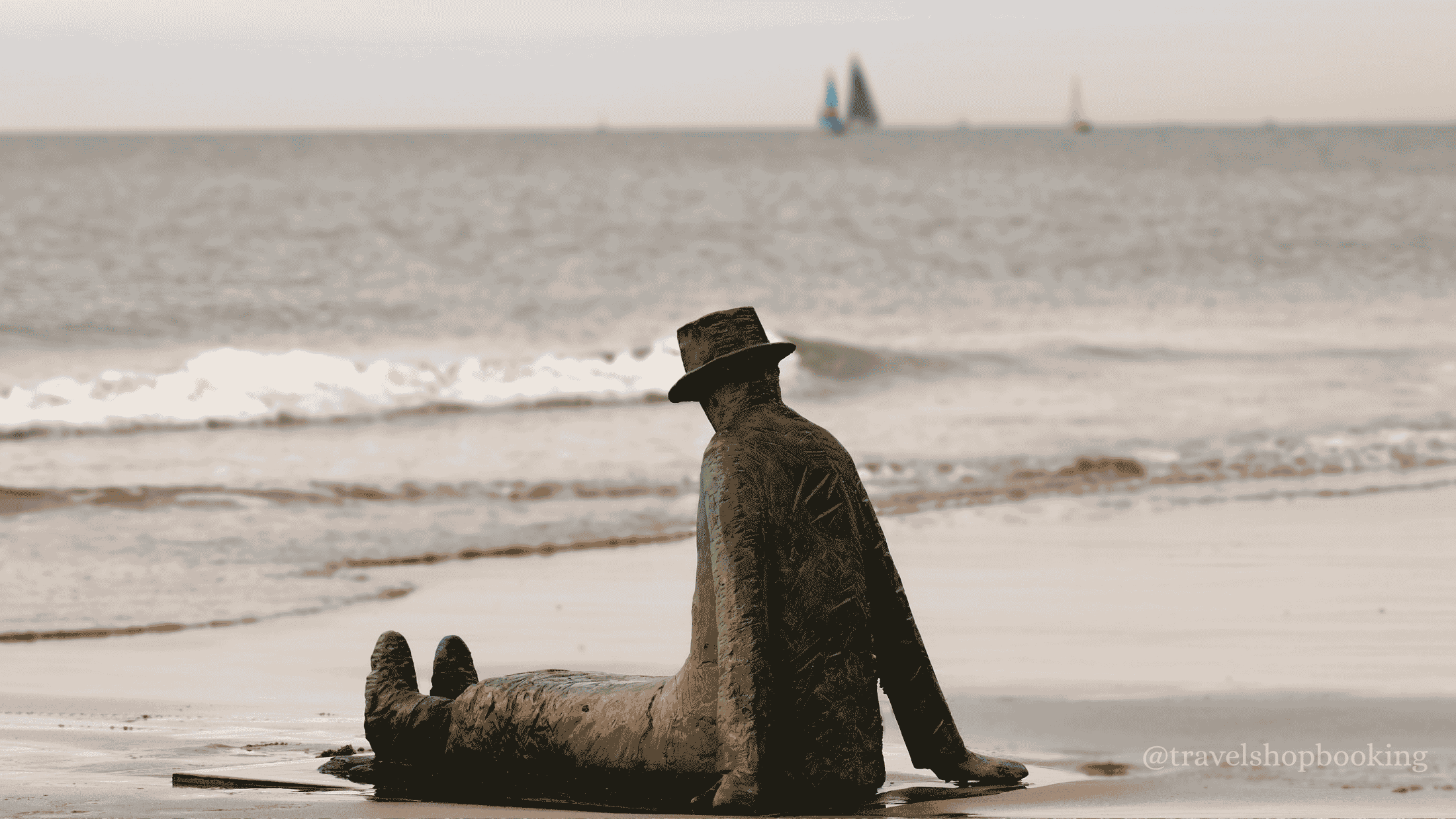
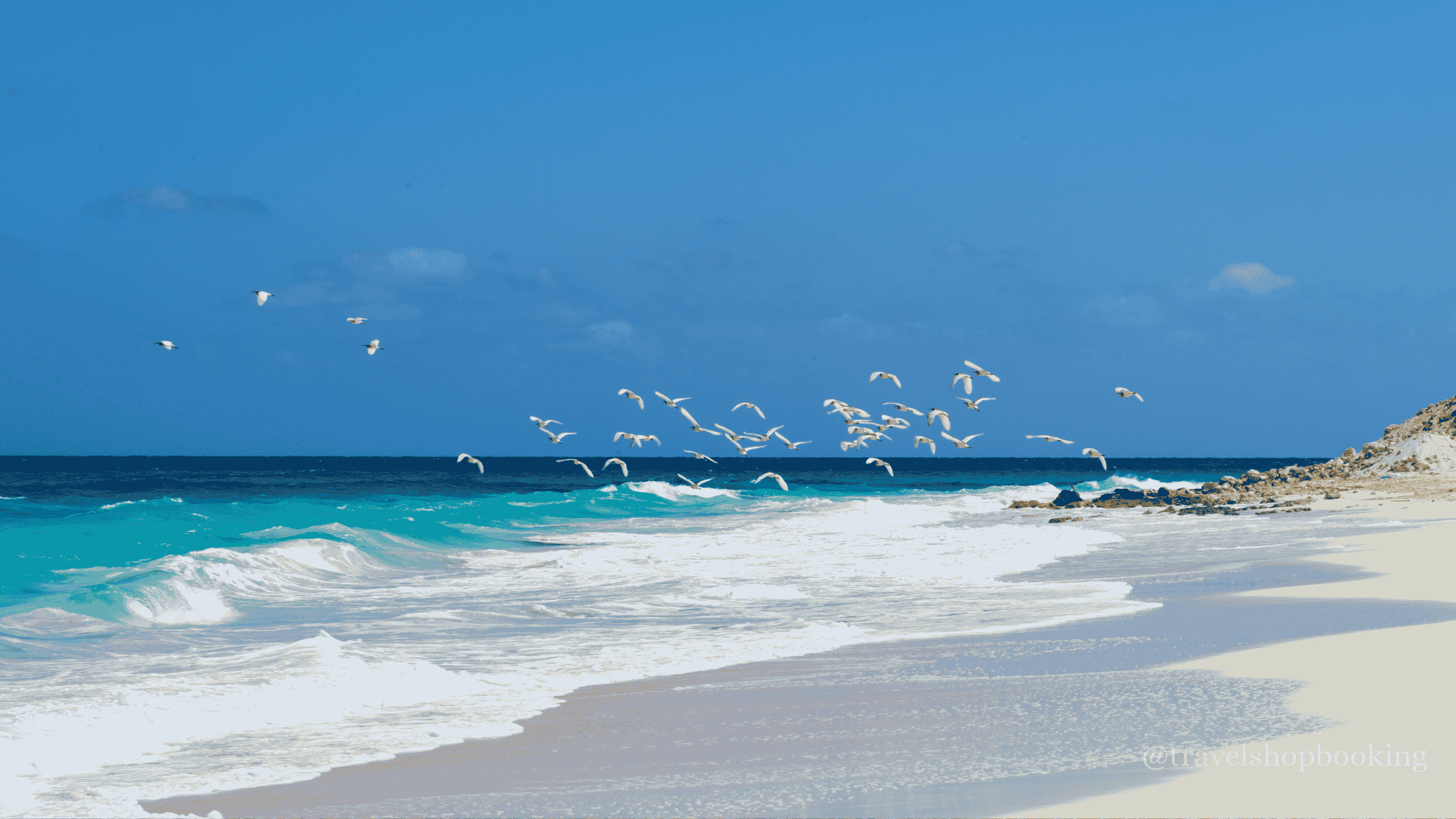
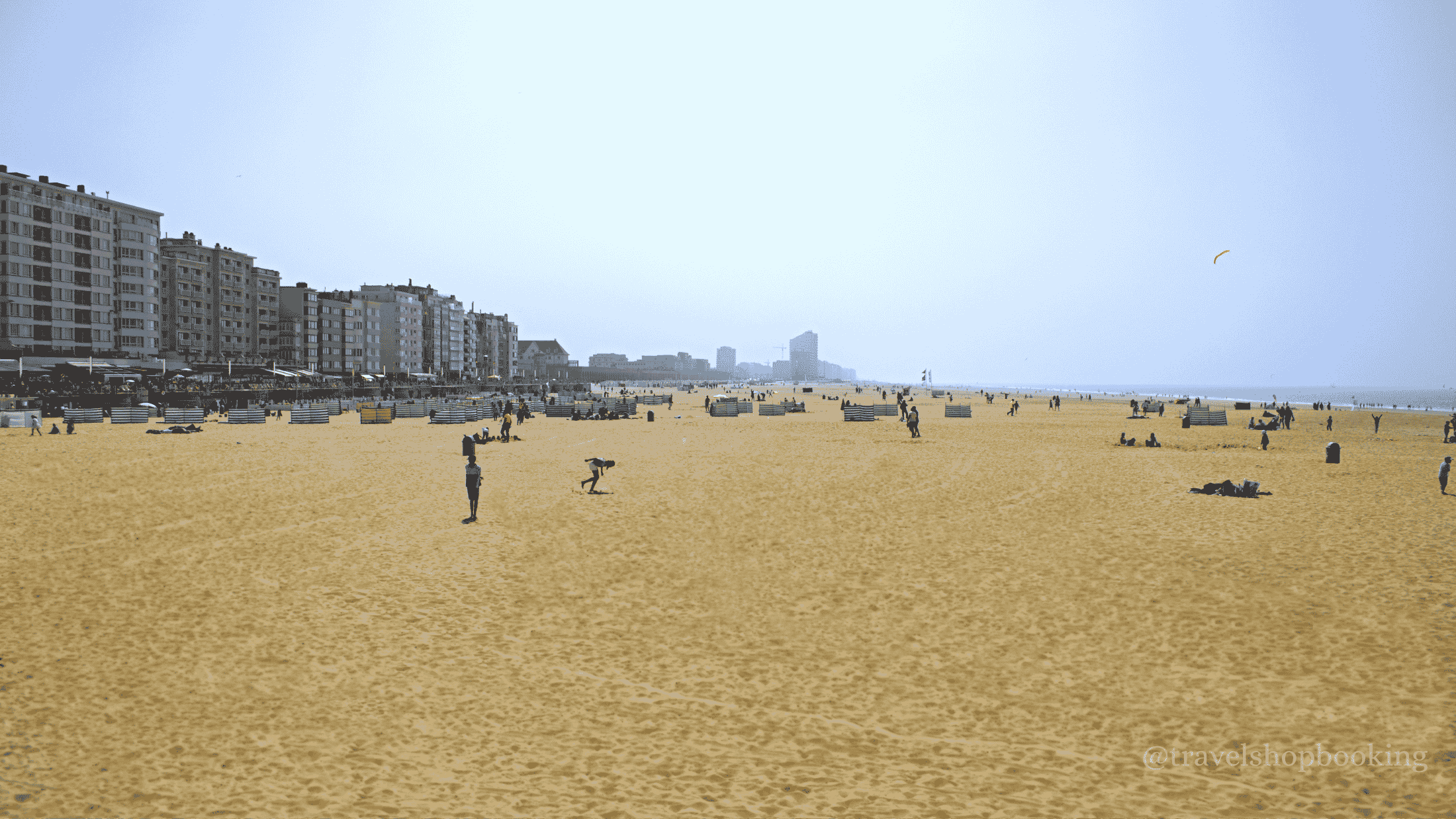
Belgium has a relatively short North Sea coastline, but it includes sandy beaches, seaside resorts, cycling paths, and coastal nature reserves.
Ostend is the largest coastal city and offers beaches, museums, restaurants, and a working harbor. Other popular destinations include Knokke-Heist, De Haan, Blankenberge, and Nieuwpoort.
The coastal tram connects several seaside towns, making it possible to explore the coast without a car.
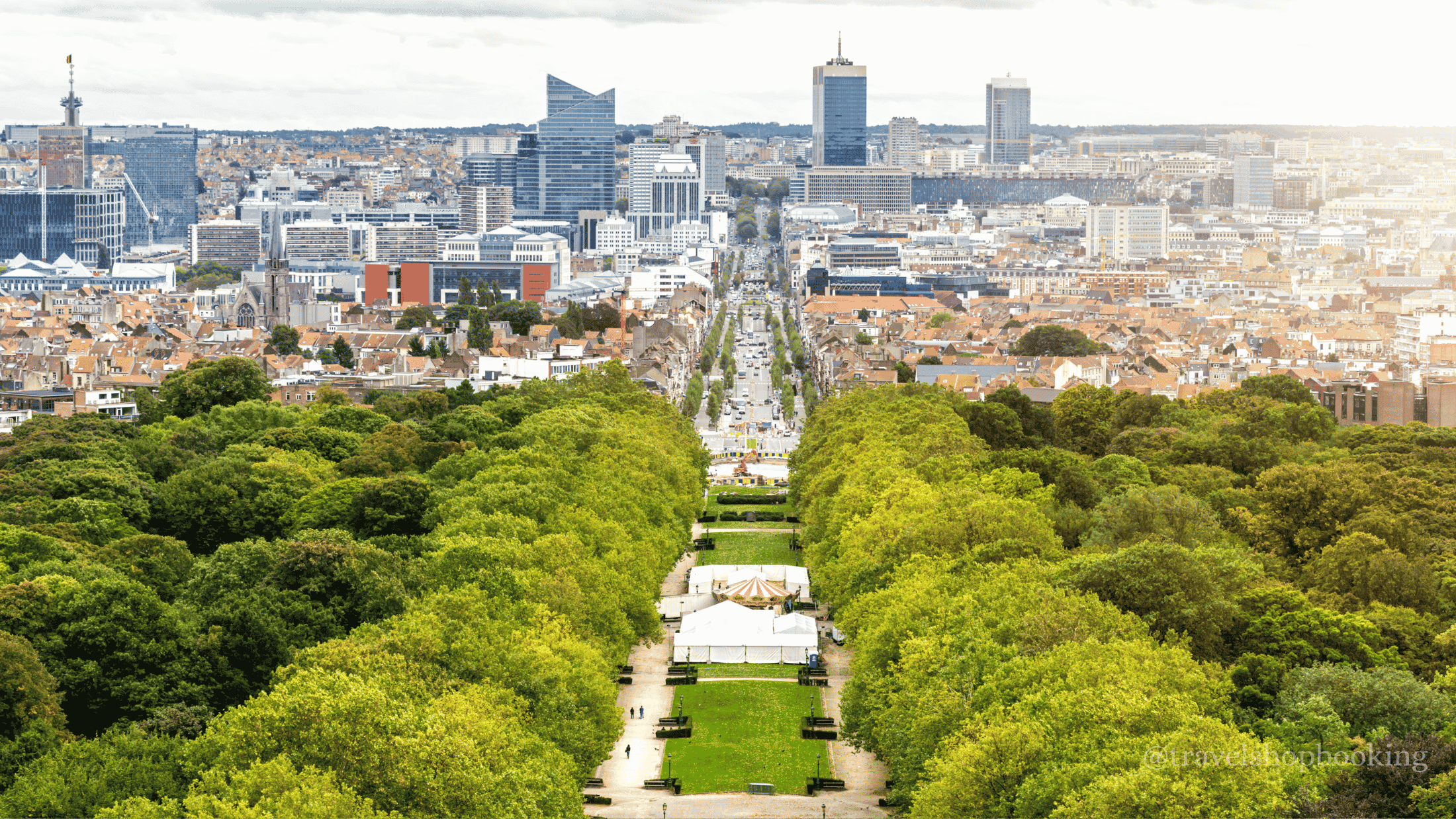
Sonian Forest
The Sonian Forest lies on the edge of Brussels and provides an easy nature escape from the capital. It contains walking paths, cycling routes, tall beech trees, and protected woodland.
Parts of the forest are recognized for their ecological and historical importance. It can be combined with visits to nearby parks, estates, or residential districts south of Brussels.
The forest is especially attractive in spring and autumn.
Best Castles to Visit in Belgium
Belgium has numerous castles, ranging from medieval fortresses to aristocratic residences. Several are located near the main cities or within scenic countryside areas.
Castle of the Counts
The Castle of the Counts, also known as Gravensteen, is one of Belgium’s most accessible medieval castles because it stands directly in central Ghent.
Its towers, walls, and rooftop viewpoints make it an essential part of a Ghent visit. The building also helps explain the city’s political and military history.
Bouillon Castle
Bouillon Castle overlooks the Semois River in southern Belgium. The fortress is closely associated with Godfrey of Bouillon and the history of the First Crusade.
Visitors can explore stone corridors, towers, courtyards, and viewpoints over the town and surrounding hills.
The castle can be combined with hiking, kayaking, and scenic drives through the Ardennes.
Château de Vêves
Château de Vêves is a well-preserved castle near Dinant. Its towers and compact design give it the appearance of a traditional storybook castle.
The furnished interiors introduce visitors to aristocratic life, while the exterior is especially popular with families and photographers.
It can be combined with Dinant, the Caves of Han, or other destinations in Wallonia.
Gaasbeek Castle
Gaasbeek Castle is located in the countryside southwest of Brussels. The estate includes landscaped grounds, gardens, walking paths, and a historic residence.
The castle has been modified several times over the centuries and reflects different architectural influences.
It is a convenient option for travelers who want to combine a Brussels stay with a quieter countryside excursion.
Hidden Gems in Belgium
Travelers who move beyond the main tourist routes can find smaller towns, unusual landscapes, and historic districts with fewer crowds.
Lier
Lier is a small Flemish town located between Antwerp and Mechelen. Its compact center includes canals, traditional houses, a beguinage, and the Zimmer Tower.
The town is easy to explore on foot and offers a quieter alternative to nearby Antwerp.
Torgny
Torgny is located in the far south of Belgium and is known for stone houses, vineyards, and a climate influenced by its southern location.
Its appearance differs from the typical architecture seen in northern Belgian cities. The village is best included in a wider road trip through the Gaume region.
La Roche-en-Ardenne
La Roche-en-Ardenne is a small town surrounded by forests and hills. A ruined medieval castle overlooks the Ourthe River and the town center.
The area is popular for hiking, kayaking, and cycling. It is especially scenic during autumn.
Hallerbos
Hallerbos is a forest south of Brussels known for its seasonal display of bluebells. The flowering period usually takes place in spring and attracts photographers and walkers.
Visitors should remain on marked paths to protect the flowers and forest floor. The exact blooming period varies depending on seasonal weather.
Frequently Asked Questions
What are the best places to visit in Belgium for first-time visitors?
Brussels, Bruges, Ghent, and Antwerp are the main destinations for a first trip. Travelers with additional time can add Leuven, Dinant, or the Ardennes.
What is the most beautiful city in Belgium?
Bruges is often considered Belgium’s most visually attractive city because of its canals and medieval architecture. Ghent offers similar historic character with a livelier local atmosphere.
Is Brussels or Bruges better?
Brussels is better for museums, major landmarks, international culture, and transport connections. Bruges is better for canals, medieval scenery, and a romantic historic atmosphere. Most itineraries can include both.
How many days are enough for Belgium?
Four to six days are enough for Brussels, Bruges, Ghent, and Antwerp. Seven to ten days allow time for smaller cities, the Ardennes, Waterloo, Ypres, or the Belgian coast.
Is Belgium easy to travel around by train?
Yes. Brussels, Bruges, Ghent, Antwerp, Leuven, and Mechelen are well connected by train. A car is more useful for the Ardennes, castles, caves, and rural villages.
What is Belgium famous for?
Belgium is known for medieval cities, Gothic architecture, chocolate, waffles, fries, beer, comics, Flemish art, castles, and European Union institutions.
Is Belgium worth visiting outside Brussels?
Yes. Bruges, Ghent, Antwerp, Leuven, Dinant, Ypres, and the Ardennes offer very different experiences from Brussels and are important parts of a complete Belgium itinerary.
Loading comments…