
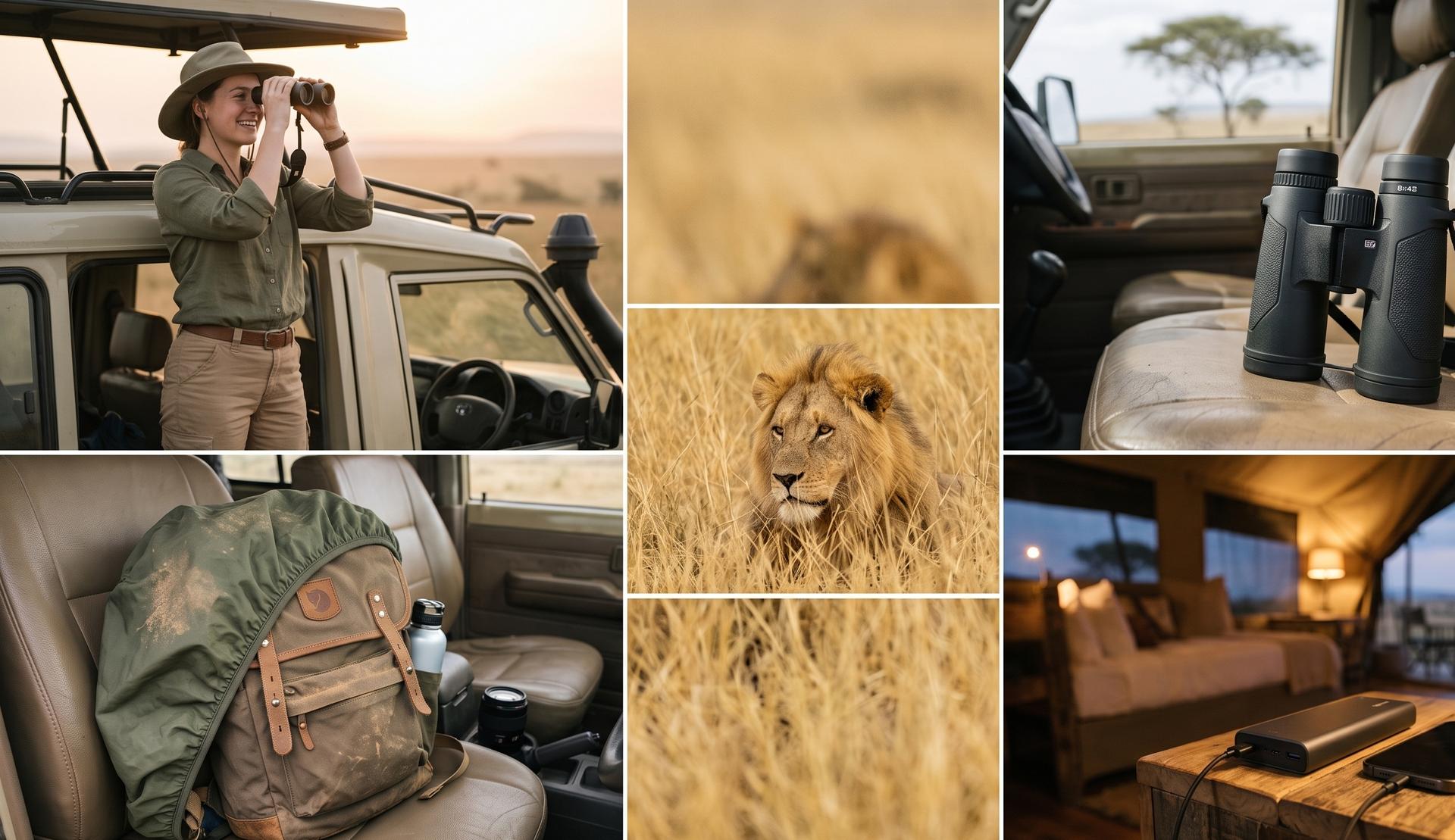
Most people spend months dreaming about an African safari, but packing often gets left until the last minute. Whether you're exploring the Serengeti in Tanzania or Kenya's Masai Mara, you'll probably spend hours in an open vehicle, far from shops or anywhere to replace forgotten items. I remember thinking I had packed everything I needed, only to realize on my first early morning game drive that I hadn't brought enough warm clothing. The excitement of spotting wildlife quickly made me forget the cold, but I learned my lesson.
The truth is that a safari isn't like a typical beach holiday or city break. The weather changes quickly, roads can be dusty, and you'll be outdoors for much of the day. A few smart packing choices will help you stay comfortable from sunrise until sunset, allowing you to enjoy every moment instead of worrying about your gear.
Here are five things I'd never leave behind.
1. Layers in Neutral Colors
Trust me on this one: stick to khakis, olive greens, tans, and grays. They blend into the surroundings and are much more practical than bright colors.
White and red can draw attention and may disturb wildlife, while dark blue and black are known to attract tsetse flies—and their bites aren't something you'll want to experience.
The weather changes quickly, too. A chilly sunrise can turn into a scorching afternoon before you know it, so pack a breathable shirt with a fleece or light windbreaker that you can easily remove later in the day.
Comfort matters just as much as color. Lightweight trousers, moisture-wicking shirts, and comfortable walking shoes will make long days much more enjoyable. Even if you don't plan on hiking, you'll probably spend time walking around lodges or stopping at viewpoints during your trip. Choosing practical clothing means you can focus on the incredible wildlife instead of feeling too hot, too cold, or uncomfortable.
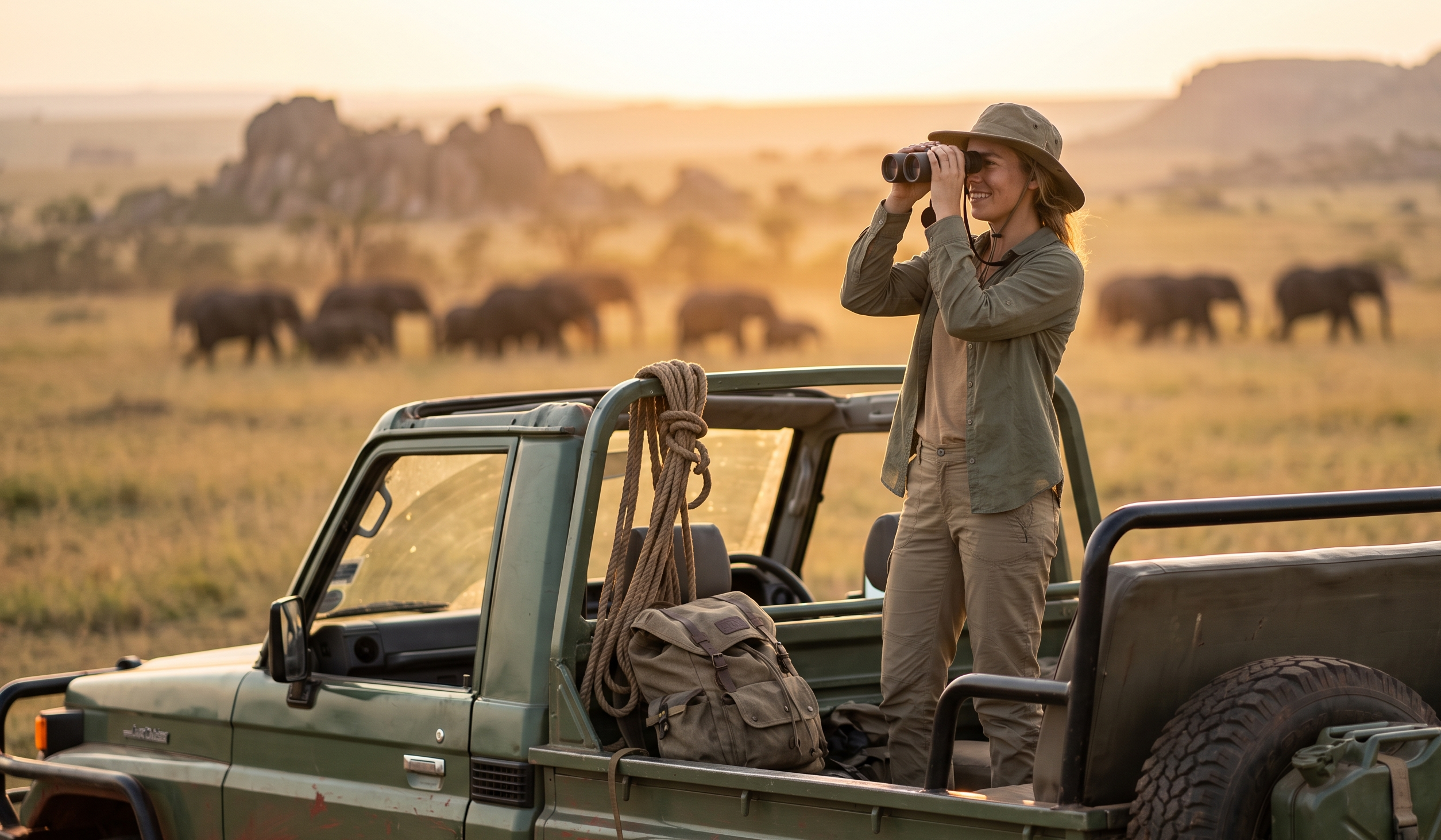
2. A Good Pair of Binoculars
Your guide will probably spot animals long before you do, but having your own binoculars completely changes the experience.
Seeing a leopard stretched across an acacia branch or watching colorful birds through your own lenses is something photos can't quite replace. Sometimes animals are resting hundreds of meters away, and binoculars let you appreciate details you would otherwise miss.
There's no need to buy professional equipment. A lightweight pair with 8x42 or 10x42 magnification is easy to carry and gives you an excellent view without taking up much space.
If you're traveling with friends or family, don't assume you'll share one pair. Wildlife sightings often happen unexpectedly and can disappear within seconds. Having your own binoculars means you won't miss that once-in-a-lifetime moment while waiting for someone else to pass theirs over.
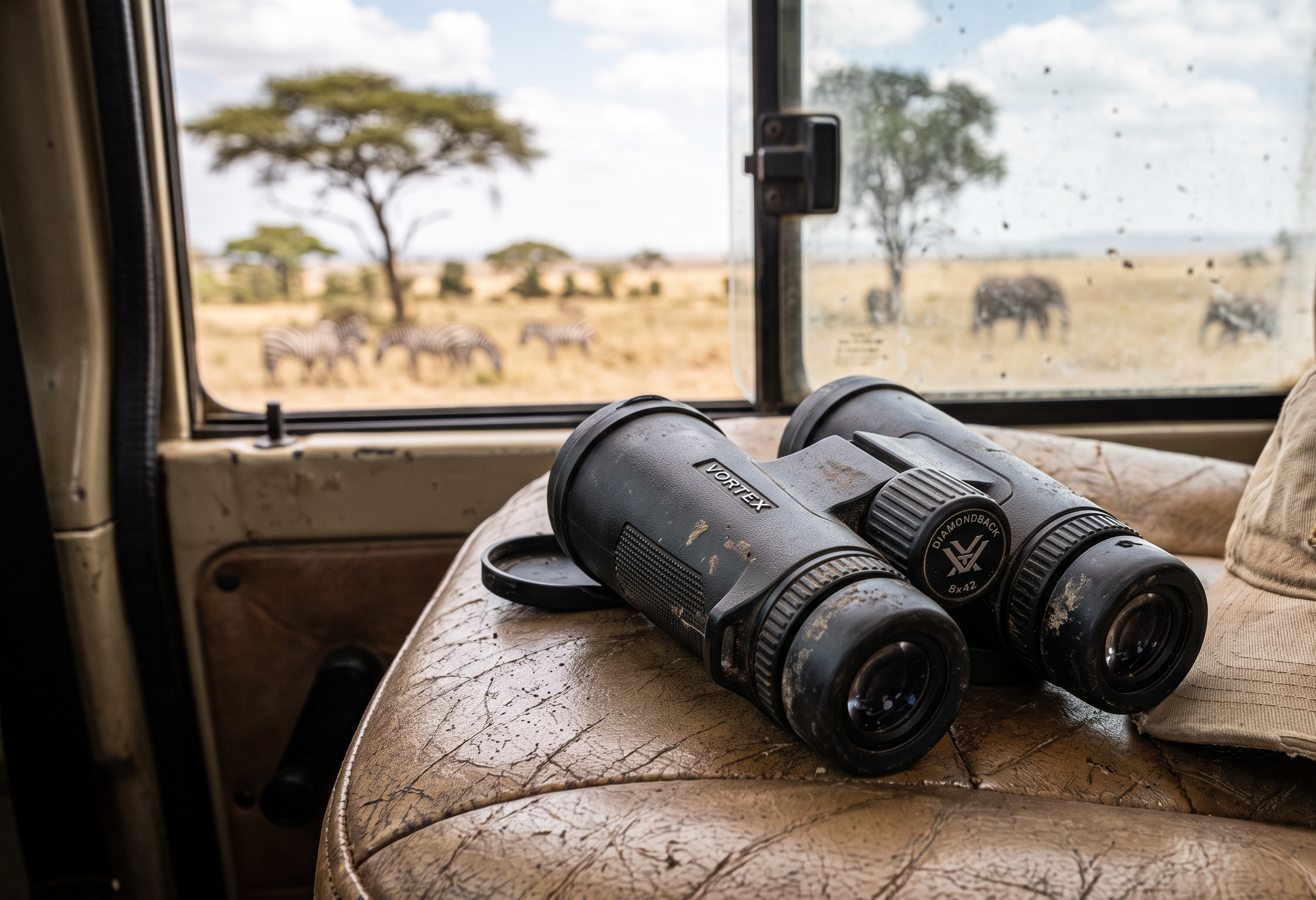
3. Sun and Insect Protection
The African sun is no joke, especially when you're sitting in an open vehicle for several hours.
Pack a wide-brimmed hat, polarized sunglasses, and a high-SPF sunscreen. A hat with a chin strap is worth having because bumpy roads and a bit of speed can send lighter hats flying.
An absolute lifesaver tip: don't forget insect repellent. Mosquitoes and other biting insects are usually most active around sunrise, sunset, and near water, so bring one containing DEET or Picaridin.
It's also a good idea to carry a reusable water bottle. Staying hydrated is easy to forget when you're busy watching elephants, giraffes, or lions, but the combination of sun, heat, and dry air can leave you feeling tired much faster than expected. Taking a few sips of water throughout the drive helps you stay comfortable and ready for the next wildlife sighting.
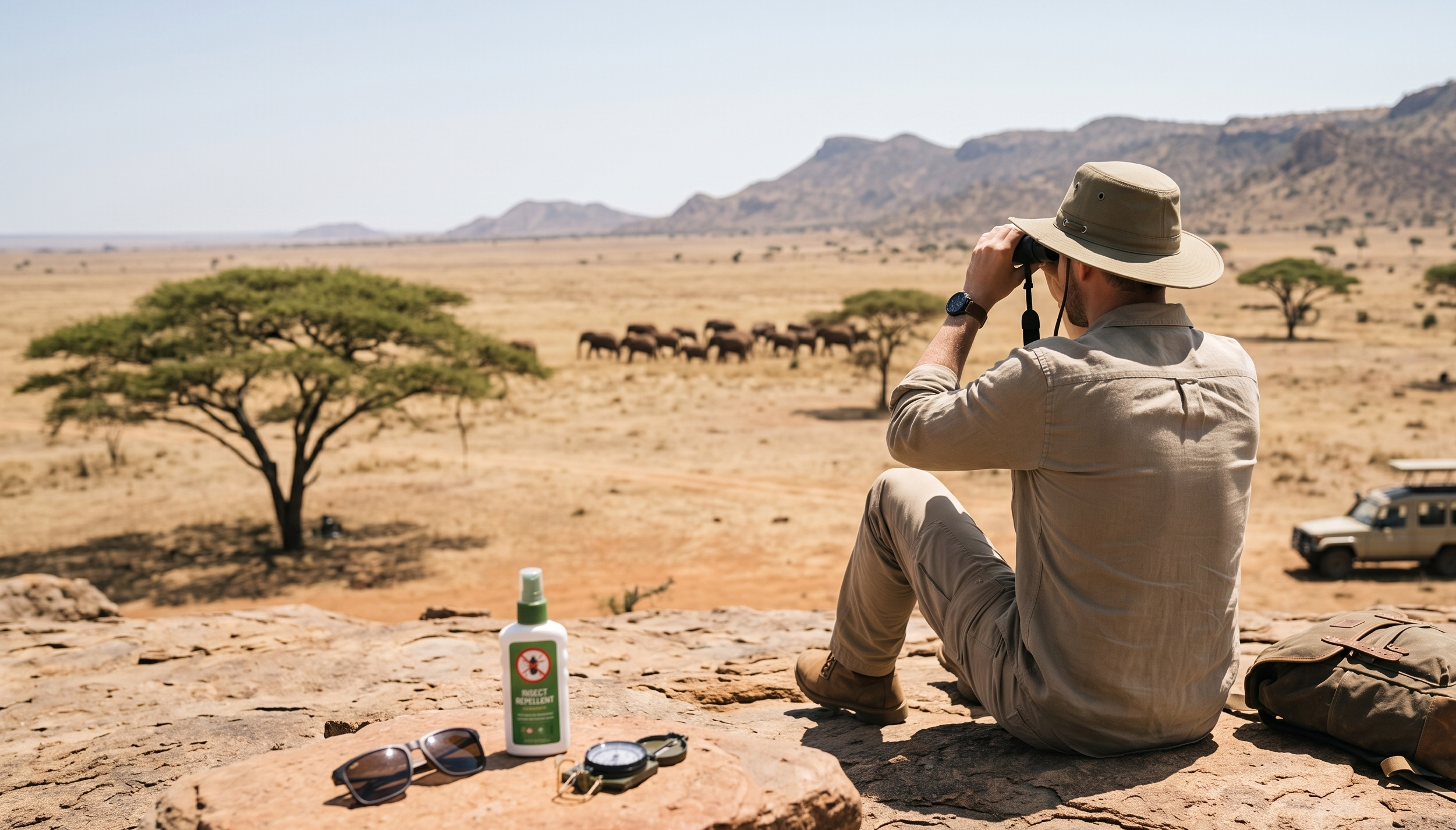
4. A Durable Daypack and Dust Cover
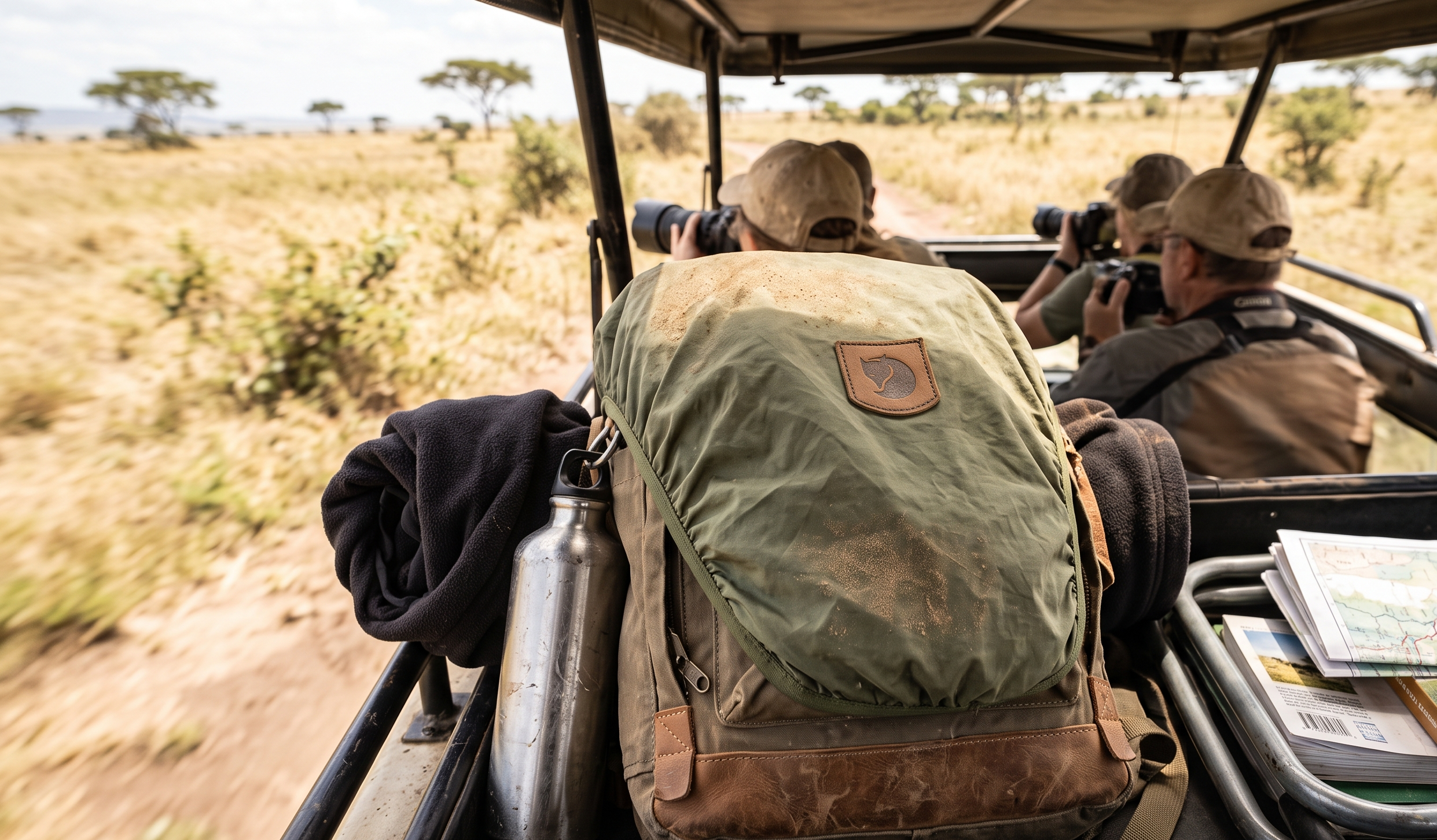
Your larger suitcase will usually stay back at the lodge or tented camp, so a comfortable daypack becomes your best friend. Something around 15 to 25 liters is plenty for your jacket, camera, water bottle, binoculars, and a few small essentials.
One thing that catches first-time safari travelers by surprise is the dust.
It gets everywhere.
A simple rain cover for your backpack—or even keeping electronics inside zip-lock bags or wrapped in a clean cloth—can save your gear by the end of the day.
I also like to keep a few extras in my daypack, including lip balm, hand sanitizer, tissues, and a small packet of wet wipes. They don't take up much space, but you'll be glad you packed them after a long drive on dusty roads. A small first-aid kit with a few plasters and pain relief tablets is another sensible addition, especially if you're visiting remote areas.
5. A Portable Power Bank
Between taking photos, filming videos, and checking maps or wildlife apps, your phone battery disappears faster than you'd expect.
Some remote bush camps only have electricity during certain hours, so it's not always possible to recharge whenever you want. A good power bank means you won't miss the moment a herd of elephants walks across the track or a lion suddenly appears nearby.
Before heading out each morning, make a habit of charging your phone, camera batteries, and power bank whenever electricity is available. It only takes a few minutes to check that everything is ready, and you'll have peace of mind knowing your devices will last throughout the day. If you enjoy photography, carrying an extra memory card is also a smart idea because you'll probably end up taking far more pictures than you expected.
Final Thoughts
An African safari is one of those trips you'll remember for years, and a little preparation goes a long way. You don't need expensive equipment or a suitcase full of gadgets. Most of the essentials are simple, practical items that make your days more comfortable and let you focus on what you came to see.
Every safari is different, and that's part of the adventure. One day you might watch a pride of lions relaxing in the shade, while the next you're following a herd of elephants across the plains or stopping to admire a tiny but colorful bird. Being properly prepared means you can enjoy each of those moments without thinking about a dead phone battery, uncomfortable clothing, or forgotten supplies.
Pack smart, stay flexible, and don't stress about bringing everything. The best memories won't come from what's in your bag, they'll come from the unforgettable wildlife encounters waiting for you.
Loading comments…