
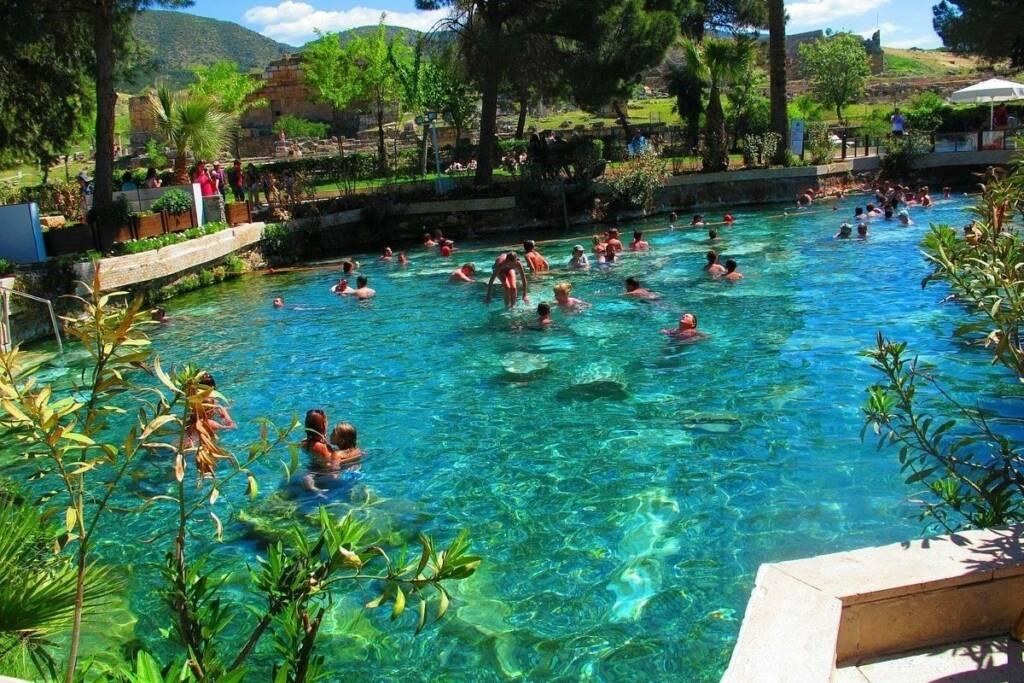
Cleopatra's Pool in Pamukkale is one of Turkey's most fascinating thermal attractions, combining ancient Roman history, naturally warm mineral water, and archaeological remains beneath the surface. Located within the ancient city of Hierapolis, the pool is famous for its submerged marble columns and the legend that Cleopatra, the Egyptian queen, once bathed in its waters.
Also known as the Hierapolis Antique Pool, this historic attraction offers visitors an unusual opportunity to experience the thermal springs that made Pamukkale famous in antiquity. The water is naturally heated by geothermal activity and contains minerals associated with the region's remarkable geological formations.
Today, Cleopatra's Pool attracts travelers interested in history, thermal bathing, and the natural wonders of southwestern Turkey. Visitors exploring the region through Pamukkale Tours can combine the ancient pool with the white travertine terraces and the archaeological remains of Hierapolis.
Where Is Cleopatra's Pool in Pamukkale?
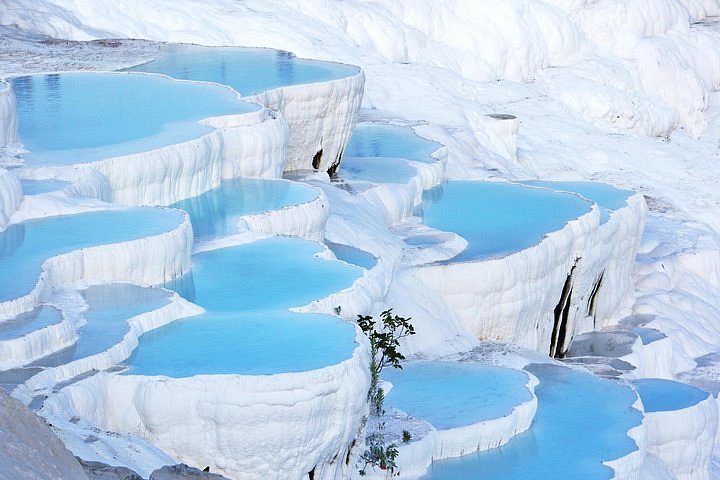
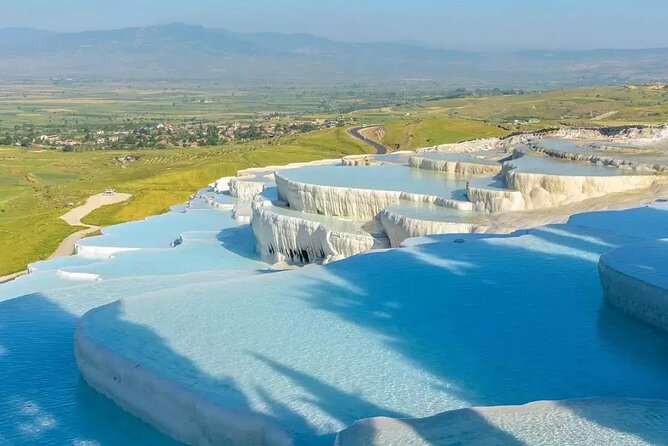
Cleopatra's Pool is located within the ancient city of Hierapolis in Pamukkale, approximately 20 kilometers north of Denizli in southwestern Turkey. The pool sits above the famous white travertine terraces, inside the Hierapolis-Pamukkale archaeological site.
The location is part of a UNESCO World Heritage Site recognized for its combination of natural geological formations and ancient cultural heritage. Visitors can explore Roman ruins, historical baths, temples, and one of the best-preserved ancient theatres in the region.
The pool is within walking distance of several important attractions in Hierapolis, including the Archaeological Museum and the ancient theatre.
Travelers should be aware that Cleopatra's Pool, Hierapolis Ancient City, and the Pamukkale travertines are different attractions within the same archaeological complex. Although they can be visited during the same trip, swimming in the Antique Pool may require an additional ticket.
History of Cleopatra's Pool
The history of Cleopatra's Pool is closely connected to Hierapolis, an ancient city founded during the second century BC under the Kingdom of Pergamon.
Hierapolis later became an important Roman settlement, particularly because of its natural hot springs. The Romans developed the city into a center of bathing, religion, and social activity. Thermal water played an important role in daily life, and visitors traveled to Hierapolis to experience its warm mineral springs.
During the Roman period, public baths were not simply places for washing. They were important social spaces where people gathered, relaxed, and participated in daily activities. The natural hot springs of Hierapolis made the city especially suitable for this bathing culture.
The city experienced several destructive earthquakes throughout its history, including a major earthquake in AD 60. Many structures were damaged or rebuilt, and architectural fragments eventually became submerged in the thermal waters.
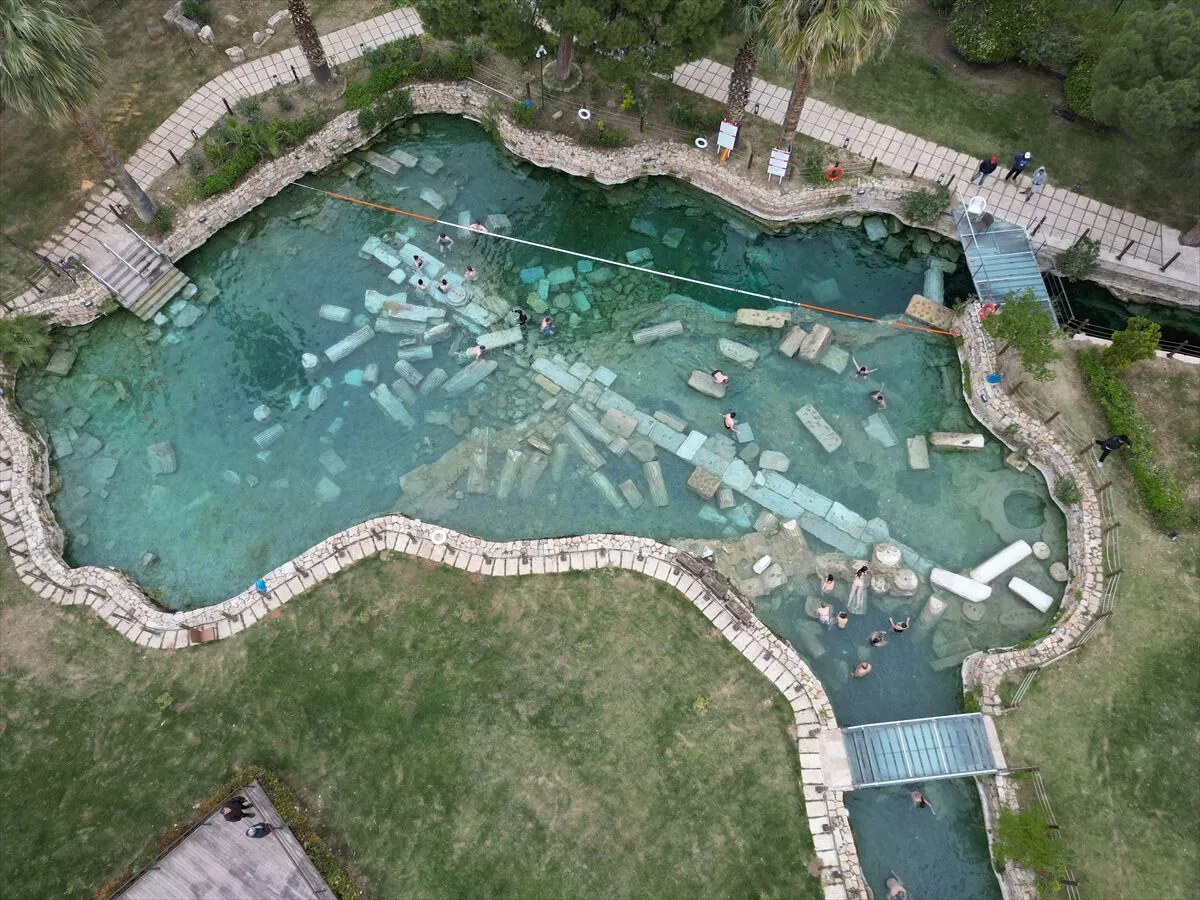
One of the most distinctive features of Cleopatra's Pool is the presence of ancient marble columns and stone remains beneath the water. These archaeological fragments are genuine remnants of the ancient city rather than modern decorations.
The pool's historical significance comes from its connection to Roman bathing traditions, the natural geothermal springs, and the architectural remains of Hierapolis.
Today, visitors can observe these ancient fragments while experiencing a thermal environment associated with the city's history.
Did Cleopatra Really Swim in Pamukkale?
The name Cleopatra's Pool comes from a popular legend connecting the thermal waters of Hierapolis with Cleopatra VII, the famous queen of ancient Egypt.
According to the story, Cleopatra visited the region and bathed in the warm mineral waters, which were believed to promote beauty, relaxation, and well-being. Over time, the pool became associated with her name.
However, there is no reliable historical or archaeological evidence confirming that Cleopatra personally visited Hierapolis or swam in this particular pool.
Cleopatra lived between 69 BC and 30 BC, during a period when the eastern Mediterranean was closely connected through political relationships and trade. Although she had significant interactions with the Roman world, these historical connections do not establish that she visited Pamukkale.
The story should therefore be understood as a local legend rather than a documented historical event.
Nevertheless, the legend has become an important part of the attraction's identity. Many visitors are drawn to the idea of swimming in waters associated with one of history's most famous queens.
What makes the pool genuinely remarkable is not whether Cleopatra visited it, but the survival of ancient architectural remains within a natural thermal bathing environment.
Cleopatra's Pool Thermal Water and Health Benefits
The thermal water of Cleopatra's Pool originates from the geothermal system beneath Pamukkale. Underground water is naturally heated and rises to the surface through geological fractures, carrying dissolved minerals from the surrounding rocks.
The water temperature is commonly reported to be approximately 36°C (97°F), although it may vary depending on conditions.
Pamukkale's thermal waters contain minerals such as calcium and bicarbonate, which are also associated with the formation of the region's famous white travertine terraces.
For centuries, people have visited Hierapolis because of its thermal springs. In ancient times, the waters were traditionally believed to support physical well-being, and bathing became an important part of the city's identity.
Muscle Relaxation and Physical Comfort
Warm-water immersion can help relax muscles and temporarily reduce feelings of tension or stiffness.
After spending several hours walking through Hierapolis or exploring the Pamukkale terraces, bathing in warm water may provide a comfortable and relaxing experience.
The warmth can also make gentle movement in the water feel easier, although this should not be considered a substitute for medical treatment or rehabilitation.
Skin and Mineral-Rich Water
Cleopatra's Pool is frequently associated with beauty and skin care, partly because of the legend surrounding the Egyptian queen.
Its thermal water contains naturally occurring minerals, but there is no strong clinical evidence demonstrating that bathing specifically in Cleopatra's Pool treats acne, eczema, psoriasis, or other skin conditions.
Some visitors may enjoy the sensation of mineral-rich water, while people with sensitive skin should be cautious and follow any medical advice relevant to their condition.
Blood Circulation and Relaxation
Immersion in warm water can temporarily affect blood circulation by causing blood vessels near the skin to widen. This may contribute to a feeling of warmth and relaxation.
However, thermal bathing is not a proven treatment for cardiovascular diseases or circulation disorders.
People with heart conditions, unstable blood pressure, or other significant medical concerns should consult a healthcare professional before entering hot thermal water.
The most dependable benefit of visiting Cleopatra's Pool is the opportunity to enjoy warm mineral water in a unique historical setting, rather than expecting specific medical results.
Can You Swim in Cleopatra's Pool?
Cleopatra's Pool is traditionally known as one of the few places where visitors can swim among authentic ancient architectural remains. Its naturally warm water and submerged Roman columns make the experience different from an ordinary swimming pool.
The pool has undergone renovation and conservation work, which has affected swimming access at different times. Recent official visitor information indicates that the Antique Pool is open, but travelers should confirm that swimming is permitted on their intended date, as access can change independently of the surrounding archaeological site.
When swimming is available, visitors should be aware that the pool contains ancient stone fragments and uneven underwater surfaces. These remains are part of a protected archaeological environment and should not be climbed on, moved, or damaged.
Before visiting, it is helpful to prepare a few essentials:
Swimwear and a towel
Suitable footwear for wet surfaces
A change of clothes
Sufficient time to swim and explore the surrounding archaeological area
Visitors should also follow the facility's safety instructions and avoid prolonged exposure to warm water if they begin to feel dizzy or uncomfortable.
Those who do not wish to swim can still appreciate the historical surroundings and observe the pool, subject to the facility's access arrangements.
Cleopatra's Pool Entrance Fee and Opening Hours
Cleopatra's Pool is situated inside the Hierapolis-Pamukkale archaeological site, which has its own entrance arrangements.
Visitors generally need admission to the archaeological site before reaching the Antique Pool. Swimming access is handled separately and may involve an additional fee.
Entrance prices can vary depending on visitor category, age, and current ticketing policies. Travelers should also distinguish between the admission fee for Hierapolis-Pamukkale and the additional charge for swimming in Cleopatra's Pool.
The archaeological site generally opens in the morning, but the swimming facility may operate on a different schedule.
Opening hours and prices can change because of seasonal arrangements, maintenance, or conservation activities. For this reason, visitors should confirm the current swimming fee, opening hours, and pool availability shortly before traveling.
For a more comfortable visit, the morning is often a good time to explore the archaeological site, especially during the warmer summer months.
Travelers planning to visit both the pool and Hierapolis should allow at least two to three hours for the surrounding attractions, with additional time if swimming is included.
How to Get to Cleopatra's Pool
Cleopatra's Pool is accessible through the Hierapolis-Pamukkale archaeological site in Denizli Province. Travelers must first reach Pamukkale and enter the archaeological area before following the designated walking paths toward the Antique Pool.
The most convenient route depends on the city from which visitors are traveling.
From Denizli
Denizli is the nearest major city to Pamukkale. The archaeological site is approximately 20 kilometers from the city center and can be reached by local transportation, taxi, or private vehicle.
From Istanbul
Travelers visiting Pamukkale from Istanbul can take a domestic flight to Denizli Çardak Airport and continue to Pamukkale by road.
For those who prefer an organized experience, the Daily Pamukkale Tour from Istanbul provides an option for discovering the region's natural and historical attractions.
From Antalya
Pamukkale is approximately 230–250 kilometers from Antalya, depending on the departure point and selected route. The road journey generally takes around three to four hours.
Travelers staying in Antalya can explore the region through the Daily Pamukkale Tour from Antalya, which focuses on the area's remarkable geological formations and ancient heritage.
Exploring Pamukkale
Visitors already staying in Pamukkale can explore the archaeological site and nearby attractions through the Daily Pamukkale Tour.
For travelers looking for a different perspective on the landscape, the Daily Pamukkale Hot Air Ballooning Tour offers an opportunity to experience the region from above.
When selecting a tour, visitors should check whether Cleopatra's Pool is included in the itinerary and whether swimming fees are covered by the package price.
Frequently Asked Questions
Is Cleopatra's Pool in Pamukkale natural?
Yes. Cleopatra's Pool is supplied by natural geothermal springs. Although the bathing facilities have been developed for visitors, the thermal water originates from the geological system beneath Pamukkale.
How hot is Cleopatra's Pool?
The water temperature is commonly reported to be around 36°C (97°F). Actual temperatures may vary, but the pool is known for its naturally warm thermal water.
Is Cleopatra's Pool good for your skin?
The water contains naturally occurring minerals, but there is insufficient scientific evidence that bathing in Cleopatra's Pool treats specific skin conditions. Visitors should regard it primarily as a thermal bathing and relaxation experience.
Why are there ancient columns inside Cleopatra's Pool?
The submerged columns are architectural remains associated with ancient Hierapolis. Earthquakes and the destruction of historical buildings contributed to the presence of these fragments in the water.
Is Cleopatra's Pool worth visiting?
Cleopatra's Pool is particularly interesting for travelers who enjoy ancient history, archaeology, and thermal attractions. The combination of natural hot springs and submerged Roman architectural remains makes it different from conventional swimming pools.
Can you visit Cleopatra's Pool without swimming?
Visitors can generally explore the surrounding area and observe the pool without swimming, subject to current access arrangements. Swimming admission is separate from general archaeological site entry.
Is Cleopatra's Pool open all year?
The attraction is generally intended for year-round visits, but swimming availability and operating hours can change because of seasonal schedules, renovation work, or conservation requirements.
How much time do you need at Cleopatra's Pool?
Visitors who plan to swim should generally allow around 45–60 minutes for the pool experience, with additional time for changing and exploring nearby attractions. Those visiting Hierapolis and the Pamukkale travertines should plan a longer stay.
Loading comments…