
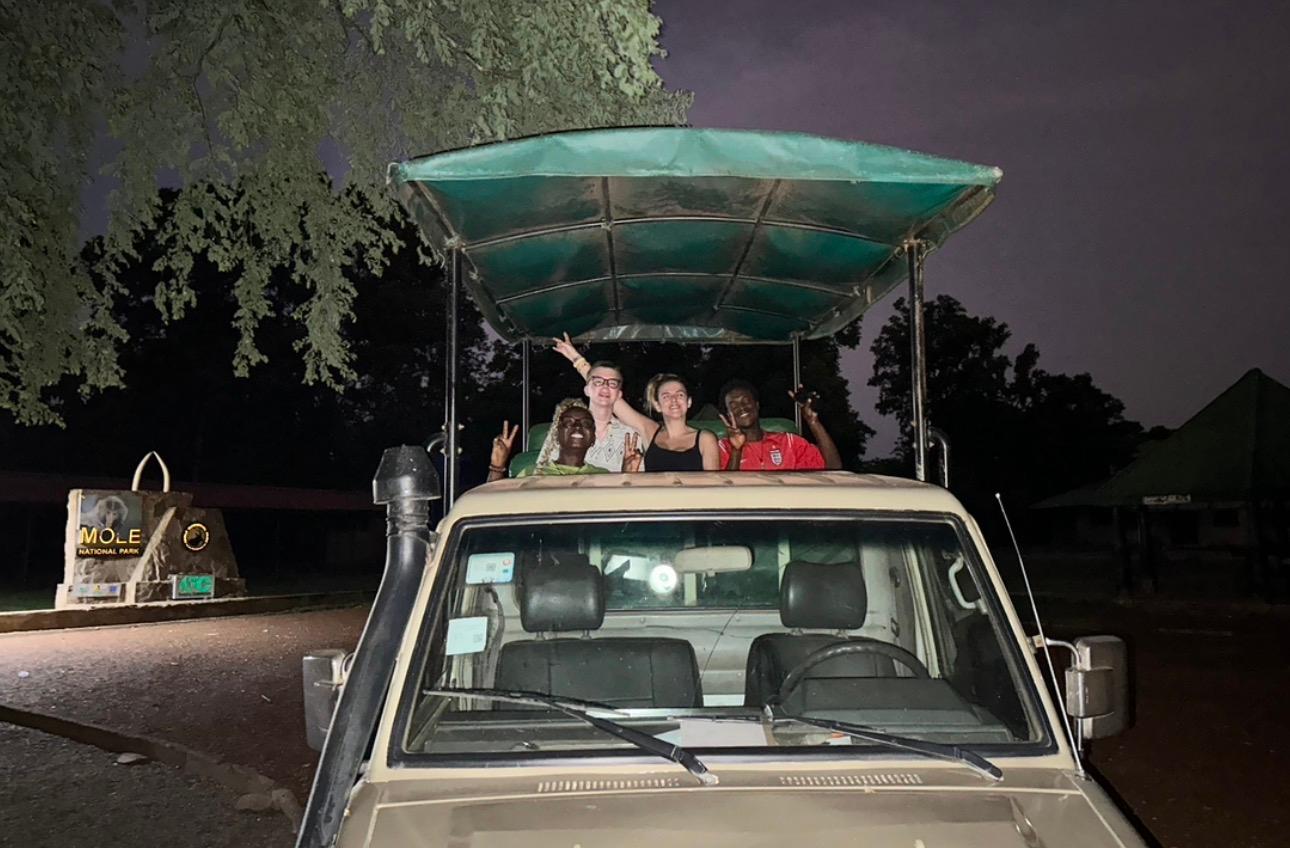
Mole is Ghana’s largest national park, and with that comes a huge responsibility. It is home to a wide range of species, including elephants, antelope, baboons, warthogs and countless birds, all of which depend on the park’s savannah ecosystem to survive. Seeing these animals in such a natural setting makes it easy to understand why conservation work here is so important.
What I found particularly interesting was how conservation and tourism work together. Visitors are not just there to observe wildlife, but also contribute to the park’s upkeep and protection. The presence of guided safaris, regulated routes and designated viewing areas all help minimise disruption to the animals while still allowing people to experience the park safely.
The role of guides is essential. During my time at Mole National Park, it was clear that they are not only helping visitors spot animals, but also acting as educators and conservation advocates. They shared insights about animal behaviour, habitat protection and the challenges of managing such a large natural area.
Another important aspect of conservation in the park is the balance between people and wildlife. The surrounding communities play a key role in supporting the park’s long-term sustainability. This relationship helps ensure that conservation efforts are not isolated, but connected to the people who live nearby and benefit from the park’s presence.
One of the most reassuring things I noticed was how carefully the park is managed for visitors. There is a strong emphasis on respecting wildlife, maintaining distance where needed and ensuring that animals are not disturbed. It creates a responsible tourism experience that feels thoughtful rather than intrusive.
Despite these efforts, conservation is never without its challenges. Like many protected areas, Mole faces pressures from habitat change and the need to maintain resources for both wildlife and surrounding communities. What makes a difference here is the ongoing commitment to balancing these needs in a sustainable way.
As a visitor, it made me appreciate the experience on a deeper level. Seeing elephants and other animals in the wild is incredible, but knowing that there are active efforts in place to protect their future adds another layer of meaning to the visit.
By the end of my time at Mole National Park, I realised it is more than just a safari destination. It is a working example of how conservation, tourism and local communities can come together to protect something truly special for generations to come.
Loading comments…