
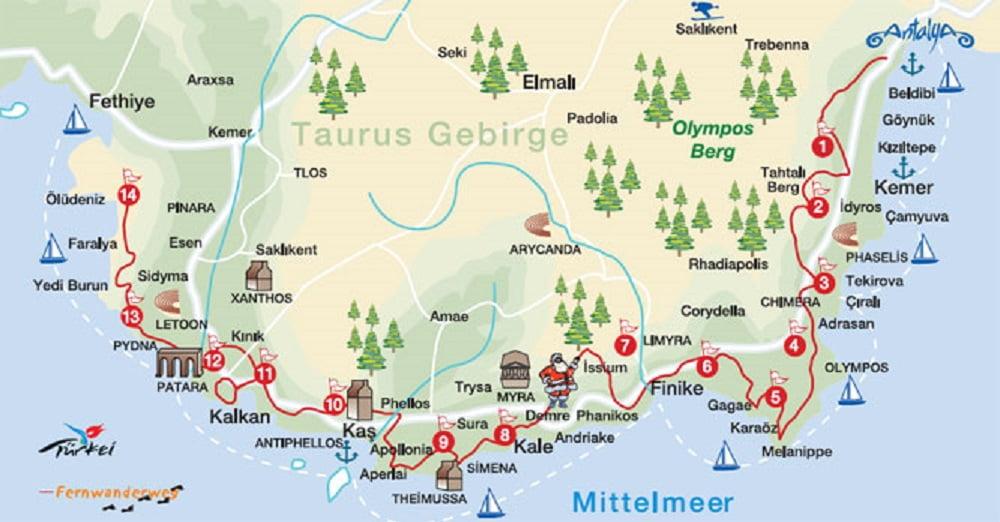
The Lycian Way is one of the most famous long distance hiking trails in Türkiye. The route stretches from Fethiye to Antalya and follows ancient coastal paths used by the Lycian civilization for centuries. Along the trail, hikers pass through mountain villages, Mediterranean forests, hidden bays, ancient cities, and coastal cliffs overlooking the sea. The full route is around 540 kilometers long and usually takes between 25 and 35 days to complete depending on pace and route selection.
Today, the Lycian Way attracts hikers, backpackers, photographers, campers, and cultural travelers from all over the world. Some visitors complete the entire trail while others focus on shorter sections around Ölüdeniz, Kaş, Demre, Olimpos, or Çıralı. One of the reasons the Lycian Way stands out is the variety it offers within a single journey. In the same day, it is possible to walk through pine forests, visit an ancient theater, swim in a quiet bay, and watch the sunset from a mountain trail.
15 Days Lycian Way Trekking Tour Turkey
7 Days Lycian Way Hiking Tour (Demre – Ölüdeniz)
Western Lycian Way Hike Tour 5days; Fethiye to Patara
What Is the Lycian Way?
The Lycian Way is a marked hiking route located along the Mediterranean coast of Türkiye. It was created using ancient paths connecting the cities of the Lycian civilization, one of the oldest civilizations of Anatolia. The route was officially mapped and marked in the late 1990s and quickly became one of Europe’s best known trekking trails.
The trail passes through Muğla and Antalya provinces and includes destinations such as Fethiye, Ölüdeniz, Kaş, Kalkan, Demre, Adrasan, Olimpos, and Çıralı. Most hikers walk the route during spring and autumn when temperatures are more comfortable for long distance trekking.
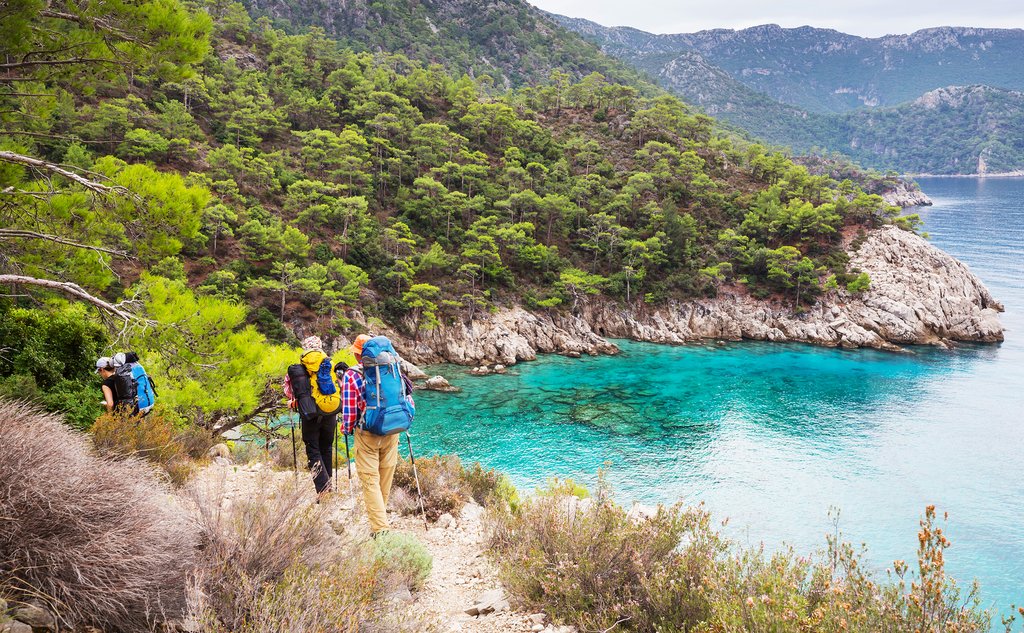
Lycian Way Map and Route Details
Western Route: Fethiye, Ölüdeniz, Butterfly Valley and Kabak Bay
The western section of the Lycian Way is the most popular starting area. The trail begins near Fethiye and continues through Ölüdeniz with panoramic coastal views. Butterfly Valley and Faralya are among the most photographed parts of the route due to their dramatic cliffs and sea scenery.
Kabak Bay offers a quieter atmosphere surrounded by nature. This section is suitable for hikers looking for short trekking experiences combined with beach and camping opportunities.
Central Route: Kaş, Kalkan, Patara and Demre
The central section combines historical sites with coastal walking trails. Kaş and Kalkan are known for stone houses, sea views, and small village roads. Patara stands out with its long sandy beach and large ancient city ruins.
Demre is one of the culturally important sections of the route. Myra Ancient City and Saint Nicholas Church are located here and attract both hikers and history travelers.
Eastern Route: Adrasan, Olimpos, Çıralı and Gelidonya Lighthouse
The eastern route is more forested and natural compared to other sections. The trail between Adrasan and Gelidonya Lighthouse is considered one of the most scenic hiking stages on the entire Lycian Way.
Olimpos and Çıralı are popular among travelers who want to combine hiking with beach accommodation. Ancient ruins, forest trails, and coastal paths are all found within this area.
Easiest Lycian Way Sections for Beginners
Fethiye to Kayaköy is a shorter and easier stage suitable for first time hikers.
Kaş to Limanağzı is ideal for travelers looking for a simple coastal walking route.
Çıralı to Yanartaş is another beginner friendly option with shorter distances and clear trails.
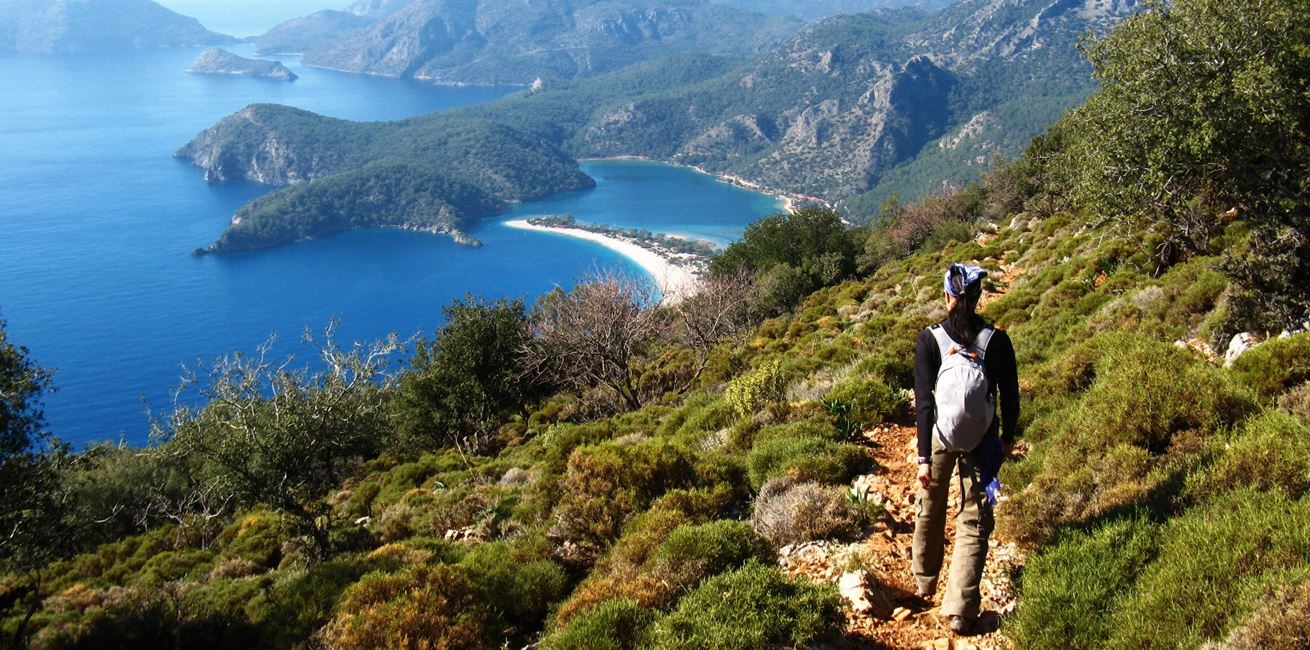
Accommodation Guide on the Lycian Way
Where to Stay on the Lycian Way
Accommodation along the Lycian Way mostly consists of small guesthouses, village pensions, family operated hotels, and bungalow stays. Areas such as Faralya, Kabak, Kaş, Demre, Adrasan, and Çıralı offer many options for hikers.
Village guesthouses are especially popular among long distance walkers. Many provide homemade breakfasts and traditional dinners prepared with local ingredients.
Can You Camp on the Lycian Way?
Camping is common on the Lycian Way and many hikers travel with lightweight tents. Kabak Bay, Alınca, Adrasan, and Gelidonya are among the most preferred camping areas.
Wild camping is possible in some sections, although hikers should avoid exposed cliff areas and always consider water access before choosing a camping spot.
Is Reservation Necessary?
During spring and autumn, reservations are recommended especially in popular coastal towns such as Kaş, Ölüdeniz, and Çıralı. Small guesthouses may become fully booked during peak hiking season.
In winter, some accommodations close temporarily due to low tourist activity.
Accommodation Costs on the Lycian Way
Budget travelers can find affordable village pensions and camping areas along most sections of the route. Prices increase in beach destinations and popular tourist towns during high season.
Travel costs mainly depend on accommodation style, transportation needs, and whether guided tours are included.
Food and Drinks on the Lycian Way
Restaurants, local cafes, village breakfasts, and small markets are available throughout the route. Coastal towns offer more dining options while remote stages may have limited services.
Hikers should always carry snacks and enough water during long walking days, especially in summer.
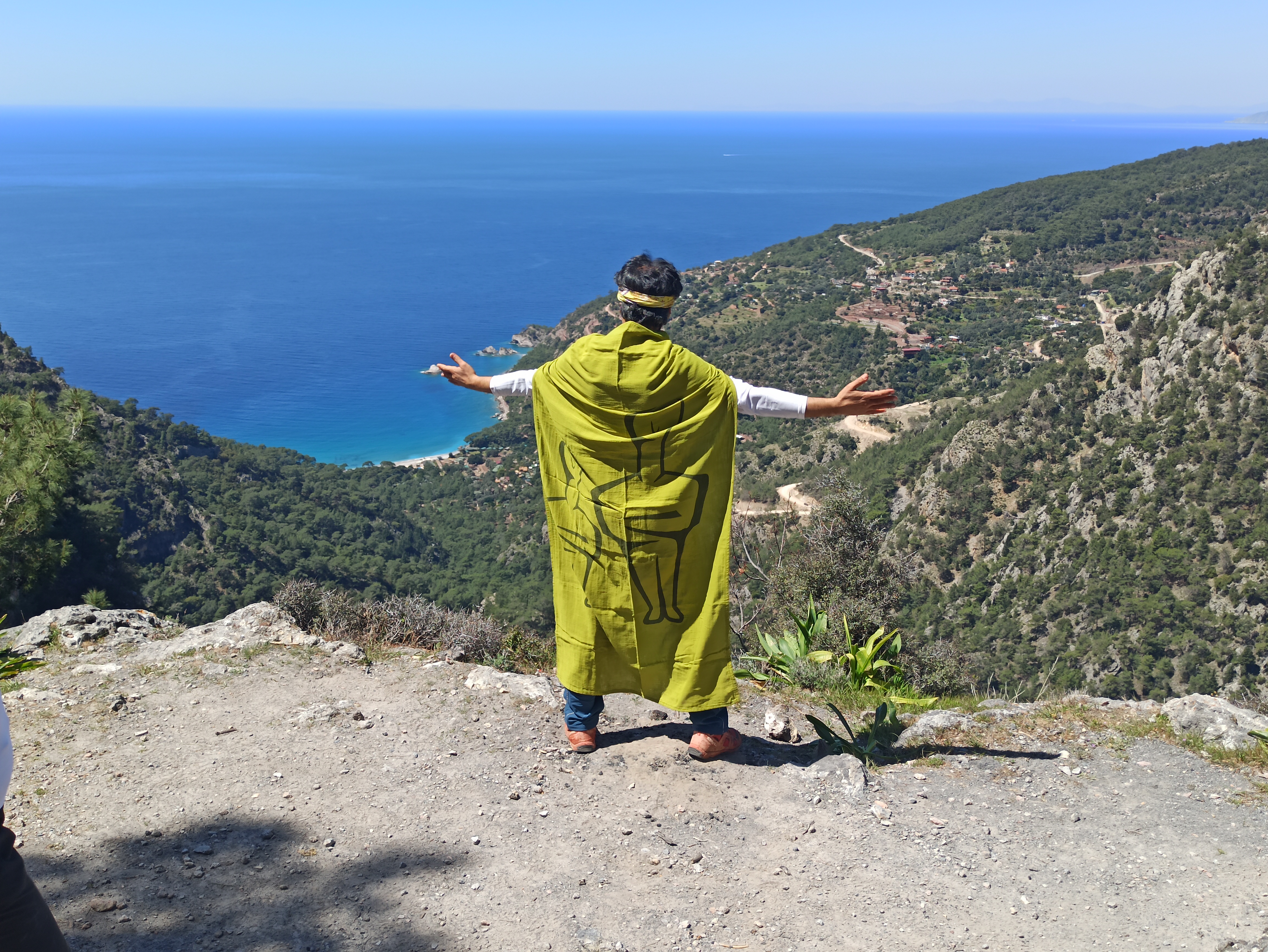
Lycian Way Preparation and Packing Guide
Essential Equipment for the Lycian Way
The most important equipment for the Lycian Way is proper hiking footwear. Rocky terrain and uneven trails require strong shoes with ankle support.
A hiking backpack should include a rain jacket, sunscreen, power bank, flashlight, first aid supplies, and lightweight clothing suitable for changing weather conditions.
Water Management and Water Sources
Some stages have limited access to clean water, especially during hot summer months. Hikers should plan daily water needs carefully before starting each section.
Water purification tablets can be useful when using natural spring water sources in remote areas.
Navigation and Trail Markings
The Lycian Way is marked with red and white painted trail signs. However, some sections may have faded markings or confusing intersections.
Offline map applications and GPS hiking tools are strongly recommended because mobile signal may disappear in mountain areas.
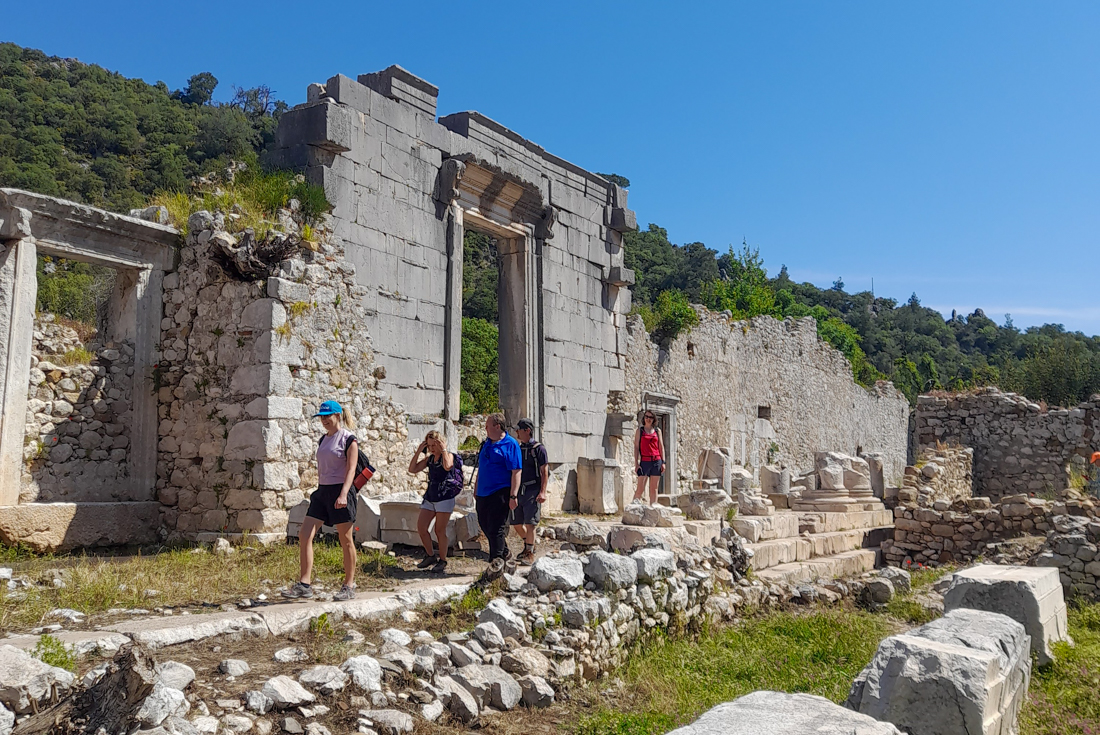
Places to See on the Lycian Way
Patara Ancient City
Patara was one of the most important cities of the Lycian civilization. The area includes ancient ruins, a Roman theater, and one of the longest beaches in Türkiye.
Xanthos Ancient City
Xanthos is listed as a UNESCO World Heritage Site and contains important Lycian ruins, monuments, and rock tombs.
Simena and Kaleköy
Kaleköy is famous for its coastal castle and views over the ancient sunken city ruins visible beneath the sea.
Olimpos and Chimera
Olimpos combines forest landscapes with ancient ruins near the beach. Nearby Yanartaş, also called Chimera, is known for its natural eternal flames rising from the rocks.
Phaselis Ancient City
Phaselis is surrounded by pine forests and small bays. The combination of ancient harbor ruins and swimming areas makes it one of the most relaxing stops on the route.
Beaches and Bays
Kabak Bay, Butterfly Valley, and Patara Beach are among the most famous coastal areas along the Lycian Way. Many hikers stop here for swimming and overnight stays.
Lycian Way Hiking Tours
Many travelers prefer guided Lycian Way tours for easier route planning and transportation support. Organized hiking tours are available for short weekend routes as well as multi day trekking programs across different sections of the trail.
On our website, you can explore Lycian Way hiking tours that include accommodation planning, route organization, and local transportation arrangements. Guided tours are especially helpful for travelers visiting the Lycian Way for the first time.
Daily Lycian Aquaduct Trekking Tour
15 Days Lycian Way Trekking Tour Turkey
Daily Lycian Tour from Fethiye – Explore Letoon, Xanthos & Patara Beach
STEP BY STEP LYCIAN ROAD FROM KAS TO ANTALYA 8 DAYS
FAQ
When Is the Best Time to Walk the Lycian Way?
Spring and autumn are considered the best seasons. March, April, May, October, and November offer comfortable temperatures for hiking.
Is the Lycian Way Dangerous?
The route is generally safe, although some stages include rocky and steep terrain. Heat and dehydration are the biggest challenges during summer months.
Can You Walk the Lycian Way Alone?
Yes, many travelers hike alone. Beginners should start with shorter stages and use offline navigation tools.
How Many Days Does It Take to Complete the Lycian Way?
The full route usually takes between 25 and 35 days depending on pace and daily distance.
Do You Need to Complete the Entire Route?
No. Many visitors only walk selected sections around Kaş, Ölüdeniz, or Çıralı.
Do You Need a Guide for the Lycian Way?
Experienced hikers can complete the route independently, but guided tours make planning easier for first time visitors.
Is There Mobile Signal on the Lycian Way?
Some mountain and forest sections have weak or no mobile coverage. Offline maps are recommended.
Can the Lycian Way Be Walked in Summer?
Yes, but temperatures can become very high in July and August. Early morning hiking is strongly recommended during summer.
Loading comments…