
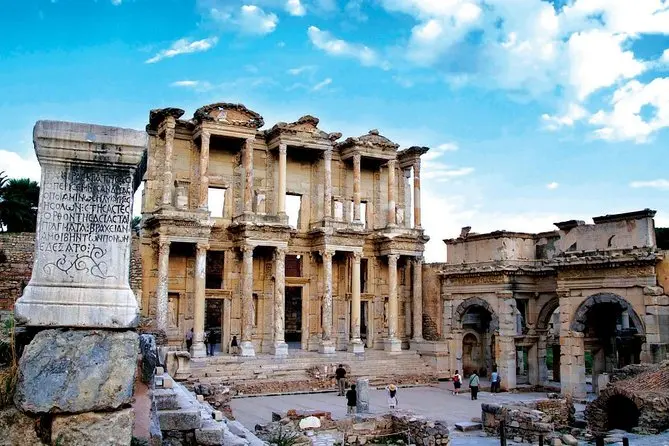
The Seven Churches of Revelation are among the most significant biblical sites in Turkey. Mentioned in the Book of Revelation in the New Testament, these seven early Christian communities were located in the Roman province of Asia, in what is now western Turkey.
The seven churches were Ephesus, Smyrna, Pergamum, Thyatira, Sardis, Philadelphia, and Laodicea. Each received a message in Revelation chapters 2 and 3, addressing its faith, challenges, strengths, and spiritual responsibilities.
Today, travelers can explore the ancient cities, archaeological remains, and historical landscapes associated with these communities. From the impressive ruins of Ephesus to the ancient streets of Laodicea, visiting the Seven Churches of Revelation offers an opportunity to understand the world of early Christianity.
This guide explores the history and biblical significance of the seven churches, their modern locations in Turkey, and the best routes for visiting them.
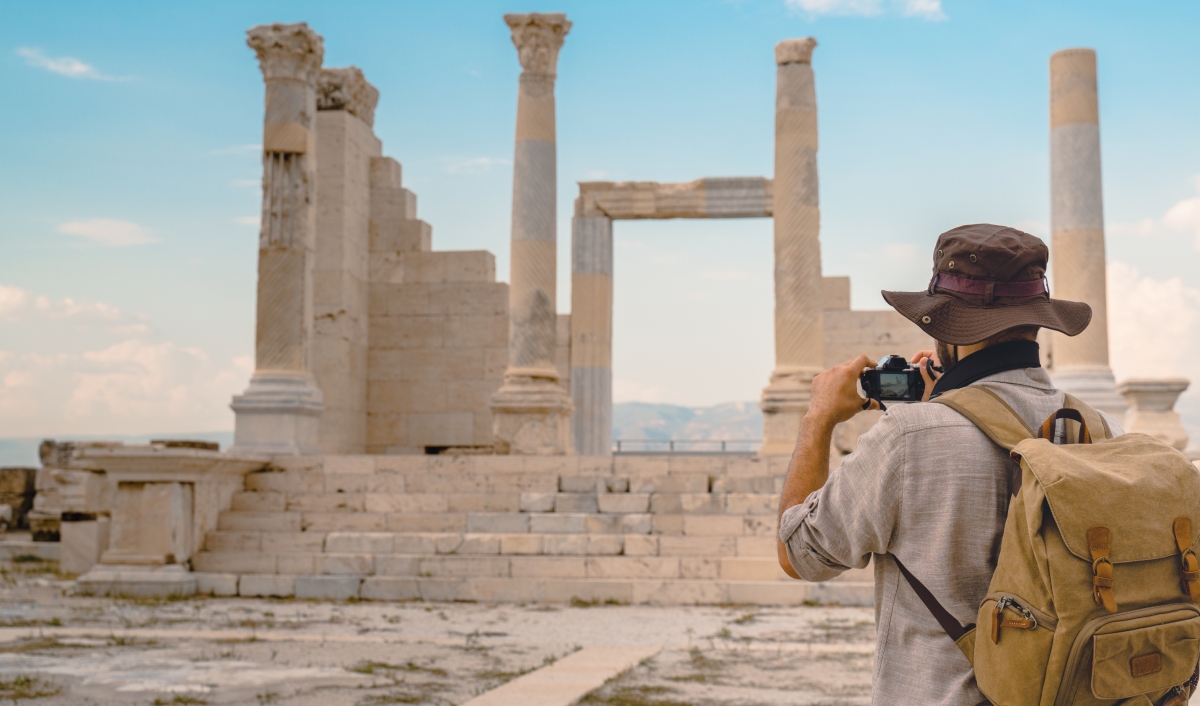
What Are the Seven Churches of Revelation?
The Seven Churches of Revelation were seven Christian congregations addressed in the opening chapters of the Book of Revelation, the final book of the New Testament.
According to Revelation 1:11, John was instructed to write what he saw and send it to seven churches in Asia: Ephesus, Smyrna, Pergamum, Thyatira, Sardis, Philadelphia, and Laodicea.
These churches were not originally seven individual church buildings. They were Christian communities living in important cities of the Roman Empire during the first century AD.
The Book of Revelation is traditionally associated with John on the island of Patmos, located in the Aegean Sea. The identity of the author, often called John of Patmos, and the precise date of composition remain subjects of scholarly discussion. Many historians date the book to the late first century, during the reign of Emperor Domitian, although earlier dates have also been proposed.
Each of the seven communities received a distinct message concerning its spiritual condition. Some were praised for perseverance and faithfulness, while others were warned about complacency, false teachings, or the loss of their original devotion.
Although the messages addressed specific ancient congregations, Christians have continued to interpret them as teachings with wider spiritual significance.
Today, the Seven Churches of Revelation are particularly important to Christian pilgrims, biblical history enthusiasts, and travelers interested in the religious heritage of ancient Anatolia.
History and Biblical Significance of the Seven Churches
The history of the Seven Churches of Revelation is closely connected to the spread of Christianity throughout Asia Minor during the first century AD.
At that time, western Anatolia was part of the Roman Empire. Its cities were connected by an extensive network of roads, ports, and commercial routes, allowing merchants, travelers, and religious ideas to move between communities.
Christianity gradually spread through this region during the apostolic period. The missionary activities of Paul and other early Christian figures helped establish congregations in several cities, particularly Ephesus.
Ephesus became an important center of early Christianity. According to the Acts of the Apostles, Paul spent a substantial period teaching there, and the city played a major role in the development of Christian communities across the Roman province of Asia.
By the time Revelation was written, Christian congregations existed in all seven cities addressed in the text.
The messages in Revelation chapters 2 and 3 reflect different challenges faced by these communities. Some experienced opposition or persecution, while others struggled with internal disagreements, religious compromise, or declining commitment.
The seven messages are traditionally summarized as follows:
ChurchMain Message in RevelationEphesusPraised for perseverance but warned about abandoning its first loveSmyrnaEncouraged to remain faithful through suffering and persecutionPergamumCommended for faithfulness but warned against compromising teachingsThyatiraPraised for love and service but criticized for tolerating false teachingSardisWarned to awaken from spiritual complacencyPhiladelphiaPraised for perseverance and encouraged to remain faithfulLaodiceaCriticized for spiritual lukewarmness and self-sufficiency
The seven churches also reflect the religious and political environment of the Roman Empire. Their cities contained temples, marketplaces, public buildings, and institutions connected to traditional Greco-Roman religion and imperial authority.
For early Christians, maintaining a distinct religious identity within these urban societies could involve significant social and religious challenges.
The messages of Revelation therefore provide insight into both early Christian beliefs and the historical circumstances of communities living in Roman Asia Minor.
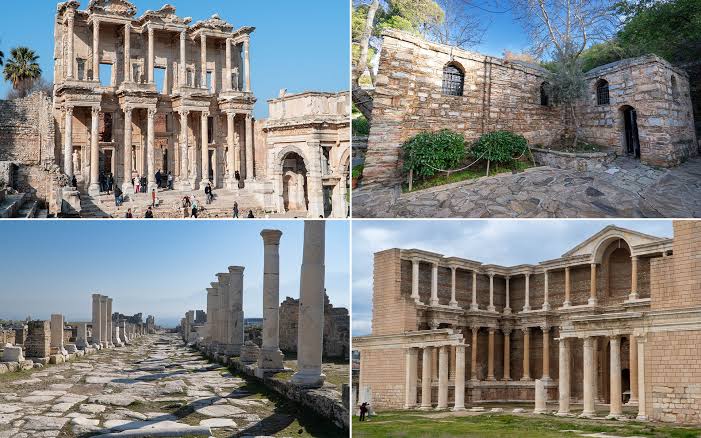
What Are the Seven Churches of Revelation?
The seven churches were located in important ancient cities across western Anatolia. Although their original Christian meeting places have not all been identified, the cities themselves can still be visited today.
1. Church of Ephesus (Ephesus)
Ephesus was one of the most influential cities of the Roman Empire and an important center of early Christianity. Located near modern Selcuk in Izmir Province, it was a major commercial, cultural, and religious destination.
The city is closely associated with the Apostle Paul, who visited Ephesus during his missionary journeys. According to the Acts of the Apostles, Paul taught there for an extended period, contributing to the growth of Christianity throughout the surrounding region.
Ephesus is also traditionally connected with the Apostle John and the Virgin Mary, although some aspects of these associations depend on later Christian traditions.
In Revelation 2:1–7, the church of Ephesus is praised for its hard work, perseverance, and rejection of false teachings. However, it is also criticized for having abandoned its first love.
The message calls the community to remember its earlier devotion and return to its original commitment.
Today, visitors can explore the remarkably preserved ruins of ancient Ephesus, including the Library of Celsus, the Great Theatre, marble streets, temples, and public buildings.
The Basilica of St. John in nearby Selcuk is another important Christian heritage site traditionally associated with the apostle.
Ephesus is often a major starting point for biblical tours departing from Izmir.
2. Church of Smyrna (Smyrna)
Smyrna was an important ancient port city located where modern Izmir stands today. Its strategic position on the Aegean coast made it one of the region's major commercial centers.
The city had a diverse population and was known for its wealth, public buildings, and strong connections to Roman imperial culture.
The Christian community of Smyrna is addressed in Revelation 2:8–11. Unlike several other churches, it receives no direct criticism.
Instead, the message acknowledges the community's suffering, poverty, and persecution while encouraging believers to remain faithful despite hardship.
Smyrna later became closely associated with Polycarp, an influential early Christian bishop who was martyred in the second century AD.
Polycarp's life and death provide important historical evidence of the development of Christianity in the region after the New Testament period.
Today, visitors can explore the Agora of Smyrna, an archaeological site preserving elements of the ancient Roman city. Although the surviving ruins are not specifically the original Christian congregation's meeting place, they help illustrate the urban environment in which the community lived.
Modern Izmir is also a convenient base for exploring several of the Seven Churches of Revelation.
3. Church of Pergamum (Pergamum)
Pergamum, also known as Pergamon, was an important political and cultural center of the ancient world. It is located in modern Bergama, north of Izmir.
Before Roman rule, Pergamum was the capital of the Attalid Kingdom and became famous for its monumental architecture, libraries, temples, and artistic achievements.
The city was also an important center of religious worship and Roman imperial authority.
In Revelation 2:12–17, Pergamum is described as the place where Satan's throne is located. The precise meaning of this expression remains debated.
Some interpretations connect it with the city's prominent pagan religious monuments, including the Great Altar of Zeus, while others emphasize its role in imperial worship. The biblical text does not explicitly identify a particular monument as Satan's throne.
The Christian community is praised for maintaining its faith despite opposition, but it is also warned against accepting teachings viewed as spiritually compromising.
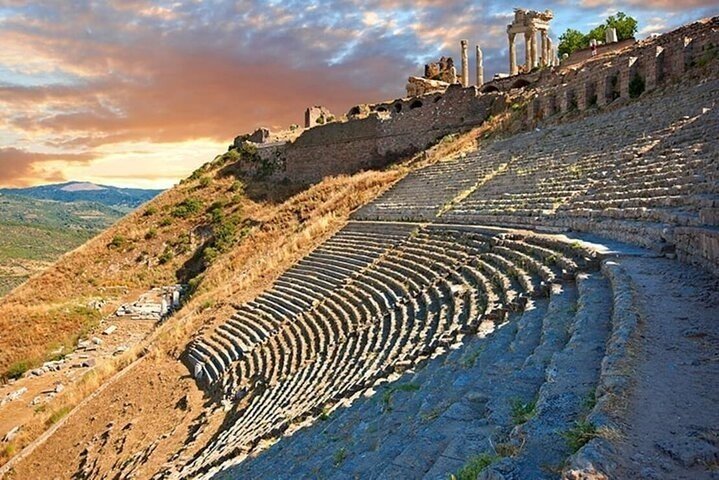
Today, the ancient city of Pergamon is a UNESCO World Heritage Site. Visitors can explore the Acropolis, steep ancient theatre, temple remains, and other archaeological structures.
The Red Basilica, a large Roman-period religious complex later adapted for Christian use, is another significant landmark in Bergama.
Pergamum is included in many extended Seven Churches biblical tours in Turkey.
4. Church of Thyatira (Thyatira)
Thyatira was an ancient city located in present-day Akhisar, in Manisa Province.
During the Roman period, Thyatira was known for its commercial activity and skilled craftspeople. The city had associations with textile production, dyeing, metalworking, and various trade organizations.
Thyatira is also connected to Lydia, a seller of purple goods mentioned in Acts 16:14. She was originally from Thyatira and became one of the earliest recorded Christian converts in Philippi.
In Revelation 2:18–29, the Christian community of Thyatira is praised for its love, faith, service, and perseverance.
However, it is criticized for tolerating a figure symbolically called Jezebel, who is accused of encouraging practices regarded as incompatible with Christian teaching.
The message emphasizes faithfulness and warns against religious compromise.
Today, the archaeological remains of ancient Thyatira are relatively limited compared with Ephesus or Pergamum.
Visitors can see surviving columns, architectural fragments, and other remains within modern Akhisar. Despite the smaller archaeological site, Thyatira remains an essential destination for travelers following the complete Seven Churches route.
5. Church of Sardis (Sardis)
Sardis was the ancient capital of the Kingdom of Lydia and one of the wealthiest cities of the ancient world.
Located near modern Sart in Manisa Province, Sardis is particularly famous for its association with King Croesus, whose legendary wealth became a symbol of prosperity.
The city later came under Persian, Greek, and Roman rule, retaining its importance as a regional center.
In Revelation 3:1–6, the church of Sardis receives one of the strongest warnings among the seven communities.
It is described as having a reputation for being alive while spiritually dead.
The message urges the congregation to awaken, strengthen what remains, and return to its earlier commitment.
This contrast between outward reputation and inner condition is often interpreted as the central lesson of the message to Sardis.
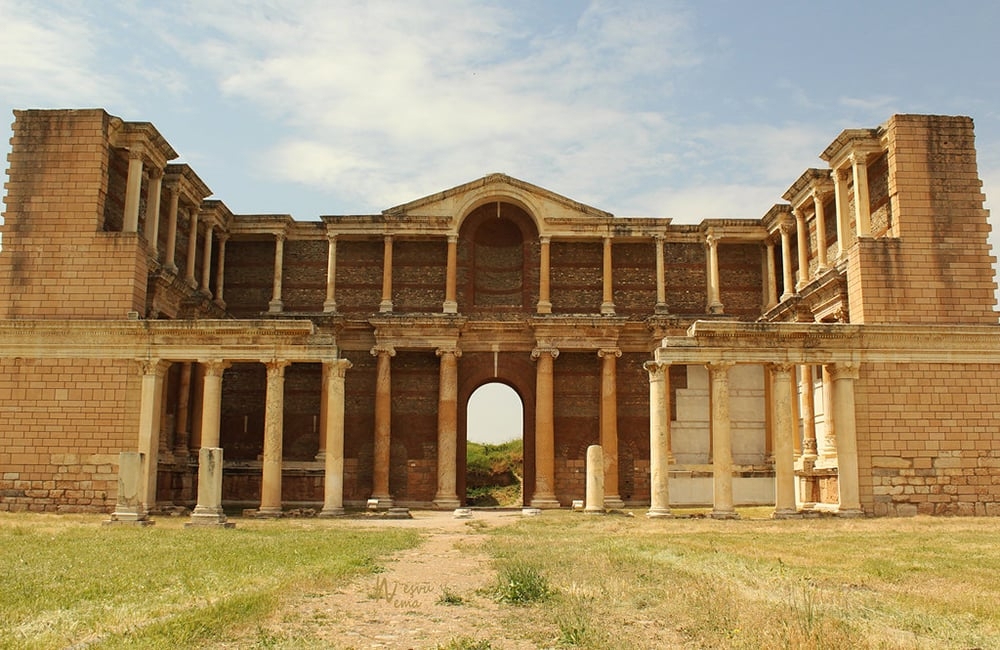
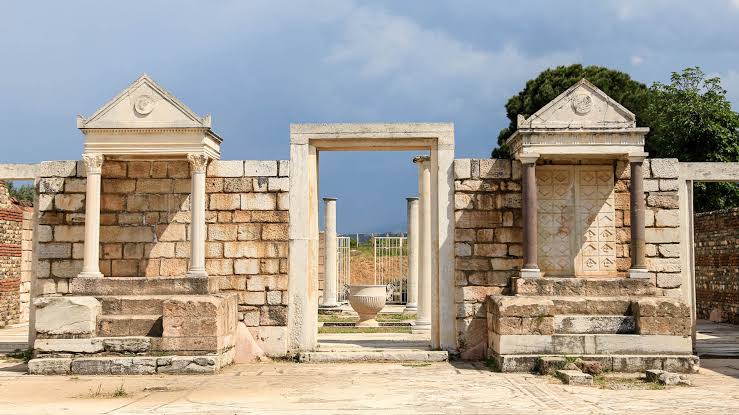
Today, Sardis contains impressive archaeological remains, including the Temple of Artemis, a reconstructed Roman gymnasium complex, and the remains of a large ancient synagogue.
These structures demonstrate the city's cultural and religious diversity during the Roman period.
Visitors following a 10-day Seven Churches biblical itinerary can explore Sardis alongside the other ancient Christian communities of western Turkey.
6. Church of Philadelphia (Philadelphia)
Philadelphia was an ancient city located in modern Alasehir, Manisa Province.
Founded during the Hellenistic period, the city became an important settlement along regional trade routes and was known for its agricultural surroundings.
Philadelphia was also affected by earthquakes, including the major earthquake of AD 17 that damaged several cities in western Anatolia.
The Christian community of Philadelphia is addressed in Revelation 3:7–13.
Like Smyrna, Philadelphia receives praise without a direct condemnation of its spiritual condition.
The message recognizes the community's limited strength but praises its faithfulness and perseverance.
One of the most recognizable expressions associated with Philadelphia is the promise of an open door that no one can shut.
In Christian interpretation, this passage has often been associated with opportunity, faithfulness, and divine protection.
Today, Philadelphia's ancient remains are scattered throughout modern Alasehir.
Among the notable Christian heritage sites are the surviving monumental pillars of a Byzantine church traditionally associated with St. John.
Although these structures date to a later period than the Book of Revelation, they demonstrate the continuing importance of Christianity in the city.
7. Church of Laodicea (Laodicea)
Laodicea was a prosperous ancient city located near modern Denizli, not far from Pamukkale and Hierapolis.
During the Roman period, it was known for commerce, banking, textile production, and medical activity.
Its wealth and economic success provide important context for the message addressed to its Christian community.
In Revelation 3:14–22, Laodicea receives a strong warning about spiritual lukewarmness.
The message famously describes the congregation as neither cold nor hot and criticizes its confidence in material wealth despite its perceived spiritual poverty.
One commonly discussed interpretation connects the hot and cold imagery to regional water conditions, although the exact historical meaning remains debated.
The message calls the community toward repentance and renewed commitment.
Laodicea is also mentioned in the New Testament's Letter to the Colossians, reflecting its connection with other early Christian communities in the Lycus Valley.
Today, the archaeological site of Laodicea includes monumental streets, theatres, temples, baths, and the remains of an early Christian church complex.
The site's excavations and restoration projects have revealed significant evidence of its religious and urban history.
Because Laodicea is close to Pamukkale, travelers can conveniently combine both destinations within the same itinerary.
Where Are the Seven Churches of Revelation Located? Map and Locations
All Seven Churches of Revelation are located in modern-day Turkey, specifically in the western provinces of Izmir, Manisa, and Denizli.
In the first century AD, these cities belonged to the Roman province of Asia. Their positions along established roads made communication and travel between the communities possible.
The seven churches form a historical route extending from the Aegean coast into the interior of western Anatolia. Their sequence in the Book of Revelation broadly follows a practical circular travel route through the region.
Ancient ChurchModern LocationProvinceEphesusSelcukIzmirSmyrnaIzmirIzmirPergamumBergamaIzmirThyatiraAkhisarManisaSardisSart, near SalihliManisaPhiladelphiaAlasehirManisaLaodiceaNear DenizliDenizli
Although all seven locations can be visited today, the surviving archaeological remains differ significantly.
Ephesus, Pergamum, Sardis, and Laodicea contain extensive ancient structures, while Thyatira and Philadelphia have more limited remains within modern towns. Smyrna's ancient archaeological heritage survives alongside the modern city of Izmir.
It is important to understand that these archaeological sites represent the cities where the early Christian communities lived, rather than seven preserved first-century church buildings.
Best Route to Visit the Seven Churches of Revelation
The Seven Churches of Revelation can be explored on a multi-day journey through western Turkey.
Izmir is one of the most convenient starting points because it has an international airport, accommodation options, and good road connections to several biblical destinations.
A route following the order mentioned in Revelation begins at Ephesus, continues north to Smyrna and Pergamum, and then travels inland through Thyatira, Sardis, Philadelphia, and Laodicea.
Travelers can complete a relatively focused visit in approximately four days, although five to seven days allows more time to explore the archaeological sites, learn about biblical history, and include nearby attractions.
A suggested itinerary is:
Day 1: Visit Ephesus, the Basilica of St. John, and Smyrna in Izmir.
Day 2: Explore Pergamum in Bergama and continue to Thyatira in Akhisar.
Day 3: Visit Sardis near Salihli and Philadelphia in Alasehir.
Day 4: Explore Laodicea near Denizli and, if time allows, visit Pamukkale and Hierapolis.
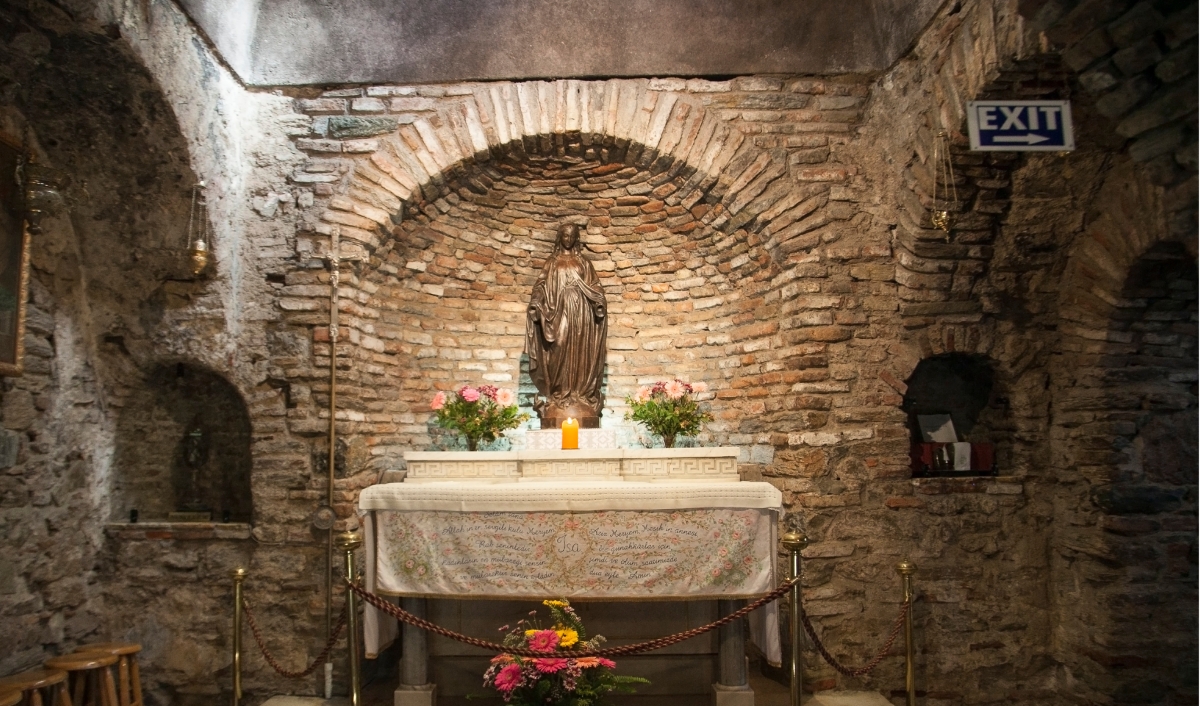
Travelers with additional time can extend their journey to other important Christian heritage sites, including the House of the Virgin Mary near Ephesus, the ancient city of Hierapolis, and the island of Patmos in Greece.
Patmos is especially significant because the Book of Revelation identifies it as the place where John received his visions. However, Patmos is not one of the seven churches and is located outside Turkey.
Spring and autumn are generally comfortable seasons for visiting the Seven Churches, as western Turkey can become particularly hot during July and August.
For visitors who prefer a guided experience, organized biblical tours can simplify transportation between the ancient cities and provide historical context for the passages in Revelation.
Seven Churches of Revelation Tours in Turkey
Visiting the Seven Churches of Revelation is an opportunity to explore the historical settings of the New Testament while discovering the archaeological and cultural heritage of western Turkey.
TravelShopBooking offers biblical and Christian heritage itineraries with different durations, routes, and combinations of destinations.
Travelers planning a shorter journey can explore the 5 Days Biblical Tour Izmir or the Seven Churches of Revelation 2 Nights 3 Days Tour.
For a more extensive biblical journey, the Seven Churches Tour – 9 Nights 10 Days and 10 Days Seven Churches Tour provide longer itinerary options.
Travelers can also consider the Seven Churches of Revelation 7 Nights 8 Days Tour, designed for visitors interested in exploring the region's biblical heritage over several days.
Those wishing to combine Christian history with Turkey's major cultural destinations can explore the Seven Churches of Revelation and Istanbul Tour or the Seven Churches Turkey Highlights Tour – 13 Nights 14 Days.
For travelers interested in the wider history of early Christianity, additional itineraries include:
These itineraries offer different ways to experience the historical landscapes associated with the New Testament, from shorter regional visits to extended journeys combining biblical sites and major Turkish attractions.
Before booking, travelers should review the exact itinerary, departure dates, included destinations, accommodation, and transportation arrangements to ensure the tour covers the sites they wish to visit.
Frequently Asked Questions
What Are the Seven Churches Mentioned in Revelation?
The Seven Churches of Revelation are Ephesus, Smyrna, Pergamum, Thyatira, Sardis, Philadelphia, and Laodicea. They are addressed in Revelation chapters 2 and 3 of the New Testament.
Where Are the Seven Churches of Revelation Today?
All seven churches were located in ancient Asia Minor, within present-day western Turkey. Their locations are found in the modern provinces of Izmir, Manisa, and Denizli.
Why Were These Seven Churches Chosen in Revelation?
The Book of Revelation does not explicitly explain why these seven communities were selected. One historical explanation is that they were important Christian congregations connected by established Roman roads. The number seven also carries symbolic significance in the Book of Revelation.
Do the Seven Churches of Revelation Still Exist?
The ancient cities and archaeological sites associated with the seven churches can still be visited. However, the original first-century Christian congregations and their meeting places have not all survived as identifiable structures.
Which of the Seven Churches Is the Most Famous?
Ephesus is among the best-known destinations because of its extensive archaeological remains and its connections to the Apostle Paul, the Apostle John, and early Christian history.
What Is the Connection Between the Seven Churches and the Apostle John?
The Book of Revelation identifies its author as John and states that he was on the island of Patmos. According to the text, he was instructed to send messages to seven Christian congregations in Asia Minor. Christian tradition often identifies this John with the Apostle John, although scholars debate the authorship.
How Many Days Do You Need to Visit the Seven Churches?
A focused itinerary can cover the seven locations in approximately four days. Five to seven days provides more time for archaeological exploration, biblical interpretation, and additional attractions such as Pamukkale and Hierapolis.
Can You Visit All Seven Churches on One Tour?
Yes. Several guided biblical itineraries include all seven historical locations. Travelers should check each tour's day-by-day program to confirm which archaeological sites and related Christian landmarks are included.
Are the Seven Churches of Revelation in Israel?
No. Although the Seven Churches of Revelation are mentioned in the New Testament, all seven were located in the Roman province of Asia, in present-day western Turkey.
Is Patmos One of the Seven Churches of Revelation?
No. Patmos is the Greek island associated with John's visions in the Book of Revelation. It is historically connected to the seven churches but is not one of the seven congregations addressed in Revelation chapters 2 and 3.
Loading comments…