
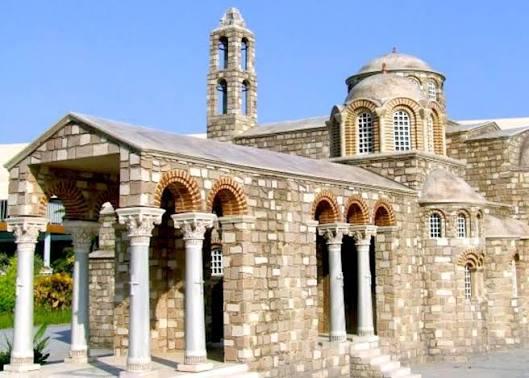
St. Nicholas Church, located in Demre in Antalya Province, is one of Turkey's most important historical and religious landmarks. The church is closely associated with Saint Nicholas, a 4th-century Christian bishop whose reputation for generosity and kindness eventually inspired the modern figure of Santa Claus.
Unlike the fictional image of Santa Claus living at the North Pole, the historical Saint Nicholas lived in the ancient region of Lycia, on the Mediterranean coast of present-day Turkey. He served as Bishop of Myra, an important city during the Roman and Byzantine periods, and became widely respected for his charitable acts and religious devotion.
Today, St. Nicholas Church attracts travelers interested in Christian history, Byzantine architecture, ancient Lycia, and the origins of Christmas traditions. The church is particularly significant because it preserves the memory of the historical figure behind one of the world's most recognizable Christmas legends.
Where Is St. Nicholas Church Located?
St. Nicholas Church is located in Demre, a district of Antalya Province on Turkey's southwestern Mediterranean coast. In ancient times, the area was known as Myra, one of the most important cities of the Lycian region.
The church stands near the center of modern Demre, approximately 145 kilometers southwest of Antalya city center. It is also close to several important historical attractions, including the ancient city of Myra and its impressive Lycian rock-cut tombs.
Demre is surrounded by Mediterranean landscapes, agricultural valleys, and coastal settlements. Although the town is relatively small, its historical importance is considerable because of its connection to Saint Nicholas and the ancient Lycian civilization.
The church is sometimes called the Church of Santa Claus, the Church of St. Nicholas, or the St. Nicholas Memorial Museum. These names refer to the same historical religious complex.
For visitors exploring southern Turkey, St. Nicholas Church can be combined with nearby archaeological attractions, making Demre an important destination for both cultural and religious tourism.
History of St. Nicholas Church
The history of St. Nicholas Church is closely connected to the life and religious legacy of Saint Nicholas, who served as Bishop of Myra during the 4th century AD.
Saint Nicholas is traditionally believed to have died around AD 343. Following his death, his burial place became an important destination for Christian pilgrims who honored his memory and reputation for generosity.
The church complex visible today developed over several centuries, particularly during the Byzantine period. Earlier religious structures were damaged or altered over time, and the site underwent reconstruction and expansion.
By the 6th century, Myra had become an important center of devotion to Saint Nicholas. The church was developed as a place of worship and pilgrimage, attracting visitors from different parts of the Christian world.
During the Middle Ages, the church continued to hold considerable religious significance. However, the surrounding region experienced political changes, environmental challenges, and periods of decline.
One of the most important events in the church's history occurred in 1087, when sailors and merchants from Bari, Italy, removed a substantial portion of the relics traditionally identified as those of Saint Nicholas and transported them to their home city.
These relics were subsequently placed in the Basilica of Saint Nicholas in Bari, which became another major pilgrimage destination.
During the 19th century, restoration work was undertaken at the church in Demre, including efforts supported by Russian patrons who regarded Saint Nicholas as an especially important religious figure.
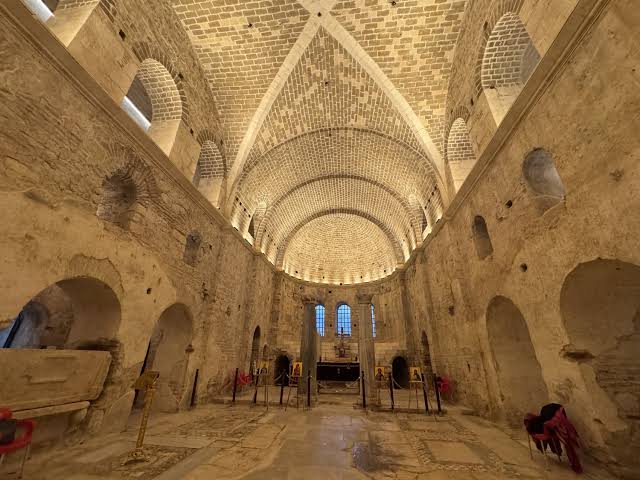
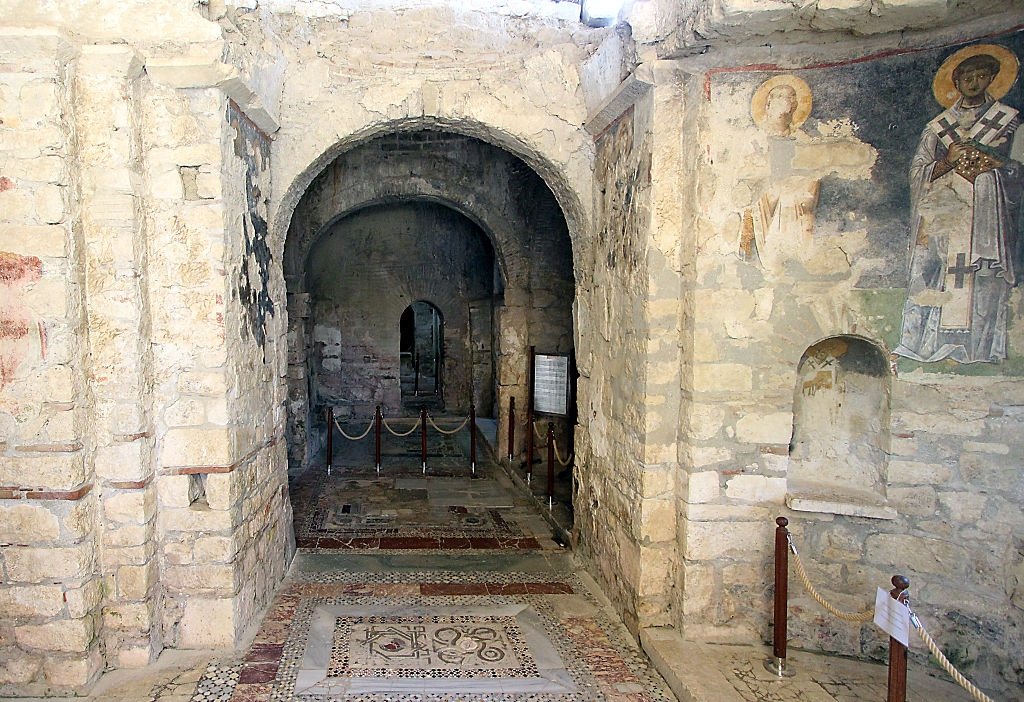
Archaeological excavations and conservation projects in the modern period have helped reveal the church's architectural history, floor mosaics, frescoes, and different construction phases.
Today, St. Nicholas Church is preserved as a museum and historical monument, providing visitors with an opportunity to explore one of the most significant sites associated with the origins of the Santa Claus tradition.
Who Was Saint Nicholas and How Is He Connected to Santa Claus?
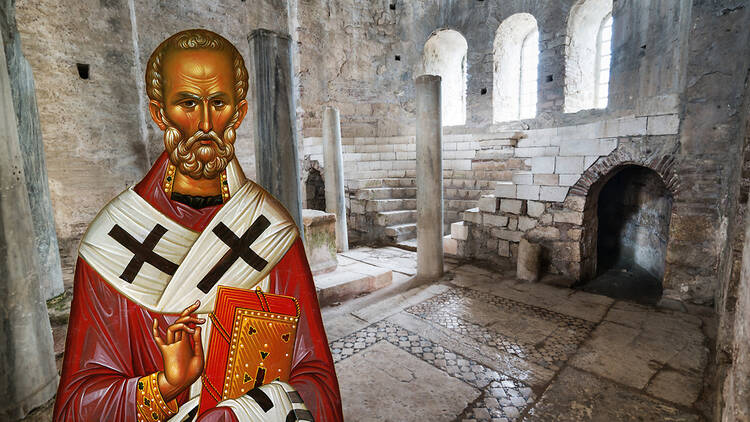
Saint Nicholas was a Christian bishop who lived during the late 3rd and early 4th centuries AD. He is traditionally believed to have been born in Patara, an ancient Lycian city located in present-day Antalya Province.
He later became Bishop of Myra, where he gained a reputation for helping people in need, protecting children, and giving gifts anonymously.
Although relatively few details of his life can be confirmed through contemporary historical records, stories about his generosity spread widely throughout the Christian world.
One of the best-known legends describes Saint Nicholas secretly providing money to help three young women from a poor family. According to the story, he gave gold to their father so the daughters could avoid poverty and secure their futures.
This tradition of anonymous gift-giving became one of the foundations of his association with Christmas generosity.
Over the centuries, Saint Nicholas became particularly popular in European Christian traditions.
In the Netherlands, he became known as Sinterklaas, a figure associated with giving presents to children. Dutch traditions later influenced the development of Santa Claus in North America.
During the 19th and 20th centuries, literature, illustrations, and popular culture gradually transformed Santa Claus into the familiar character with a red suit, white beard, sleigh, and reindeer.
However, the historical origins of this figure can be traced back to Saint Nicholas of Myra.
Did the Real Santa Claus Live in Turkey?
Yes, the historical Saint Nicholas lived in the territory of present-day Turkey, although the modern Santa Claus character developed much later through European and American traditions.
Saint Nicholas was associated with Patara and Myra, both located in ancient Lycia. He lived centuries before the creation of the modern image of Santa Claus.
The story of Santa Claus therefore combines the legacy of a real Christian bishop with folklore and cultural traditions that developed over many generations.
For travelers interested in discovering the origins of Santa Claus, Demre provides a direct geographical connection to the life and legacy of Saint Nicholas.
Where Is Saint Nicholas Buried?
Saint Nicholas is traditionally believed to have been buried in Myra, where his tomb became an important Christian pilgrimage site.
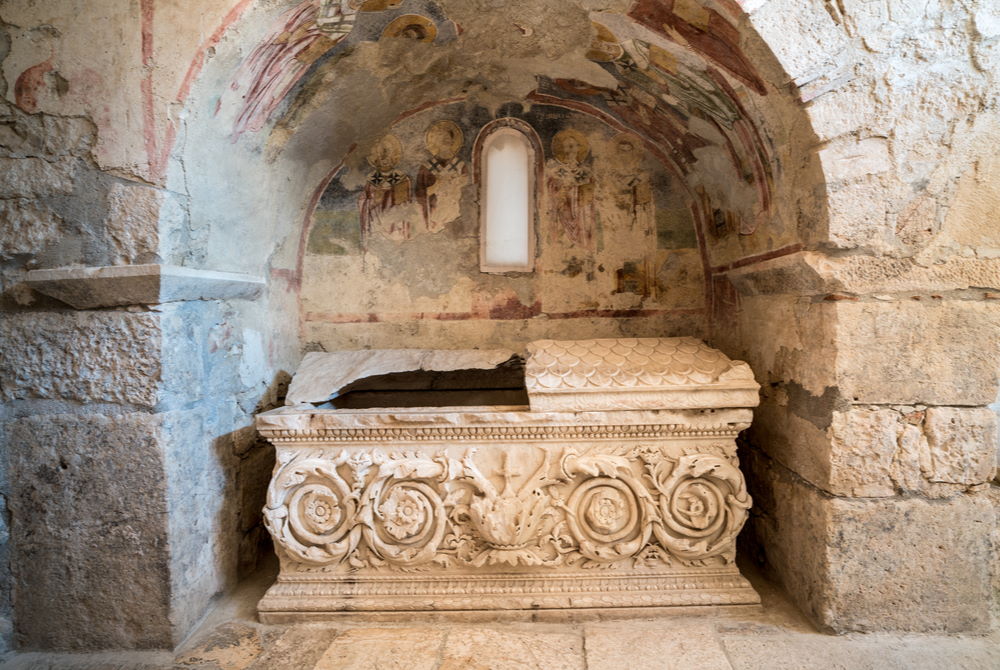
His original burial place is associated with St. Nicholas Church in modern Demre. The church contains a stone sarcophagus traditionally linked to the saint, although its precise relationship to his original burial remains a subject of historical and archaeological study.
In 1087, sailors and merchants from Bari, Italy, removed a large portion of the relics believed to belong to Saint Nicholas and transported them to Bari.
The relics were placed in the Basilica di San Nicola, where they remain an important part of the city's religious heritage.
Other relics attributed to Saint Nicholas have also been associated with Venice and additional religious institutions.
As a result, the question of where Saint Nicholas is buried has more than one historical dimension.
His original burial tradition belongs to Myra in Turkey, while the principal relics traditionally associated with him are preserved in Bari, Italy.
The church in Demre remains particularly important because it is directly connected to the place where Saint Nicholas served as bishop and was traditionally buried.
How to Get to St. Nicholas Church
St. Nicholas Church is located in the center of Demre, making it accessible from several popular destinations along Turkey's Mediterranean coast.
Visitors can reach Demre by private vehicle, public transportation, or organized sightseeing tours.
From Antalya
Demre is approximately 145 kilometers from Antalya city center. The drive generally takes around two and a half to three hours, depending on traffic and road conditions.
The coastal route passes through scenic Mediterranean landscapes and towns along the way.
Travelers staying in Antalya can combine St. Nicholas Church with other historical attractions in the region, particularly the ancient city of Myra.
From Kas
Demre is approximately 45 kilometers from Kas. The drive usually takes around 45 minutes to one hour.
This makes St. Nicholas Church a convenient cultural excursion for travelers staying in Kas or exploring the western Antalya coastline.
From Kemer
Demre is approximately 100 kilometers from Kemer, with a typical driving time of around one and a half to two hours.
Visitors can explore the church as part of a longer excursion through the Lycian region.
Nearby Historical Attractions
St. Nicholas Church is close to the ancient city of Myra, famous for its Lycian rock-cut tombs and Roman theatre.
Another popular destination is Kekova, known for its coastal scenery and submerged archaeological remains.
Combining these attractions allows visitors to explore both the Christian heritage and ancient Lycian history of the region.
St. Nicholas Church Entrance Fee and Opening Hours
St. Nicholas Church operates as a museum and archaeological attraction under Turkey's Ministry of Culture and Tourism.
Visitors generally need an entrance ticket to explore the church complex, including its historical architecture, mosaics, frescoes, and burial-related features.
Admission prices may differ depending on visitor category, age, and applicable museum-pass arrangements.
The church generally opens in the morning, but closing times can vary between summer and winter. Seasonal schedules, religious activities, restoration projects, and conservation work may also affect access to certain sections.
Travelers should confirm the latest entrance fees and opening hours before visiting rather than relying on outdated ticket information.
Most visitors should allow approximately 45 minutes to one hour to explore the church, although travelers with a particular interest in Byzantine architecture or Christian history may wish to spend longer.
The best time to visit is generally during the morning or late afternoon, particularly in summer when temperatures along the Mediterranean coast can be high.
Frequently Asked Questions
Was Santa Claus Really Born in Turkey?
The historical Saint Nicholas, who inspired the Santa Claus tradition, is traditionally believed to have been born in Patara, an ancient city in present-day Antalya Province, Turkey. The modern Santa Claus character developed much later from European and American Christmas traditions.
Is St. Nicholas Church the Original Home of Santa Claus?
St. Nicholas Church is associated with the historical bishop who inspired Santa Claus, but it was not his birthplace or necessarily his personal residence. The church is primarily connected to his religious legacy and traditional burial place in Myra.
How Old Is St. Nicholas Church in Demre?
The church complex developed over several centuries, with important construction phases dating to the Byzantine period. Its religious origins are connected to the 4th-century life and death of Saint Nicholas.
Is Saint Nicholas Buried in Turkey or Italy?
Saint Nicholas was traditionally buried in Myra, present-day Demre, Turkey. In 1087, a substantial portion of the relics attributed to him was transported to Bari, Italy, where they remain in the Basilica di San Nicola.
Is St. Nicholas Church Still Used for Worship?
St. Nicholas Church primarily operates as a historical museum. However, special religious ceremonies have occasionally been permitted because of its importance to Orthodox and other Christian communities.
Is St. Nicholas Church Worth Visiting?
St. Nicholas Church is especially interesting for visitors who want to discover the historical origins of Santa Claus, explore Byzantine architecture, or learn about Christianity in ancient Lycia. Its proximity to Myra and Kekova also makes it a valuable stop on a cultural itinerary.
How Long Does It Take to Visit St. Nicholas Church?
Most visitors spend approximately 45–60 minutes exploring the church. Travelers who also visit Myra Ancient City and Kekova should plan additional time for transportation and sightseeing.
Loading comments…