
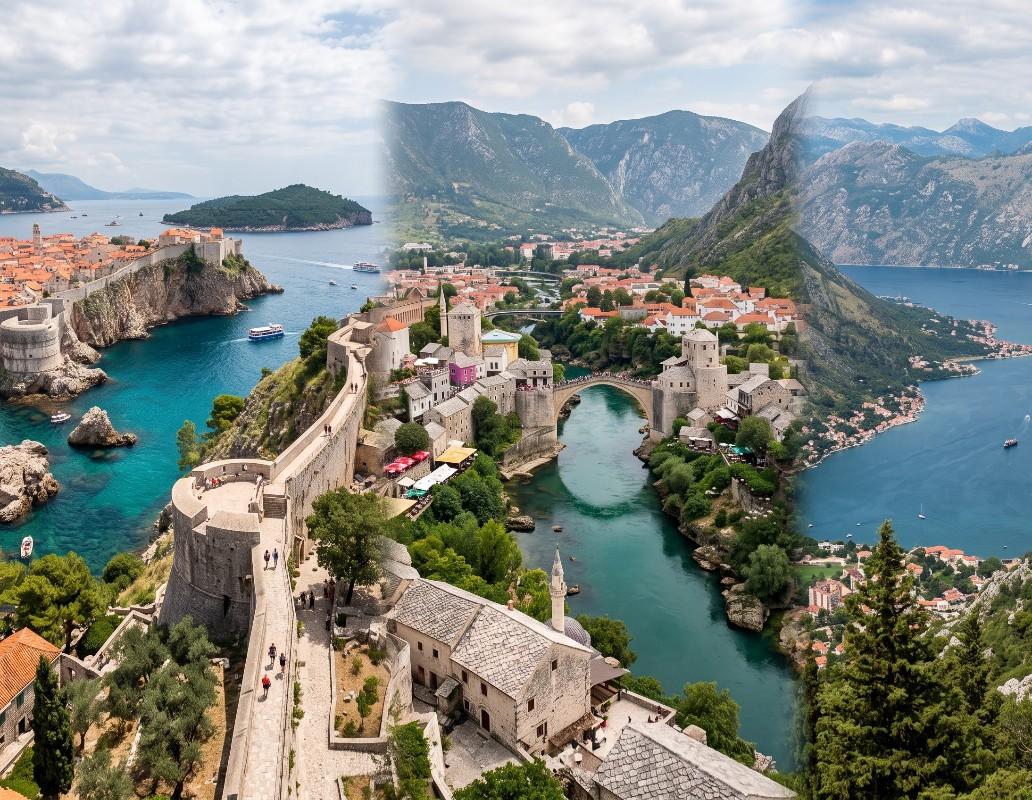
I still remember the first time I saw photos of the Balkans and honestly thought they were edited. The colors looked too sharp, the water too clear, and the old towns too perfect to be real. But when you actually get there, you realize nothing is exaggerated.
This route through Croatia, Bosnia and Herzegovina, and Montenegro feels like three completely different worlds stitched together into one trip. It’s not just about sightseeing. It’s about experiencing how quickly landscapes, cultures, and even food can change within a few hours of driving.
Let’s go through the highlights step by step.
Stop 1: Dubrovnik, Croatia, The Pearl of the Adriatic
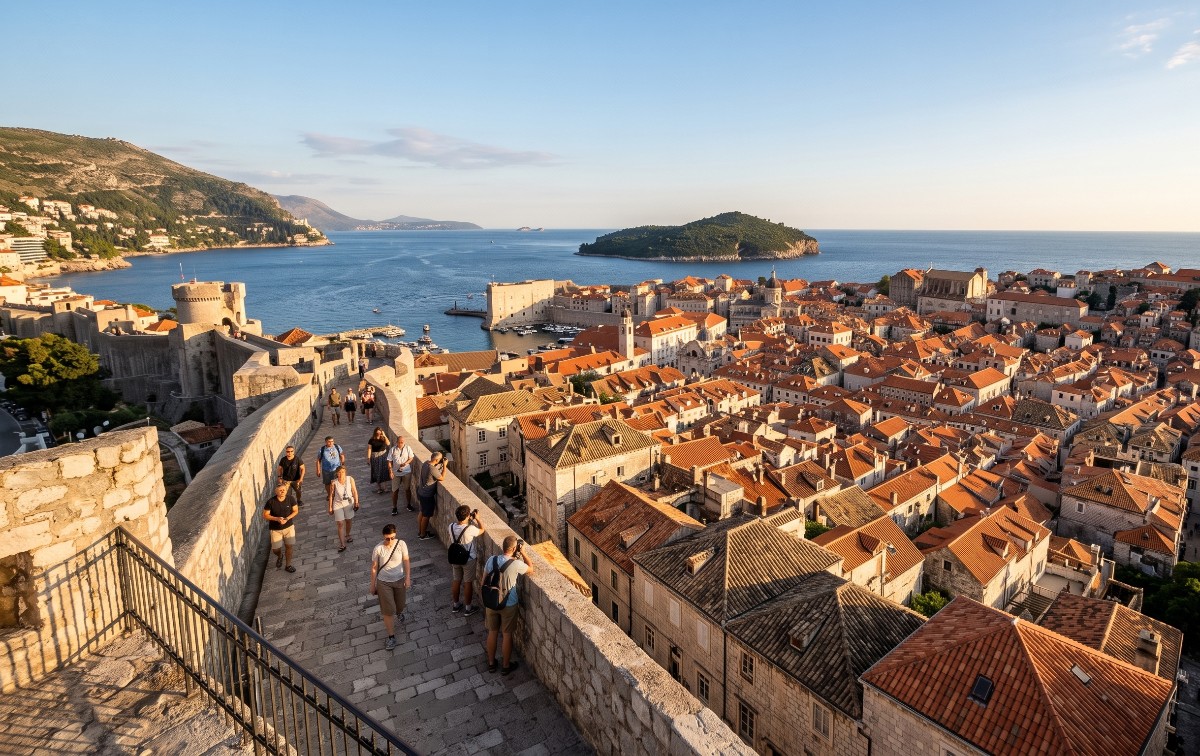
Dubrovnik is one of those places that almost forces you to slow down. The moment you step into the Old Town and walk along the limestone streets of the Stradun, it feels like time shifts a little.
One of the best things I can recommend is very simple. Go early. Not kind of early, but right when the city walls open. The light is soft, the streets are quiet, and you’ll actually hear your footsteps instead of crowds.
Walking the city walls gives you that classic Dubrovnik view. Terracotta rooftops on one side and deep blue Adriatic waters on the other. It’s the kind of contrast you don’t forget easily.
A small but important tip. The restaurants right in the center can be expensive and honestly a bit predictable. If you wander just a few streets uphill, you’ll find small family run places where the food feels more local and less tourist focused. I once ended up in a tiny konoba where the seafood risotto cost half the price and tasted better than anything I had on the main square.
Stop 2: Mostar, Bosnia and Herzegovina, Where East Meets West
Crossing into Bosnia and Herzegovina feels like entering a different rhythm of life. The scenery becomes greener, quieter, and more mountainous as you approach Mostar.
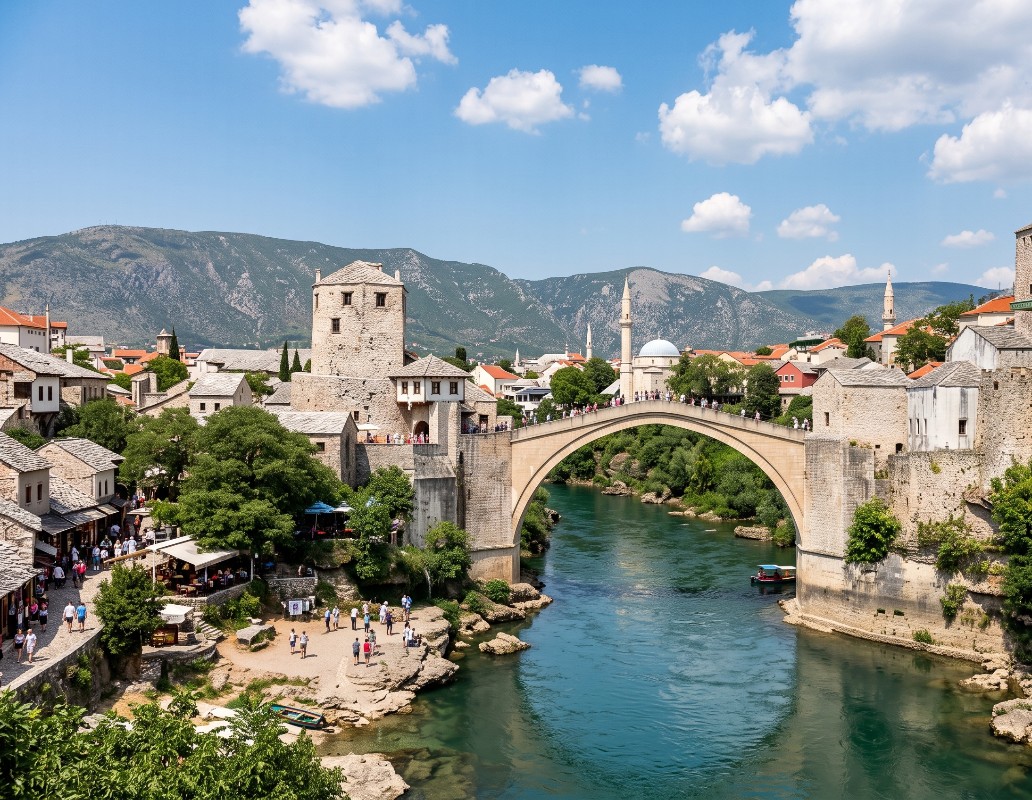
The heart of the city is the famous Stari Most (Old Bridge). Standing over the Neretva River, it looks almost impossibly elegant for something built in the sixteenth century. If you’re lucky, you might see local divers jump from the bridge. It is a tradition that takes real courage given the height and cold water below.
But Mostar isn’t just about the bridge.
Take your time walking through Kujundžiluk, the old bazaar. This is where you really feel the mix of cultures. Ottoman style architecture, the smell of Bosnian coffee being prepared in copper pots, and small workshops where artisans still work by hand. It’s one of those places where you don’t need a plan. Just walk slowly and let it unfold.
I’d also suggest sitting down for a traditional Bosnian coffee at least once. It’s strong, served slowly, and honestly, it’s more of a ritual than a drink.
Stop 3: Perast and the Bay of Kotor, Montenegro, A Quiet Coastal Masterpiece
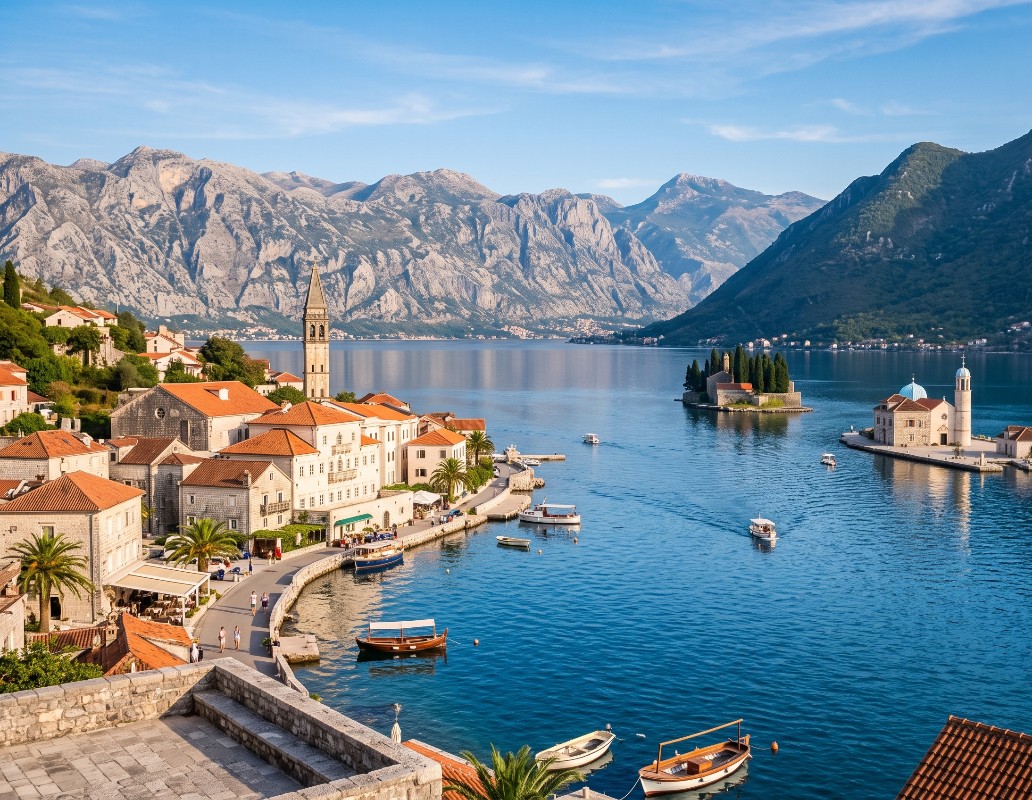
From Mostar, the journey into Montenegro becomes more scenic with every turn. The Bay of Kotor is often called a fjord, and when you first see it, you’ll understand why people use that comparison.
Before you reach Kotor itself, stop in **Perast. It is a small peaceful village where life feels slower in the best way. From the shore, you can take a short boat ride to Our Lady of the Rocks (Gospa od Škrpjela), a tiny man made island with a blue domed church surrounded by legends and local stories.
It’s the kind of place where you don’t really rush anything. You just take it in.
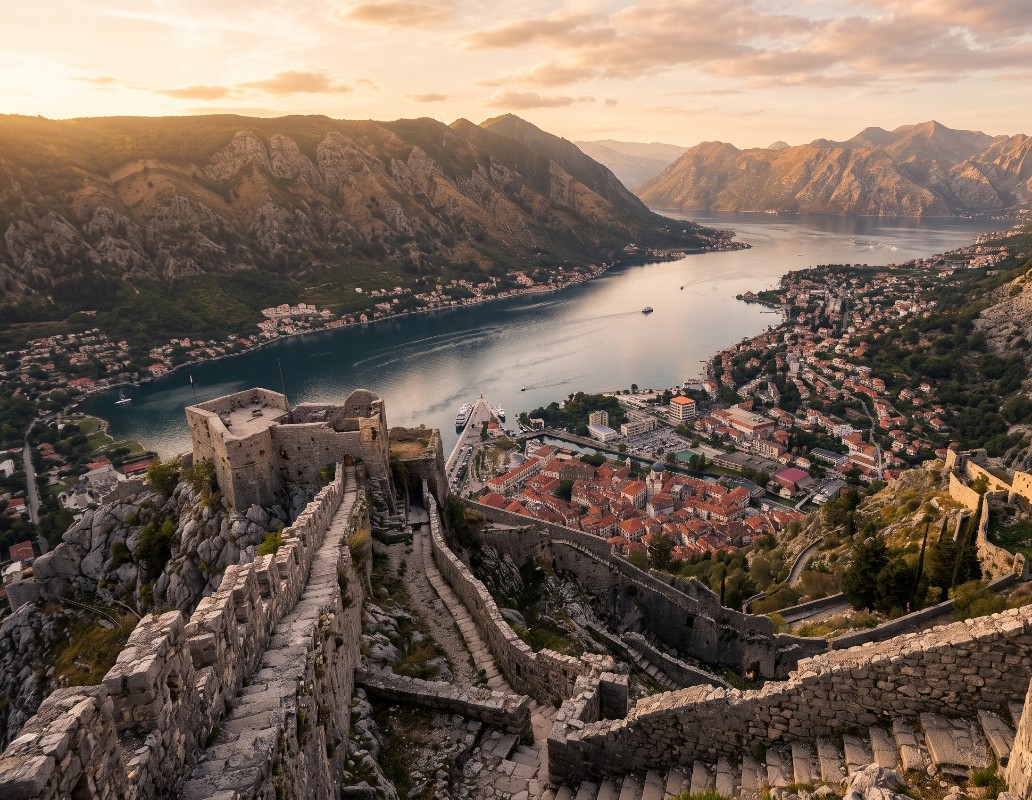
Then continue to Kotor Old Town, surrounded by Venetian walls and mountains that seem to rise straight from the sea. If you feel up for it, the climb to the Castle of San Giovanni is steep, over one thousand steps, but the view at the top is one of the best in the entire region. Watching the sun drop over the bay from up there feels almost unreal.
Final Travel Hacks for Your Balkan Journey
A few practical things can make your trip much smoother.
Currency is one of them. Croatia and Montenegro use the Euro, while Bosnia and Herzegovina uses the Convertible Mark (BAM). It’s worth carrying a bit of cash, especially for small cafés, local markets, or rural stops where cards may not always work.
Border crossings are another detail people sometimes underestimate. Since you’re moving between countries, keep your passport somewhere easy to access, preferably in a small daypack pocket rather than buried in your luggage.
Also, don’t try to rush this route. The Balkans are not just about ticking off destinations. The real beauty is in the in between moments, the road views, the small cafés, and the unexpected stops you didn’t plan for.
Final Thoughts
This region has a way of staying with you long after you leave. It’s not just the landscapes, but the feeling of moving through places that each have their own identity, history, and pace of life.
If you give yourself enough time and travel it slowly, this Balkan route becomes more than a trip. It becomes a collection of moments you’ll keep replaying in your mind.
And honestly, that’s what makes it worth it.
Loading comments…