
Adıyaman Museum Collections
Europe, Turkey
Museum Information
Opening Hours
09:00 – 17:00
Open Days
About Adıyaman Museum Collections
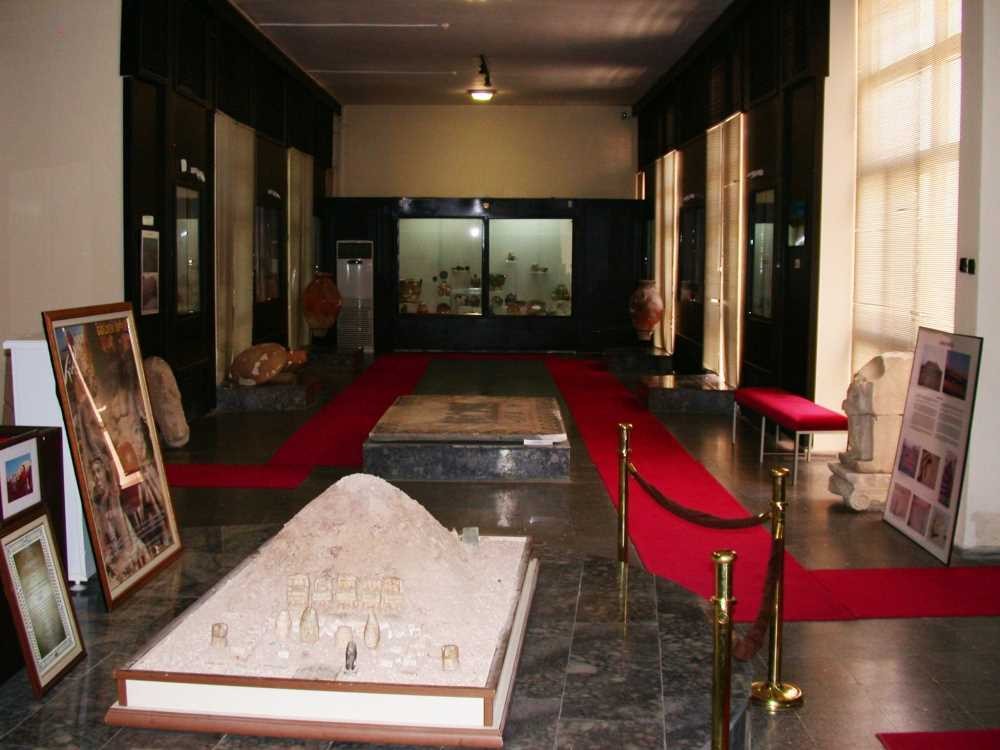
The museum features three main collections: Archaeology,
Ethnography, and Numismatics. Highlights include a rich selection
of artifacts from the Kingdom of Commagene (163 BC – 72 AD).
Key Artifacts
- Head of King Antiochos I – Discovered
during the 1983 Samsat excavations, this piece is one of the museum’s most
important archaeological treasures.
- Kilisik Cult Statue (7500–7000 BC) –
Unearthed in Kahta in 1970, this unique Neolithic statue draws attention
with its stylistic similarity to the sculptures of Göbekli Tepe.
Archaeological
Highlights
Visitors can explore objects from the Paleolithic to the
Ottoman periods, including:
- Paleolithic flint hand axes and tools
- Neolithic obsidian and flint arrowheads
- Chalcolithic terracotta vessels
- Bronze Age spearheads
- Iron Age hieroglyphic inscriptions and ornamental items
- Hellenistic and Roman statues, mosaics, inscriptions, and daily-use
ceramics
- Byzantine pottery and small finds
- Seljuk glazed ceramics, glass artifacts
- Ottoman-era household items
- Extensive gold, silver, and bronze coin collections
Ethnographic Section
The Ethnography Hall displays:
- Traditional carpets, kilims, and cicims
- Regional men’s and women’s clothing
- Silver jewelry
- Copper kitchen utensils
Arsameia
Archaeological Site (Arsameia on the Nymphaios)
Founded in the early 2nd century BC by Arsemes, the
ancestor of the Commagene kings, Arsameia served as the summer capital and
administrative center of the kingdom. The site features Anatolia’s
longest Greek inscription.
Highlights
- Processional Road Reliefs: Depictions of
Antiochos I, Herakles, Mithridates Kallinikos, and Persian ceremonial
scenes.
- Monumental Greek Inscription: Details the
city’s foundation, royal genealogy, architectural monuments, religious
practices, and rituals.
Kahta New Castle
(Kocahisar Castle)
Originally dating back to the Hittites, the
castle’s current form reflects the Mamluk period, with later Ottoman
use. Throughout history, it was held by Urartians, Parthians, Commagene rulers,
Romans, Sasanians, and Arabs.
Features
- Inscriptions of Mamluk rulers including Sultan Qalawun and Sultan
al-Ashraf Khalil
- Mosque, prison, dungeon, pigeon tower, cisterns, bathhouse
- A secret water passage leading to the Kahta Stream
- Inner and outer castle sections
Mount Nemrut Tumulus
(UNESCO World Heritage Site)
Constructed during the reign of King Antiochos I
(69–40 BC), the tumulus crowns the 2,150-meter peak of Mount Nemrut. With
monumental divine and royal statues on its eastern and western terraces, the
site is one of the most iconic landscapes in the world.
UNESCO Status
Listed in 1987 under criteria I, III, and IV.
Terraces
- Eastern Terrace: Best-preserved statues of
Antiochos I, Commagene, Zeus-Oromasdes, Apollo-Mithras, Herakles-Artagnes,
and guardian eagles and lions; fire altar.
- Western Terrace: Mirrors the Eastern
Terrace, featuring statues and four reliefs of Persian ancestors.
- Northern Terrace: Believed to be a ceremonial
route connecting both sides.
Nemrut is internationally famous for offering one of the
world’s most breathtaking sunrise and sunset experiences.
Perre Ancient City
One of the five major cities of the Commagene Kingdom,
Perre was a significant stopover on the route between Melitene (Malatya) and
Samosata.
Highlights
- One of the region’s largest necropolis areas
- Cisterns, wine workshops, and Byzantine wall structures
- Known as Hierapolis (“Holy City”) during the Eastern Roman
period
- Participated in the Council of Nicaea (AD 325)
- Excavations (2001–2009) revealed a 5th-century BC mosaic area and
rock-cut tombs
Sofraz Tumuli
Sofraz Monumental
Tomb
A Roman funerary structure dating to the 2nd century AD.
Big Sofraz Tumulus
Located southeast of Sofraz (Üçgöz) village. The burial
complex consists of:
- Dromos (entrance corridor)
- Passage hallway
- Main burial chamber carved into the earth
Small Sofraz Tumulus
Approximately 4 meters high, accessed via rock-cut steps.
Features:
- Six burial niches
- A vaulted main chamber measuring 4 × 5 meters