
Hierapolis (Pamukkale) Archaeology Museum
Europe, Turkey
 1 / 4
1 / 4Museum Information
Opening Hours
08:00 – 17:00
Open Days
About Hierapolis (Pamukkale) Archaeology Museum
Hierapolis (Pamukkale)
Archaeology Museum
Address: Located within the
borders of Pamukkale District, Denizli
Phone: (0258) 272 20 34
Situated inside one of the largest and most impressive
structures of the ancient city of Hierapolis, the Roman Bath Complex,
the museum opened to visitors on 1 February 1984 after extensive
restoration work. Today, it houses a rich collection of movable cultural
artifacts unearthed mainly from the excavations at Hierapolis and Laodikeia,
as well as from other archaeological sites in the region.
Due to natural wear over time and the continuous
expansion of the museum collection, a new phase of restoration and exhibition
planning began in 1999. With the completion of these works, the Hierapolis
(Pamukkale) Archaeology Museum reopened to the public on 24 April 2000.
Location and Historical
Structure
The museum occupies a 14,000 m² area within the
ancient city, using the monumental Roman Bath–Gymnasium complex dating back to
the 2nd century AD.
After the abandonment of the city in late antiquity, mineral-rich
waters—responsible for forming Pamukkale’s famous white travertines—deposited
thick layers of calcite inside the structure, raising the bath’s floor level by
nearly five meters.
Museum Exhibitions
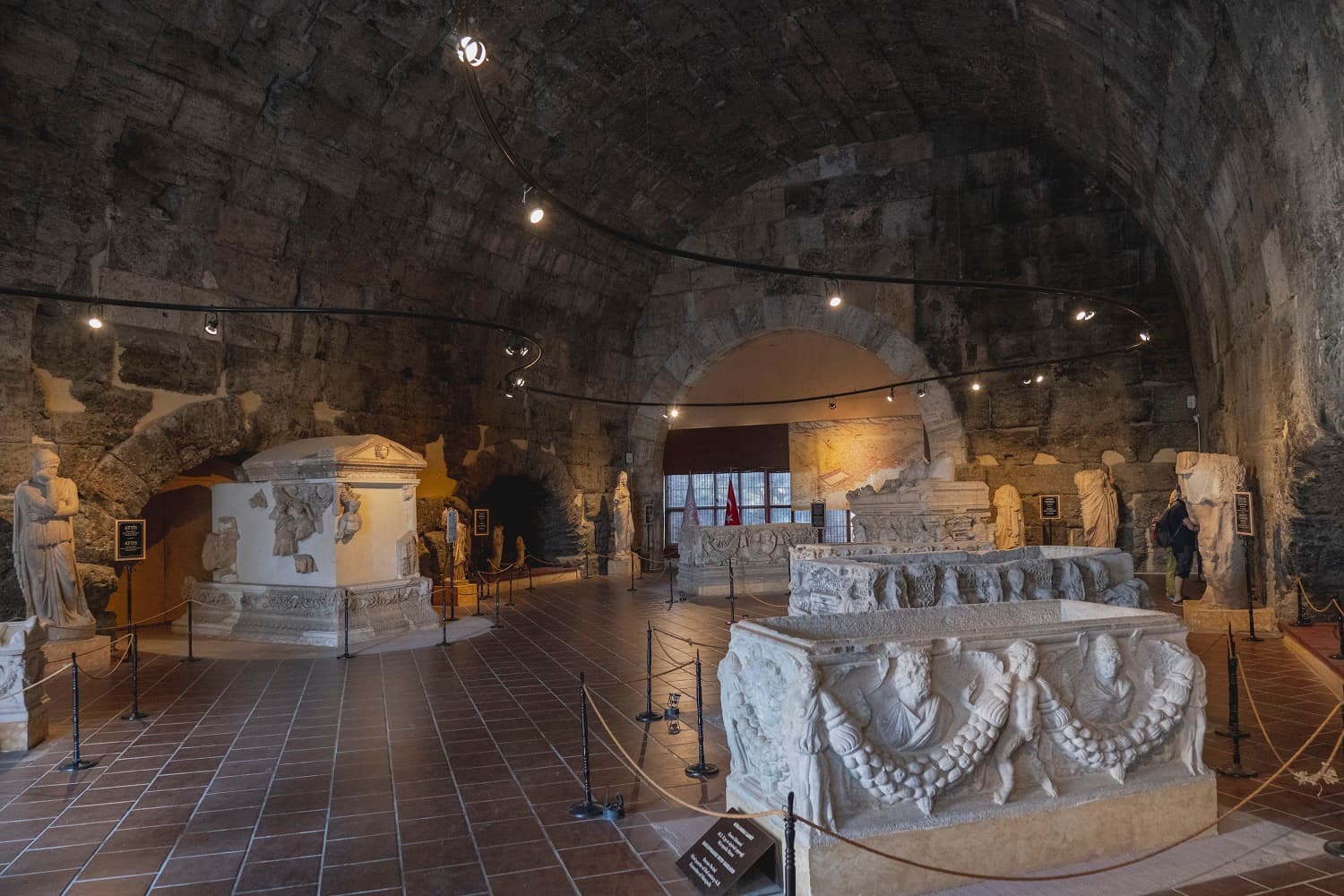
Artifacts are displayed in three main halls, all
located within the vaulted Roman Bath structures built of travertine stone
blocks:
1. Hall of Sarcophagi and
Sculptures
This hall presents sarcophagi, statues, reliefs, and
monumental pieces discovered during excavations at Hierapolis, Laodikeia, and
surrounding ancient cities.
2. Hall of Small Finds
A chronological display of small artifacts dating from
the 4th millennium BC onward, representing the material culture of
various civilizations that once inhabited the region.
3. Hall of Hierapolis
Theatre Artifacts
This section showcases the sculptural decorations and
reliefs that once adorned the stage building (scaenae frons) of the
Hierapolis Theatre.
Open-Air Display Area
In addition to the indoor galleries, many artifacts that
cannot be exhibited inside—including column capitals, sarcophagi, and grave
steles—are arranged in a systematic open-air exhibition area, offering
visitors an immersive view of the region’s funerary and architectural heritage.