
Izmir Archaeological Museum
Europe, Turkey
 1 / 2
1 / 2Museum Information
Opening Hours
08:30 – 17:30
Open Days
About Izmir Archaeological Museum
İzmir Archaeology
Museum
The İzmir Archaeology Museum is a museum where
archaeological artifacts discovered in İzmir Province and its surrounding
regions are exhibited.
The museum was opened to visitors in 1927 in the Aya
Vukla (Gözlü) Church and has been operating since 1984 in its modern building
located within Bahribaba Park in the Konak district.
Artifacts unearthed during excavations in various parts
of the Aegean Region—such as Bayraklı (ancient Smyrna), Ephesus, Pergamon,
Miletus, Klazomenai, Teos, and Iasos—which shed light on the history of Western
Anatolia, are displayed both inside the museum and in its garden.
The three-story museum building houses exhibition halls
on the second and third floors, administrative offices on the first floor, and
on the ground floor artifact storage rooms where all objects are preserved in
separate categories, a restoration laboratory, and a library.
The museum was first established in 1924 in the abandoned
Aya Vukla Church in the Basmane district under the name “Asar-ı Antika Museum”.
Following three years of collecting and cataloging artifacts, it was opened to
the public in 1927. After Aziz Ogan left İzmir for another appointment, the
directorship of the museum was taken over by Selâhattin Kantar. The museum was
visited in 1931 by Mustafa Kemal Atatürk, the President of the Republic at the
time. In 1943, during Selâhattin Kantar’s directorship, it was officially
renamed the İzmir Archaeology Museum.
In 1951, the museum was relocated to the “National
Education Pavilion” in Kültürpark, which had been converted into a
museum. As the number of artifacts brought from ancient cities in and around
İzmir increased, a new building became necessary. Consequently, the current
museum building in Bahribaba Park, Konak, was opened to the public in 1984.
Museum Sections
Lower Floor
A section of this floor displays sarcophagi and funerary
stelae made of terracotta and marble from various periods. Among these are the
renowned Klazomenai terracotta sarcophagi, famous throughout the ancient world.
The Late Hellenistic funerary stelae exhibited in this hall constitute one of
the richest collections of their kind worldwide. Also on display are the
coffered ceiling reliefs of the Belevi Mausoleum, one of the most significant
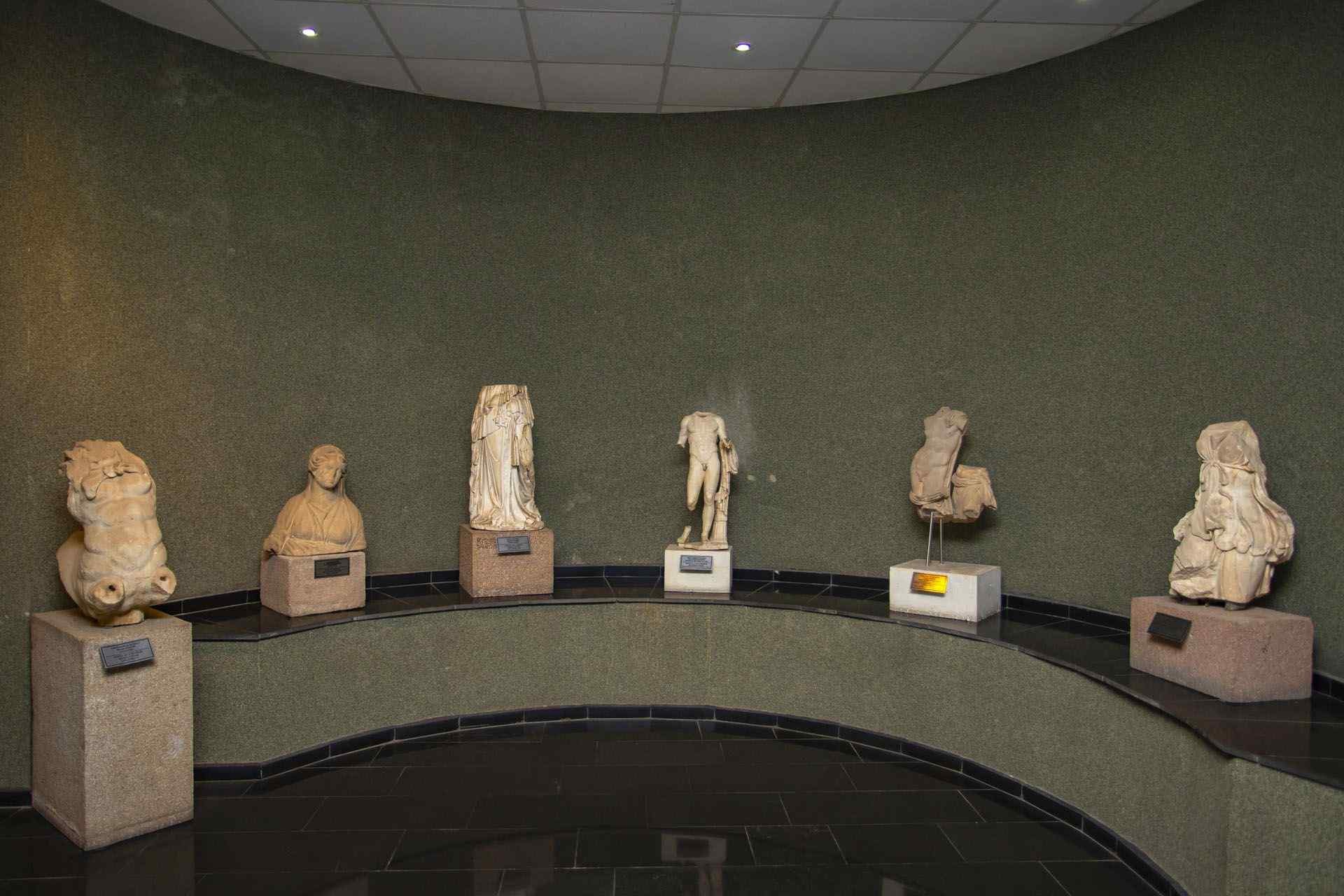
monuments of the Hellenistic period. At the end of the hall, statues of
Poseidon, Demeter, and Artemis discovered at the Agora archaeological site
stand out as striking examples of ancient sculpture.
Middle Floor
This floor, which serves as the main entrance level,
displays marble statues, busts, and sculptural portrait heads. As on the upper
floor, the exhibits are arranged in chronological order. Eight display cases
present smaller marble artifacts grouped by type. The Kore Statue found in
Erythrai, located at the entrance of the hall, is among the earliest examples
of large-scale marble sculpture from antiquity. The Bronze Athlete Statue
discovered in Kyme holds a particularly important place among bronze sculpture
examples.
Upper Floor
The artifacts exhibited in the first gallery of this
floor were found in various locations across Western Anatolia. Small-scale
objects made of glass, bronze, engraved gemstones, and terracotta—such as
figurines, pottery, and oil lamps—are displayed in grouped showcases. These
objects are arranged in chronological order, spanning from prehistoric periods
to the end of the Byzantine era.