
Kayseri Archaeology Museum
Europe, Turkey
 1 / 3
1 / 3Museum Information
Opening Hours
09:00 – 17:00
Open Days
About Kayseri Archaeology Museum
Located in a region that has witnessed major and
transformative developments since prehistoric times, Kayseri has a long and
deeply rooted tradition of museology. The origins of museum activities in the
city date back to the late Ottoman period. Following a circular issued by Osman
Hamdi Bey, which instructed provincial authorities to send the most important
movable antiquities to Istanbul and to collect the remaining artifacts in
suitable and secure school buildings, many artifacts gathered from the Kayseri
region were placed under protection in a room of Kayseri High School.
In 1928, during a visit to Kayseri, the then Minister of
National Education, Esat Bey, inspected these artifacts and discussed the
establishment of a museum with Governor Fuat Bey. Through the efforts of
Governor Fuat Bey, Hunat Hatun Madrasa was restored, and on 1 March 1930, the
museum was officially opened. Until 1937, the institution functioned as a
“Depot Museum,” primarily serving as a storage and conservation facility. After
the artifacts were classified in a chronological and scientific manner, the museum
was opened to the public in 1938, with an entrance fee of five kuruş.
In 1948, systematic archaeological excavations were
initiated by Prof. Dr. Tahsin Özgüç at Kültepe Kaniš/Karum, located
approximately 22 kilometers northeast of Kayseri. The increasing number of
artifacts uncovered during these excavations, along with items purchased from
or donated by the local population, gradually created space constraints in both
the exhibition and storage areas of the museum. As a result, construction of
the current museum building began in 1965, and the museum was officially opened
to visitors on 26 June 1969.
Originally operating as a museum at Hunat Hatun Madrasa
from 1 March 1930, the Kayseri Museum was relocated in 1969 to its new
purpose-built facility in the Melikgazi district, Gültepe neighborhood, on
Kışla Street. However, due to the growing collection and expanding museological
needs, the building eventually became insufficient. With a protocol signed on
30 April 2012 between the Ministry of Culture and Tourism and the Kayseri
Metropolitan Municipality, it was decided that the museum would be relocated to
a new building constructed by the Metropolitan Municipality within the Inner
Castle of Kayseri.
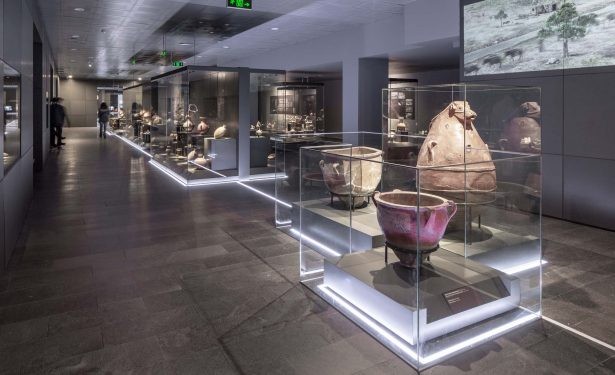
The museum displays artifacts brought to the directorate
from Kayseri and its surrounding regions, as well as finds unearthed during the
continuous excavations at Kültepe Kaniš/Neša, which have been ongoing since
1948. The collection is presented across 13 permanent exhibition halls,
including:
- Chalcolithic Period Hall
- Early Bronze Age Hall
- Tablet Hall
- Assyrian Trade Colonies Period Hall
- Hittite Period Hall
- Late Hittite Stone Artifacts Hall
- Archaic and Classical Period Halls
- Hellenistic Period Hall
- Roman Period Hall
- Eastern Roman (Byzantine) Period Hall
- Seljuk Period Hall
- Ottoman Period Hall
In addition to these permanent displays, the museum also
features one temporary exhibition hall, which hosts rotating exhibitions
throughout the year.
Construction and restoration works for the new museum
building were initiated by the Kayseri Metropolitan Municipality in 2013 and
were completed in May 2019, after which the building was officially handed over
to the Ministry of Culture and Tourism. The relocation of artifacts began in
May, and the processes of transportation, exhibition planning, and display
arrangement were completed by September 2019.
The new Kayseri Museum was officially opened to visitors
on Saturday, 19 October 2019, during a mass opening ceremony held with the
attendance of President Recep Tayyip Erdoğan, and with the participation of
General Director Gökhan Yazgı.
Today, with its modern exhibition design, extensive
collections, and historically significant artifacts—particularly those from
Kültepe Kaniš/Neša, one of Anatolia’s most important archaeological sites—the
Kayseri Museum stands as a major cultural institution, offering visitors a
comprehensive journey through thousands of years of Anatolian history.