
Tokat Museum
Europe, Turkey
 1 / 4
1 / 4Museum Information
Opening Hours
08:00 – 16:45
Open Days
About Tokat Museum
Tokat Museum
Museum activities in Tokat began in 1926, when a retired
teacher, Halis Turgut Cinlioğlu, collected historical artifacts from the
surrounding area and stored them in Gökmedrese, a 13th-century Anatolian Seljuk
madrasa. Serving as a combined archaeology and ethnography museum, Tokat Museum
continued its activities in Gökmedrese until 2012, when it was relocated to the
historic Tokat Bedesten, located on Sulusokak.
Following modern museological exhibition and display
arrangements in the Bedesten, Tokat Museum officially opened to visitors on 18
September 2012.
Tokat Bedesten
(Museum Building)
The Tokat Bedesten, now serving as the museum building,
is located in the historic Sulu Sokak area of Tokat city center. Although the
building does not bear an inscription indicating its construction date, its
architectural features suggest that it was built in the 15th century, during
the reign of Sultan Mehmed I.
The structure consists of three main sections:
- The central bedesten hall
- Arasta units on the east and west façades
The bedesten hall is divided into nine bays by four pairs
of piers, each covered with a dome. The building is accessed through entrances
on the north and south façades, and it also has additional doors opening into
the arastas on both the eastern and western sides.
The arasta section, constructed lower than the bedesten
walls, contains twenty shops arranged opposite each other. The building was
constructed using rubble stone and brick, while the arches and roofing system
are made entirely of brick. Due to this layout, the structure is also known as
the Arasta Bedesten.
Archaeology Hall
The bedesten hall has been arranged as the Archaeology
Gallery. Archaeological research and excavations have revealed that Tokat’s
history dates back to c. 4000 BCE, and artifacts from numerous civilizations
that lived in the region are displayed in this section.
The museum’s archaeological collection consists of finds
from:
- Maşathöyük excavations (Zile District, Yalınyazı Township)
- Ongoing excavations at Comana Ancient City
- Rescue excavations conducted by the museum
- Artifacts acquired through donation, purchase, or confiscation from
districts and villages of Tokat Province
Among the most significant exhibits are:
- Hittite cuneiform tablets from Maşathöyük
- A Hellenistic-period sword
- A Roman-period bronze sculpture group, including figures of Apollo,
Poseidon, Nike, and sacred animals associated with deities
Coin Collection
The coin section is located within the Archaeology Hall.
In terms of both quantity and diversity, Tokat Museum holds a prominent place
among museums in Anatolia.
A major part of the collection consists of Anatolian
Seljuk silver coins discovered during a rescue excavation conducted by the
museum in Niksar in 1982. The significance of this hoard lies not only in its
large number, but also in the variety of mints and sultans represented.
Another important group comprises Ottoman and Venetian
gold coins unearthed in 1985 during excavation works for the annex of the
present-day Governor’s Office building.
In addition, the museum houses a comprehensive coin
collection spanning from the earliest electrum coins ever minted to the final
period of the Ottoman Empire, representing all civilizations that ruled in
Tokat.
Ethnography Hall
The western arasta of the Bedesten has been arranged as
the Ethnography Gallery. The museum possesses a rich and high-quality
ethnographic collection that reflects the traditional lifestyle, culture, and
social structure of Tokat.
Among the most important ethnographic exhibits are:
- A manuscript Qur’an dated AH 587 (1191 CE) from the Anatolian Seljuk
period, recognized as the oldest known Qur’an among museums and libraries
in Anatolia
- Tokat-produced ceramics, identified through recent research as
products of the fourth major ceramic production center of Anatolian
Turkish ceramics, following İznik, Kütahya, and Çanakkale
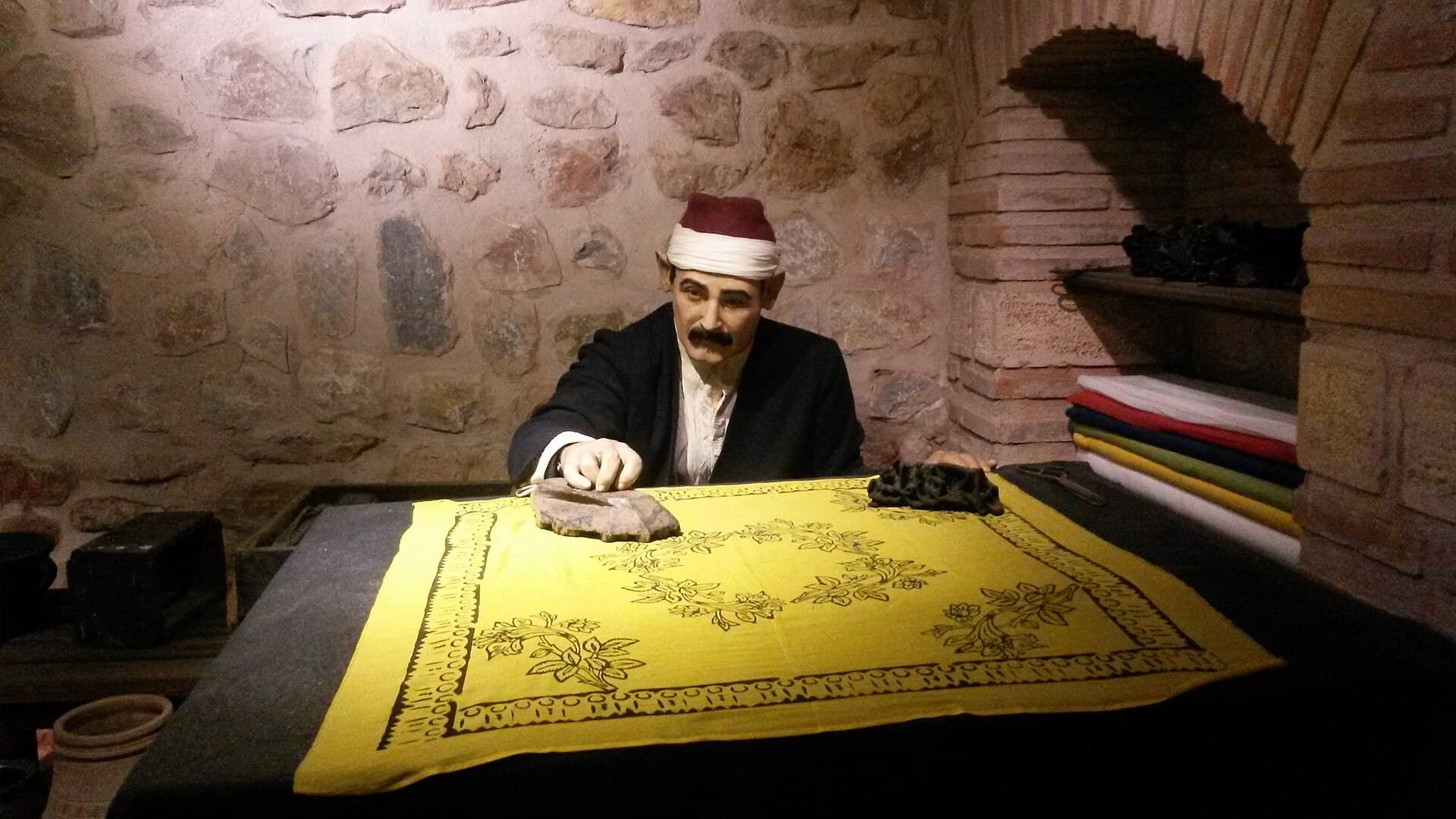
Within the Ethnography Gallery, a reconstruction of a
traditional block-print textile workshop (el baskısı yazma),
representing a 600-year-old Tokat craft tradition, has been created.
In a street-facing room at the southern end of the
western arasta, a coppersmith workshop reconstruction illustrates Tokat’s
historical importance as a major Ottoman copperworking center.
Additional Sections
and Open-Air Display
Parts of the eastern arasta are used as storage areas and
administrative offices.
In the front garden, stone artifacts and large storage
jars are displayed. One side of the garden features Roman-period funerary
stelae, sarcophagi, and column capitals, while the other side exhibits Seljuk
and Ottoman tomb chests, headstones, and footstones.