
17 Day Grand Turkey Discovery Tour: Istanbul, Gallipoli, Ephesus, Bodrum, Antalya & Cappadocia
-high.jpg&w=1920&q=100)
-high.jpg&w=828&q=100)
-high.jpg&w=828&q=100)
-high.jpg&w=828&q=100)
-high.jpg&w=1920&q=90)
Duration
17 days
Max Group Size
40
Departure Type
Scheduled
Guiding Method
Fully guided
Physical level
easy
Operated In
English
Age Requirement
11 - 99 Ages
About this tour
Embark on a once-in-a-lifetime 17-day journey across Türkiye, a land where East meets West and history comes alive. From the mighty walls of Constantinople to the mystical landscapes of Cappadocia, this tour combines world-famous UNESCO heritage sites, ancient cities, stunning coastlines, and vibrant cultural experiences. Walk in the footsteps of Romans, Byzantines, and Ottomans; cruise the turquoise waters of the Mediterranean; explore biblical landmarks; and marvel at the engineering genius of ancient civilizations. Perfect for travelers seeking a deep dive into Türkiye’s rich history, natural wonders, and living traditions.
Route
- 1IstanbulEuropeTurkeyStart
- 2GallipoliEuropeTurkeyCanakkale
- 3TroyEuropeTurkeyCanakkale
- 4CanakkaleEuropeTurkey
- 5BergamaEuropeTurkeyIzmir
- 6KusadasiEuropeTurkeyAydin
- 7EphesusEuropeTurkeyIzmir
- 8Didyma Ancient CityEuropeTurkeyAydin
- 9BodrumEuropeTurkeyMugla
- 10KasEuropeTurkeyAntalya
- 11PhaselisEuropeTurkeyAntalya
- 12AntalyaEuropeTurkey
- 13Perge Ancient CityEuropeTurkeyAntalyaMuratpasa
- 14AspendosEuropeTurkeyAntalya
- 15SideEuropeTurkeyAntalya
- 16KonyaEuropeTurkey
- 17CappadociaEuropeTurkeyNevsehir
- 18Salt LakeEuropeTurkeyAksaray
- 19AnkaraEuropeTurkeyEnd
Attractions
What makes this tour special
Itinerary
Today we arrive in Istanbul and transfer to our hotel.
"If one had but a single glance to give the world, one should gaze on Constantinople," marvelled Alphonse de Lamartine, the 19th-century French writer and politician. Today we arrive in this legendary city that has served as the beating heart of three mighty empires. Istanbul straddles two continents at the confluence of the Golden Horn and the Bosphorus, making it the only city in the world to span Europe and Asia. New Rome, Byzantium, Constantinople, Istanbul---each name tells a chapter in humanity's greatest urban story. The Romans built their eastern capital here, the Byzantines created a Christian empire that lasted a thousand years, and the Ottomans forged their Islamic dynasty from these same ancient stones.
Overnight in Istanbul.
(Breakfast Included)
Dawn breaks over a city divided by waterways into three distinct parts---two in Europe, one in Asia---creating Istanbul's unique character as the world's only transcontinental metropolis. We begin with a panoramic drive around the Golden Horn, following the massive walls that protected Constantinople for over a thousand years.
The first bridge here was built during Justinian's reign in the 6th century, and today we pass the famous Galata Bridge where fishermen still cast their lines as they have for centuries. The towering minarets of Süleyman's Mosque and the medieval Galata Tower guide us towards Sultanahmet Square, where the heart of old Constantinople awaits.
Our walking exploration begins at the legendary Blue Mosque, built between 1609 and 1616 by Mehmet Ağa. Inside, over 20,000 hand-painted İznik tiles create a symphony of blue that gives the mosque its popular name. At the adjacent Hippodrome, we stand where 100,000 Romans once cheered chariot races. Here stands an Egyptian obelisk carved for Pharaoh Thutmose III around 1500 BC---older than Christ, yet brought here by Byzantine Emperor Theodosius in 390 AD.
We continue to Hagia Sophia, built by Emperor Justinian in 548 AD as the largest church in Christendom for nearly a millennium. When Ottoman forces conquered the city in 1453, they transformed this Christian cathedral into an Islamic mosque. In 1934, it became a museum; in 2020, President Erdoğan controversially returned it to mosque status, though visitors are still welcome.
Beneath Hagia Sophia lies another marvel---the colossal Basilica Cistern. Using columns plundered from ruined temples, Emperor Justinian created this underground cathedral to store water for his Great Palace. Walking through this subterranean wonder, we understand why the Byzantine Empire was history's greatest engineering civilization.
The remainder of the afternoon is yours to explore before our evening meal. Your Tour Leader can show you to Istanbul's famous Grand Bazaar -- even if you're not a keen shopper, the atmosphere and goods on offer offer interesting local insights into life in the city, the old and the new.
Note: You may wonder why we choose not to include Topkapi Palace in our program. While it's an important site with a long storied history, the nature of the facility and the rules pertaining to visitation, ie limits on groups and guiding to reduce crowding and noise, make it better-suited to a self-guided, rather than a group touring, experience. Should you want to visit on your own, please consult your Tour Leader in advance.
* Due to periodic closures for restorations, we may substitute the nearby Cistern of Philoxenos, also known as the Binbirdirek Sarnici or "Cistern of 1,001 Columns." Overnight in Istanbul.
(Breakfast Included)
The aromatic Spice Bazaar awakens our senses this morning, where cinnamon, clove, and thyme spill from hundreds of colourful muslin bags. Merchants have traded exotic spices here since the 17th century, when Ottoman ships brought treasures from across their vast empire stretching from Vienna to Yemen.
Nearby stands the Mosque of Süleyman the Magnificent, the masterpiece of Sinan, history's greatest architect. Built in the 16th century during the Ottoman Empire's golden age, this mosque achieves perfect harmony between monumentality and grace. Süleyman's complex included libraries, soup kitchens for the poor, hammams, fountains, and schools---a complete community surrounding the sacred space.
We board a ferry for a leisurely cruise along the legendary Bosphorus, sipping traditional tea from small curved glasses as summer palaces and palatial mansions drift past on both shores. This narrow strait has been humanity's gateway between Europe and Asia for millennia. Alexander the Great crossed here pursuing Persian dreams, Crusaders passed these waters seeking Jerusalem, and today massive tankers carry the world's energy through this 30-kilometre channel.
Disembarking at the strait's northern end, we enjoy lunch at a local fish restaurant before visiting the Kariye (Chora) Museum. Here, Byzantine artists in the 14th century created some of history's most beautiful mosaics---intricate golden scenes telling the story of Christ with an artistry that rivals Michelangelo. Overnight in Istanbul.
(Breakfast & Dinner Included)
This morning we bid farewell to Europe, driving along the Sea of Marmara through Thrace---the small European corner of a nation that is 97% Asian. Turkey's fascinating character springs from the countless peoples who have claimed this bridge between continents as home.
Before leaving Europe, we visit Gallipoli---Gelibolu in Turkish. This narrow, mountainous peninsula has witnessed over 3,000 years of battles for control of the Dardanelles. Here, during World War I, a young officer named Mustafa Kemal first showed the brilliance that would transform him into Atatürk, father of the Turkish Republic. Winston Churchill's ambitious plan to capture these straits, open the way to Russia, and seize Constantinople failed catastrophically. Today, over 30 memorials mark this hallowed ground where Australian, New Zealand, British, French, and Turkish soldiers fought with extraordinary courage.
Crossing the Dardanelles by ferry, we leave Europe for Asia and journey to Troy, where legend claims Greek and Trojan heroes fought for beautiful Helen. For centuries, scholars dismissed Homer's Iliad as pure myth until German businessman Heinrich Schliemann excavated here at his own expense in the 1870s. His discoveries proved that a sophisticated city had indeed flourished on this strategic hilltop for millennia.
Standing on Troy's ancient ramparts, we gaze across the windswept plain where archaeology and epic poetry merge into one timeless story. The famous north wind still blows from the Dardanelles, just as Homer described 3,000 years ago. We arrive in Canakkale in time for dinner. Overnight in Canakkale.
(Breakfast & Dinner Included)
An early start carries us down Turkey's rugged Aegean coast to the authentically Turkish town of Bergama, ancient Pergamon. Here we explore one of antiquity's greatest medical centres---the Asklepion, considered among the world's first hospitals. Ancient patients came here seeking healing through a combination of medicine, psychology, and faith.
We discover the carved symbol of two serpents wrapped around a cup---the caduceus that still represents medicine today. In Pergamon's theatre, mentally disturbed patients allegedly acted out their emotions as a form of therapy, foreshadowing modern psychoanalysis by 2,000 years. The innovation of ancient physicians who understood the connection between mind and body feels remarkably contemporary.
Our route continues through Izmir, Turkey's most vital port city, birthplace of the legendary blind poet Homer. Here in 1922, during Turkey's War of Independence, Atatürk's forces expelled Greek invading armies, securing the new Turkish Republic's sovereignty. The dramatic events of that war transformed the ancient city of Smyrna into modern İzmir.
We arrive in Kusadasi as evening approaches---the "Island of Birds"---named for the small fortress island connected to the mainland. This beautiful port has welcomed traders, pilgrims, and travellers for centuries. Tonight we rest beside the Aegean Sea, preparing for tomorrow's encounter with one of antiquity's greatest cities.
Overnight in Kusadasi.
(Breakfast & Dinner Included)
Today we step into one of the ancient world's greatest cities---Ephesus, crown jewel of Roman Asia Minor. During its golden age, over 250,000 people lived here, making it the empire's third-largest city after Rome and Alexandria. The patron goddess Artemis watched over this cosmopolitan metropolis from her temple, considered one of the Seven Wonders of the World.
Walking down the marble-paved Arcadian Way, we follow the same path where St. Paul preached, Mark Antony paraded, and wealthy merchants displayed their prosperity. The Library of Celsus rises before us in restored magnificence---once holding 12,000 scrolls, it served as both library and elaborate tomb for the Roman consul whose son built it in his honour.
The Great Theatre, carved into the hillside, could hold 24,000 spectators for gladiator contests and dramatic performances. From its upper tiers, we gaze across the former harbour where Mediterranean ships once docked. Centuries of river silt have moved the coastline 8 kilometres away, leaving this great port city stranded inland---nature's reminder that even mighty Rome couldn't control everything.
Our special visit to the Terrace Houses reveals how Ephesus's elite lived. These Roman villas, protected under modern roofs, preserve incredible frescoes, mosaics, and marble decorations. Walking through their rooms, we glimpse the sophisticated lifestyle that made Ephesus famous throughout the ancient world.
The superb Ephesus Museum houses treasures that bring the ancient city to life, while nearby Selcuk shows us Turkey's medieval Islamic heritage with the beautiful İsa Bey Mosque, built in 1375, and the imposing Ayasoluk Fortress crowning the hill.
Overnight in Kusadasi
(Breakfast & Dinner Included)
Winding roads carry us southward along the Aegean coast through landscapes of olive groves and pine forests. En route, we pause at Didyma, one of antiquity's most powerful oracles. For over a thousand years, pilgrims journeyed here seeking Apollo's wisdom through prophecies delivered by the sacred priestess.
The Temple of Apollo at Didyma was the fourth-largest temple in the Greek world, its massive columns reaching towards the heavens in tribute to the sun god. Standing among these ancient stones, we understand why Greeks believed this was a place where mortals could communicate with the divine.
Our destination, Bodrum, occupies one of the Mediterranean's most perfect natural harbours. This was ancient Halicarnassus, birthplace of Herodotus, the world's first historian, and site of another Wonder of the Ancient World---the Mausoleum. This elaborate tomb was so magnificent that all grand tombs since have been called mausoleums in its honour.
Modern Bodrum charms visitors with its whitewashed cube houses draped in brilliant bougainvillea, cascading down hillsides to the sparkling sea. The reputation of Bodrum's shipbuilders stretches back to ancient times. Today's craftsmen still construct traditional wooden yachts: the sharp-prowed Tirhandil and the broad-beamed Gulets used for pleasure cruising.
This afternoon we explore the magnificent Crusader Castle of St. Peter, built by the Knights Hospitaller in the early 15th century using stones from the ancient Mausoleum. The castle now houses an extraordinary underwater archaeology museum, displaying treasures from ancient shipwrecks discovered off Turkey's coast by teams from Texas A&M University. Overnight in Bodrum.
(Breakfast & Dinner Included)
Today belongs to you in this enchanting seaside town where ancient history meets modern pleasure. The morning might find you exploring the remains of the Bodrum Mausoleum, where enough foundations survive to imagine King Mausolus's magnificent tomb rising 50 metres above the surrounding city. Though earthquakes and medieval builders have claimed most of the structure, the site's gardens and remaining sculptures still evoke the wonder that made this one of antiquity's seven marvels.
The hillside Bodrum Amphitheatre offers another glimpse of ancient Halicarnassus. Built during King Mausolus's reign in the 4th century BC and later expanded by the Romans, this well-preserved theatre commands stunning views across the modern city to the azure sea beyond. Sitting on its stone seats, you can imagine audiences 2,400 years ago watching Greek tragedies and Roman spectacles.
Bodrum's narrow streets invite wandering, with traditional Turkish houses, boutique shops, and waterfront cafés creating a perfect atmosphere for relaxation. The harbour bustles with wooden gulets preparing for sunset cruises, their varnished hulls gleaming in the Mediterranean sun.
Perhaps you'll choose to stroll the castle ramparts again, watching fishing boats return with their daily catch, or simply find a seaside taverna to sample fresh seafood while contemplating how this beautiful bay has sheltered sailors and dreamers for thousands of years. Overnight in Bodrum.
(Breakfast & Dinner Included)
Leaving Bodrum's azure embrace, we journey over the coastal fringes of the mighty Taurus Mountains towards the warm Mediterranean shore, famously called the "Turquoise Coast" for its extraordinarily blue waters. This dramatic landscape transition takes us from Aegean sophistication to Mediterranean wildness.
The picturesque fishing village of Kas welcomes us with its intimate harbour surrounded by mountains that plunge directly into crystal-clear seas. Lycian tombs carved into cliffsides 2,000 years ago watch over the town, while an ancient theatre carved from living rock speaks of Kas's importance during classical times. The Greek island of Kastellorizo floats just offshore, so close you feel you could swim to it.
Known throughout Turkey for its stunning natural beauty and relaxed atmosphere, Kas has evolved from a quiet fishing village into a haven for those seeking authentic Mediterranean life. The town maintains its traditional character despite its popularity, with narrow streets climbing hillsides adorned with brilliant bougainvillea and traditional Turkish houses painted in white and blue.
Local fishermen still bring their catch to the small harbour each morning, just as their ancestors did when this was the Lycian city of Antiphellos. The ancient name means "opposite Phellos," referring to the Lycian city across the bay whose ruins still crown a nearby hilltop.
Tonight we rest in this magical corner of Turkey where mountains meet the sea and ancient stones blend seamlessly with modern life. Overnight in Kas.
(Breakfast Lunch & Dinner Included)
This morning we board a traditional Turkish gulet, a handcrafted wooden vessel created by master shipbuilders whose skills pass from generation to generation. These beautiful boats originated in the Bodrum region, where craftsmen still shape each hull by hand, following designs perfected over centuries of Mediterranean sailing.
Our open-ended itinerary adapts to local weather and sea conditions, but we anticipate cruising to some of the coast's most spectacular treasures. Tersane Bay offers a perfect swimming stop in waters so clear you can see ancient pottery shards on the seabed 10 metres below. At Kekova, we sail over the submerged ruins of an ancient city destroyed by earthquakes in the 2nd century AD.
The fortress at Simena, accessible only by boat or mountain path, crowns a rocky peninsula where Byzantine walls still guard empty windows looking across the sea. Swimming near these ruins, we glimpse foundations of houses and rock-hewn staircases beneath the crystal-clear surface---an underwater museum preserved by the Mediterranean's warm, salty embrace.
Our captain guides us to hidden coves known only to local sailors, where pine forests cascade to secluded beaches and the only sounds are gentle waves against ancient stones. We anchor for swimming in waters that shift from deep sapphire to brilliant turquoise, understanding perfectly why this coast bears that jewel's name. Overnight in Kas.
(Breakfast & Dinner Included)
Following the ancient Lycian Coast, we journey to Myra, where extraordinary rock tombs carved directly into towering cliffs reveal the sophisticated artistry of Lycian civilization. These elaborate burial chambers, adorned with intricate facades resembling temple fronts, housed the sarcophagi of wealthy merchants and nobles who controlled this coastline 2,000 years ago.
At the Church of St. Nicholas, we encounter the historical figure behind the Father Christmas legend. The 4th-century bishop who inspired Santa Claus lived and served in this very community, known for his generosity to children and the poor. Beautiful Byzantine mosaics and frescoes within the church create an intimate connection to this beloved saint's actual life and ministry.
Before reaching Antalya, we explore Phaselis, one of the Mediterranean's most spectacular Roman sites. Built on a narrow peninsula between pine-covered mountains and three natural harbours, this ancient city perfectly demonstrates Roman mastery of coastal geography. Founded in the 7th century BC, Phaselis prospered as a member of the Lycian League, its merchants trading with civilizations across the Mediterranean.
Walking through Phaselis's well-preserved ruins, we discover a theatre overlooking the sea, a gymnasium where Roman citizens maintained their fitness, and a necropolis where elaborate tombs reflect the city's cosmopolitan wealth. The three harbours that made Phaselis famous still shelter modern yachts, their protected waters as valuable today as they were 2,000 years ago. Overnight in Antalya.
(Breakfast & Dinner Included)
Today we delve into Roman imperial grandeur at Perge, believed to be the birthplace of St. Paul and one of Asia Minor's most impressive archaeological sites. This ancient city offers an extraordinary window into Roman life at its most sophisticated, when the empire's eastern provinces rivalled Rome itself for wealth and culture.
Perge's massive theatre, adorned with intricate marble reliefs, demonstrates Roman engineering prowess and artistic refinement. The theatre's 15,000-seat capacity reflects the city's importance, while its superb acoustics prove that Roman architects understood sound as well as structure. Nearby, we explore a luxurious colonnaded steam bath complex and an imposing basilica that served both commercial and judicial functions.
Our visit to nearby Aspendos reveals perhaps the world's best-preserved Roman theatre, a masterpiece of engineering that still hosts performances 1,800 years after its construction. Standing in this magnificent structure, we experience acoustic perfection---even whispers from the stage reach the highest seats with crystal clarity. The Romans' mastery of mathematical principles and architectural innovation created a building that remains functionally superior to many modern venues.
The intricate aqueduct system that supplied Perge with fresh mountain water demonstrates Roman mastery of hydraulic engineering. These stone channels carried water across valleys and through mountains, providing essential services that supported urban populations larger than many modern cities.
We conclude our day at Antalya's excellent archaeological museum, which houses early Christian icons and Roman sculptures representing some of Asia Minor's finest artistic achievements. Overnight in Antalya.
(Breakfast & Dinner Included)
We climb from the Mediterranean coast through dramatic Taurus Mountain scenery towards the vast Anatolian Plateau, one of Turkey's most spectacular geographical transitions. As altitude increases, the landscape transforms from subtropical coastline to high mountain passes, then opens onto the rolling plains that form Turkey's agricultural heartland.
Agriculturally, Turkey ranks among the world's richest nations. Driving past traditional villages and carefully tended farms, we see endless wheat fields and flourishing orchards that make Turkey a major exporter of dried fruits, nuts, lentils, and beans. This fertile plateau has fed empires for millennia.
Our scenic route takes us through Side, the legendary trysting place of Mark Antony and Cleopatra. This romantic coastal town stands on a promontory flanked by golden beaches, where ruins of the ancient city mingle seamlessly with modern resort development. Despite tourism's growth, Side retains its enchanting atmosphere and unique character.
By evening, we reach Konya, a profoundly traditional town and Turkey's spiritual heart. Here in the 13th century, Mevlâna Rumi founded the mystical Sufi order known as the Whirling Dervishes. His teachings about divine love and spiritual unity continue influencing Islamic thought worldwide, making Konya one of Turkey's most important pilgrimage destinations for Muslims.
We visit the museum and tomb of Mevlâna, beautifully decorated with Turkish carpets, calligraphy, and architectural details that create an atmosphere of profound reverence. Konya served as capital of the Sultanate of Rum from 1150 to 1300, and many magnificent Seljuk buildings date from this golden age. Overnight in Konya.
(Breakfast & Dinner Included)
Traversing the vast Anatolian Plateau, we encounter Sultanhani Caravanserai, a magnificent testament to medieval Turkey's position as the bridge between East and West. These fortified inns sheltered merchant caravans traveling the Silk Road, providing security, supplies, and hospitality in a dangerous world.
Sultanhani's imposing stone architecture and well-preserved courtyard offer vivid insights into medieval trade networks that connected China with Europe. Caravanserais like this enabled cultural and commercial exchange that enriched civilizations from Venice to Beijing. Standing in its shadowed archways, we imagine merchants from dozens of nations gathering around evening fires, sharing stories and goods that would travel thousands of kilometres to distant markets.
As afternoon progresses, we enter the heart of Cappadocia, where geology creates landscapes that seem to belong on another planet. Millions of years ago, volcanic eruptions from nearby Mount Erciyes covered this region with layers of ash and lava. Over millennia, wind and water carved this volcanic debris into fantastic formations---towering cones, mushroom-shaped rocks, and intricate valleys that housed entire civilizations.
The region's name comes from the Persian "Katpatuka," meaning "Land of Beautiful Horses," though today Cappadocia is famous for entirely different reasons. Byzantine monks carved hundreds of churches into these soft volcanic rocks, creating hidden sanctuaries where Christianity flourished even under Islamic rule.
Tonight we rest at the edge of this geological wonderland, preparing to explore landscapes and history that exist nowhere else on earth. Overnight near Cappadocia.
(Breakfast & Dinner Included)
Dawn reveals Cappadocia's otherworldly landscape in all its surreal glory---a moonlike terrain where fairy chimneys and conical towers topped with perfectly balanced capstones create one of earth's most extraordinary geological galleries. Here, volcanic ash hardened into soft tuff rock that wind and water sculpted into towering mushrooms reaching 30 metres high.
In Goreme Valley, we discover a monastic complex where Byzantine hermits carved churches directly into the living rock between the 10th and 11th centuries. These rock chapels preserve brilliant frescoes depicting biblical scenes, their colours still vivid after a thousand years of hidden sanctuary. Walking through this open-air museum, we understand how persecuted Christians created an entire civilization inside the earth itself.
Our exploration continues at Kaymaklı underground city, one of dozens of subterranean communities carved into Cappadocia's soft volcanic rock. At least eight levels descend into the earth, four currently open to visitors through an elaborate network of tunnels, stairways, and chambers. These hidden cities served as safe havens during times of invasion, sheltering entire communities complete with churches, stables, kitchens, and ventilation systems.
The engineering sophistication of these underground cities astounds modern visitors. Narrow passages that could be quickly blocked, clever air shafts that prevented suffocation, and communication networks that connected multiple levels demonstrate how medieval communities adapted to survive in a dangerous world.
Weather permitting, adventurous travellers might choose the optional hot-air balloon flight at sunrise. Evening brings optional performances of traditional Turkish folk dances. Overnight near Cappadocia.
(Breakfast Included)
Our journey begins with a visit to the picturesque village of Uçhisar, dominated by the imposing Uçhisar Fortress---a natural rock castle that provided medieval communities with an impregnable refuge and panoramic views across Cappadocia's volcanic landscape. This ancient stronghold, carved from a single massive outcrop, demonstrates how geography shaped human survival strategies in this remarkable region.
Continuing through Ürgüp, we discover a charming village that medieval records show was once home to a Byzantine bishop. The village's cobblestone streets, traditional stone houses, and vibrant atmosphere reflect centuries of cultural continuity, where Greek Orthodox, Armenian, and Turkish communities created a unique Anatolian civilization.
En route to Ankara, we pause at Tuz Gölü, Turkey's great salt lake. This shallow inland sea, one of the world's largest hypersaline lakes, creates a landscape that shifts dramatically with seasons and weather---sometimes mirror-flat and reflective, other times crystalline white with evaporated salt deposits that stretch to the horizon.
Ankara, Turkey's modern capital, began as an ancient trading centre famous for the soft angora wool of local goats. When Atatürk established the Turkish Republic after World War I, he deliberately chose Ankara over Istanbul as his new capital, symbolically breaking with the discredited Ottoman Empire to create a modern, forward-looking nation.
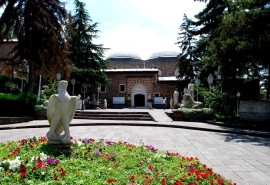
We pay our respects at Ataturk's Mausoleum before visiting the Museum of Anatolian Civilizations, considered among the world's greatest archaeological museums. This extraordinary collection spans from the Paleolithic settlement at Çatalhoyuk (7500 BC) through the mighty Hittite Empire, showcasing artifacts from Phrygian, Urartian, Assyrian, and countless other civilizations that flourished on Anatolian soil. Overnight in Ankara.
(Breakfast Included)
After breakfast at the hotel, enjoy free time at leisure until your scheduled departure. At the appropriate time, you will be transferred to Ankara Airport for your onward flight.
TravelShopBooking thanks you for choosing us for your journey across Türkiye. We hope the memories of Istanbul’s skyline, ancient ruins of Ephesus, turquoise bays of Bodrum, mystical valleys of Cappadocia, and the warmth of Turkish hospitality stay with you forever.
We look forward to welcoming you again on another unforgettable TravelShopBooking adventur
Trip includes
Included
3 nights hotel in Istanbul - 5 Star Ramada By Wyndham Istanbul Pera Hotel
1 nights hotel in Canakkale - Troia Tusan Hotel
2 nights hotel in Kusadasi - Odelia Resort Hotel
2 night hotel in Bodrum - Azka Hotel
2 night hotel in Kas Hera Hotel or Hotel Sonne
2 night hotel in Antalya - Best Western Khan Hotel
1 nights hotel in Konya - Novotel Konya
1 night hotel in Ankara - Ankara Hitit Hotel
2 nights hotel in Cappadocia - - Elpuente Cave Hotel
PS: If this hotel list is not available at the time of your booking then we will arrange a similar hotel for your group. If you prefer a different category hotel, there might be an additional cos
Professional English-speaking tour guides
Guiding Method
Fully guided
 English
16 open buffet breakfasts
11 local dinners at the hotels
 Vegan
Vegan Jain
Jain Vegetarian
 Halal
Halal Meat
MeatAll Airport transfer mention in site the Itinerary
Transportation in a fully air-conditioned, non-smoking coach
Guided Istanbul City Tour
Guided Istanbul Bosphorus Cruise Tour
Guided Ephesus and Sirince Village Tour
Guided Pamukkale Tour
Guided Antalya Old City Tour with waterfalls
Guided Konya Tour
Guided Cappadocia Tour with Underground City and Goreme Open Air MuseumAll entrance fees mentioned in the itinerary
Hotel room taxes
City Tax
Excluded
Internationals or Domestic Flights
Insurance: All types
International flights
Some Lunch & Dinners
Turkey entry visa
Tipping
Items of a personal nature such as alcoholic drinks, cold drinks, laundry
Any other expenses which are not mentioned in the included section
Note: You may wonder why we choose not to include Topkapi Palace (Istanbul) in our program. While it's an interesting site with a long storied history, the nature of the facility and the rules pertaining to visitation, ie limits on groups and guiding to reduce crowding and noise, make it better-suited to a self-guided, rather than a group touring, experience. Should you want to visit on your own, we suggest an extra night in Istanbul, which is always a great idea for numerous reasons
Availability
Loading. Please wait.
Make this journey exclusively yours
By design, this is a group tour. You can however request a private, customized version of this tour for yourself or your private group of people. Private departures are usually more expensive, but come with these benefits:
Personal
Itinerary can be tweaked and customized.
Protected
Travel withing your own bubble.
Professional
Access our Travel Specialists insider knowledge.
Privacy
Enjoy a tour focused solely on you or your travel group.
Why book with TravelShop Booking
Cancellation Policy
On our global marketplace TravelShop Booking Supplier is recognized globally as an online tourism marketplace connecting travelers, suppliers, and tour operators worldwide. All users acknowledge that TravelShop Booking is a platform not liable for canceled tours, poor services, or unforeseen circumstances occurring before, during, or after the tour.
Need help or have a question about this tour?
if you have any question about this tour or need help with planning a trip, please do not hesitate to get in touch with us. We're ready to help.
You might also like these tours
Handpicked trips with a similar vibe — perfect if this one caught your eye.