

Bosnia and Herzegovina is one of the Balkans’ most distinctive travel destinations, combining Ottoman heritage, Austro-Hungarian architecture, medieval towns, mountain landscapes, clear rivers, waterfalls, and traditional villages. The country is compact enough for a multi-city road trip, yet every region offers a noticeably different atmosphere.
Most visitors begin with Sarajevo and Mostar, but the country’s appeal extends far beyond these two cities. Historic towns such as Travnik and Jajce, natural areas such as Una and Sutjeska national parks, and smaller destinations such as Blagaj and Počitelj make it possible to build a varied itinerary around history, culture, food, and outdoor activities.
Why Visit Bosnia and Herzegovina?
Bosnia and Herzegovina offers an unusual mix of cultural influences. Ottoman mosques, Catholic churches, Orthodox monasteries, synagogues, Austro-Hungarian buildings, and Yugoslav-era landmarks can often be found within the same city.
The country is also known for its mountain scenery and river valleys. Travelers can combine old-town walking tours with rafting, hiking, waterfall visits, scenic drives, and traditional food experiences.
Compared with many popular European destinations, Bosnia and Herzegovina can still feel less commercial and more locally focused. This makes it especially attractive to travelers who want cultural depth without limiting their trip to major tourist centers.
Most Popular Cities to Visit in Bosnia and Herzegovina
The country’s main cities provide the best introduction to its history, architecture, and everyday culture. Sarajevo and Mostar are the essential starting points, while Banja Luka and Tuzla offer a broader view of the country.
Sarajevo
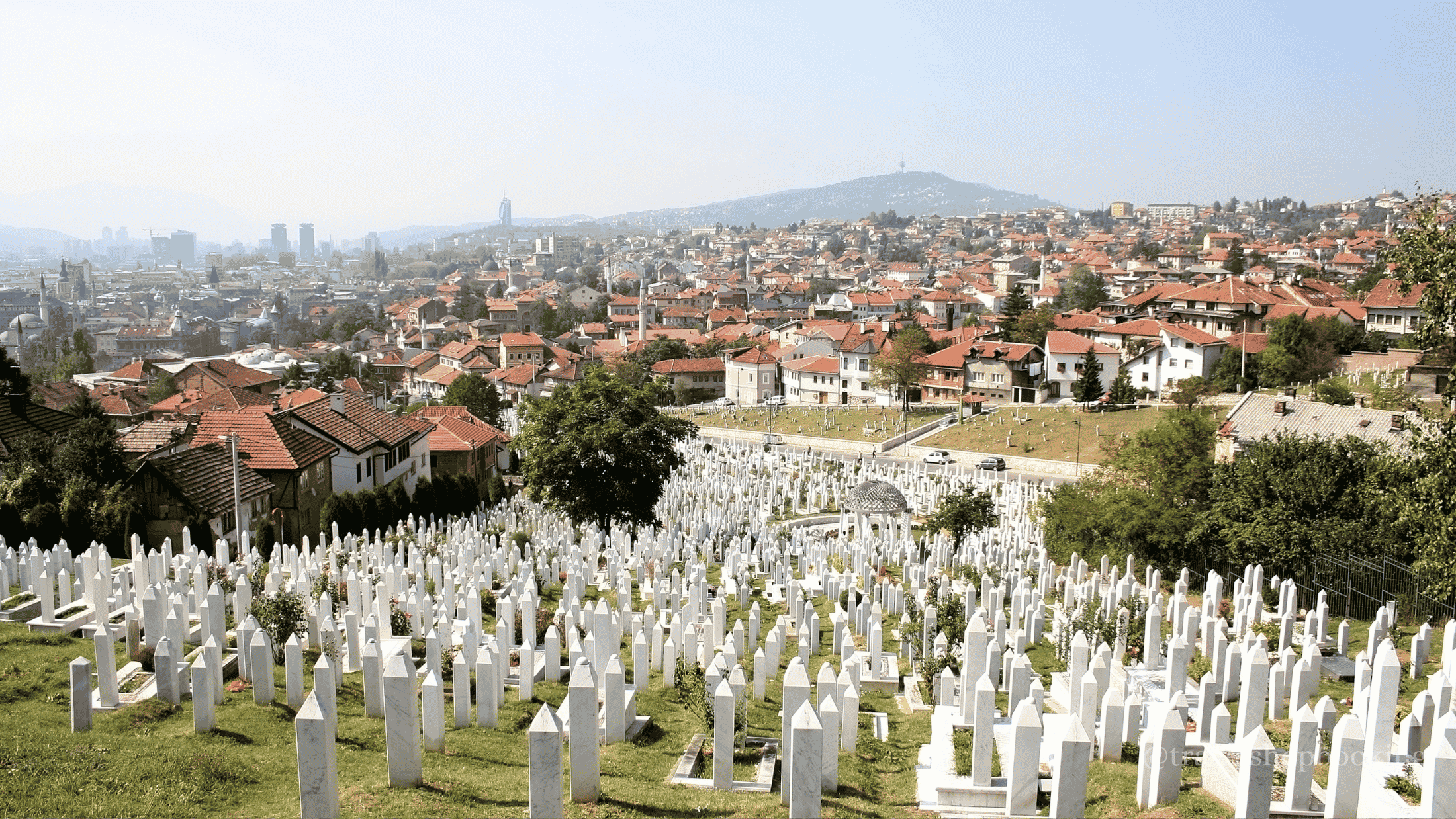
Sarajevo is the capital and one of the best places to begin a trip through Bosnia and Herzegovina. Its historic center reflects Ottoman, Austro-Hungarian, Yugoslav, and modern influences within a relatively compact area.
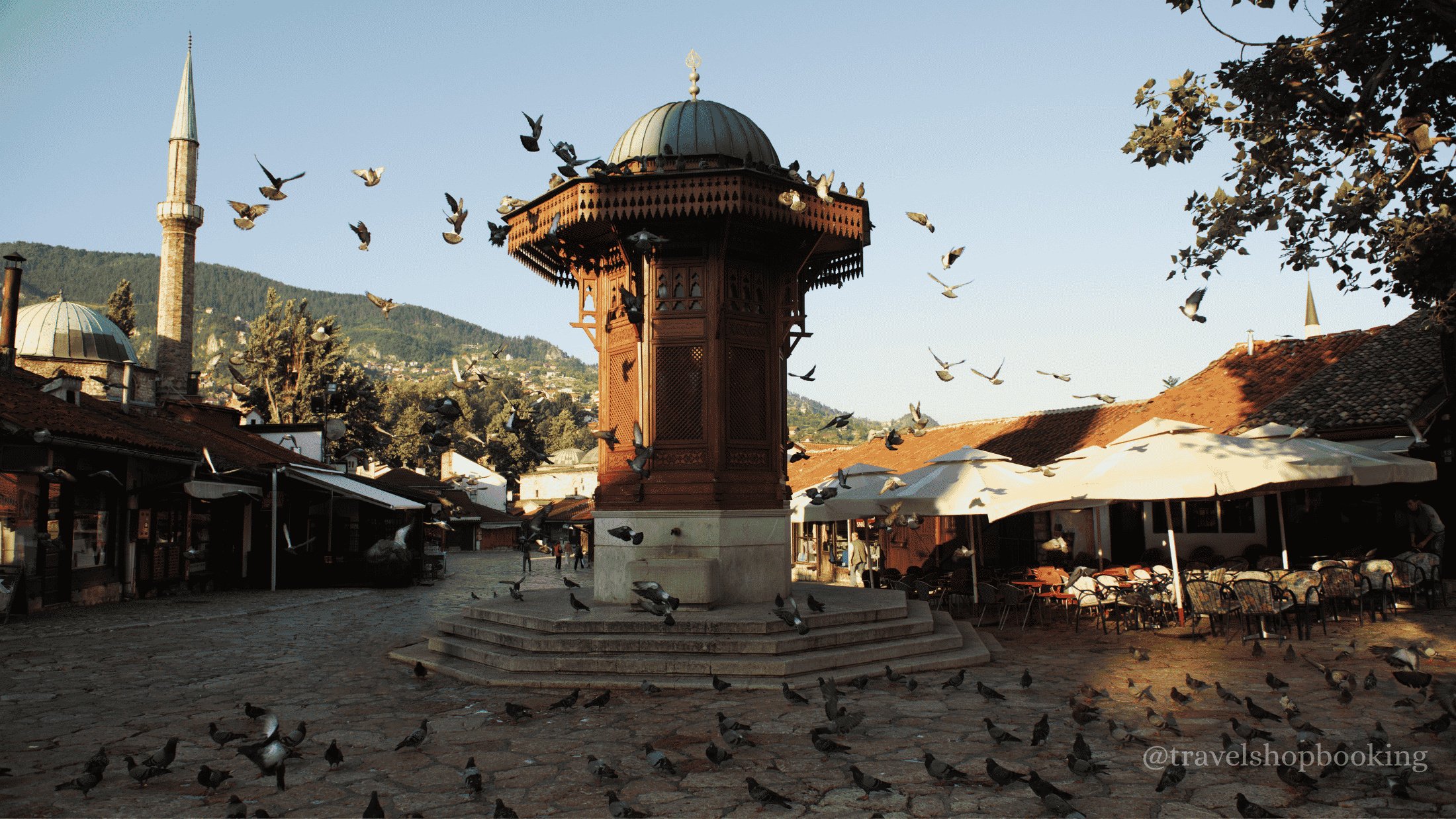
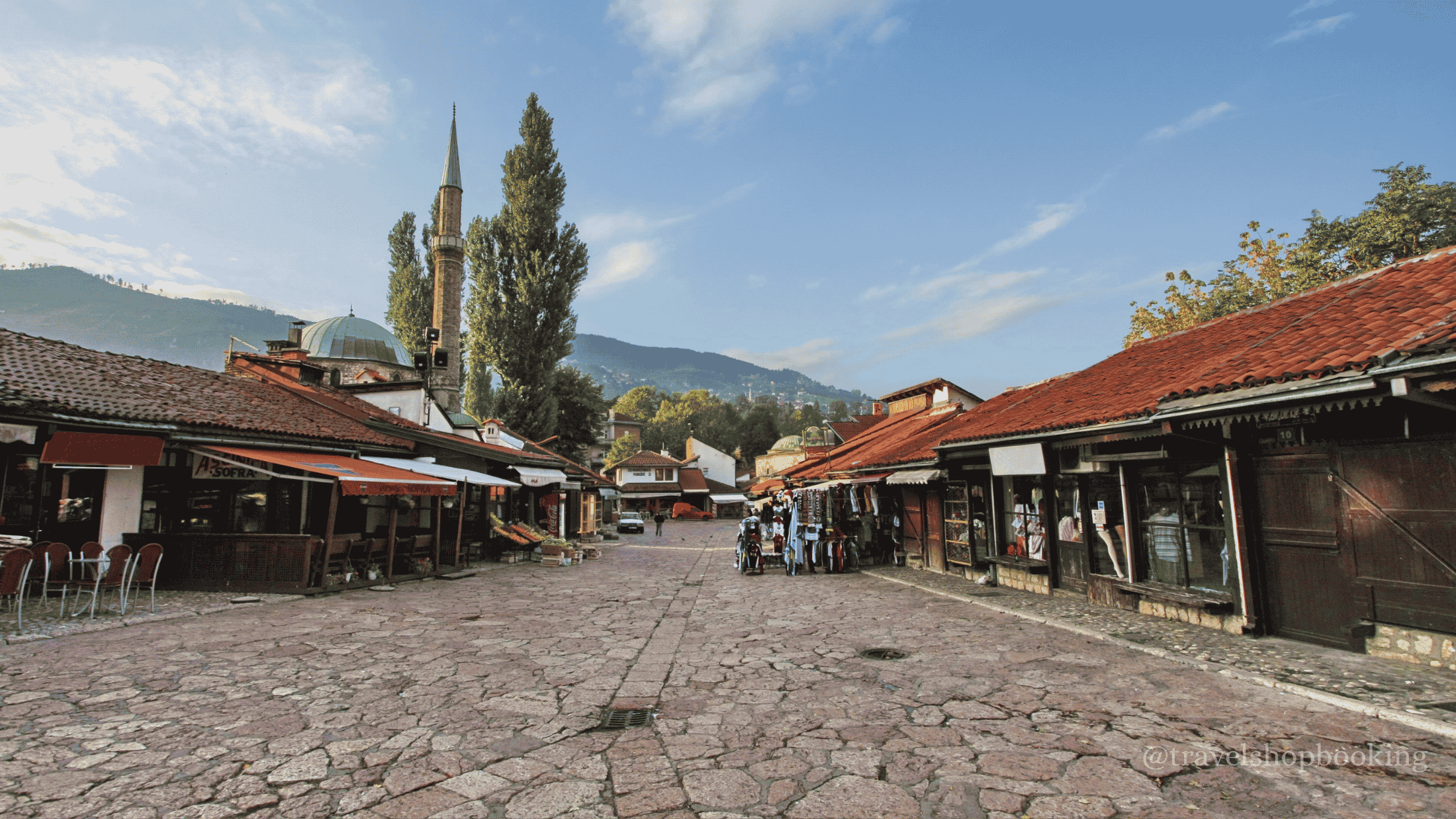
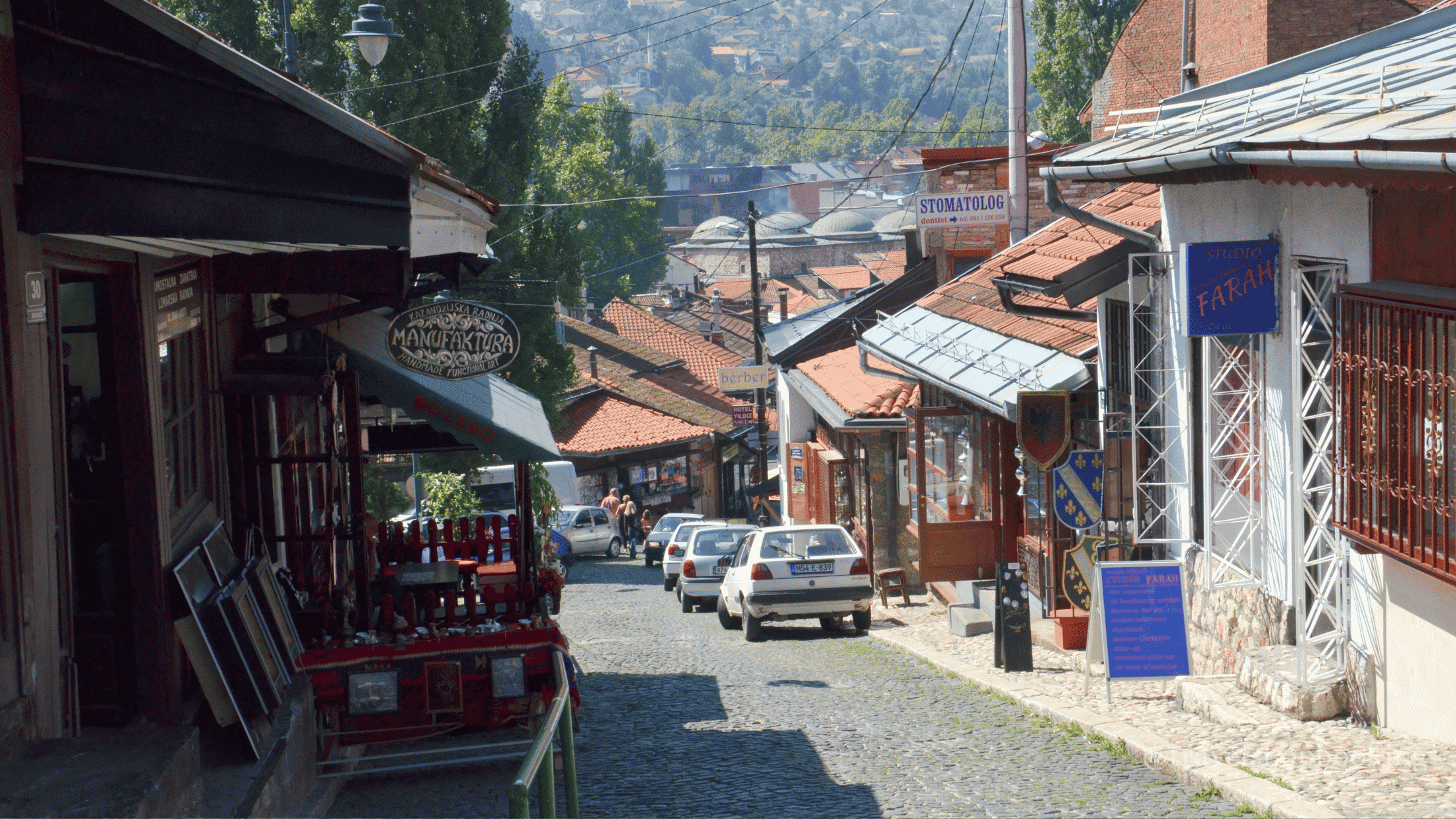
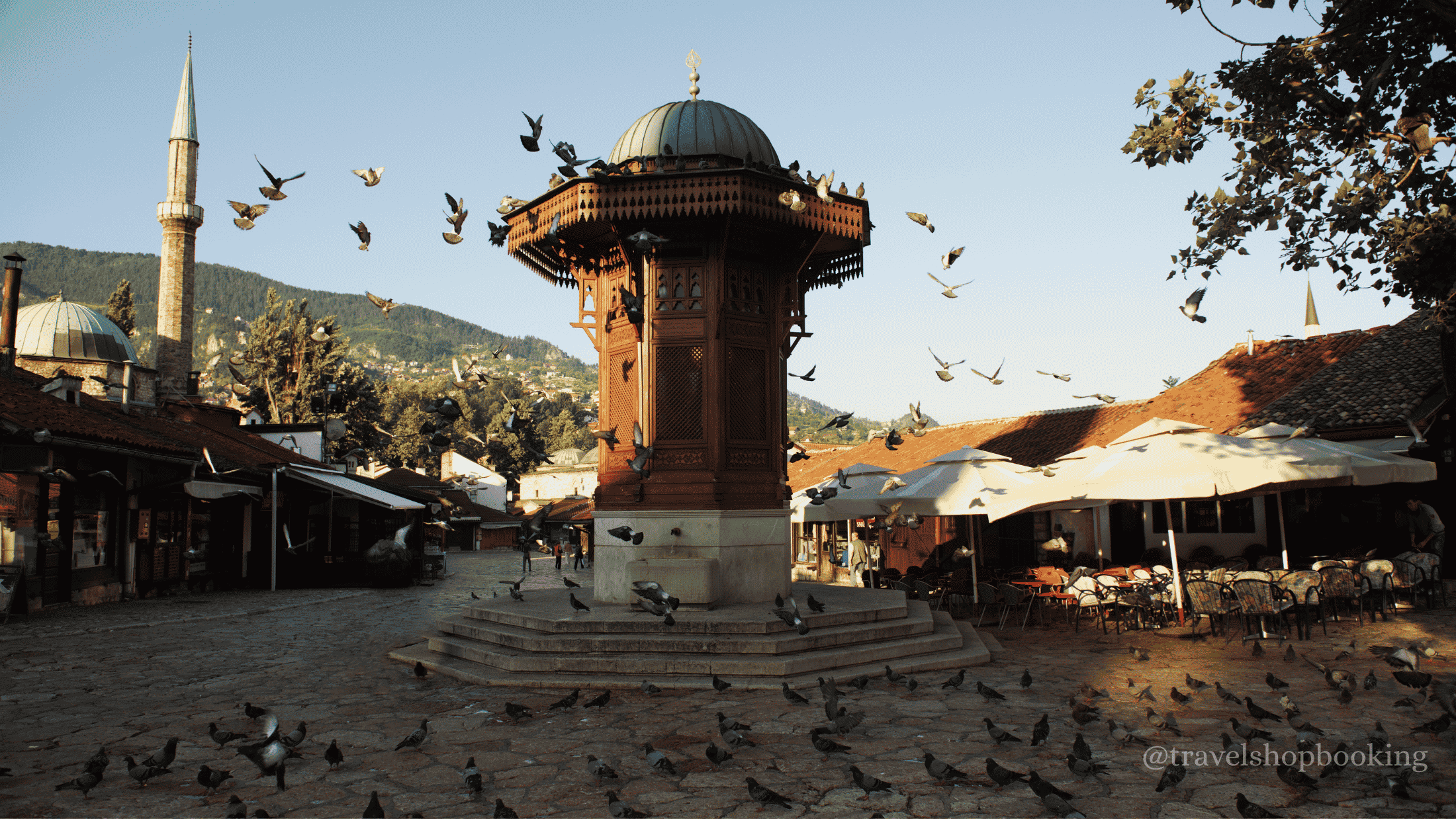
Baščaršija is the heart of the old city, with narrow streets, traditional workshops, cafés, mosques, and restaurants serving Bosnian dishes. Important places include Sebilj Fountain, Gazi Husrev-beg Mosque, Latin Bridge, Sarajevo City Hall, and the Sacred Heart Cathedral.
The city also has several museums and memorial sites connected to the First World War, the Yugoslav period, and the Siege of Sarajevo. For panoramic views, visitors can take the cable car to Trebević Mountain or walk to the Yellow Fortress around sunset.
Mostar
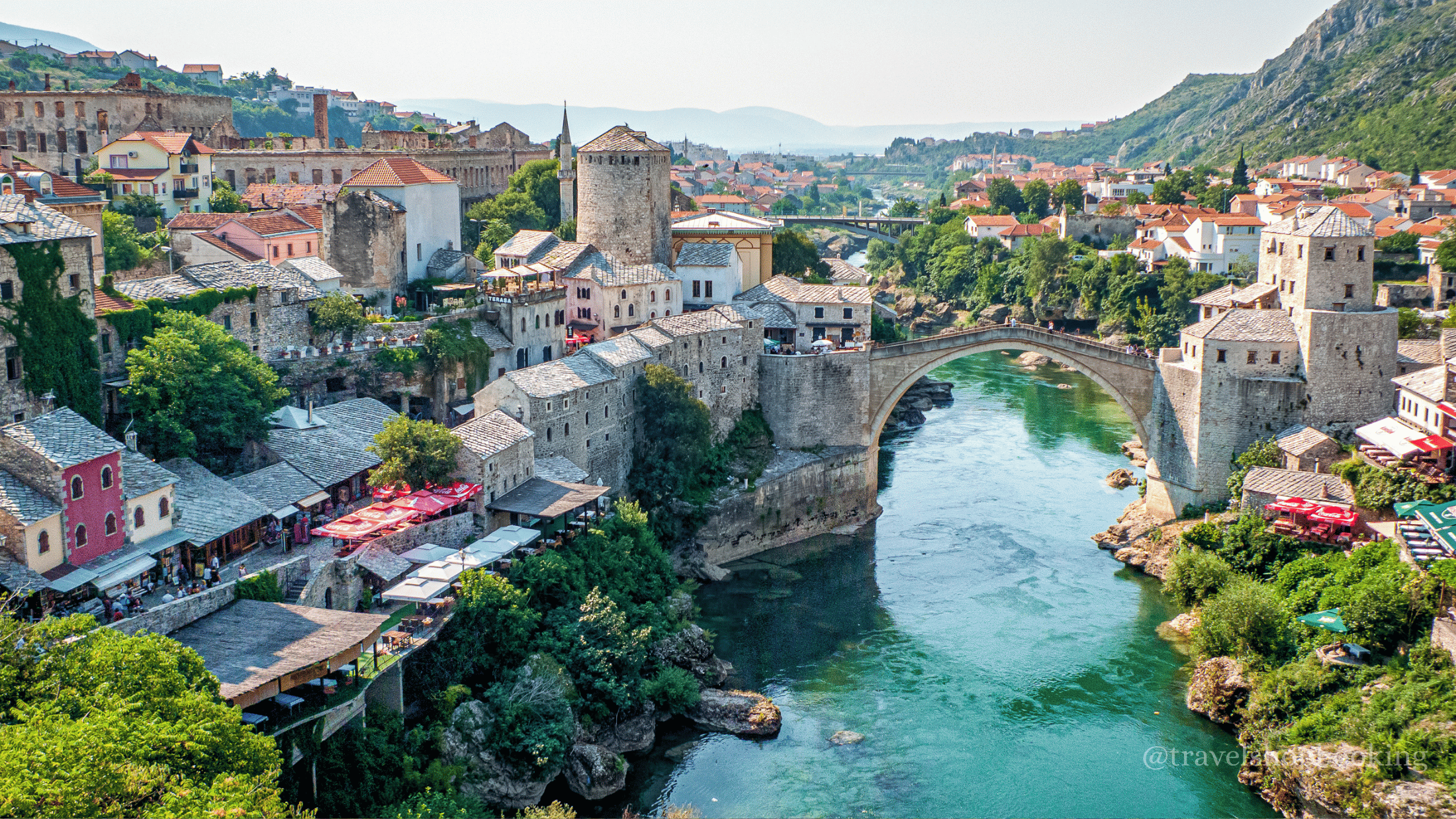
Mostar is best known for Stari Most, the reconstructed Ottoman bridge that crosses the Neretva River. The bridge and surrounding Old Town form one of the country’s most recognizable views.
The historic center includes cobbled lanes, traditional houses, mosques, market stalls, restaurants, and viewpoints over the river. Koski Mehmed Pasha Mosque is a popular place for views toward the bridge.
Mostar can become hot and busy during summer, so morning and late-afternoon visits are often more comfortable. The city is also a useful base for day trips to Blagaj, Počitelj, Kravica Waterfalls, and Međugorje.
Banja Luka
Banja Luka is the country’s second-largest city and the main urban center of the northwestern region. It has a more relaxed atmosphere than Sarajevo and is known for tree-lined streets, riverside areas, cafés, and surrounding nature.
The Kastel Fortress stands near the Vrbas River and is one of the city’s main historic landmarks. Visitors can also see the Cathedral of Christ the Saviour, Ferhadija Mosque, and several parks in the city center.
The Vrbas River is important to the region’s outdoor tourism. Rafting, kayaking, canyoning, and riverside trips can be arranged around Banja Luka, particularly during the warmer months.
Tuzla
Tuzla is known for its salt history and the Pannonian Lakes, a group of artificial saltwater lakes located close to the city center. During summer, the lakes become a popular recreational area.
The old town contains pedestrian streets, cafés, religious buildings, and Austro-Hungarian architecture. Tuzla is less tourist-focused than Sarajevo or Mostar, which gives visitors a more local city experience.
It can also be combined with visits to northeastern Bosnia, including Srebrenik Fortress and the medieval town of Gradačac.
Best Historical and Cultural Places in Bosnia and Herzegovina
The country’s cultural attractions include Ottoman towns, medieval fortresses, monasteries, bridges, and religious landmarks. Many can be visited as day trips from Sarajevo or Mostar.
Mostar Old Bridge
Stari Most is the central landmark of Mostar and one of the most important cultural sites in Bosnia and Herzegovina. The original bridge was built during the Ottoman period and was reconstructed after its destruction during the war.
The bridge connects the two sides of the Old Town and provides views over the Neretva River. Traditional bridge diving remains closely associated with Mostar, particularly during organized competitions.
The surrounding historic district is best explored on foot. Visitors should also walk down to the riverbank for a full view of the bridge and old stone buildings.
Baščaršija
Baščaršija is Sarajevo’s Ottoman-era market district and the city’s main historic quarter. It contains workshops, mosques, caravanserais, courtyards, bakeries, coffee houses, and restaurants.
The area is known for traditional crafts such as copperwork. Visitors can also try Bosnian coffee, ćevapi, burek, and local desserts while exploring the narrow streets.
Because several major landmarks are concentrated here, Baščaršija is usually the most convenient starting point for a Sarajevo walking tour.
Travnik
Travnik was once an important administrative center during the Ottoman period. Its historic core contains a fortress, mosques, traditional houses, fountains, and a colorful mosque known as the Šarena Džamija.
Travnik Castle overlooks the town and offers broad views across the valley. The town is also associated with Nobel Prize-winning author Ivo Andrić, whose birthplace has been converted into a museum.
Travelers often stop in Travnik while traveling between Sarajevo and Jajce. The town is also known for Travnik-style ćevapi and nearby Vlašić Mountain.
Počitelj
Počitelj is a historic stone settlement built into a hillside above the Neretva River. Its architecture reflects the Ottoman period, with stone houses, defensive walls, a mosque, a clock tower, and the remains of a fortress.
The village is small enough to explore in a few hours, but the steep paths require comfortable footwear. The upper sections provide views over the river valley and surrounding countryside.
Počitelj is commonly included on day trips from Mostar together with Blagaj and Kravica Waterfalls.
Jajce
Jajce is one of the country’s most historically important towns. It served as a royal center in medieval Bosnia and later became significant during the formation of socialist Yugoslavia.
Its best-known feature is the waterfall located near the old town, where the Pliva River meets the Vrbas River. Other attractions include Jajce Fortress, catacombs, medieval gates, religious buildings, and the AVNOJ Museum.
Nearby Pliva Lakes and the traditional watermills provide additional reasons to spend more than a few hours in the area.

Best Natural Attractions in Bosnia and Herzegovina
Bosnia and Herzegovina is covered by mountains, forests, rivers, lakes, and waterfalls. Many of its strongest natural attractions remain relatively uncrowded outside summer weekends.
Una National Park
Una National Park is located in northwestern Bosnia and Herzegovina near the town of Bihać. It protects a section of the Una River known for clear water, waterfalls, forested banks, and rafting routes.
Štrbački Buk is the park’s most famous waterfall and one of the country’s most impressive natural attractions. Martin Brod is another important area, with cascades, old watermills, and walking routes.
The park is especially suitable for rafting, kayaking, photography, and nature trips. A car is useful because the main attractions are spread across a wide area.
Sutjeska National Park
Sutjeska is the oldest national park in Bosnia and Herzegovina and one of the country’s top destinations for serious hiking and mountain scenery.
The park includes Maglić, the country’s highest mountain, as well as Perućica, one of Europe’s remaining primeval forests. Skakavac Waterfall and the Trnovačko Lake hiking route are among the main natural highlights.
Some areas require local knowledge, suitable equipment, or a guide. Travelers should check trail and road conditions before entering remote sections of the park.
Kravica Waterfalls
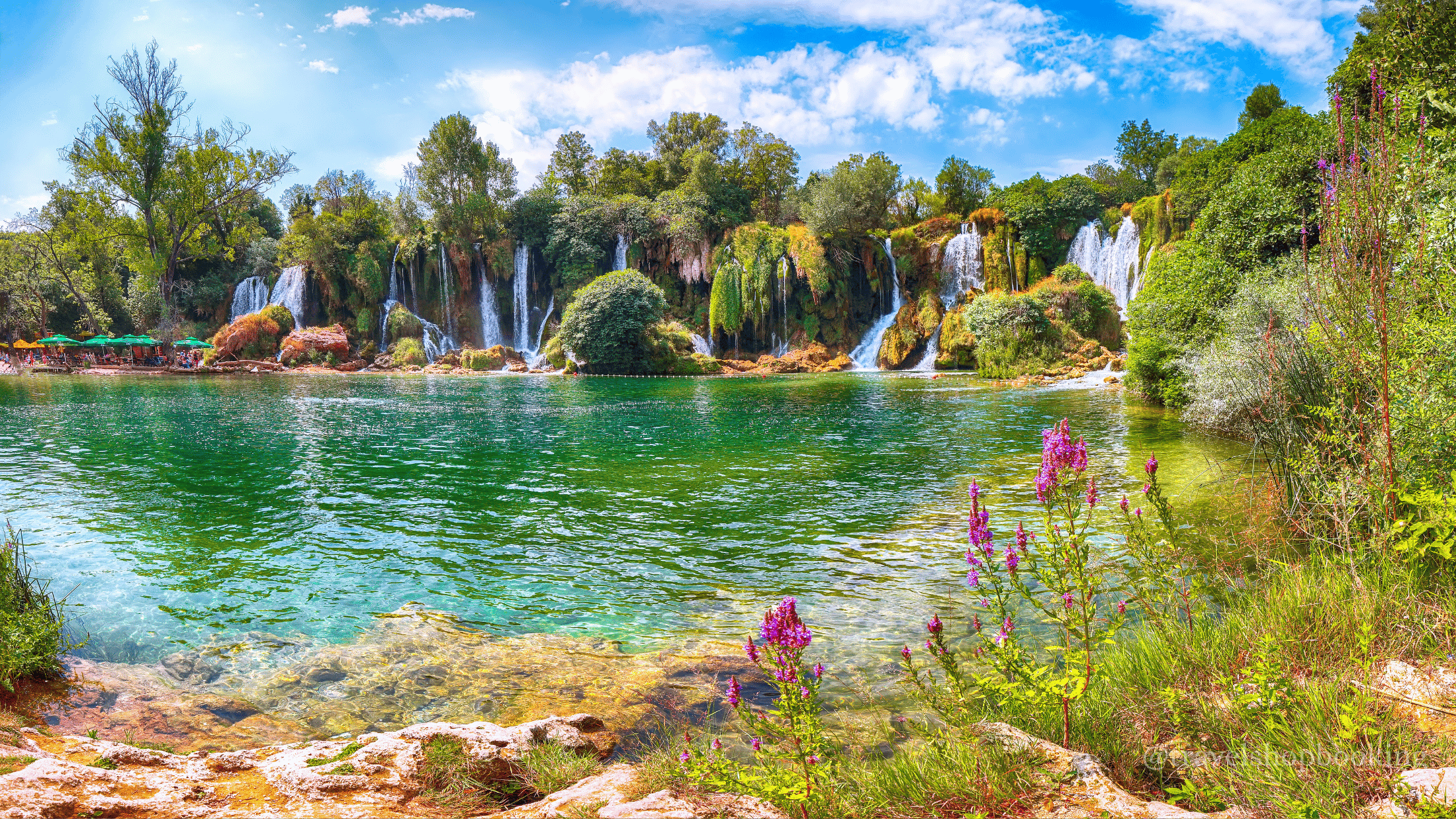
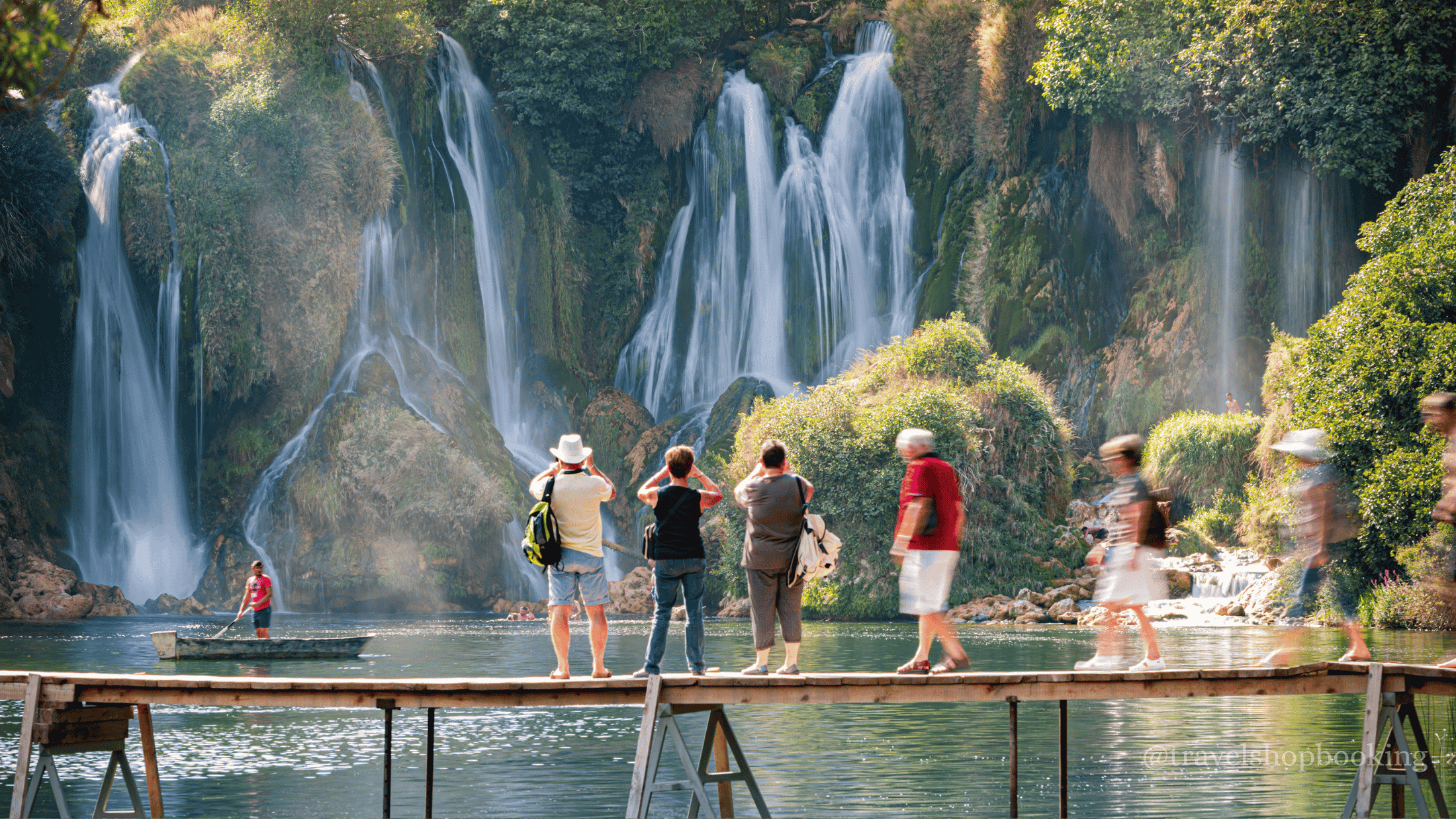
Kravica Waterfalls are among the most popular natural attractions in Herzegovina. The waterfalls form a wide semicircle surrounded by vegetation, with a swimming area below.
Late spring usually provides stronger water flow, while summer is better for swimming and spending time beside the falls. The area becomes busy during July and August, so arriving early is recommended.
Kravica can easily be combined with Mostar, Počitelj, Blagaj, or Međugorje.
Blidinje Nature Park
Blidinje Nature Park is a mountain area located between several major peaks in Herzegovina. It is known for Blidinje Lake, pine forests, hiking trails, traditional settlements, and winter scenery.
The park is a good choice for travelers interested in quieter outdoor destinations. Hiking, cycling, photography, and seasonal winter activities are available depending on conditions.
Masna Luka and the surrounding mountain areas provide some of the park’s best scenery.
Prokoško Lake
Prokoško Lake is a small glacial lake located on Vranica Mountain. Traditional wooden and stone shepherd houses surround the lake, creating one of the country’s most recognizable mountain landscapes.
The road can be difficult, particularly after rain, and access conditions may vary. Many travelers use a suitable vehicle or join an organized excursion.
The destination is best visited in the warmer months when mountain roads are open and the surrounding pastures are green.
Best Small Towns and Villages in Bosnia and Herzegovina
Smaller destinations often provide a quieter and more traditional experience than the main cities. Several can be added to road trips between Sarajevo, Mostar, and western Bosnia.
Blagaj
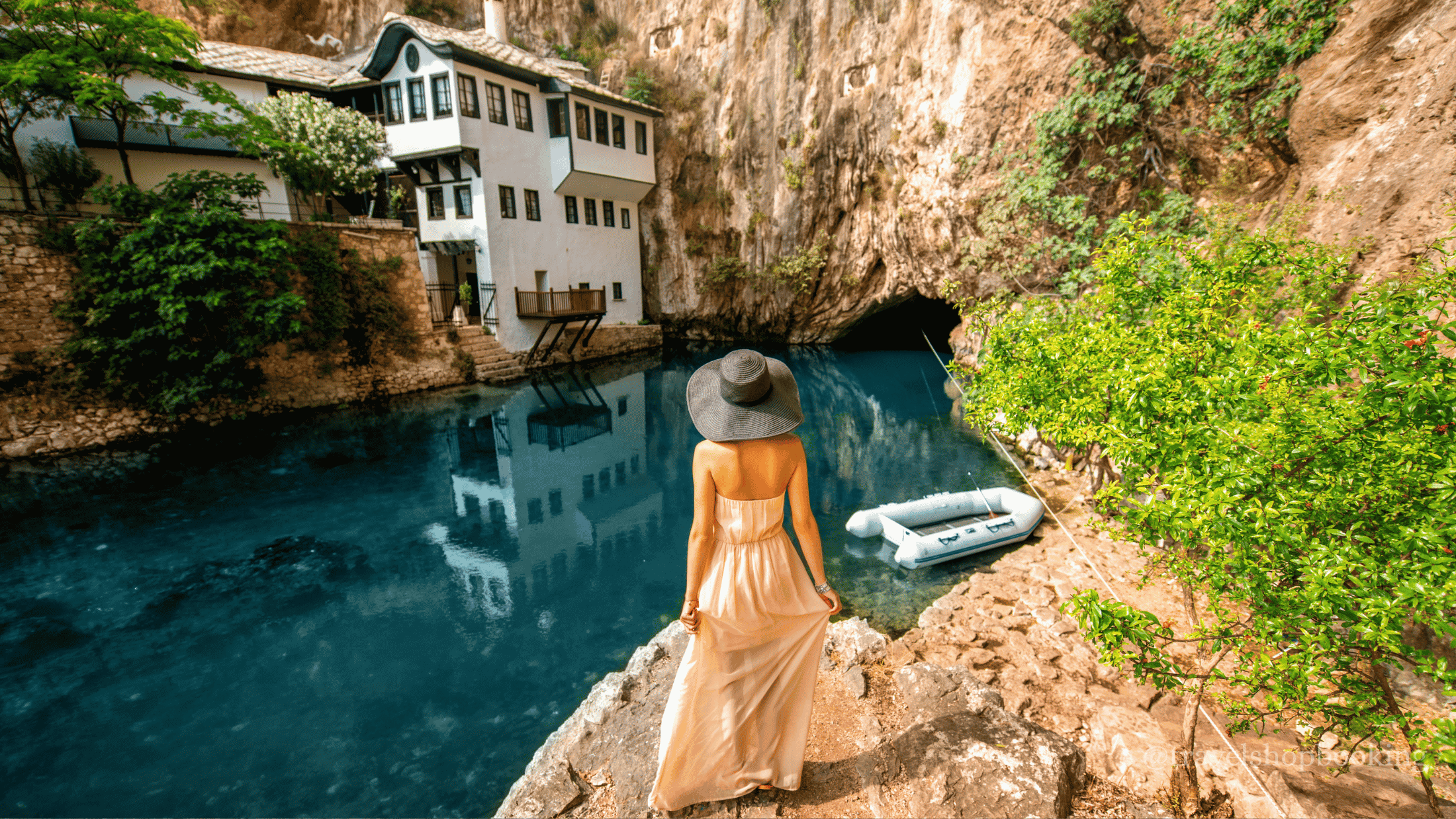
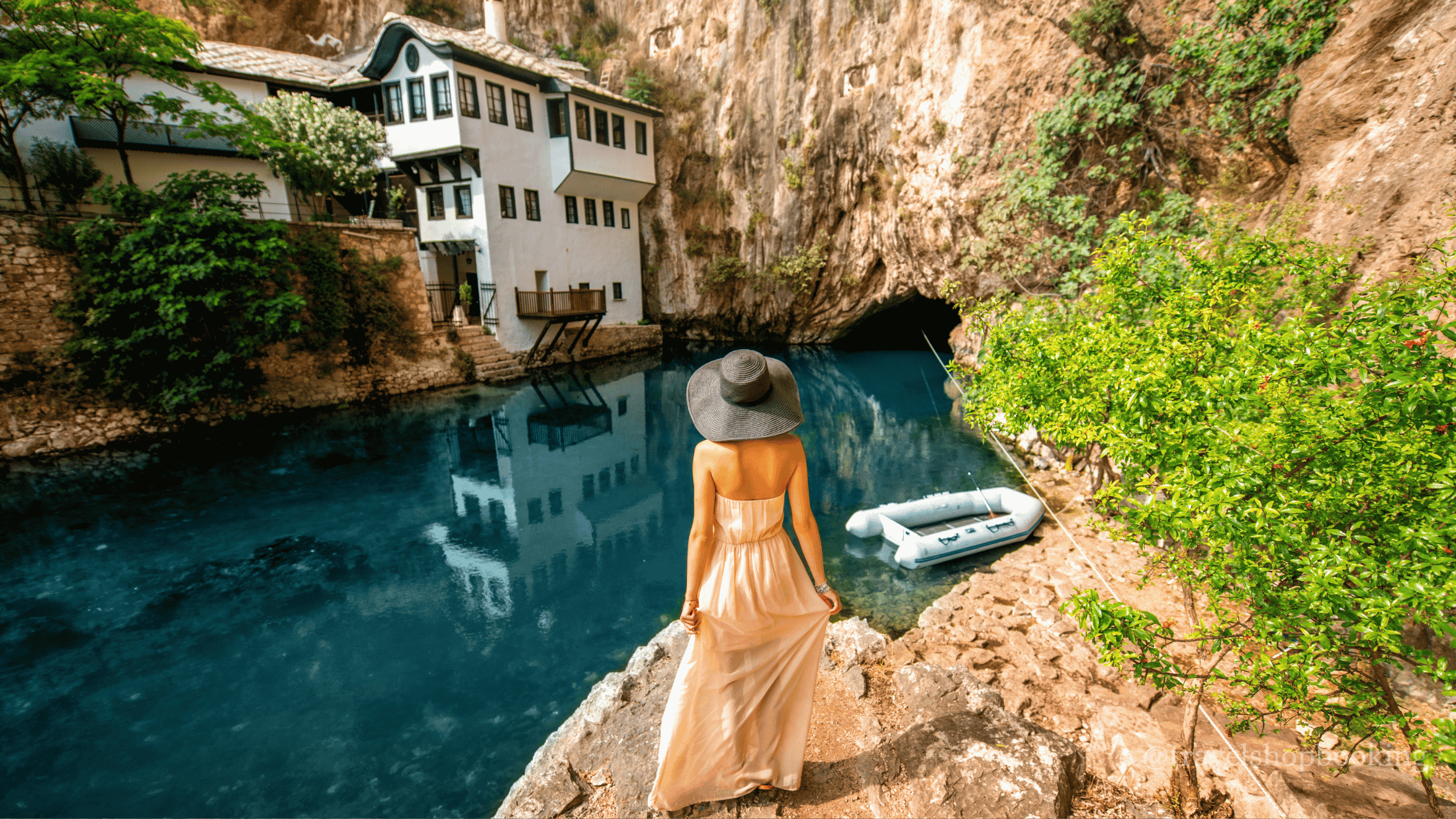
Blagaj is located near Mostar and is famous for the source of the Buna River. The river emerges from beneath a high limestone cliff beside the historic Blagaj Tekke.
Restaurants line the riverbank, offering views of the water and cliff. The area is especially attractive in spring and early summer when the landscape is green.
Blagaj is usually visited as a half-day trip from Mostar and can be combined with Počitelj and Kravica Waterfalls.
Konjic
Konjic is a small town between Sarajevo and Mostar, set along the Neretva River. Its old stone bridge, riverside streets, and mountain surroundings make it a convenient stop on the main route through the country.
The area is one of Bosnia and Herzegovina’s main rafting centers. Trips on the Neretva River usually begin near Konjic during the warmer months.
The town is also known for Tito’s Bunker, a large underground Cold War complex that can be visited on guided tours.
Bihać
Bihać is the main base for visiting Una National Park. The city sits beside the Una River and has a compact center with historic buildings, cafés, and riverside walks.
Most travelers stay in Bihać before visiting Štrbački Buk, Martin Brod, and other parts of the national park.
The region works well for a two- or three-day nature-focused trip, especially for visitors interested in rafting and waterfalls.
Trebinje
Trebinje is located in southern Herzegovina, close to the borders with Croatia and Montenegro. The city has a Mediterranean atmosphere, a small old town, riverside areas, vineyards, and warm weather.
Important places include the old stone bridge, central market square, Hercegovačka Gračanica Monastery, and nearby wineries.
Trebinje can be combined with Dubrovnik, Kotor, or a wider road trip through southern Bosnia and Herzegovina.
Hidden Gems in Bosnia and Herzegovina
Several lesser-known destinations provide impressive scenery or historical value without the visitor numbers found in Sarajevo and Mostar.
Lukomir
Lukomir is one of the highest inhabited villages in Bosnia and Herzegovina. Located on Bjelašnica Mountain, it is known for stone houses, traditional clothing, mountain views, and access to the Rakitnica Canyon.
The village is best visited during the warmer months, as winter conditions can make access difficult. Hiking routes connect Lukomir with surrounding mountain areas.
It is a strong option for travelers interested in rural culture and highland landscapes.
Vrelo Bosne
Vrelo Bosne is a protected park near Sarajevo where the Bosna River begins. The area contains springs, walking paths, small bridges, trees, and picnic spaces.
It is one of the easiest nature escapes from Sarajevo and can be reached by road or by walking along the tree-lined Velika Aleja from Ilidža.
The park is suitable for families, relaxed walks, and short trips away from the city center.
Pliva Lakes
The Great and Small Pliva Lakes are located near Jajce and provide opportunities for kayaking, walking, cycling, fishing, and lakeside relaxation.
Between the lakes, a group of traditional wooden watermills forms one of the area’s most photographed scenes.
A visit to the lakes can be combined with Jajce’s waterfall, fortress, and historical center.
Vjetrenica Cave
Vjetrenica is one of the most important cave systems in the region. It is located in southern Herzegovina near the village of Ravno.
Guided visits introduce travelers to underground chambers, rock formations, water channels, and cave species. The interior remains cool throughout the year, so an extra layer of clothing is useful even during summer.
The cave can be included in a southern Herzegovina itinerary together with Trebinje.
Frequently Asked Questions
What are the best places to visit in Bosnia and Herzegovina for first-time visitors?
Sarajevo, Mostar, Blagaj, Počitelj, Kravica Waterfalls, and Jajce are among the best choices for a first visit. Together, they provide a balanced introduction to the country’s cities, history, and natural scenery.
What is the most beautiful place in Bosnia and Herzegovina?
The answer depends on travel interests. Mostar is the best-known historic view, while Una National Park, Sutjeska National Park, Kravica Waterfalls, and Prokoško Lake are among the country’s most beautiful natural areas.
Is Bosnia and Herzegovina worth visiting?
Yes. The country offers strong cultural attractions, historic towns, mountain landscapes, clear rivers, waterfalls, local food, and outdoor activities. It is particularly suitable for travelers interested in history, nature, and Balkan culture.
How many days are enough for Bosnia and Herzegovina?
Five to seven days are enough for Sarajevo, Mostar, Blagaj, Počitelj, and Jajce. Eight to ten days are better for travelers who also want to include Una National Park, Sutjeska National Park, Trebinje, or rafting.
Is Sarajevo or Mostar better?
Sarajevo is better for museums, layered history, food, and a longer city stay. Mostar is better for Ottoman architecture, river views, and nearby day trips. Most first-time itineraries should include both.
What is Bosnia and Herzegovina famous for?
Bosnia and Herzegovina is known for Sarajevo, Mostar’s Old Bridge, Ottoman heritage, mountain landscapes, rivers, waterfalls, Bosnian coffee, ćevapi, and its complex modern history.
Can you travel around Bosnia and Herzegovina without a car?
The main cities can be reached by bus or train, and the Sarajevo–Mostar railway is particularly scenic. However, a car or organized tour is more practical for national parks, waterfalls, mountain villages, and smaller historic towns.
Loading comments…