
Bosnia and Herzegovina Sarajevo Tours
100+ tours & activities
Free Cancellation
8 days on Western Balkans
-high.jpg&w=1920&q=75 "10 Days from Turkey: Bosnia & Croatia Tour")
Free Cancellation
10 Days from Turkey: Bosnia & Croatia Tour
Free Cancellation
Bosnia & Herzegovina Tour
Free Cancellation
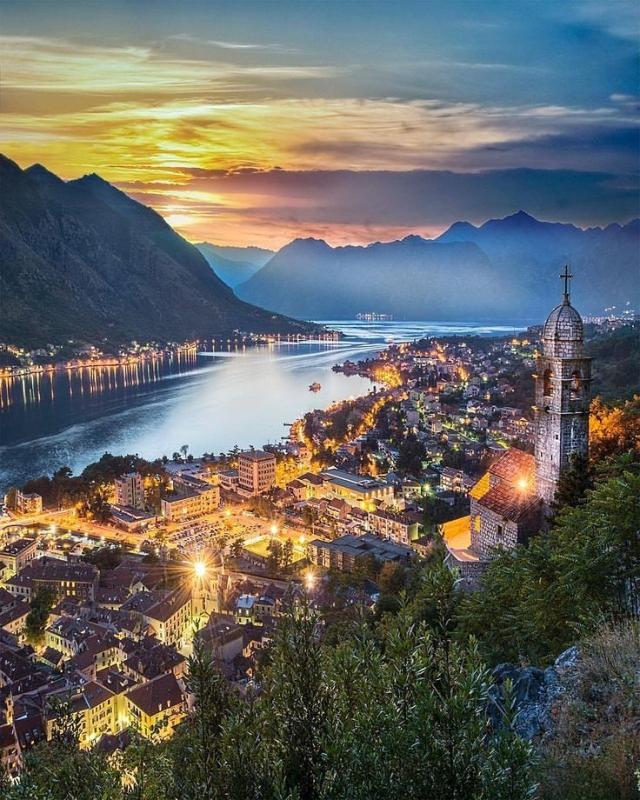
Bosnia & Croatia & Montenegro
Free Cancellation
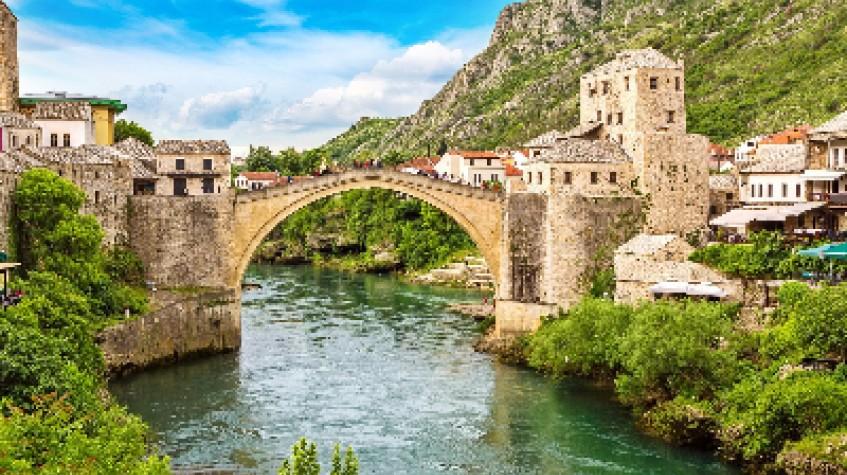
Sarajevo to Mostar Day Trip
Free Cancellation
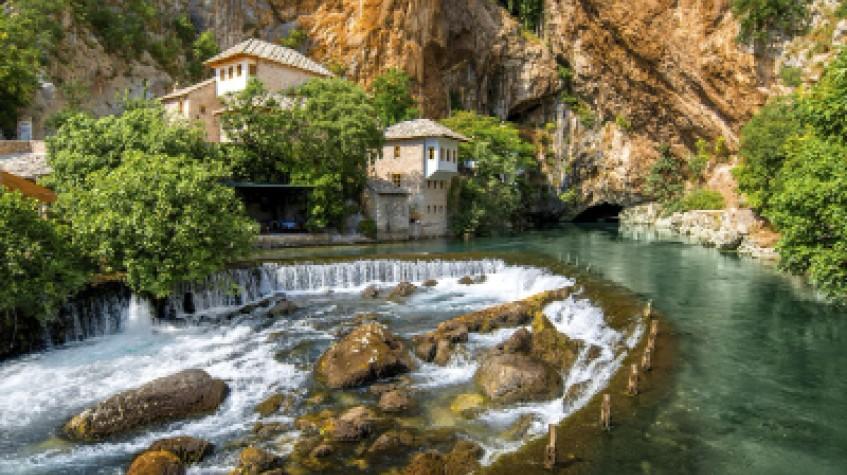
7 Days Bosnia and Herzegovina Tour
-high.jpg&w=1920&q=75 "Balkans 12 Day Tour Bosnia Montenegro Albania Cultural Experience")
Free Cancellation
Balkans 12 Day Tour Bosnia Montenegro Albania Cultural Experience
Free Cancellation
Bosnian Odyssey: A 5 Day Exploration Tour Packages
Free Cancellation
6 Balkan countries tour: From Sarajevo to Belgrade
-high.jpg&w=1920&q=75 "From Sarajevo to Sofia: Tour of 6 Balkan countries")
Free Cancellation
From Sarajevo to Sofia: Tour of 6 Balkan countries
Free Cancellation
Visit Bosnia 5 Days Tour All Included
Free Cancellation
Big tour Bosnia & Herzegowina
-high.jpg&w=1920&q=75 "19 Days Europe Balkan Countries Tour")
PopularFree Cancellation
19 Days Europe Balkan Countries Tour
-high.jpg&w=1920&q=75 "21 Day Europe Balkan Combined Tour")
PopularFree Cancellation
21 Day Europe Balkan Combined Tour
-high.jpg&w=1920&q=75 "16 Days Grand Balkan Countries Tour")
Free Cancellation
16 Days Grand Balkan Countries Tour
-high.jpg&w=1920&q=75 "23 Days Balkan Countries Combined Tour")
Free Cancellation
23 Days Balkan Countries Combined Tour
-high.jpg&w=1920&q=75 "24 Days Europe Balkan Countries Tour")
Free Cancellation
24 Days Europe Balkan Countries Tour
-high.jpg&w=1920&q=75 "13 Days Yugoslavia Long Tour")
Free Cancellation
13 Days Yugoslavia Long Tour
Explore Bosnia and Herzegovina Sarajevo Tours
About Bosnia and Herzegovina Sarajevo Tours
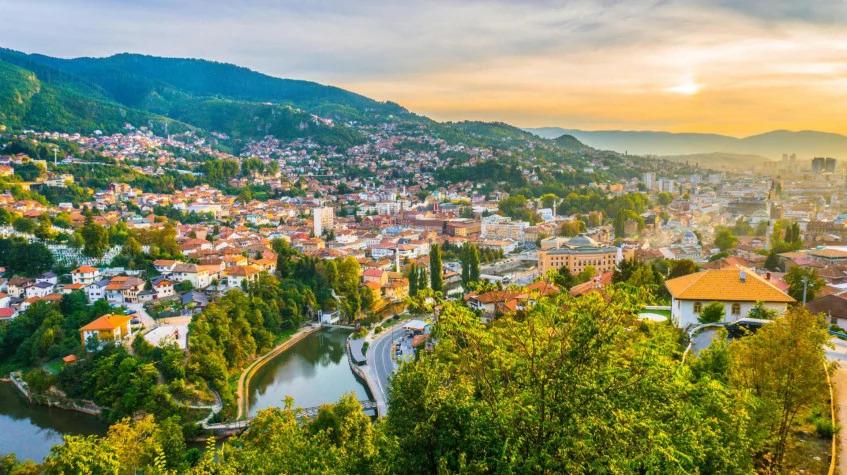
Sarajevo Tours introduce visitors to the capital of Bosnia and Herzegovina, a city set in a narrow valley along the Miljacka River and ringed by the mountains that hosted the 1984 Winter Olympics. Ottoman, Austro-Hungarian, Yugoslav and post-war layers sit within a few streets of each other here, and Sarajevo's mosques, synagogue, Catholic cathedral and Orthodox church standing close together have long given it a reputation for religious diversity rarely matched elsewhere in Europe.
Most visitors treat Sarajevo as a base for exploring wider Bosnia and Herzegovina, combining a few days in the capital with trips to Mostar or the mountains. Walking tours typically cover the old town, the sites connected to the 1990s siege and one of the surrounding hills for a view over the valley.
Baščaršija: the Ottoman Old Town
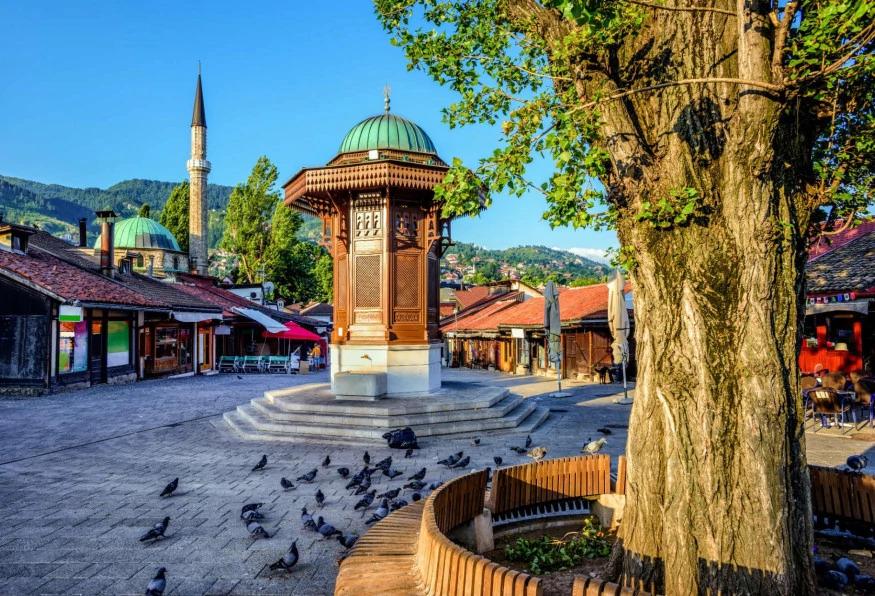
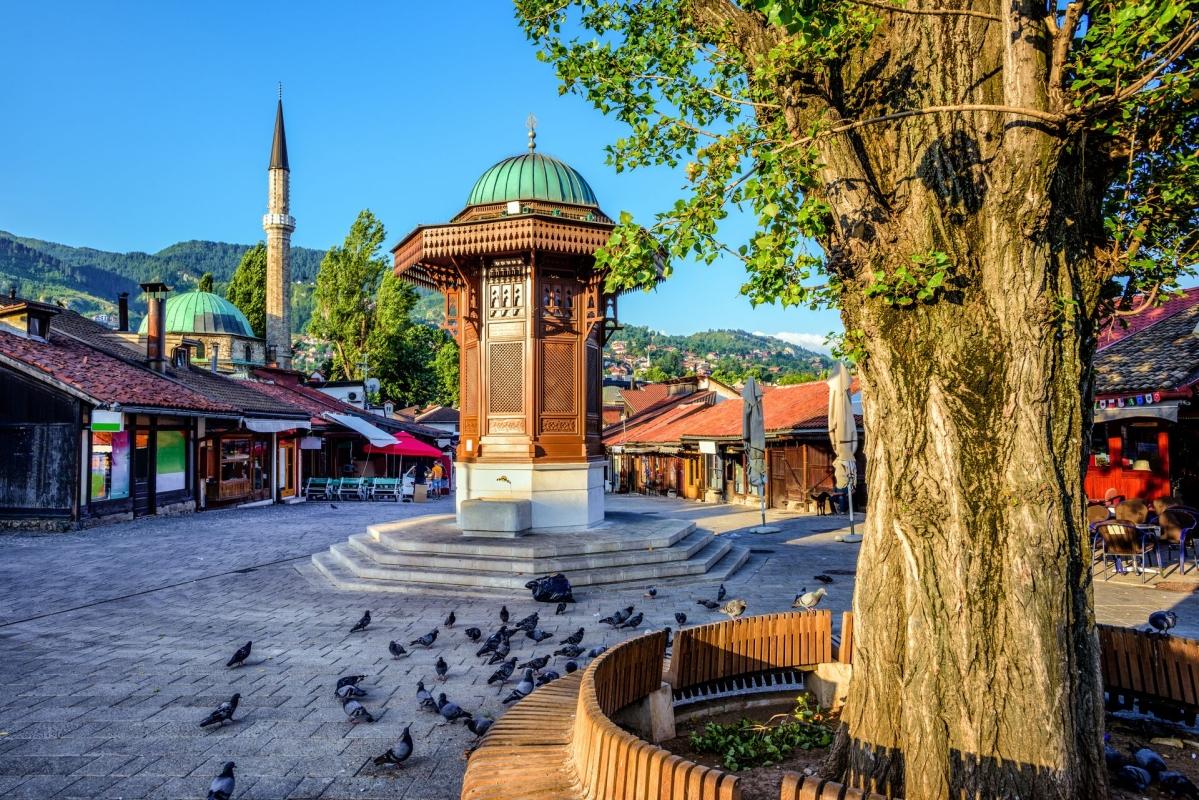
Founded in the fifteenth century under governor Isa-Beg Ishaković, Baščaršija remains Sarajevo's commercial heart, its narrow lanes lined with copper workshops, cafes and the Sebilj, a wooden fountain that has become the informal symbol of the city. Gazi Husrev-beg Mosque, completed in 1531, is the largest Ottoman mosque in the Balkans and still functions as an active place of worship alongside its adjoining madrasa and library.
A City of Four Faiths
Within a few minutes' walk of Baščaršija stand the Sacred Heart Cathedral, Sarajevo's Catholic seat consecrated in 1889, the Old Orthodox Church with roots reaching back to the sixteenth century, and the Old Jewish Synagogue, now a museum documenting a Sephardic community that settled here after 1492. This clustering of Islamic, Catholic, Orthodox and Jewish sites in a single quarter is central to how guided tours frame the city, and it earned Sarajevo the description "Jerusalem of Europe" long before the twentieth century's conflicts.
The 1984 Winter Olympics
Sarajevo hosted the Winter Olympics in February 1984, the first Winter Games held in a socialist country, with events spread across the surrounding peaks of Bjelašnica, Igman and Trebević. The bobsled and luge track on Trebević, abandoned since the 1990s and now covered in graffiti, draws hikers and cyclists who reach it by the cable car that reconnected the mountain to the city center in 2018 after standing unused since the war.
Sarajevo's Siege and the Tunnel of Hope
Between 1992 and 1996, Sarajevo endured the longest siege of a capital city in modern warfare, and its effects remain visible in building facades and in memorials across the city. The Tunnel of Hope, a passage dug beneath the airport runway to connect the besieged city with free territory, preserves a section of the original tunnel along with photographs and personal accounts from the period. The museum sits on the edge of the city near the airport and is commonly included in half-day tours alongside the Latin Bridge, where the assassination of Archduke Franz Ferdinand in June 1914 set off the chain of events leading to the First World War.
Vrelo Bosne and Coffee Culture
At the western edge of the city, Vrelo Bosne marks the spring where the Bosna River emerges from beneath Mount Igman, its small islands and horse-drawn carriage paths a common half-day escape from the old town within the spa suburb of Ilidža, developed during the Austro-Hungarian period. Back in Baščaršija, Bosnian coffee brewed in a copper džezva and served with rahat lokum remains a daily ritual, and Markale, the open-air market a few streets away, sells produce and baked goods on the same ground marked today by plaques recalling the mortar attacks it suffered during the siege.
Sarajevo Tour Packages
Multi-day packages built around Sarajevo typically combine the old town, siege-related sites and a regional excursion, often extending into Herzegovina. The Big tour Bosnia & Herzegowina package is one such itinerary that pairs the capital with destinations further south. Shorter stays sometimes add a single day trip to Mostar or the mountain towns south of the city before a final night back in Sarajevo.
Best Time to Visit Sarajevo
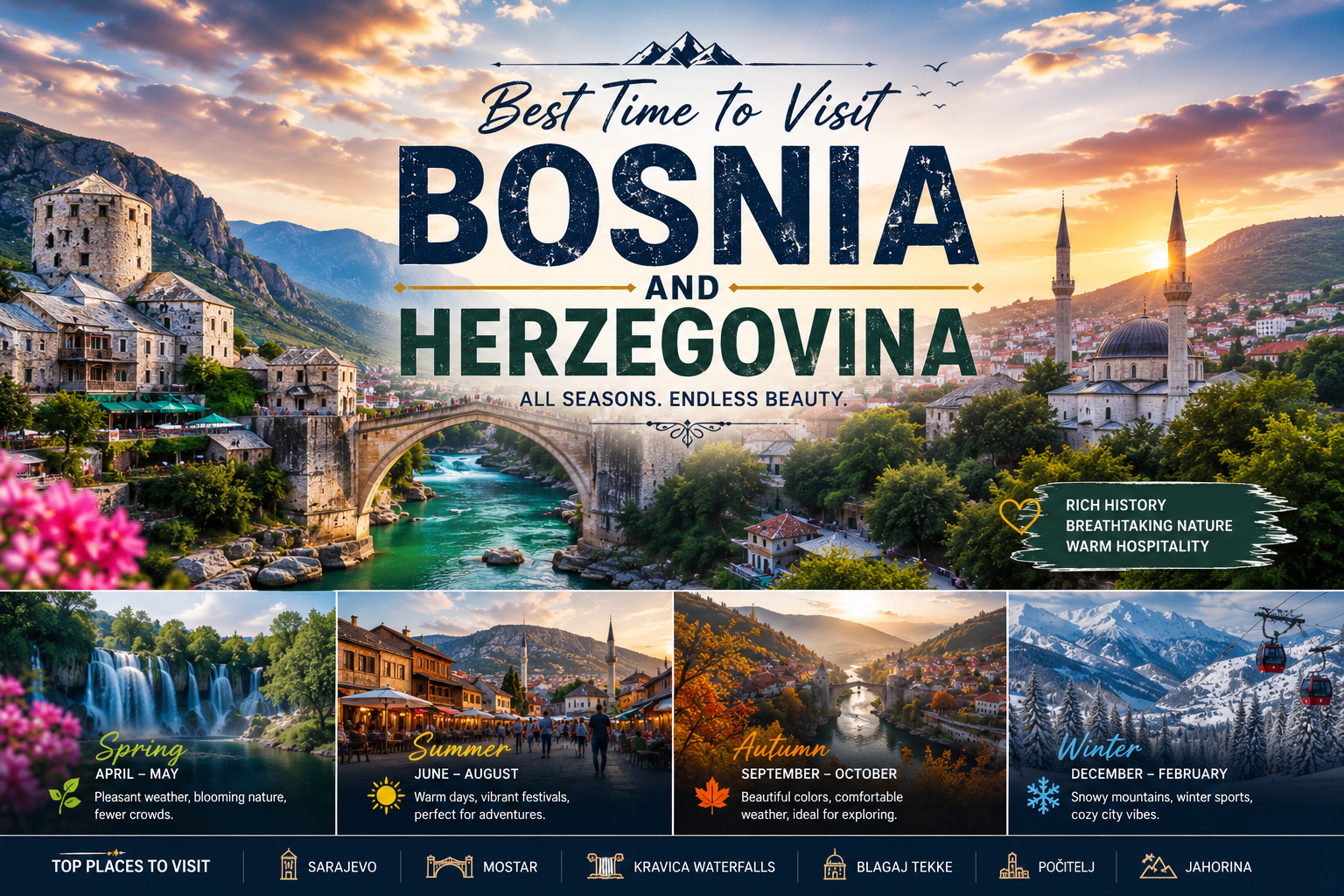
May, June, September and October bring mild days suited to walking the old town and riding the Trebević cable car, with fewer crowds than midsummer. Winter turns Sarajevo into a ski base again, with Bjelašnica and Jahorina both within an hour of the city center, while July and August can be warm in the valley but remain the peak season for outdoor cafes and festivals. August also brings the Sarajevo Film Festival, one of the region's larger cultural events, filling cafes and cinemas across the city center.