-high.jpg&w=1920&q=75 "Bosnian Culinary Adventures")
Free Cancellation
-high.jpg&w=1920&q=75 "19 Days Europe Balkan Countries Tour")
-high.jpg&w=1920&q=75 "21 Day Europe Balkan Combined Tour")
-high.jpg&w=1920&q=75 "16 Days Grand Balkan Countries Tour")
-high.jpg&w=1920&q=75 "23 Days Balkan Countries Combined Tour")
-high.jpg&w=1920&q=75 "24 Days Europe Balkan Countries Tour")
-high.jpg&w=1920&q=75 "13 Days Yugoslavia Long Tour")
-high.jpg&w=1920&q=75 "23 Days Asia Europe and Balkan Countries Tour")
-high.jpg&w=1920&q=75 "Balkan Explorer: 5-Day Journey Through Croatia, Bosnia, Montenegro & Albania")
-high.jpg&w=1920&q=75 "10 Days from Turkey: Bosnia & Croatia Tour")
-high.jpg&w=1920&q=75 "Best Balkan Tour Packages 13 Day 12 Night")
-high.jpg&w=1920&q=75 "11 Days Grand Balkan Tour Starting from Bulgaria")
Mostar Tours center on the city that gives Herzegovina its historic identity, built along the Neretva River in the country's south. The Ottoman-era Stari Most bridge, rebuilt after its wartime destruction, remains the reason most travelers come, but the streets around it hold a working old bazaar, several historic mosques and a river gorge that draws divers and swimmers through the summer.
Most travelers see it as a day trip or overnight stop within a broader Bosnia and Herzegovina itinerary, often paired with Sarajevo to the north or the coastal towns of Croatia. Its compact old town makes it manageable on foot, with most sights within a short walk of the bridge.
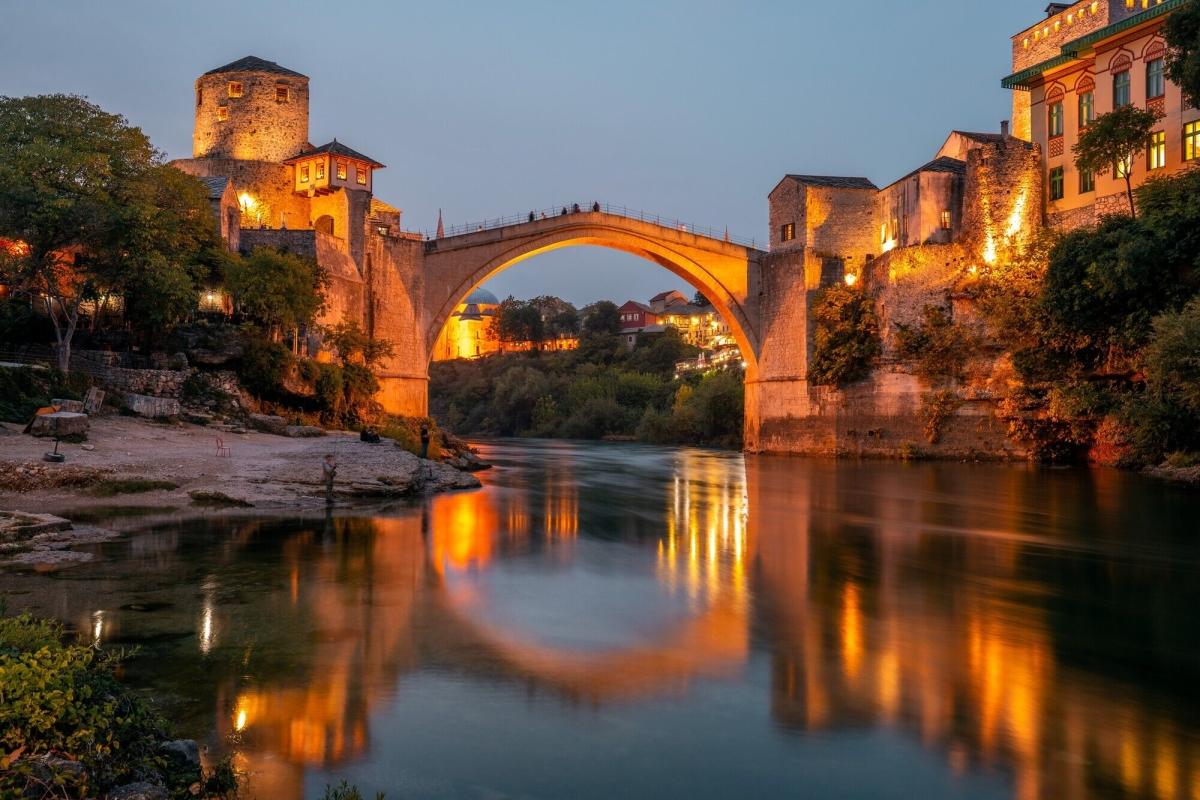
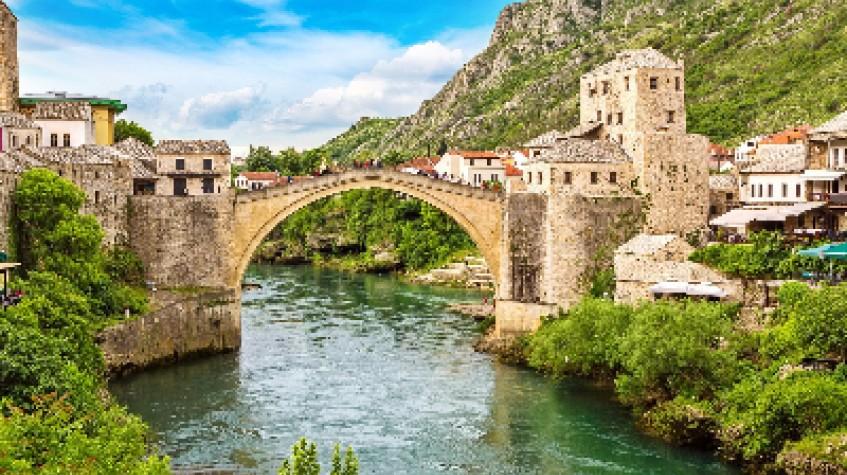
Built in 1566 under the direction of Ottoman architect Mimar Hayruddin, Stari Most spans the Neretva at a height of roughly 24 meters above the water. Shelling destroyed the bridge in 1993 during the Bosnian War, and it was rebuilt using original construction techniques and reopened in 2004; UNESCO lists the Old Bridge Area of Mostar as a World Heritage Site. Local divers still jump from the parapet into the river below, a tradition that predates the war by more than a century.
Kujundžiluk, the cobbled street of the old bazaar, runs from the bridge past coppersmith workshops selling engraved plates and jewelry in a craft tradition still practiced by local families. The Koski Mehmed Pasha Mosque, completed in 1617, has a minaret open to visitors, with a platform that gives one of the closer views down onto the bridge and river. The Mostar Peace Bell Tower and the scarred facades along the Old Frontline, a street that marked the division of the city during the war, sit a short walk from the bazaar.
A small exhibition inside one of the bridge's stone towers documents the medieval construction of Stari Most and its reconstruction after the war, tracing the span from destruction in 1993 to its reopening eleven years later through photographs and salvaged fragments. Along the Old Frontline, buildings left largely as they were during the conflict stand a few streets from the restored old town, giving visitors a fuller picture of Mostar's twentieth-century history alongside its Ottoman-era architecture.
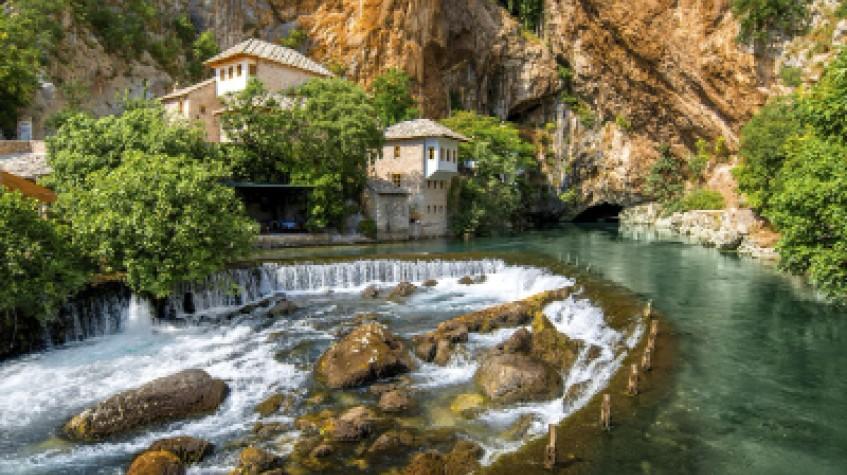
Blagaj, twelve kilometers south, centers on a sixteenth-century Sufi dervish house built directly into the cliff face at the source of the Buna River, one of the strongest natural springs in Europe. Počitelj, a fortified hilltop village on the road toward Croatia, preserves an Ottoman tower, mosque and stone houses largely unchanged since the seventeenth century. Rafting trips on the Neretva, launched from villages north of the city near Konjic, add a half-day of white water to itineraries that also take in Blagaj and Počitelj.
Herzegovina's warmer climate supports vineyards around Mostar producing Žilavka and Blatina wines, alongside orchards of figs and pomegranates. Cooking-focused tours in the city introduce dishes such as ćevapi, dolma and Bosnian coffee prepared in a džezva, often built around the Bosnian Culinary Adventures itinerary in a home kitchen setting.
April through June and September through October bring mild temperatures well suited to walking the old town and visiting nearby Blagaj and Počitelj. July and August are hot, often above 35 degrees Celsius, though this is also when the bridge divers perform most regularly and the Neretva is warm enough for swimming. Shoulder-season visits also make it easier to cross Stari Most and browse Kujundžiluk without the density of midsummer day-trip groups arriving from the coast.