
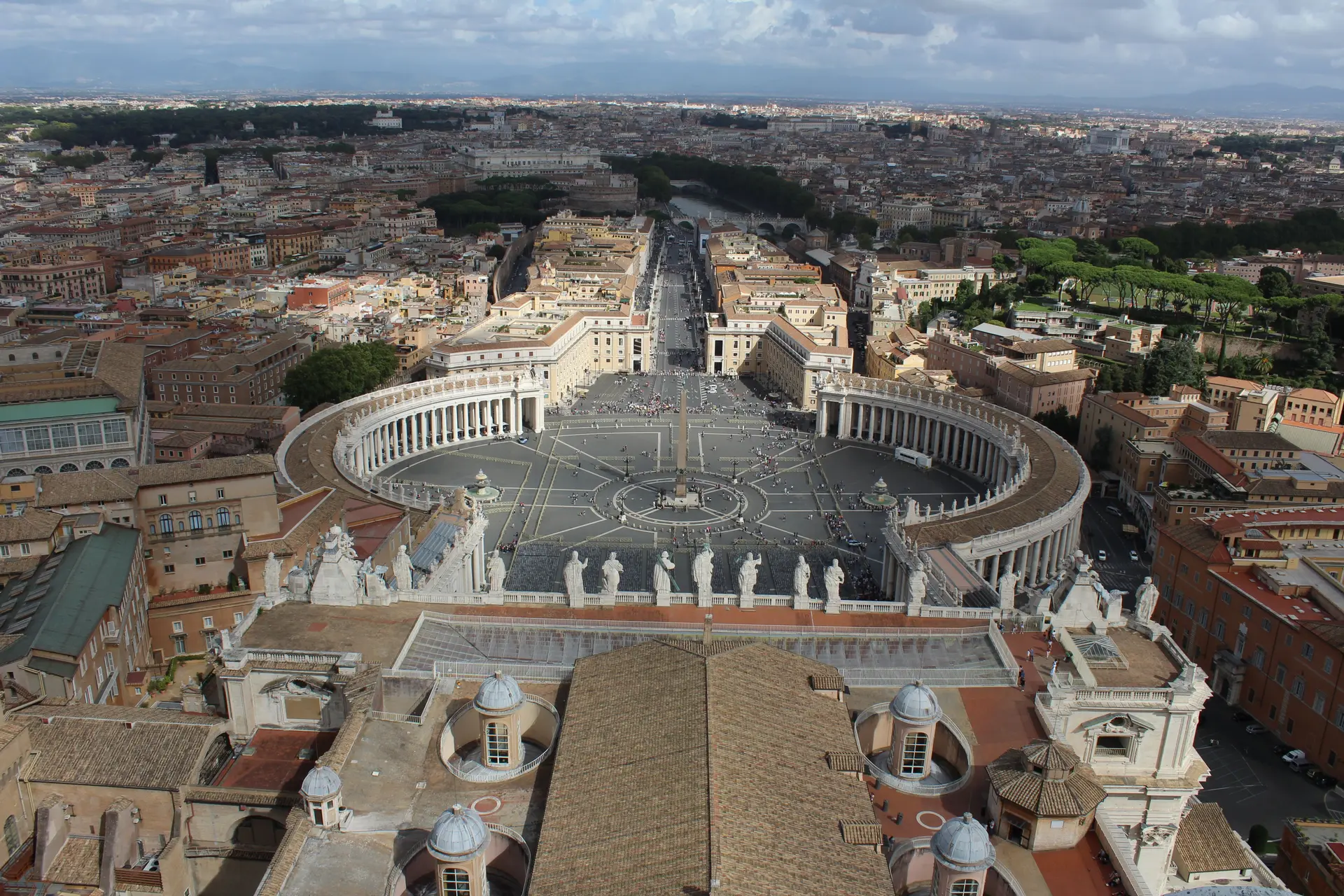
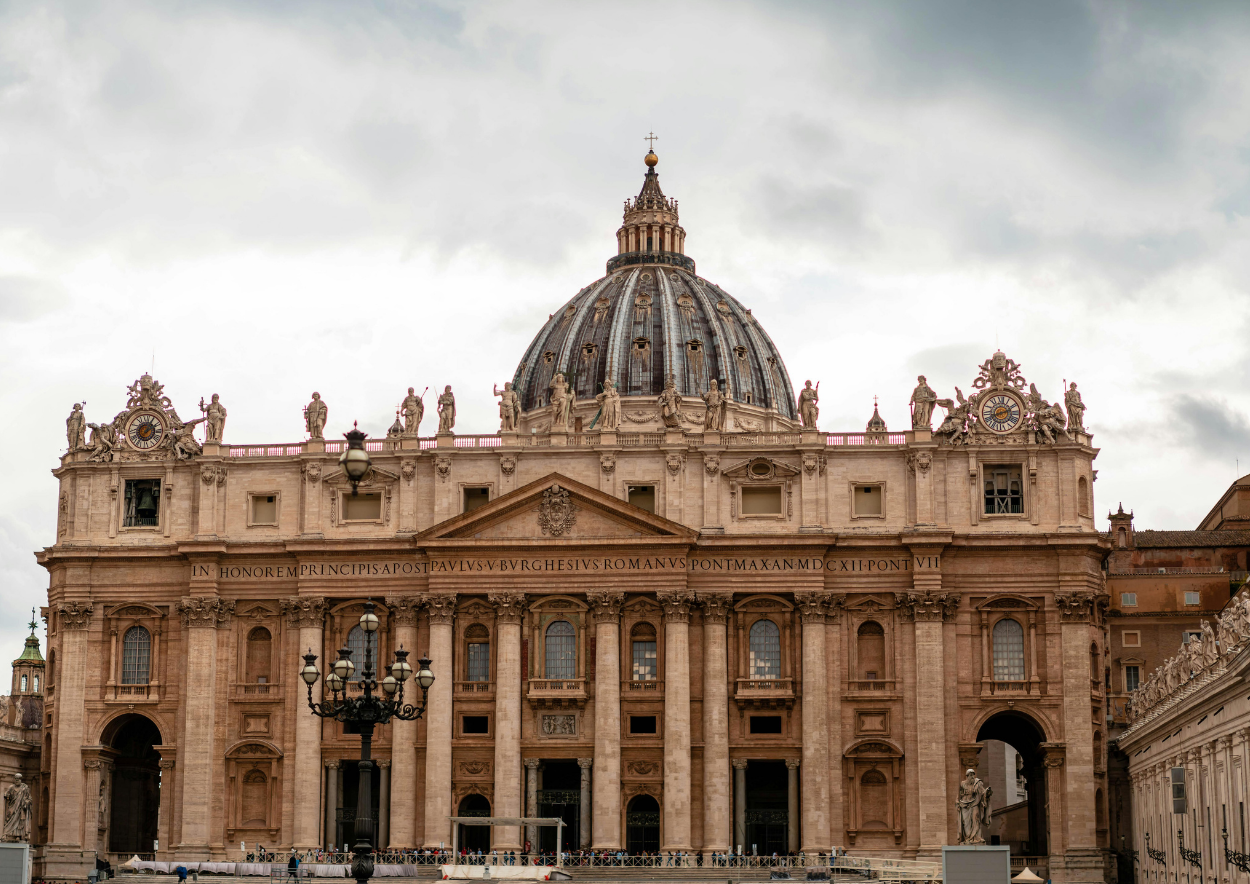
St. Peter's Basilica
St. Peter's Basilica is the most famous landmark in Vatican City and one of the most important churches in Christianity. The enormous Renaissance structure dominates St. Peter's Square and contains works by some of Italy's greatest artists.
Inside, visitors can see Michelangelo's Pietà, Bernini's monumental baldachin, elaborate chapels, and impressive mosaics. The scale of the interior is difficult to appreciate from photographs, making an in-person visit particularly worthwhile.
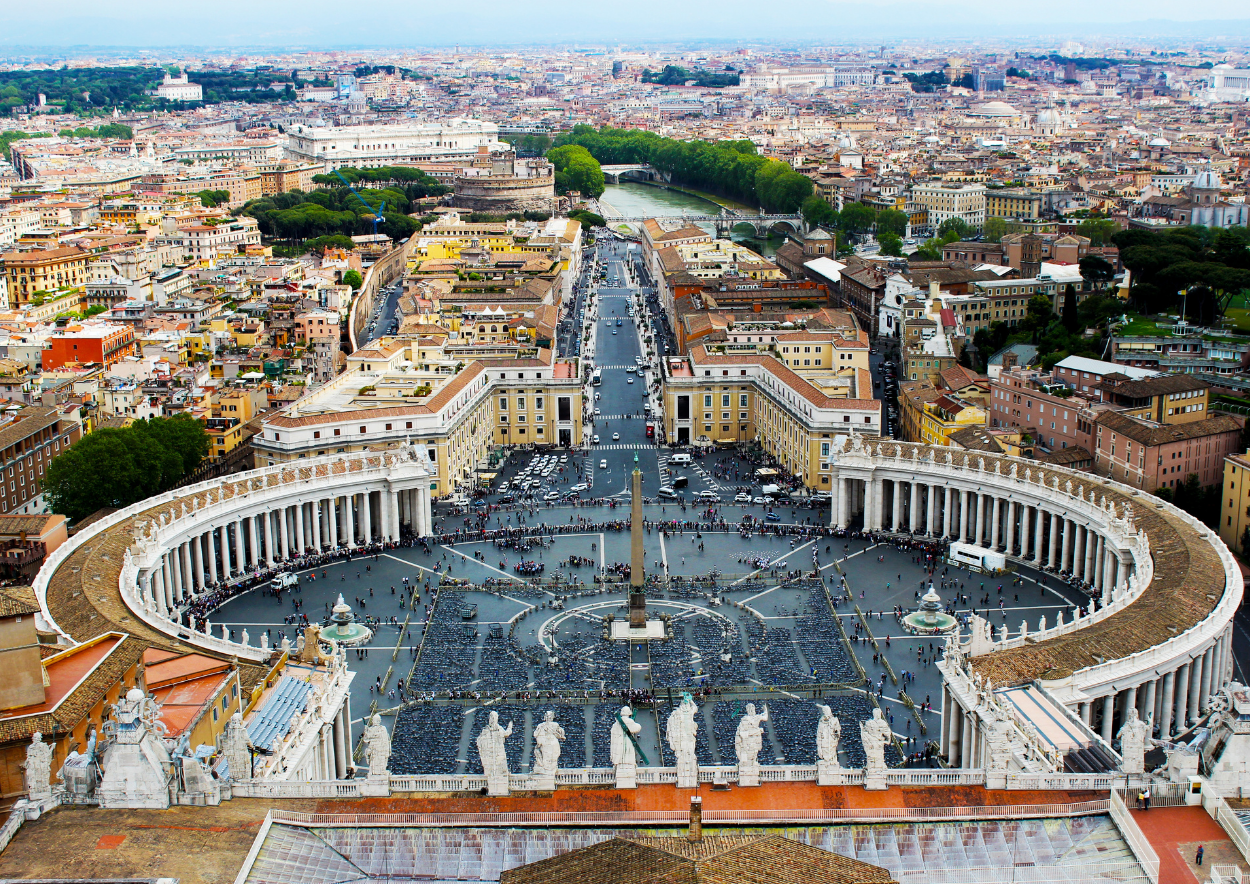
St. Peter's Square
St. Peter's Square is the grand entrance to the Vatican and one of the world's most recognizable public spaces.
Designed primarily by Gian Lorenzo Bernini, the square is surrounded by sweeping colonnades representing embracing arms. At its center stands an ancient Egyptian obelisk, while fountains and rows of columns create a dramatic approach to St. Peter's Basilica.
The square is also the setting for major papal ceremonies and public events.
Vatican Museums
The Vatican Museums contain one of the world's greatest collections of art and historical objects.
The enormous complex includes ancient sculptures, Renaissance paintings, tapestries, maps, archaeological collections, and decorated rooms commissioned by generations of popes. Because the museums are extensive, visitors should allow several hours rather than trying to see everything in a short visit.
The museums are also the main route to the Sistine Chapel.
Sistine Chapel
The Sistine Chapel is one of the most famous artistic spaces in the world, best known for Michelangelo's ceiling and The Last Judgment.
The ceiling depicts scenes from the Book of Genesis, including the famous Creation of Adam. The chapel continues to serve an important religious function and is the traditional location of papal conclaves.
Photography is not permitted inside, and visitors are expected to remain quiet.
Michelangelo's Pietà
Michelangelo's Pietà is one of the most celebrated sculptures of the Renaissance.
The marble sculpture depicts the Virgin Mary holding the body of Christ and is located inside St. Peter's Basilica. Created when Michelangelo was still a young artist, the work is admired for its delicate details and emotional expression.
It is protected behind glass following an attack in 1972.
Raphael Rooms
The Raphael Rooms are a group of four richly decorated rooms within the Vatican Museums.
They were commissioned by Pope Julius II and decorated primarily by Raphael and his workshop during the Renaissance. The rooms contain some of the most important examples of Renaissance fresco painting in the Vatican.
The School of Athens is the best-known work in the collection and depicts famous philosophers from classical antiquity.
Gallery of Maps
The Gallery of Maps is one of the most visually impressive corridors in the Vatican Museums.
Its walls are covered with enormous painted maps representing regions of Italy, while the ceiling is richly decorated with elaborate Renaissance and Baroque artwork.
The gallery provides an unusual combination of art, geography, and historical perspective.
Gallery of Tapestries
The Gallery of Tapestries contains a remarkable collection of large-scale woven artworks commissioned for the Vatican.
Many of the tapestries depict religious scenes and were produced in major European workshops. Their intricate details become particularly impressive when viewed at close range.
The gallery forms part of the traditional Vatican Museums route toward the Sistine Chapel.
Apollo Belvedere
The Apollo Belvedere is one of the Vatican Museums' most famous ancient sculptures.
The marble statue represents the Greek god Apollo and became an important inspiration for Renaissance artists and later European sculpture. It is displayed in the Octagonal Court of the Vatican Museums alongside other renowned classical works.
Its influence on Western art makes it particularly significant for visitors interested in classical history.
Laocoön and His Sons
The Laocoön and His Sons is an ancient marble sculpture depicting the Trojan priest Laocoön and his sons struggling with sea serpents.
The dramatic composition and intense expressions made the sculpture an important discovery for Renaissance artists. Michelangelo was among the artists influenced by its rediscovery in Rome in the early 16th century.
Today it is displayed in the Vatican Museums.
Vatican Necropolis
The Vatican Necropolis lies beneath St. Peter's Basilica and contains ancient tombs dating from the Roman period.
The archaeological area provides insight into the history of the site before the construction of the present basilica. It is traditionally associated with the ancient burial place believed to contain the tomb of St. Peter.
Access is restricted and requires advance arrangements, making it different from the standard basilica visit.
St. Peter's Tomb
The traditional tomb of St. Peter is located beneath St. Peter's Basilica.
According to Catholic tradition, the apostle Peter was buried in this area following his martyrdom in Rome. Archaeological investigations beneath the basilica have uncovered ancient burial structures and remains associated with the early Christian cemetery.
The area has exceptional religious importance and is part of the deeper historical story of the Vatican.
Vatican Gardens
The Vatican Gardens occupy a substantial part of Vatican City's territory and contain landscaped gardens, fountains, monuments, paths, and religious structures.
The gardens have developed over centuries and include Italian, French, and other landscape traditions. They offer a quieter perspective on Vatican City away from the crowds around St. Peter's Square.
Access is generally controlled and requires an organized visit or appropriate reservation.
Castel Sant'Angelo
Although Castel Sant'Angelo is located outside Vatican City, it is closely connected to the Vatican and is one of the most interesting attractions to include in a Vatican itinerary.
Originally built as a mausoleum for Emperor Hadrian, the structure was later transformed into a fortress and papal refuge. The Passetto di Borgo connects the castle area with the Vatican walls and historically provided a protected route for popes.
The upper terraces also provide excellent views over Rome and the Vatican.
Passetto di Borgo
The Passetto di Borgo is a fortified passage connecting Vatican City with Castel Sant'Angelo.
The elevated corridor was historically used as an escape route for popes during periods of military danger. It became particularly famous because of its role during the Sack of Rome in 1527.
The passage forms an important part of the defensive history of the Vatican and the surrounding Borgo district.
Frequently Asked Questions
What are the best places to visit in Vatican City?
The main attractions include St. Peter's Basilica, St. Peter's Square, the Vatican Museums, the Sistine Chapel, the Raphael Rooms, the Gallery of Maps, and the Vatican Gardens.
What is the most famous attraction in Vatican City?
St. Peter's Basilica is arguably the most recognizable landmark, while the Sistine Chapel is the Vatican's most famous artistic attraction.
How long does it take to visit Vatican City?
A full day is recommended for seeing the main attractions without rushing. The Vatican Museums and St. Peter's Basilica can each take several hours.
Can you visit the Vatican Museums and St. Peter's Basilica on the same day?
Yes. Combining them on the same day is practical and allows you to explore the Vatican's major attractions efficiently.
Is the Sistine Chapel inside the Vatican Museums?
Yes. The Sistine Chapel is part of the Vatican Museums route and is normally visited toward the end of the museum tour.
Can you visit the Vatican Gardens?
Yes, but access is controlled and usually requires an organized visit or advance reservation. They are not generally explored in the same way as St. Peter's Square.
Can you visit St. Peter's tomb?
Access to the archaeological area beneath St. Peter's Basilica is restricted and requires special arrangements. It is separate from a standard visit to the basilica.
What is the best time to visit Vatican City?
April to June and September to October generally offer comfortable weather. Early morning visits can help avoid some of the busiest periods, although the Vatican remains popular throughout the year.
Loading comments…