
Free Cancellation
-high.jpg&w=1920&q=75 "21 Day Central Asia Grand Discovery Tour: Kazakhstan, Kyrgyzstan, Tajikistan, Uzbekistan & Turkmenistan")
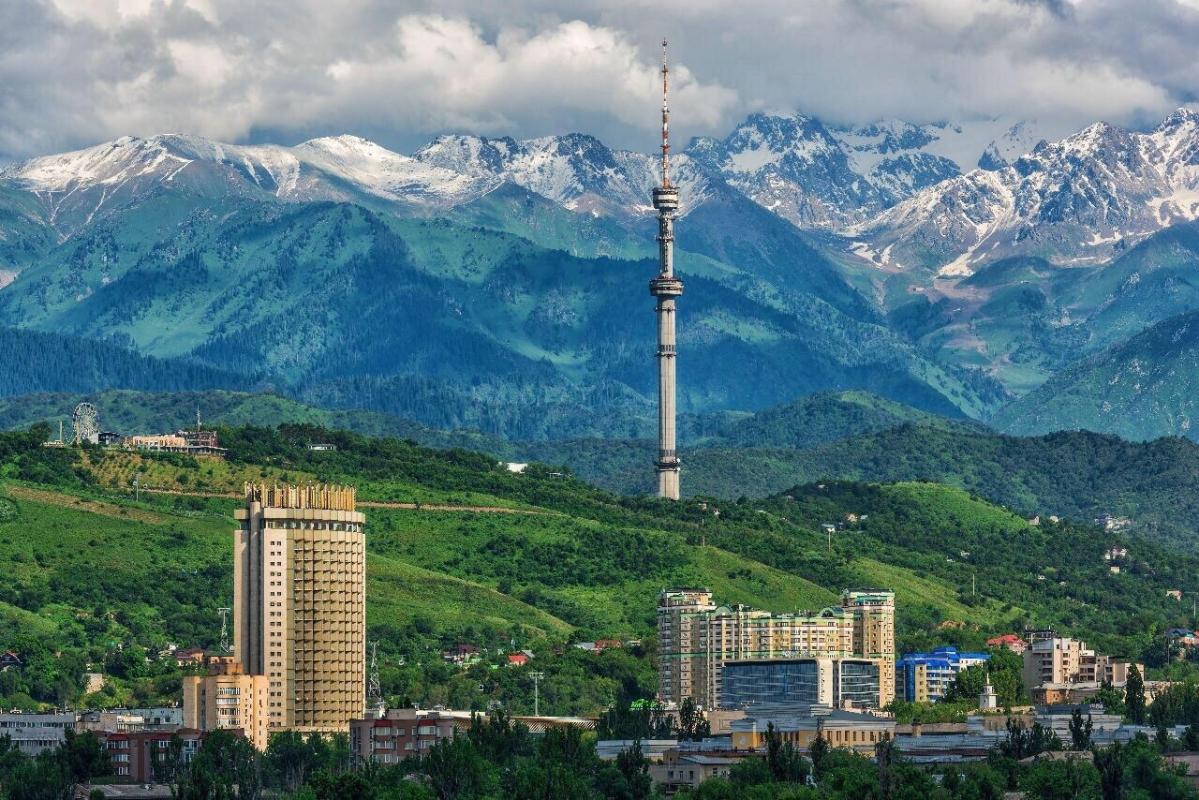
Almaty sits at the foot of the Tien Shan mountains in southeastern Kazakhstan, close enough to the Zailiysky Alatau range that snow-capped peaks are visible from most of the city center on a clear day. Founded in 1854 as the Russian fortress of Verny, the city grew through the Soviet period under the name Alma-Ata before adopting its current name after Kazakhstan's independence in 1991.
The city served as capital of Kazakhstan until 1997, when the government moved north to what is now Astana, and it remains the country's largest city and its cultural and financial center. Many visitors pair a stay in Almaty with a longer Kazakhstan Tours itinerary that continues north toward the steppe and Astana.
Long before Verny was founded, the site of modern Almaty served as a waystation on Silk Road trade routes through the Zhetysu region. Repeated earthquakes, including a major one in 1887 and another in 1911, later shaped the city's low-rise, wood-reinforced architecture, a building style still visible on some of the older streets near the center.
Panfilov Park, named for a division of soldiers who fought in the defense of Moscow in 1941, holds a war memorial complex and the Ascension Cathedral, better known as Zenkov Cathedral. Completed in 1907 and built entirely of wood without metal nails, the cathedral survived the 1911 earthquake and stands among the tallest wooden buildings in the world. Nearby, the Central State Museum of Kazakhstan displays a replica of the Golden Man, the gilded armor of a Saka warrior found in a burial mound at Issyk, just east of the city, and now one of the country's defining national symbols.
Republic Square, at the heart of Almaty's grid of wide, tree-lined avenues, is flanked by government buildings and a large independence monument that traces Kazakhstan's history from its nomadic roots to statehood. Much of central Almaty still carries the low-rise, leafy character common to Soviet-planned cities, which makes it an easy place to explore on foot between sights. A statue of Abai Kunanbaev, the nineteenth-century poet regarded as the founder of written Kazakh literature, stands along the same avenue, one of several monuments to Kazakh cultural figures in the city center.
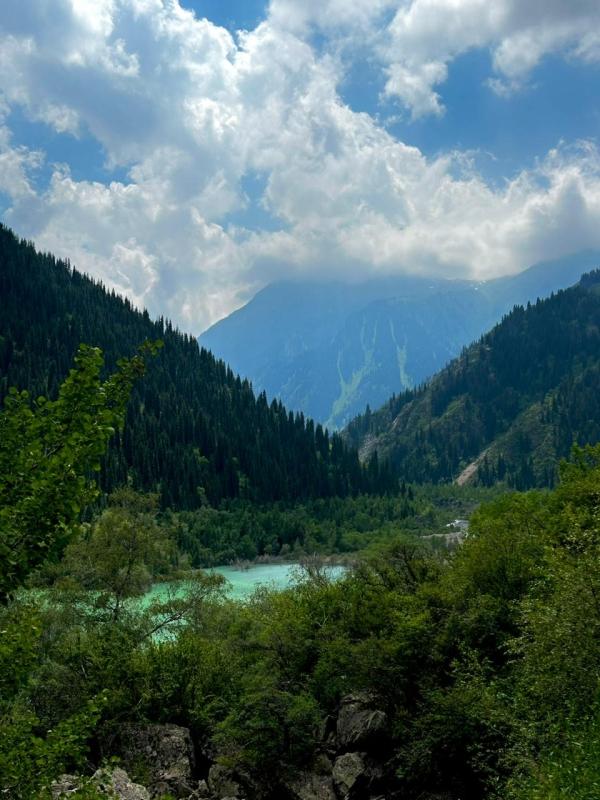
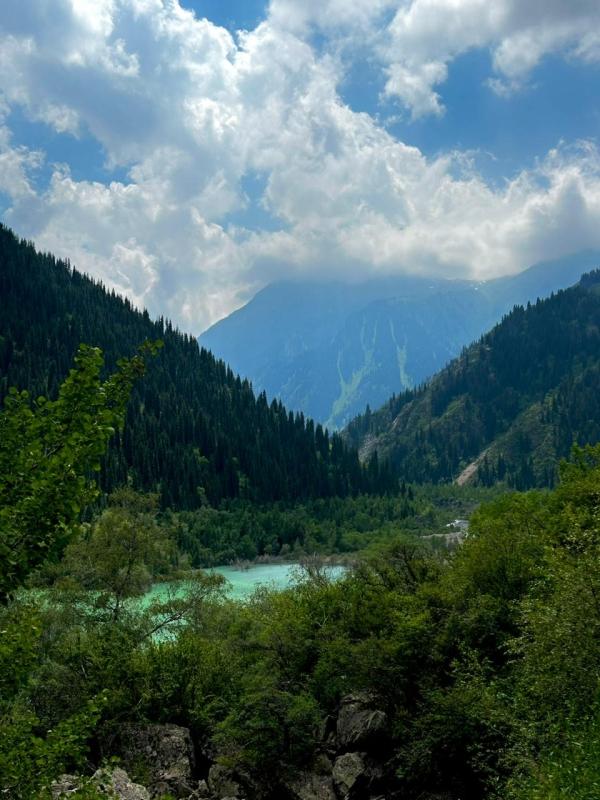
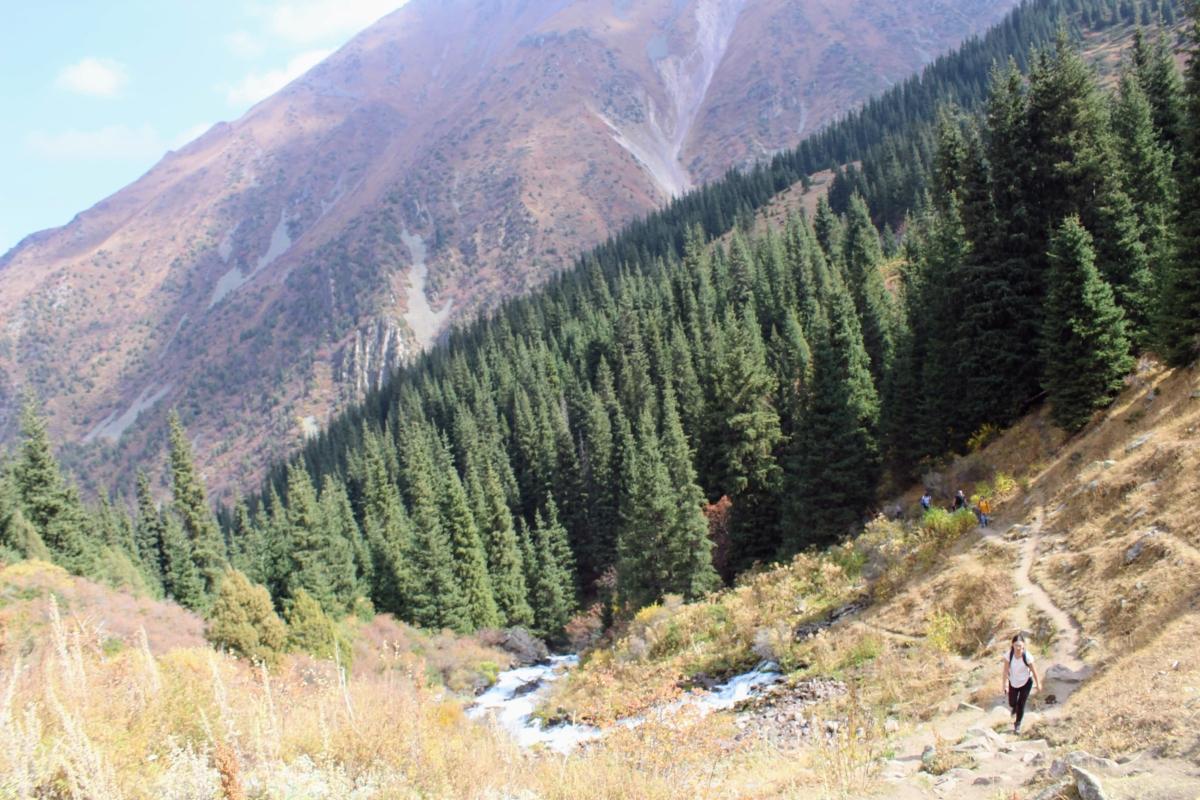
A short drive south of central Almaty, the road climbs into the foothills toward Medeu, a Soviet-built skating rink set at about 1,691 meters above sea level and often described as the highest of its kind. Above it, the Shymbulak ski resort sits higher still in the Zailiysky Alatau range, reachable by cable car and popular with visitors even outside the ski season for the mountain views. The peaks directly south of the city fall within Ile-Alatau National Park, established in 1996 to protect the range's northern slopes, and trails from Shymbulak's upper cable car stations lead into its alpine meadows. Further into the mountains, Big Almaty Lake holds turquoise glacial water at around 2,500 meters, a common half-day trip for travelers with an extra day in the city.
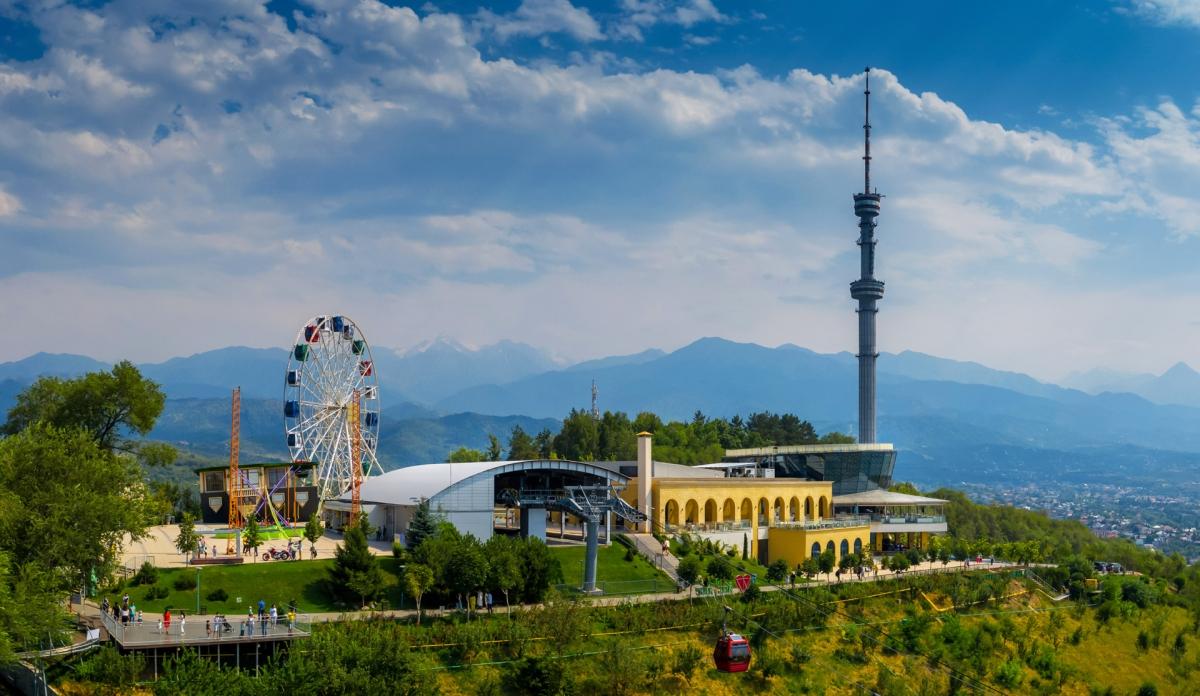
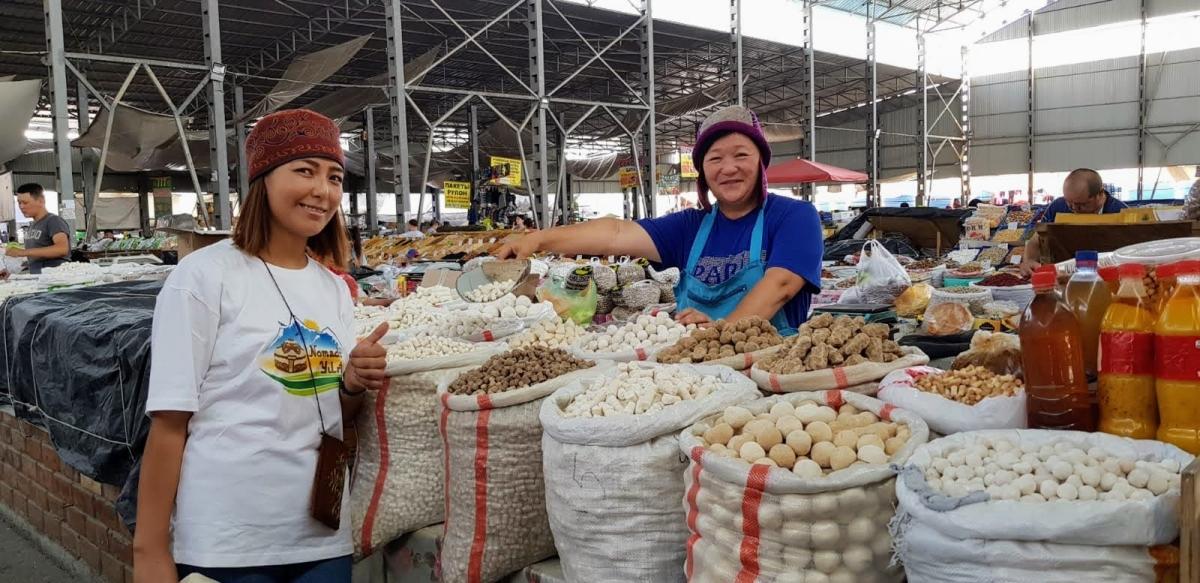
Kok Tobe, a hill on the southeastern edge of the city, is reached by cable car and gives a wide view over Almaty toward the mountains. The hill is also home to an unofficial monument to the Beatles, a gathering spot that grew out of the band's cult following in the Soviet Union, where their music was never officially released. Back at street level, the Green Bazaar remains the city's main market for produce, dried fruit, nuts and horse meat products typical of Kazakh cuisine, and is one of the few places where the old trading city is still visible.
Almaty's restaurants are a good introduction to Kazakh food, built around dishes like beshbarmak, boiled meat served over wide pasta squares and traditionally eaten by hand, and plov, a rice dish shared across Central Asia. Other staples include manty, steamed dumplings filled with minced meat, and kazy, a horse meat sausage often served at celebrations. Fermented drinks such as kumis, made from mare's milk, and shubat, made from camel's milk, are typically served alongside dried fruit and nuts as part of Kazakh tea culture.
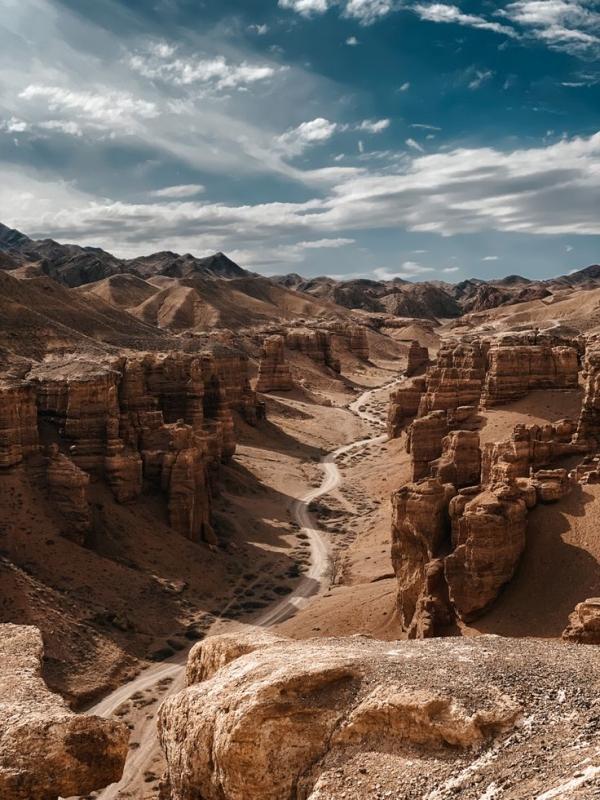
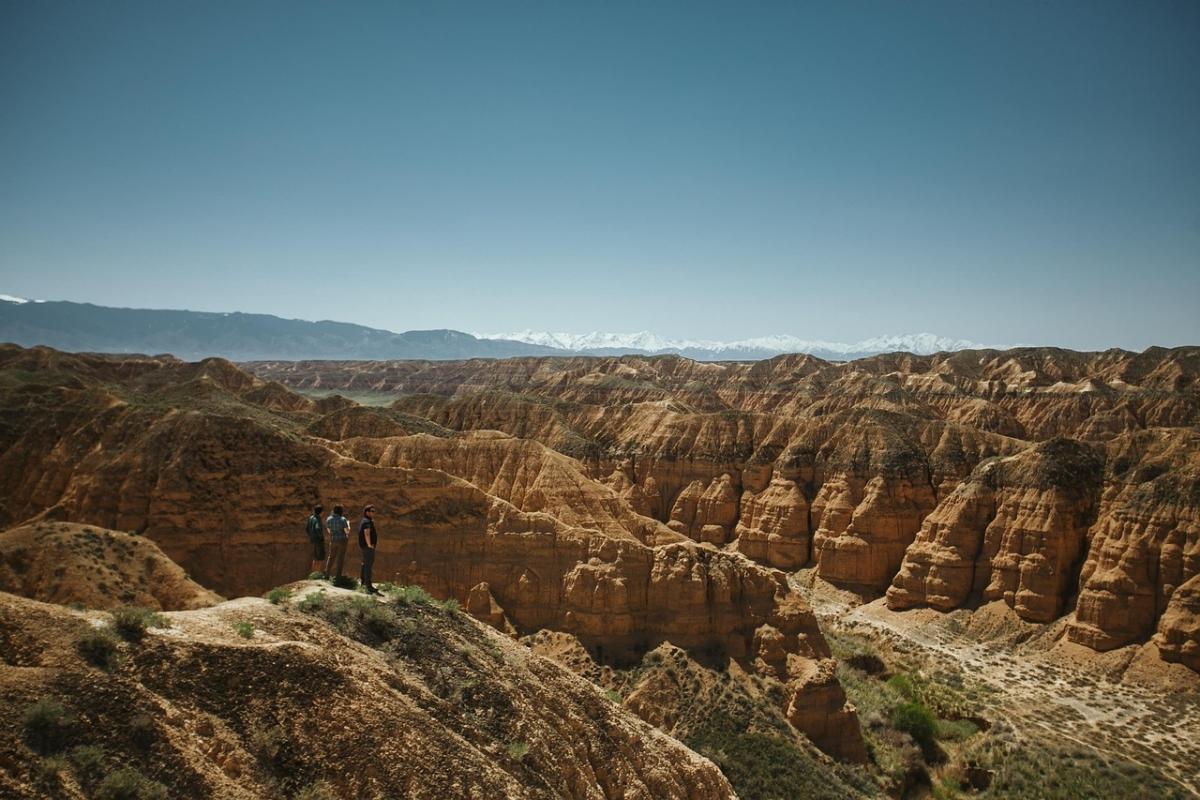
About 200 kilometers east of the city, Charyn Canyon cuts through red sandstone in formations that have earned it comparisons to the Grand Canyon, particularly the Valley of Castles section, where wind and water have carved the rock into narrow towers over roughly 12 million years. Its relative remoteness has kept crowds smaller than at more famous canyons elsewhere in the world. The Charyn Canyon Tour covers the drive out from Almaty and enough time on the canyon floor to walk among the formations before returning the same day.
Almaty International Airport lies about 20 kilometers northeast of the city center and remains Kazakhstan's busiest airport despite Astana's status as capital, with direct connections to major hubs across Europe and Asia. Taxis and shuttle services reach central Almaty from the airport in under an hour outside peak traffic.
Late spring and early autumn bring the most comfortable weather for walking around the city and taking day trips into the mountains or out to Charyn Canyon. Winters are cold enough for skiing at Shymbulak, while summer temperatures in the city can climb into the low 30s Celsius, making the mountain routes a welcome break from the heat.