
Ankara Indipence War Muesum
Europe, Turkey
 1 / 4
1 / 4Museum Information
Opening Hours
09:00 – 17:00
Open Days
About Ankara Indipence War Muesum
History of the Building
Located in Ankara’s Ulus Square, this structure served as
the First Grand National Assembly of Turkey. Built in a traditional
Turkish architectural style, the two-story building is distinguished by the use
of Ankara stone (andesite) on its exterior walls.
The building functioned as the First Turkish Grand
National Assembly between 23 April 1920 and 15 October 1924. In 1957, it
was designated to be restored as a museum and was opened to the public on 23
April 1961 under the name “Museum of the Grand National Assembly of
Turkey.”
As part of the nationwide celebrations of Atatürk’s 100th
birthday, the building was restored again and reorganized by the Ministry of
Culture and Tourism. It reopened on 23 April 1981 as the War of
Independence Museum.
On 24 April 1920, during the Assembly’s second
meeting, Mustafa Kemal was unanimously elected as Speaker of the Parliament. In
his speech, he emphasized the sovereignty of the Assembly with the statement:
“There is no power above the Grand National Assembly.”
The War of Independence was led and coordinated by Gazi
Mustafa Kemal and the First Turkish Grand National Assembly. Major milestones
achieved in this building include:
- Adoption of the first Constitution (20 January 1921)
- Adoption of the National Anthem (12 March 1921)
- Abolition of the Sultanate (1 November 1922)
- Approval of the Treaty of Lausanne (24 July 1923)
- Decision designating Ankara as the capital (13 October 1923)
- Proclamation of the Republic and election of
Mustafa Kemal as President (29 October 1923)
Atatürk later expressed the significance of the Assembly
by saying:
“The Grand National Assembly is the embodiment of the Turkish nation’s
centuries-long quest and its conscious will to govern itself.”
Sections of the Building
Corridor
The left side of the corridor and adjoining rooms present
events from 1918–1923 with oil paintings, photographs, documents, weapons,
models, and various historical objects.
The right side displays the activities of the Assembly,
featuring photographs, documents, oil paintings, personal items, and
memorabilia belonging to the deputies of the first and second parliamentary
terms.
Presidency Council – Cabinet Room
Located to the left of the corridor entrance, this room
served both as the Cabinet Room and the Presidency Council Room. Exhibits
include:
- The presidential table used during the Sivas Congress
- A long central table with chairs
- Photographs of the first Council of Ministers formed after the
proclamation of the Republic
The room is preserved in its original arrangement.
Committee Room
The second room on the left was used for committee
meetings. Exhibits portray:
- The Armistice of Mondros
- Mustafa Kemal’s arrival in Samsun
- The Amasya Circular
- The Erzurum and Sivas Congresses
- The National Pact
One of the most important artifacts is the seal used
during the Erzurum Congress.
Assembly Lounge
The third room on the left served as the Assembly lounge.
It includes:
- A large oil painting showing Mustafa Kemal’s arrival in Ankara
- Materials illustrating the opening of the Assembly
- Maps, documents, and photographs on the Treaty of Sèvres and Treaty of
Lausanne
- Telecommunication devices used during the War of Independence
- The silver dinner set gifted to Kazım Karabekir Pasha during the Treaty of Gümrü negotiations
Committee of Religious
Affairs Room
The fourth room on the left was used to examine the
constitutional suitability of draft laws. Displays include:
- The Great Offensive (Büyük Taarruz) illustrated with maps, documents,
and photographs
- A carpet symbolizing the National Pact
- Independence Medals
- An oil painting showing Gazi Mustafa Kemal and his comrades on the
Assembly balcony
Administration Room
(Left)
The fifth room on the left served as the Assembly’s
administration office. It features:
- The National Anthem
- Photographs of commanders of the War of Independence
- Documents on the Mudanya Armistice and the Treaty of Lausanne
- Ankara’s designation as the capital
- The proclamation of the Republic
- Mustafa Kemal’s post-election Assembly address
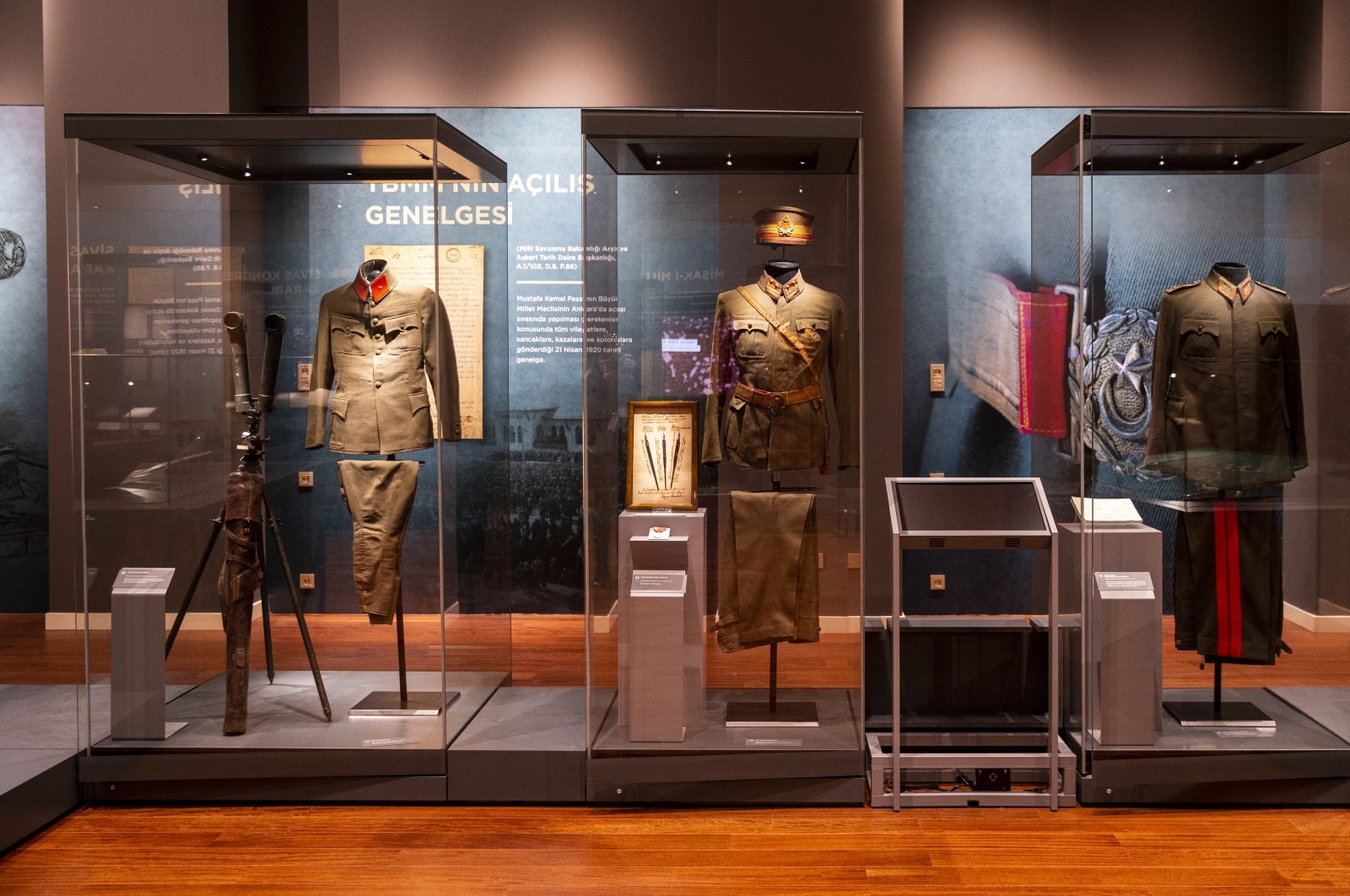
- His cane, Mauser seals, field binoculars, and uniform samples
- The flag hung at the Assembly on 23 April 1920
- A textile cover gifted by the “Ladies’ Benevolent Association”
Administration Room
(Right)
The fifth and sixth rooms on the right side served as
administrative offices. Today, the sixth room functions as the museum
administration office. The fifth room exhibits:
- Photos and identity documents of first and second-term deputies
- Mauser rifles gifted by the Assembly
- Independence Medals, badges, documents, and various personal items
Assembly Hall
Located on the right side of the corridor, the large
Assembly Hall is preserved exactly as it was. Features include:
- The Speaker’s podium and the Presidium seats
- Behind the podium, the historic inscription “Hakimiyet Milletindir”
(“Sovereignty Belongs to the Nation”)
- Benches for the Cabinet, deputies, diplomatic corps, listeners, and
press
The podium was crafted and gifted by a local Ankara carpenter. Benches were sourced from the Ankara Teachers’ School, kerosene lamps and stoves from neighborhood cafés, and office supplies from various government offices—reflecting the humble beginnings of the new national assembly.
Prayer Room
The first room on the right side of the museum entrance.
This modest room displays prayer rugs and Qur’an lecterns.
President’s Room
The second room on the right was Mustafa Kemal’s office
in Parliament. Preserved in its original form, it is where many significant
decisions were taken. One of the most valuable artifacts displayed here is the Presidential
Seal, showcased on national holidays.
Lower Floor
The lower level of the building now houses the museum’s
photo studio, storage rooms, and exhibition hall.