
Ankara Roman Bath and Open-Air Museum
Europe, Turkey
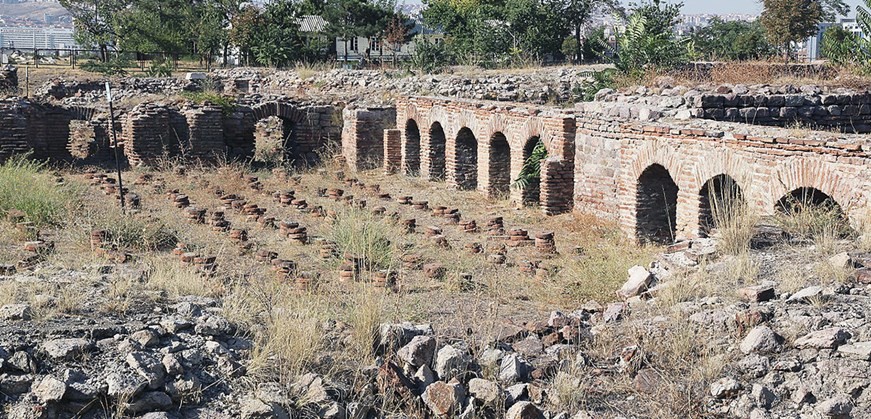 1 / 3
1 / 3Museum Information
Opening Hours
08:30 – 17:00
Open Days
About Ankara Roman Bath and Open-Air Museum
The Roman Bath is located on Çankırı Street, stretching
from Ulus Square to Yıldırım Beyazıt Square. It lies approximately 400 meters
from Ulus, on the west side of the road, elevated on a platform about 2.5
meters above street level.
Although historical sources indicated the presence of a
bath in ancient Ankara, the first archaeological traces were discovered in 1931
during construction work. The complex consists of two main sections: the Great
Bath and the palaestra (exercise courtyard). The bath building
measures approximately 140 × 180 meters, and on its northeast side lies
a nearly 95 × 95-meter palaestra. Based on finds and coins uncovered
during excavations, the Great Bath is thought to have been constructed during
the reign of Emperor Caracalla (AD 211–217).
Excavations revealed that the site—today known as the
Roman Bath—was originally a mound, occupied successively during the Phrygian,
Roman, and partly Byzantine, Seljuk, and Ottoman periods.
At this site, historically known as Çankırıkapı,
two major structures from the Roman period can be observed:
1.
A section of the colonnaded street of
ancient Ancyra
2.
The Roman Bath and Palaestra
structures, surrounded by additional architectural remains from the
Roman era
Open-Air Museum
Covering an area of approximately 65,000 m², the
Ankara Roman Bath archaeological site was transformed into an open-air museum
through restoration and landscaping works carried out between 1997 and 2001.
Roughly 1,000 artifacts uncovered at the site are
displayed in three main groups: grave steles, inscribed stones,
and architectural elements.
- Along the south and west wings of the palaestra are grave
steles.
- The north wing features inscribed blocks, pedestals, and water
pipes.
- The east wing displays altars and other architectural pieces.
- In the central area, sarcophagi and lion sculptures are
exhibited.
Most of the grave steles belong to the Roman and
Byzantine periods.
The inscribed blocks consist mainly of epitaphs and
milestone stones, offering valuable information about Roman-era Ankara. For
example, one inscription reveals that retired soldiers of Ancyra founded an
association during the reign of Emperor Vespasian (AD 69–79). Other
inscriptions provide insights into the economic, social, cultural, and
commercial life of the period, as well as athletic activities.
Additionally, several finely crafted architectural pieces from Roman structures are on view at the site. Among them is a relief block depicting a Nike-themed victory monument, displayed in the exhibition area west of the indoor bath section. Other artifacts include column capitals, column bases, and various small architectural fragments.