
Bursa Museum of Turkish and Islamic Art
Europe, Turkey
 1 / 2
1 / 2Museum Information
Opening Hours
08:00 – 16:30
Open Days
About Bursa Museum of Turkish and Islamic Art
Bursa Museum of Turkish
and Islamic Art – Bursa
The origins of the first museum in Bursa date back to 19
August 1902, when Bursa Director of Education Azmi Bey and Bursa Boys’ High
School accountant Reşad Bey gathered ethnographic and archaeological artifacts
from the region and opened them to public display in the school’s garden and
laboratory. Thanks to the efforts of inspectors, teachers and students under
the governorship of Mümtaz Reşid Pasha, the collection rapidly expanded. In
September 1904, it was officially recognized as a branch of the Imperial Museum
(Müze-i Hümâyun) by the renowned Osman Hamdi Bey.
In 1929, it gained independent status as the Bursa
Museum. One year later, due to its growing collection, it was moved to the
Yeşil Medrese (Green Madrasa) and reorganized by Aziz Ogan, the Director of
Istanbul Museum. The museum reopened on 8 April 1930. After restoration work in
1955, the museum reopened with new displays in October 1956.
For many years it functioned as a mixed museum until its
archaeological collection was transferred to a modern building in Kültürpark.
The historic madrasa was reorganized once again and has been serving as the
Bursa Museum of Turkish and Islamic Art since 22 November 1975.
Architecture & Layout
The 15th-century Yeşil Medrese features 13 rooms (cells),
three iwans, and a classroom, surrounding a central courtyard. Visitors are
welcomed in the entrance iwan by the Müze-i Hümâyun inscription.
Two of the rooms near the entrance serve as
administrative offices. Another large room displays Karagöz–Hacivat shadow
theatre figures crafted by Osman Sözen and Hayali Küçük Ali.
Highlights of the
Collection
Metalwork & Glass Art
In the eastern iwan’s rooms, rare examples of metal and
glass art are showcased:
- A distinctive Timurid-era pewter ewer with a stylistic dragon handle
- Ottoman-period pewterware and three elegant pitchers
- Seljuk and Mamluk candlesticks decorated with human and animal motifs
- Incense burners, rosewater sprinklers, lanterns, and brass candle
snuffers
- 19th-century Ottoman glass pieces, such as wall lamps, bowls, plates,
jugs, and sugar containers
- A special display case featuring intricate door knockers, locks and
keys
Ceramics
A dedicated room presents:
- 13th-century Seljuk ceramics
- Fine examples of Miletus Ware, blue-and-white İznik ceramics, Haliç
Ware, Kütahya pottery, and Çanakkale ceramics
Calligraphy & Sacred
Objects
The eastern iwan houses:
- Exquisite calligraphy panels
- Ottoman candlesticks
- Calligraphy tools such as paper scissors, inkwells, penknives, divits,
and ivory maktas
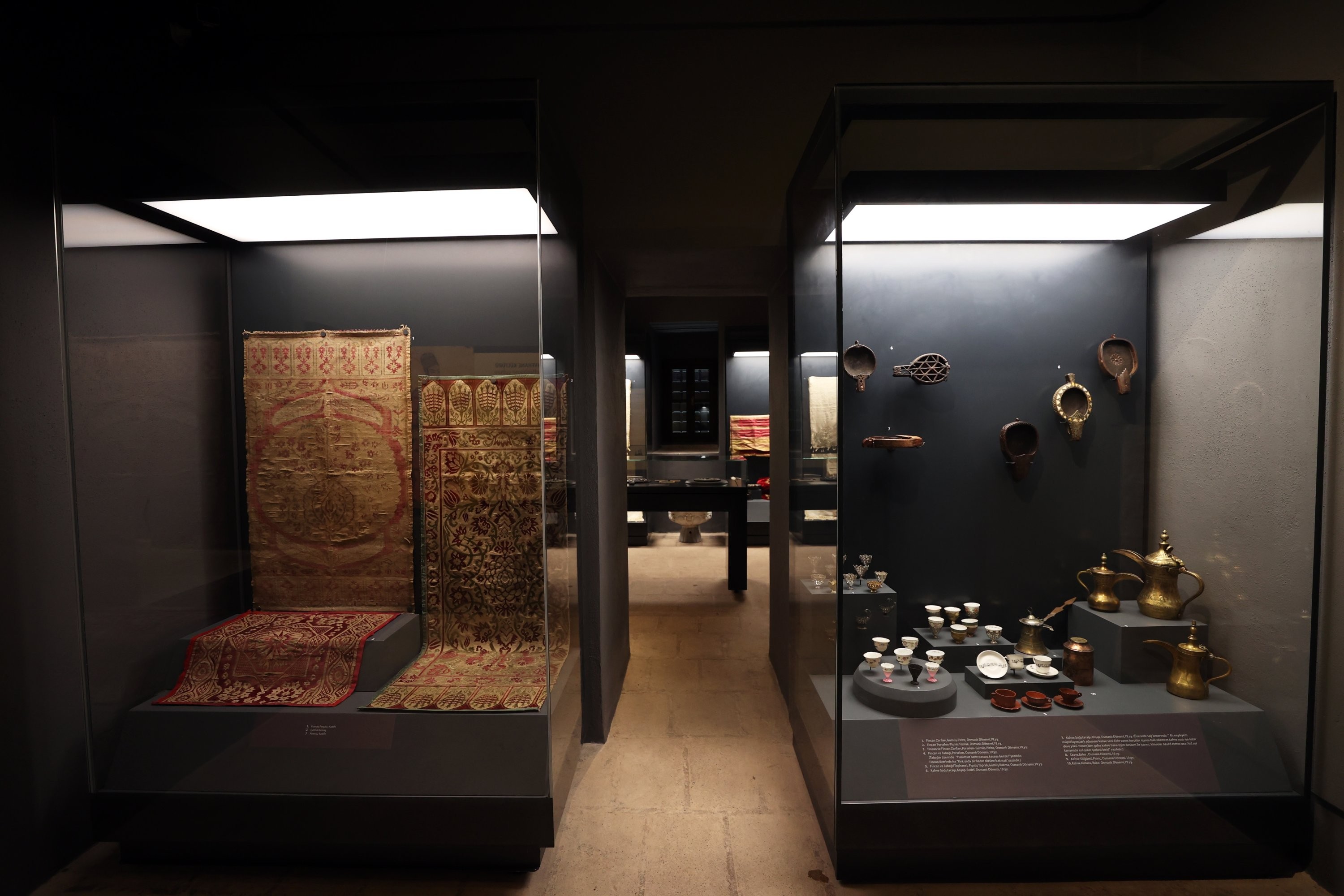
Coffee Culture &
Textiles
Another room displays items reflecting traditional
Ottoman coffee culture:
- Silver filigree and brass cup holders
- Porcelain cup sets
- Wooden coffee coolers
- Coffee and salep pots
- Coffee grinders
Adjacent to it is a room dedicated to the Ottoman bath
(hamam) tradition, featuring:
- Bath bowls, clogs, towels, soap containers, and Bursa peshtemals
- Embroidered textiles and mirrors, ivory combs, and kohl containers
Carpets, Clothing &
Jewelry
In the classroom section, visitors can explore:
- Door and mihrab curtains from the Yeşil Tomb
- 20th-century carpets and copper candlesticks
- Traditional women’s garments displayed on mannequins
- Gold and silver belts, belt buckles, bracelets, tiaras, earrings, and
rings
Imperial Documents &
Sikke Collection
One room features:
- A decree bearing the tughra of Sultan Abdülhamid II
- Calligraphic panels
- A comprehensive collection of Islamic coins, including Sasanian,
Umayyad, Abbasid, Ilkhanid, Seljuk, Beyliks, and Ottoman examples
- The impressive Şehreküstü and Pirinç Hanı hoards, composed entirely of
gold coins
- Traditional textile money pouches made of Bursa silk and cotton
Weaponry
In the western iwan, the museum exhibits:
- Gold-, silver-, ivory- and mother-of-pearl-inlaid rifles, pistols,
swords, yataghans, daggers, and maces
- Ottoman helmets and armor used in battles
Sufi & Dervish Objects
Two rooms display fascinating items from various Sufi
orders:
- Staffs, bowls, begging bowls, Rifa’i skewers, trumpets, banners
- Mevlevi and other order hats
- Musical instruments such as bendir and kudüm
- Healing bowls, prayer stones, and ceremonial belts
- Beautifully crafted calligraphic panels
Woodwork
Rooms near the entrance exhibit:
- Ottoman wooden art featuring mother-of-pearl and ivory inlay
- A detailed scale model of the madrasa
Outdoor Exhibition
The museum garden includes:
- Islamic tombs and gravestones
- Stone inscriptions and architectural fragments
Currently, the museum displays:
- Approx. 900 Islamic coins
- 445 ethnographic artifacts