
Ulucanlar Prison Museum Ankara
Europe, Turkey
 1 / 10
Museum Information
Opening Hours
10:00 – 16:00
Open Days
About Ulucanlar Prison Museum Ankara
Ulucanlar
Prison was opened in 1925 in Ankara, which had been declared the capital of the
newly founded Republic of Turkey in 1923 and was envisioned as a symbolic
representation of the new state. Looking into the history of Ulucanlar
Prison, therefore, is almost synonymous with examining the political history of
Turkey, as it has been a site where political prisoners were detained from the
very first day it began operating. The significance of the place is further
underscored by a 1987 excavation conducted for the construction of an
additional storage building on a plot known to have served as a burial ground.
During the excavation, a large number of human bones were unearthed (Özal,
2017).
When regarded
as a reflection of Turkey’s modern history, it becomes difficult to list all
those who were unjustly imprisoned, executed, or subjected to various human
rights violations—especially torture—within Ulucanlar Prison. Some of the
well-known names include the renowned poets Nazım Hikmet and Ahmed Arif;
politicians such as Osman
Bölükbaşı, former Prime Minister Bülent Ecevit, former
Democracy Party (DEP) deputies Hatip
Dicle, Leyla Zana, Mahmut Alınak, Orhan Doğan, Sırrı Sakık, and
Selim Sadak;
Sırrı Süreyya Önder,
an MP from the Peoples’ Equality and Democracy Party (DEM); journalists like Cüneyt Arcayürek;
dissident filmmaker Yılmaz
Güney; and revolutionaries Deniz Gezmiş, Yusuf Aslan, and Hüseyin İnan.
Ulucanlar
Prison was also at the center of several key historical turning points in
Turkey. After the military intervention of 12 March 1971, leading members of the
People’s Liberation Army of Turkey—Deniz Gezmiş, Yusuf Aslan, and Hüseyin
İnan—were sentenced to death and executed in Ulucanlar on 6 May 1972. Following
the 12 September 1980
military coup, high-school student Erdal
Eren, who was legally underage for execution at the time, was
brought to the prison. After his age was officially adjusted, he was executed
on 18 December 1980.
One of the
most severe rights violations in the history of Turkish prisons occurred at
Ulucanlar on 26
September 1999, when a security-led operation resulted in the
deaths of ten inmates. During this period, Turkey was transitioning from the
ward-based prison system to the new cell-based F-Type Prisons, which generated
widespread resistance, especially among political prisoners. The state
responded with simultaneous operations in 20 prisons between 19–22 December 2000,
known officially as the “Return
to Life Operation,” but widely referred to by the media and
public as the “December
19 Massacre” (Bayrampaşa–Istanbul). The Ulucanlar phase of this
operation left ten inmates dead—killed by firearms or chemical agents—and
hundreds severely injured. Ironically, this operation took place under the
premiership of Bülent
Ecevit, who himself had once been imprisoned in Ulucanlar. A
parliamentary commission established in 2000 concluded that the inmates who
lost their lives had been killed through gunfire or physical violence and
emphasized the necessity of holding those responsible accountable.
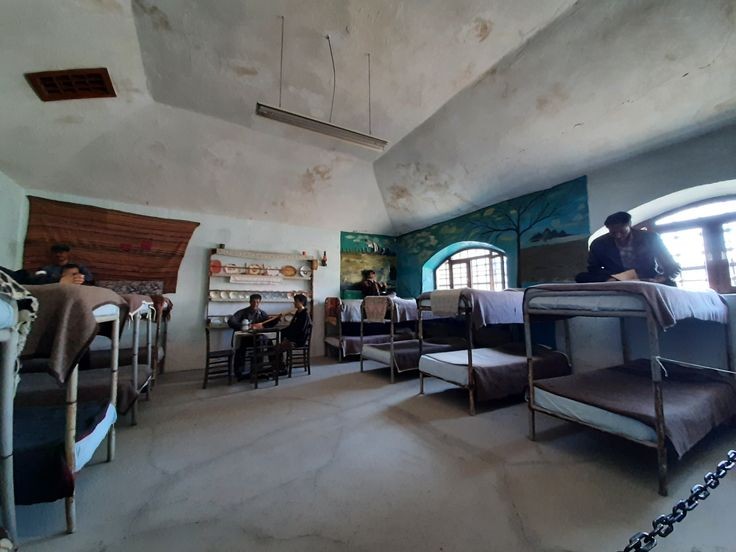
With the
gradual opening of new cell-type prisons in Ankara, inmates at Ulucanlar began
to be transferred in 2006. Initially, Ankara Metropolitan Municipality
envisioned turning the former prison into a shoe market. Meanwhile, the Chamber
of Architects proposed transforming the site into a museum and conducted
year-long consultations with various civil society organizations to outline
what kind of museum it should be. However, in 2008, Altındağ Municipality
announced that it would take full control of the museum process. As a result,
when the Ulucanlar
Prison Museum finally opened in July 2011, the institution that emerged
differed significantly from the civilian-driven vision originally proposed.