
Diyarbakır Ziya Gökalp Museum
Europe, Turkey
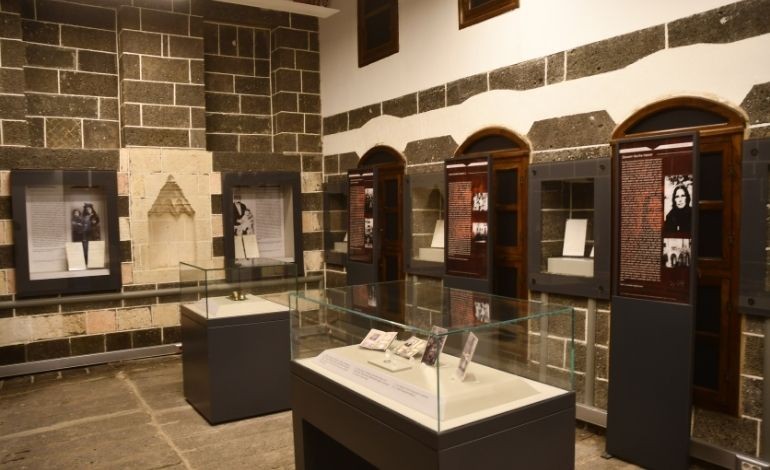 1 / 6
1 / 6Museum Information
Opening Hours
08:30 – 16:30
Open Days
About Diyarbakır Ziya Gökalp Museum
Ziya Gökalp Museum
The Ziya Gökalp House is located on Melik Ahmet Street,
Gökalp Sokak. Built in the 19th century, it is one of the finest examples of
traditional Diyarbakır civil architecture. Unlike many other Diyarbakır houses,
this residence consists of three wings arranged around a central courtyard,
each built with a ground floor and a single upper floor.
A distinctive feature of the house is its courtyard pool, which, instead
of being placed at the center of the courtyard as seen in typical Diyarbakır
homes, is positioned within the eyvan, reflecting a unique architectural
approach. The structure is divided into two sections: Harem (family
quarters) and Selamlık (guest/men’s quarters).
In 1824, the house passed into the hands of Ziya
Gökalp’s family, and the prominent sociologist and writer Ziya Gökalp was
born here in 1876. On March 23, 1956, the harem section of the house was
expropriated by the Provincial Administration and the selamlık by the
Municipality. The harem was later restored and opened to visitors by the
Ministry of Culture and Tourism as the Ziya Gökalp Museum.
The museum is housed in a two-story residence built in 1806
from basalt stone. Gökalp’s family moved into the house in 1824, and it was
converted into a museum in 1956.
The museum preserves personal belongings, documents, and memorabilia
associated with Ziya Gökalp.
Like many traditional Diyarbakır houses, the structure reflects an inward-oriented
architectural plan, with all living spaces arranged around an inner
courtyard. The house also features a fine example of the eyvan with a pool,
characteristic of Diyarbakır architecture.
Architectural Features
The building consists of four facades surrounding a
central courtyard. A round-arched doorway leads into a courtyard paved with
cut basalt stone.
South Wing
The ground floor of the south wing contains a two-bay
eyvan with pointed arches. The eyvan features a deep niche with a scalloped
arch and a rectangular pool at its center.
To the left, steps lead to a room with round-arched and rectangular windows,
deep interior niches, and polychrome stonework used both inside the room and in
the eyvan.
At the southeast, steps descend into a wood-storage area.
North Wing
On the ground floor, a kitchen with a hearth niche and a
pantry lie to the left.
To the right is a room with deep wall niches and a wooden-beamed ceiling.
Access to the upper floor is provided by stairs ascending from a round-arched
doorway.
The upper floor features round-arched windows with iron grilles on the lower
halves.
The room on the left has an overhanging bay window (cumba) overlooking
the street.
West Wing
This wing contains three small rooms and a deep,
pointed-arched niche.
East Wing
Access to the basement level is provided via steps
descending from the eyvan.
The windows are rectangular and covered with wooden shutters.
On the left side, a round-arched eyvan provides entry to the basement.
The ground floor is reached by ascending cut basalt stone steps.
An inscription stands above the doorway of this section.
Just inside the entrance, a room with scalloped-arched window openings lies to
the right, while an eyvan reached by steps lies to the left. The façade of this
eyvan features recessed niches.
The door and window arches throughout the house
are decorated using the cas carving technique, with intricate plant and
geometric motifs.