
Free Cancellation
-high.jpg&w=1920&q=75 "15 Days Spiritual Pakistan Tour (Darghas+Imambarghas)")
Islamabad became Pakistan's capital in the 1960s, purpose-built to replace Karachi and laid out on a grid system at the foot of the Margalla Hills. The city's low-rise, sector-based design sets it apart from Pakistan's older cities, and its position against a forested hill range gives it more green space than most South Asian capitals. These Pakistan tours often use Islamabad as an entry point, since its international airport connects to both the country's historic cities further south and the mountain regions to the north.
Rawalpindi, Islamabad's older twin city, sits just to the southwest and offers a contrast in pace and architecture, with the dense Raja Bazaar standing in for the markets Islamabad's planned layout does not really have. Together the two cities function as a single metropolitan area, connected by a metro bus line, and many visitors split time between Islamabad's monuments and green spaces and Rawalpindi's older commercial streets.
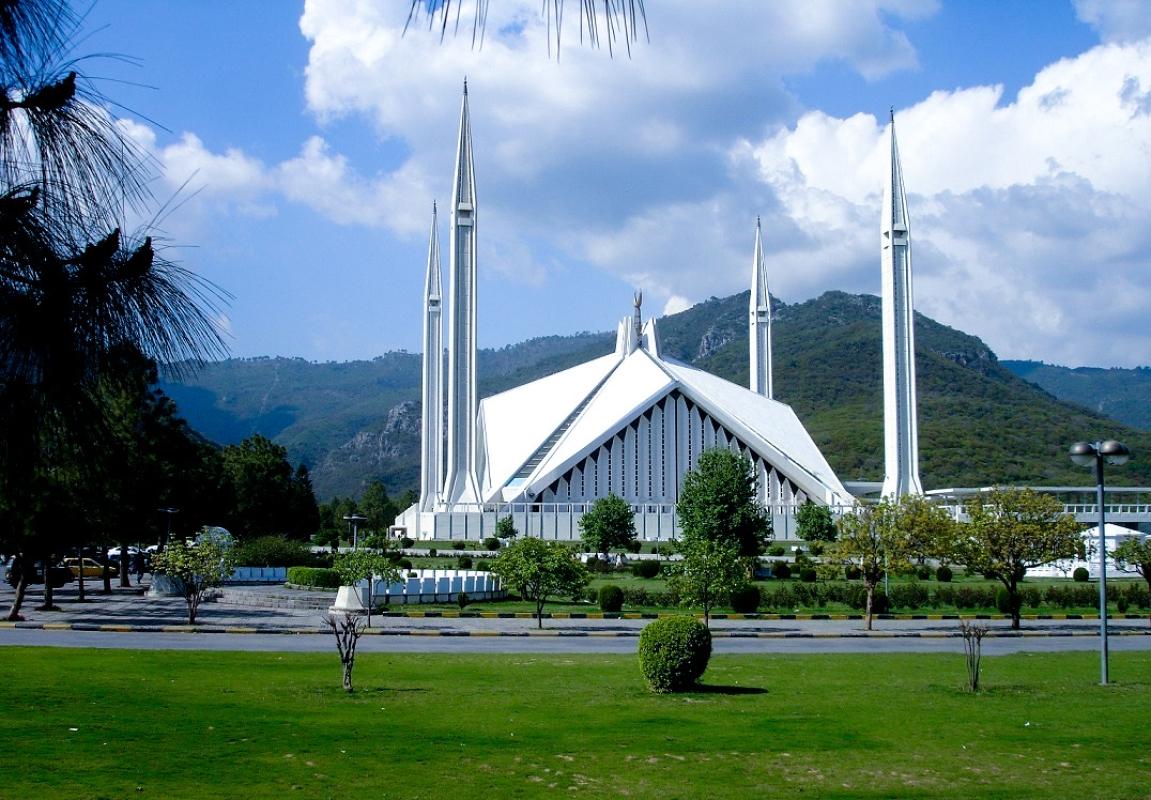
Faisal Mosque, completed in 1986 and funded largely by Saudi Arabia, is among the largest mosques in South Asia and departs from traditional dome-and-minaret design in favor of a shape inspired by a Bedouin tent, with four minarets rising at its corners. It sits at the northern edge of the city against the base of the Margalla Hills and remains Islamabad's most recognized landmark. The Pakistan Monument, a petal-shaped structure on the Shakarparian hills, represents the country's four provinces and its territories, and the adjoining Lok Virsa Museum displays crafts, textiles and cultural artifacts from across Pakistan's regions.
The Margalla Hills National Park rises directly behind the city and is threaded with numbered hiking trails, of which Trail 3 and Trail 5 are the most used by residents and visitors alike. Daman-e-Koh, a viewpoint partway up the hills, looks out over Faisal Mosque and the city grid below and is a common stop for both morning walks and evening visits when the haze clears. The park also holds patches of subtropical forest and a resident population of leopards, though sightings are rare given how close the trails run to the city.
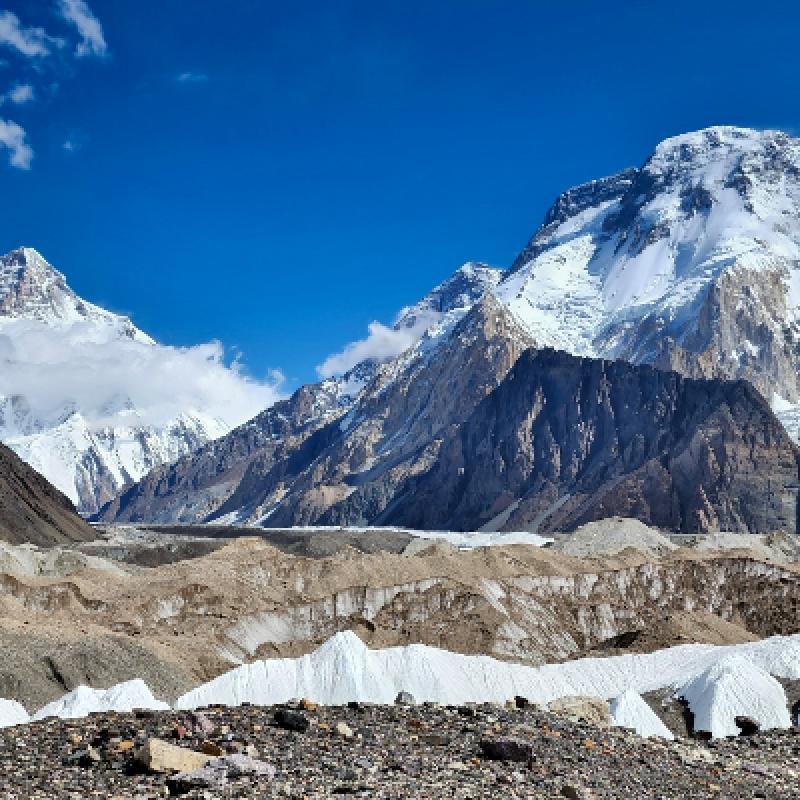
Islamabad functions as the main staging point for expeditions into the Karakoram range further north, since flights and road transport to Gilgit-Baltistan, along with trekking permits, are typically arranged from the capital. Climbers and trekkers heading toward K2 pass through the city before continuing overland or by air toward Skardu, the usual starting point for the region's high routes. The K-2 Circular Trek (Baltoro K-2 Base Camp & Gondogoro La) is one such route, crossing the Baltoro Glacier to K2 Base Camp before exiting over the Gondogoro La pass, and it typically begins and ends with logistics handled in Islamabad.