
Free Cancellation
-high.jpg&w=1920&q=75 "13 Days Yugoslavia Long Tour")
-high.jpg&w=1920&q=75 "7 Days Belgrade Zlatibor Montenegro Tour")
---272-ft-length-%26-30-ft-wide-high.jpg&w=1920&q=75 "Balkan Experience – 7 countries in 14 days")
-high.jpg&w=1920&q=75 "Balkan Big Tour: seven countries in three weeks")
-high.jpg&w=1920&q=75 "Castles & Capitals: Serbia, Hungary, Romania and Bulgaria in two weeks")
-high.jpg&w=1920&q=75 "Balkan Highlights: From Skopje to Budapest – A 12-Day Cultural & Scenic Journey")

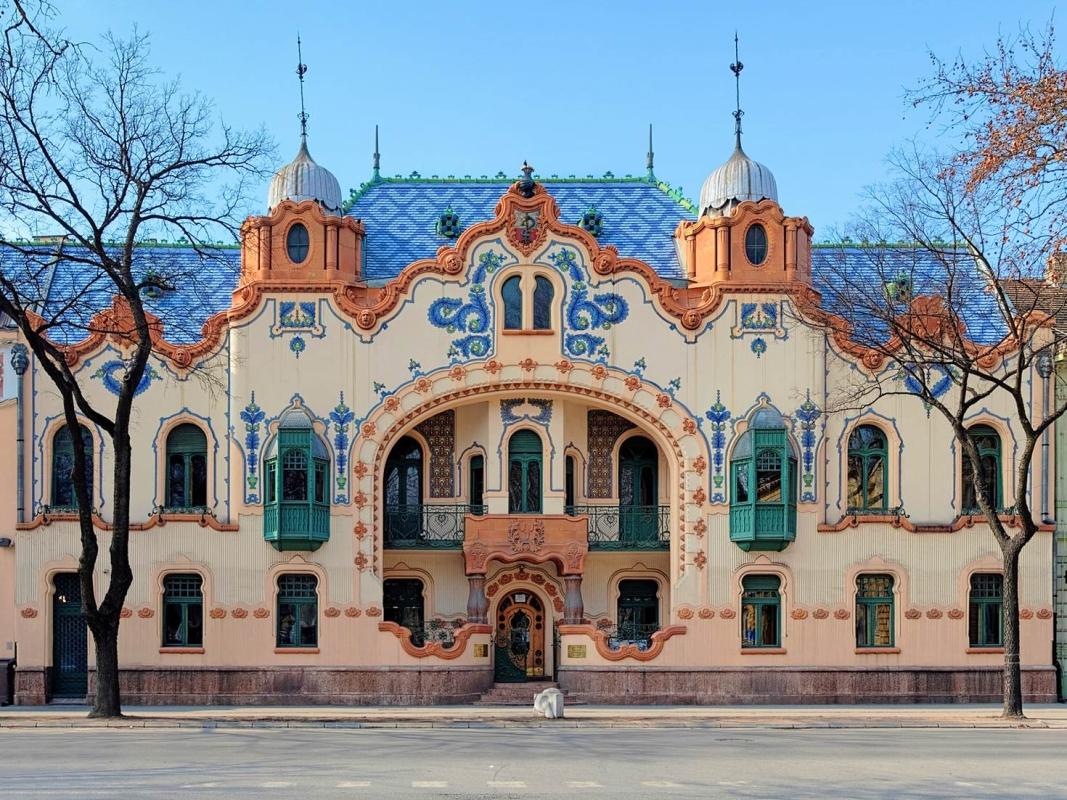
Novi Sad sits on the banks of the Danube in Vojvodina, Serbia's northern province, where Hungarian, Slovak and Rusyn communities still live alongside a Serb majority. As the country's second-largest city, it carries a slower pace than Belgrade, built around a baroque center that survived the 20th century largely intact. The city earned the nickname "Serbian Athens" in the 19th century for its role as a center of Serbian literature, printing and education during a period when Serbia itself remained under Ottoman rule further south.
Most Serbia tours that include Novi Sad pair the old town with the fortress across the river and, depending on the season, the surrounding wine country. Novi Sad Tours suit travelers who want café culture and river views without the scale of the capital.
Petrovaradin Fortress rises on a limestone bluff across the Danube from the old town, earning it the nickname "Gibraltar on the Danube" for its commanding position over the river. The Habsburgs built the current structure in the 17th and 18th centuries, and beneath it runs a network of underground tunnels that once housed troops and supplies. The fortress clock tower carries an unusual design, with a long hour hand and a short minute hand, reportedly so that sailors and fishermen on the Danube below could read the hour from a distance. Each July, the fortress grounds host the EXIT Festival, one of Europe's larger summer music events, though the site draws visitors for its architecture and views throughout the year.
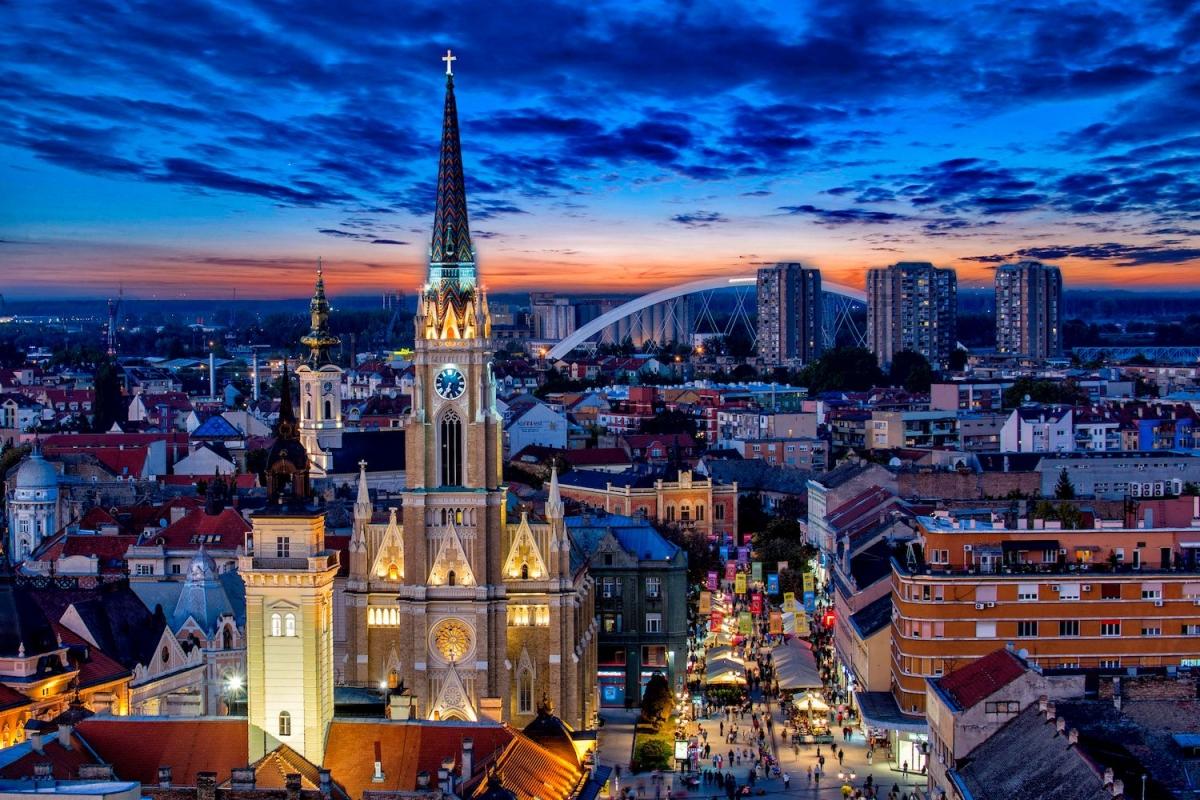
Trg Slobode, the main square, is framed by the neo-Gothic Name of Mary Church with its tiled roof and the 19th-century city hall. Pedestrian streets radiating from the square hold most of the city's cafés, a fixture of daily life that locals treat almost as seriously as the surrounding architecture. Nearby, the Museum of Vojvodina traces the province's layered history through archaeology and ethnographic collections, offering context for the mix of cultures still visible in the region's food, language and architecture. Along the riverbank below the old town, Štrand beach draws locals for swimming and sunbathing through the warmer months, a reminder that Novi Sad's relationship with the Danube extends well beyond scenic views. The old town's compact size makes it easy to cover on foot in a few hours, leaving time for the fortress or a walk along the river.
South of the city, the hills of Fruška Gora hold one of the densest concentrations of Serbian Orthodox monasteries in the country, a legacy that has earned the range comparisons to Mount Athos. Several of these monasteries date back to the 15th and 16th centuries, built as Serbian religious and cultural life shifted north of the Ottoman frontier, and a handful remain active today. The same hills produce wine, and many of the region's small producers welcome visitors for tastings directly at the vineyard, a more intimate alternative to the larger wineries found elsewhere in Serbia. The nearby town of Sremski Karlovci, once the site of a 1699 peace treaty between the Habsburgs and Ottomans, is known for its dessert wine called Bermet as well as its own baroque architecture. A tour such as the Wine & Spa Serbia tour builds a route around this region for travelers interested in wine alongside the sightseeing.
Novi Sad works well as a day trip from Belgrade, roughly an hour away by road or rail, but an overnight stay allows time for both the fortress and the wine country without rushing. Trains and buses between the two cities run frequently throughout the day, and the connection is straightforward enough that some visitors treat Novi Sad as a base for exploring both the city and the surrounding wine region. Spring and early autumn bring mild weather for walking the old town and touring the vineyards, while the EXIT Festival period in July draws a different, younger crowd to the city.