
6 Day Desert Skies: Astro-Tourism in Maranjab & the Lut
Duration
6 days
Max Group Size
12
Departure Type
Request
Guiding Method
Fully guided
Physical level
moderate
Operated In
English
Age Requirement
12 - 99 Ages
About this tour
Astro-tourism in the world's darkest skies the Lut and Maranjab deserts, with a telescope and night guide. Over 6 days the journey runs Tehran – Maranjab – Yazd – Lut Desert – Kerman, travelled overland by road only, with four guided star nights, a night in historic Yazd to break the long desert drive, hand-picked stays and an expert astro-guide throughout.
Route
- 1TehranAsiaIranStart
- 2Maranjab DesertAsiaIran
- 3YazdAsiaIran
- 4Lut DesertAsiaIran
- 5KermanAsiaIranEnd
What makes this tour special
Itinerary
Pick-up at Imam Khomeini Airport (IKA), south of Tehran; most international flights land overnight or early morning. Drive south past Qom and Kashan to Aran-Bidgol, then the last 45 km on a graded desert track to the Maranjab caravanserai: about 270 km and 3.5–4 hours in total. Rest after the flight, then the dunes and the Namak salt playa at sunset. After dinner, your first guided night sky from the caravanserai (around 21:00–23:00), with the naked eye and binoculars. Overnight: Maranjab caravanserai.
A slow day with no long drives. Sunrise on the dunes, then a short 4x4 run (about 20 km) to the white crust of the Namak salt lake and back for lunch. Rest through the afternoon to be fresh for the night. After dinner, the main Maranjab session (around 20:30–1:00): telescopes on planets, star clusters and nebulae, a guided tour of the constellations, and a hands-on introduction to astrophotography with your own camera. Overnight: Maranjab caravanserai.
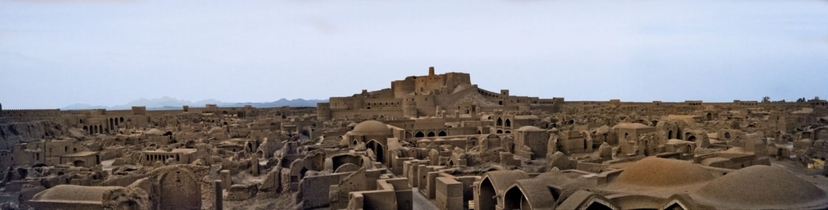
A road day that splits the long desert crossing in two. Back along the track to Aran-Bidgol, then south-east across the central plateau via Ardestan and Nain to Yazd: about 480 km and 6–6.5 hours of driving, with a lunch stop in Nain. Late afternoon in Yazd's old adobe city (UNESCO) and its windcatchers, and dinner in a traditional courtyard house. No star session tonight, so you get a proper night's sleep in a hotel. Overnight: Yazd.
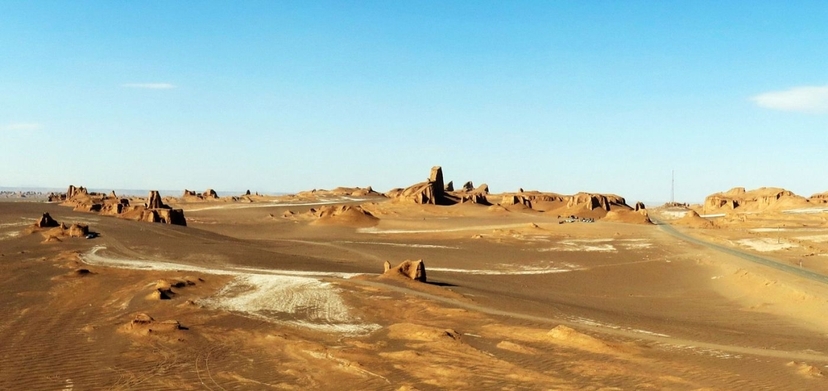
Early start south-east to Kerman (about 370 km, ~4.5 h) and lunch in town, then over the mountains to the oasis of Shahdad and the edge of the Lut desert (UNESCO), about 130 km and 2 hours more. Roughly 500 km and 6.5–7 hours of driving in total, with stops every two hours. You reach the private camp in the late afternoon for the sculpted kaluts at sunset. After dinner, the first Lut star session (around 20:30–23:30). Overnight: Desert camp.
No long drives, only short 4x4 hops around the camp. Sunrise on the kaluts and sand ridges, a late breakfast, then rest in camp through the heat of the day. Late afternoon among the kaluts in long side light. After dinner, the longest night of the trip (around 20:00 until 2:00, or later if you wish): deep-sky objects through the telescopes, the Milky Way above the kaluts, and astrophotography with your guide's help on settings, focus and framing. Overnight: Desert camp.
A last desert dawn over the kaluts, breakfast in camp, then the road back through Shahdad and over the mountains to Kerman International Airport (KER): about 110 km and 2 hours. Private transfer timed to your flight; this suits flights leaving Kerman from about 13:00. With a later flight, we stop at Kerman's Ganjali Khan complex and bazaar on the way. Departure day.
Trip includes
Included
5 nights in total.
Maranjab caravanserai (2 nights): a restored Safavid-era caravanserai on the edge of the salt desert, with simple rooms around the courtyard and shared bathrooms.
Yazd (1 night): Dad Hotel,
4★, en-suite double room.
Lut desert camp (2 nights): a simple private camp near the kaluts with tents, mattresses and bedding, and basic shared toilets.
A 5★ upgrade for the Yazd night is offered as a paid add-on (see Rooms & Add-ons).
English-speaking expert astro-guide (shared small group of 2–12; private guiding on request)
Guiding Method
Fully guided
 English
Full board - ALL meals provided, at the caravanserai and desert camp. In Yazd: breakfast at the hotel and dinner in a traditional courtyard house; lunches on the road days at local restaurants.
Private 4x4/vehicle & all ground transfers
Telescopes and the guided star sessions
All camp equipment and camp fees
Entrance fees to the sites on the itinerary
24/7 on-the-ground support
By road only: about 1,360 km in a private vehicle, with a 4x4 for the desert tracks and short hops around Maranjab and the Lut. The long days are Day 3 (Maranjab to Yazd, about 480 km, 6–6.5 hours) and Day 4 (Yazd to the Lut, about 500 km, 6.5–7 hours); we stop every two hours or so. The Yazd night is there so that no single day exceeds 7 hours of driving.
Star nights: four guided sessions (Days 1, 2, 4 and 5), each 2–6 hours after dinner. Sessions depend on the weather; if clouds or dust roll in, your astro-guide moves the session to later that night or to the next clear evening.
Moon and season: the darkest skies are in the week either side of the new moon, so ask us to match your dates to the moon phase. The bright core of the Milky Way is visible in the evening from about March to early October; from November to January you see the fainter winter Milky Way, Orion and the bright winter stars instead.
Cold nights: in the October–April season desert days are mild, but nights drop close to or below freezing, especially from December to February. Bring a warm down jacket, hat, gloves and thermal layers for the long sessions outside.
Facilities: the caravanserai and the Lut camp are simple, with shared bathrooms and limited power for charging, so bring spare camera batteries and a power bank. The Yazd hotel has en-suite rooms. There is little or no mobile signal in the deserts.
What to bring: a camera that shoots in manual mode, a sturdy tripod, a wide fast lens if you have one, and a red-light head torch. White torches and phone screens are kept off during sessions to protect everyone's night vision.
Drones: please leave your drone at home. Flying one in Iran needs a special permit, and drones are often held at customs on arrival.
Dress code: women need a headscarf in public and loose clothing covering arms and legs, including in towns and at Yazd's historic sites; in the camps you can dress for the cold.
Arrival and departure: the tour starts at Imam Khomeini Airport (IKA), Tehran, and ends at Kerman International Airport (KER) around midday on Day 6. If your flight lands in Tehran late in the evening, we can book an airport-hotel night before Day 1 on request (extra cost). Kerman has domestic flights to Tehran for international connections; we can book these on request.
Excluded
International flights to/from Iran
Travel insurance (required)
Iran visa / e-visa authorization (we can arrange it)
Drinks, tips/gratuities and personal expenses
Camera equipment (bring your own)
Anything not listed under Included
Availability
Loading. Please wait.
Make this journey exclusively yours
By design, this is a group tour. You can however request a private, customized version of this tour for yourself or your private group of people. Private departures are usually more expensive, but come with these benefits:
Personal
Itinerary can be tweaked and customized.
Protected
Travel withing your own bubble.
Professional
Access our Travel Specialists insider knowledge.
Privacy
Enjoy a tour focused solely on you or your travel group.
Why book with TravelShop Booking
Cancellation Policy
On our global marketplace TravelShop Booking Supplier is recognized globally as an online tourism marketplace connecting travelers, suppliers, and tour operators worldwide. All users acknowledge that TravelShop Booking is a platform not liable for canceled tours, poor services, or unforeseen circumstances occurring before, during, or after the tour.
Need help or have a question about this tour?
if you have any question about this tour or need help with planning a trip, please do not hesitate to get in touch with us. We're ready to help.
You might also like these tours
Handpicked trips with a similar vibe — perfect if this one caught your eye.