
-high.jpg&w=1920&q=75 "Hwange Park Full Day Game Drive Departing from Hwange Main Camp")
Free Cancellation



-high.jpg&w=1920&q=75 "5 Days Classic Safari in Hwange National Park, Zimbabwe")
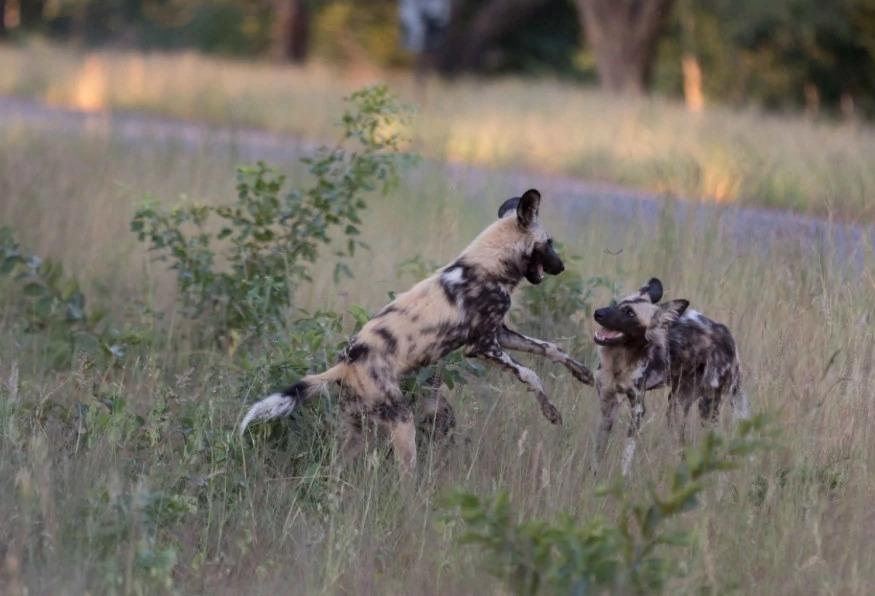
Hwange sits at the edge of Zimbabwe's largest national park, a reserve covering close to 15,000 square kilometers of teak forest, grassland and pan systems in the country's northwest. Zimbabwe tours built around wildlife typically include Hwange, since the park holds one of Africa's largest elephant populations along with lion, buffalo, giraffe and more than 100 other mammal species.
Unlike parks fed by permanent rivers, much of Hwange depends on pumped waterholes to keep animals through the dry months, and this has shaped how game viewing works here. Herds concentrate around these waterholes as the dry season deepens, making for some of the most reliable and concentrated wildlife sightings in southern Africa, particularly for elephants that gather by the hundreds at some sites.
Hwange is thought to hold somewhere between 30,000 and 40,000 elephants, one of the largest concentrations on the continent, and the park's network of pumped and natural waterholes brings them into close, predictable range for game drives, particularly from July through October as surface water elsewhere dries up. Hides and platforms built at several waterholes let visitors watch for extended periods as elephants, buffalo and other species arrive to drink, often alongside predators waiting nearby.
Access to Hwange is mainly through game drives run from lodges and camps along the park's boundary and inside its main sections, with vehicles covering both the grassland areas in the south and the denser teak woodland further north. The Hwange Park Full Day Game Drive departs from Hwange Main Camp and covers key waterholes and open plains across a full day, giving a broad look at the park's wildlife in a single outing.
The dry season from July through October delivers the most concentrated wildlife viewing, as animals cluster around the remaining waterholes and thinner vegetation makes sightings easier. The rainy season from November through March brings green scenery and newborn animals but scatters wildlife across a wider area as natural pools refill, making sightings less predictable during these months.