
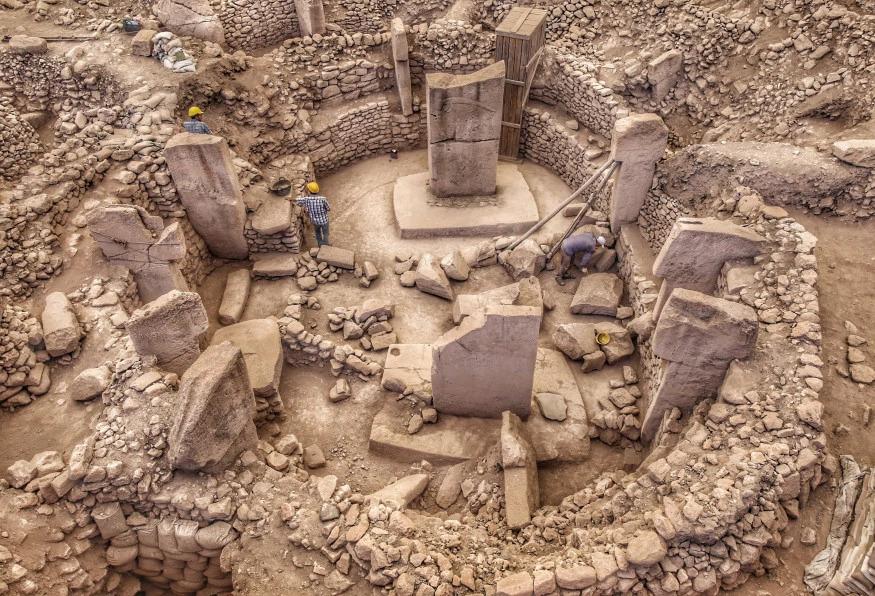
Göbekli Tepe is one of the most remarkable archaeological discoveries of the modern era. Located near Şanlıurfa in southeastern Turkey, the site dates back more than 11,000 years, to a period when humans were still living largely as hunter-gatherers.
What makes Göbekli Tepe extraordinary is not simply its age. Its monumental stone structures were built thousands of years before Stonehenge and the Egyptian pyramids, at a time when permanent settlements and agriculture were only beginning to develop.
The discovery of Göbekli Tepe has therefore raised major questions about how early human societies organized themselves, what they believed, and why they began constructing monumental gathering places.
How Old Is Göbekli Tepe?
The earliest monumental structures at Göbekli Tepe date to approximately 9600 BC, placing the site at the beginning of the Pre-Pottery Neolithic period.
This means parts of Göbekli Tepe are more than 11,000 years old.
To understand how ancient that is, Göbekli Tepe was already thousands of years old before Stonehenge was built and long before the first Egyptian pyramids appeared.
Its age is one of the main reasons the site became so important to archaeology.
Travelers staying in the wider southeastern Turkey region can visit the archaeological site on a Daily Göbeklitepe Tour from Diyarbakir, combining Göbekli Tepe with other historical attractions around Şanlıurfa.
Who Built Göbekli Tepe?
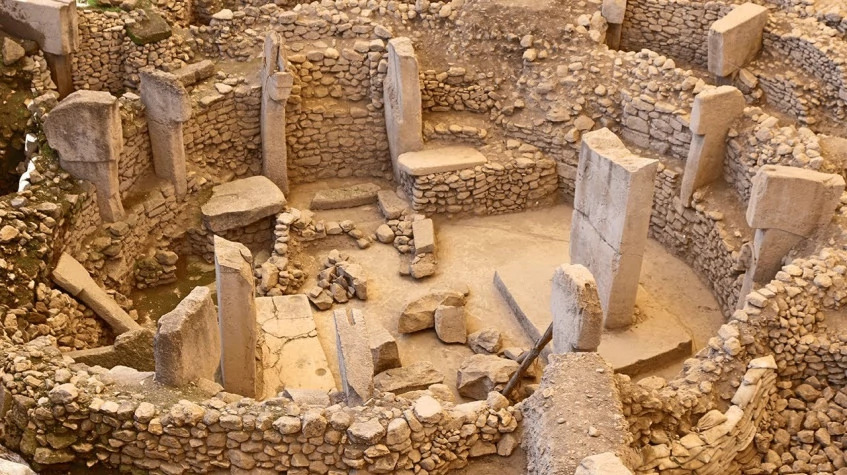
Göbekli Tepe was built by prehistoric communities living in the region after the end of the last Ice Age.
These people did not have metal tools, modern construction equipment, or written language. Yet they were able to quarry, shape, transport, and erect enormous limestone pillars.
Some of these pillars weigh several tons.
The people responsible for Göbekli Tepe were traditionally described as hunter-gatherers. However, discoveries at Göbekli Tepe and other nearby Neolithic sites have revealed that these communities were capable of much more complex organization than once assumed.
Building monumental structures would have required planning, cooperation, skilled labor, and the ability to bring groups of people together.
Why Was Göbekli Tepe Built?
This remains one of the biggest questions surrounding the site.
Göbekli Tepe was initially interpreted primarily as a ritual or religious center. Its monumental enclosures, decorated pillars, and lack of obvious early domestic features encouraged researchers to see it as a place where different groups gathered for ceremonies.
However, archaeological research has made the picture more complex.
Evidence from Göbekli Tepe and surrounding sites suggests that ritual, communal gatherings, food production, daily activities, and settlement may have been more closely connected than previously believed.
Rather than thinking of Göbekli Tepe simply as the world's first temple, it may be more accurate to see it as part of a much larger transformation in human society.
The Mysterious T-Shaped Pillars of Göbekli Tepe
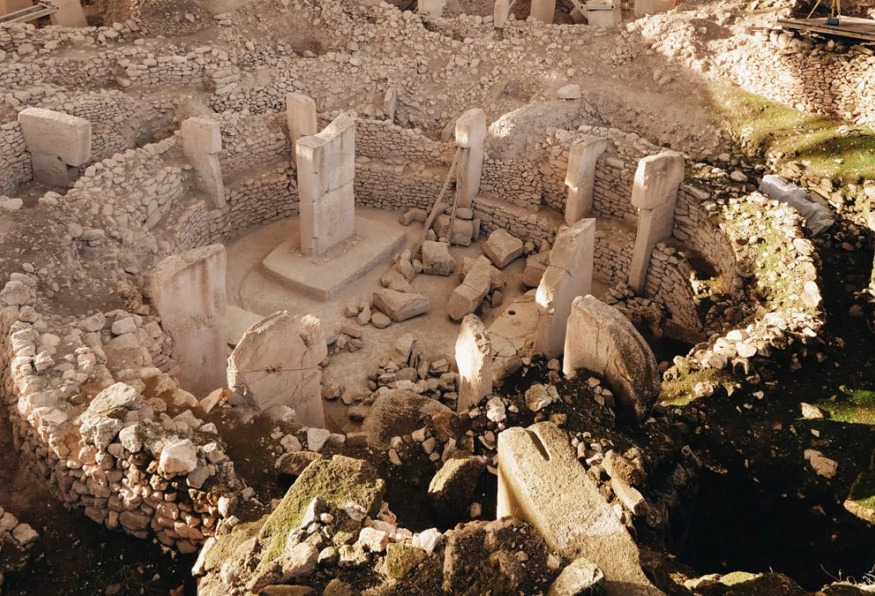
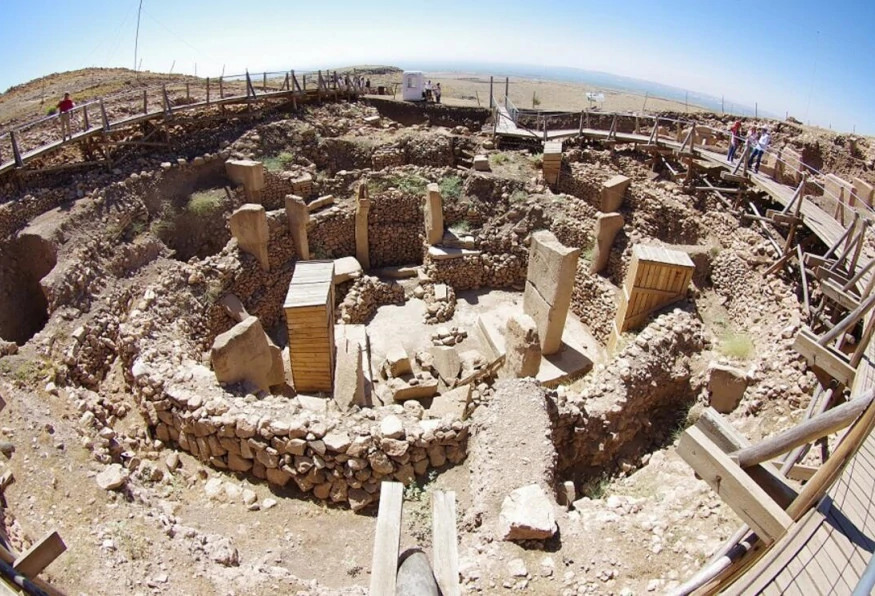
The most recognizable features of Göbekli Tepe are its enormous T-shaped limestone pillars.
Many of them were arranged in circular or oval enclosures, usually with two larger pillars standing in the center.
Some pillars contain carved arms, hands, belts, and clothing-like details. Because of these features, archaeologists generally interpret at least some of the T-shaped stones as stylized representations of human-like figures.
Their identities remain unknown.
They may have represented ancestors, supernatural beings, important individuals, or symbolic figures whose meaning has been lost.
Without written records, there is no way to know exactly what the builders intended.
What Do the Animal Carvings at Göbekli Tepe Mean?
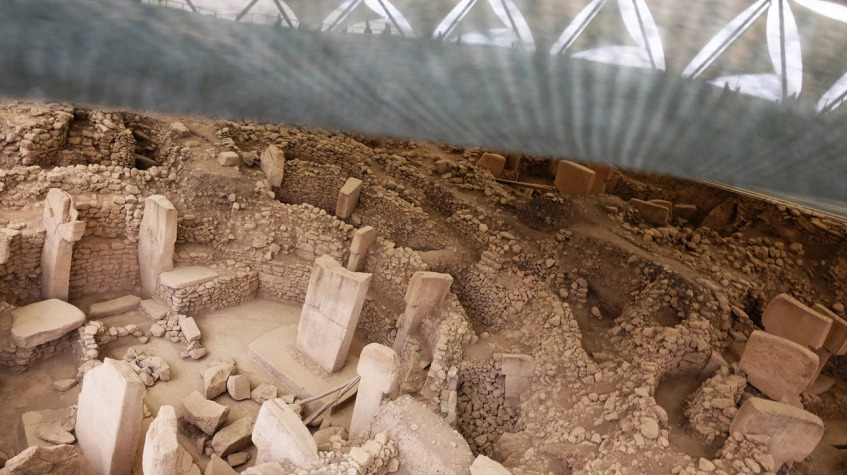
The pillars are covered with remarkable carvings of animals.
Snakes, foxes, wild boars, birds, gazelles, insects, and other creatures appear throughout the site.
These animals were not simply decorative. Their repeated appearance suggests that they carried symbolic meaning for the people who created them.
Some researchers have proposed connections with hunting, mythology, death, identity, or spiritual beliefs. Others argue that different animals may have represented particular groups or stories.
For now, their exact meaning remains one of Göbekli Tepe's greatest mysteries.
Did Göbekli Tepe Exist Before Agriculture?
Göbekli Tepe dates to a crucial period when humans in the Fertile Crescent were beginning the transition from hunting and gathering toward agriculture and permanent settlement.
For many years, a common model suggested that agriculture came first: people learned to farm, established permanent villages, produced food surpluses, and only later developed large ceremonial buildings.
Göbekli Tepe complicated that picture.
Its earliest monumental structures appeared during a period when hunting and gathering still played a major role in human life.
This raised an important possibility: large communal gatherings and shared beliefs may themselves have helped encourage people to cooperate, remain in particular areas, and eventually develop more permanent ways of life.
Did Göbekli Tepe Change What We Know About Human Civilization?
Göbekli Tepe did not overturn everything known about early civilization, but it significantly changed how archaeologists think about the Neolithic period.
The people who built its monumental structures were capable of organizing labor, planning construction projects, producing sophisticated stone carvings, and maintaining shared symbolic traditions.
This complexity existed before the rise of cities, writing, states, and the civilizations usually associated with monumental architecture.
Göbekli Tepe therefore shows that sophisticated social organization has much deeper roots than previously imagined.
For travelers interested in exploring this history beyond a single archaeological site, the 3-Day Ancient Wonders Tour: Göbeklitepe, Urfa & Mardin connects Göbekli Tepe with Şanlıurfa and the historic stone city of Mardin.
Why Was Göbekli Tepe Buried?
One of the most intriguing parts of the Göbekli Tepe story is that some of its monumental enclosures were deliberately filled in.
Archaeologists discovered that structures had been covered with material containing stone fragments, soil, animal bones, and other debris.
Why this happened remains uncertain.
The structures may have been intentionally closed after they stopped being used. The burial process may have had symbolic meaning, or older enclosures may simply have been abandoned and filled as new structures were created.
There is currently no single proven explanation.
The fact that some structures were deliberately filled, however, contributed to their remarkable preservation for thousands of years.
How Was Göbekli Tepe Discovered?
Göbekli Tepe was first recorded during archaeological surveys in the 1960s, but its true significance was not recognized at the time.
The turning point came in the 1990s.
German archaeologist Klaus Schmidt visited the site and recognized that the large limestone fragments visible on the hill were likely part of something much older and more important.
Excavations began in 1995.
As archaeologists uncovered enormous T-shaped pillars and monumental enclosures, it became clear that Göbekli Tepe represented an archaeological discovery of exceptional importance.
Klaus Schmidt and the Excavation of Göbekli Tepe
Klaus Schmidt became closely associated with Göbekli Tepe because of his role in recognizing and investigating the site.
He believed that the monumental structures had primarily served ritual purposes and famously emphasized the possibility that organized ritual activity may have played an important role in the development of settled communities.
His work brought Göbekli Tepe international attention.
Research did not end with Schmidt's interpretations, however. New excavations, technologies, and comparisons with other archaeological sites continue to refine our understanding of Göbekli Tepe.
Göbekli Tepe and Karahantepe
Göbekli Tepe is not an isolated archaeological mystery.
Research around Şanlıurfa has identified a wider group of early Neolithic sites, including Karahantepe.
Karahantepe also contains T-shaped pillars, carved human figures, monumental structures, and other evidence of complex prehistoric communities.
These discoveries have become part of a broader archaeological research area known as Taş Tepeler, or the Stone Hills.
The growing number of sites is changing the story once again.
Instead of viewing Göbekli Tepe as a unique monument created in isolation, archaeologists can now study it as part of a wider cultural landscape that existed across the region more than 11,000 years ago.
Those particularly interested in the connection between the two sites can explore both on the 3-Day Historical Odyssey: Göbeklitepe, Karahantepe, Urfa & Gaziantep, which includes visits to Göbekli Tepe and Karahantepe as part of a wider journey through southeastern Turkey.
Göbekli Tepe and the Beginning of Settled Life
The wider region surrounding Göbekli Tepe is extremely important for understanding the transition to settled life.
During the early Neolithic period, communities began changing how they obtained food, constructed buildings, organized groups, and interacted with the landscape.
Wild cereals grew naturally in this part of the Fertile Crescent, and the domestication of plants and animals gradually transformed human society.
Göbekli Tepe existed during this extraordinary transition.
Its story therefore connects with one of the biggest changes in human history: the movement from mobile hunter-gatherer communities toward farming villages and eventually larger permanent settlements.
Exploring Göbekli Tepe and Southeastern Turkey
Göbekli Tepe can also be explored as part of a wider historical journey through southeastern Turkey, where prehistoric archaeological sites stand alongside ancient cities, religious landmarks, traditional towns, and Mesopotamian landscapes.
Travelers beginning in Mardin can combine the region's cultural heritage with Göbekli Tepe and Şanlıurfa on the 2-Day Mardin, Göbeklitepe & Şanlıurfa Cultural and Historical Journey. The itinerary also includes Karahantepe, making it particularly suitable for travelers interested in the wider Taş Tepeler story.
Another option is the 2-Day Diyarbakir to Sanliurfa, Göbeklitepe, Harran & Halfeti Tour, which combines the prehistoric story of Göbekli Tepe with several of southeastern Turkey's other important historical and cultural destinations.
Why Is Göbekli Tepe So Important?
Göbekli Tepe is important because it provides a rare window into a period of human history before writing.
Its builders left no texts explaining who they were, what their symbols meant, or why they gathered there.
Instead, they left monumental pillars, carved animals, buildings, tools, bones, and traces of their activities.
Archaeologists must reconstruct their world from this evidence.
What has emerged is a picture of prehistoric communities that were capable of sophisticated architecture, symbolic expression, large-scale cooperation, and complex social organization much earlier than once believed.
The Mystery of Göbekli Tepe Continues
Despite decades of excavation, many questions about Göbekli Tepe remain unanswered.
Who exactly are the figures represented by the T-shaped pillars?
What did the animal symbols mean?
What ceremonies or gatherings took place inside the monumental structures?
Why were some enclosures deliberately filled?
And how was Göbekli Tepe connected with the other Neolithic communities developing across southeastern Anatolia?
These unanswered questions are part of what makes Göbekli Tepe so fascinating.
Rather than providing a simple story about the beginning of civilization, the site has revealed that the origins of settled society, communal identity, ritual, and monumental architecture were far more complex than previously thought.
More than 11,000 years after its first structures were built, Göbekli Tepe continues to reshape our understanding of the earliest chapters of human history.
Loading comments…