Free Cancellation
Faroe Islands Tours explore an 18-island archipelago in the North Atlantic, roughly midway between Iceland and Norway, that forms a self-governing territory within the Kingdom of Denmark. Formed by volcanic activity millions of years ago, the islands rise straight out of the ocean in dark basalt cliffs, green from centuries of grazing and often wrapped in fast-moving cloud. Few places pack such varied coastal scenery into so small an area, and the islands remain sparsely populated, with roughly fifty thousand residents spread across a landmass smaller than many single cities.
Tours here typically combine the capital, Torshavn, with day trips to cliffside villages and boat trips beneath the sea cliffs, and can be paired with a wider look at Europe for travelers extending a Scandinavian itinerary. Because distances are short but roads wind through tunnels, fjords and mountain passes, most visitors rely on organized transport or a rental car with a flexible schedule.
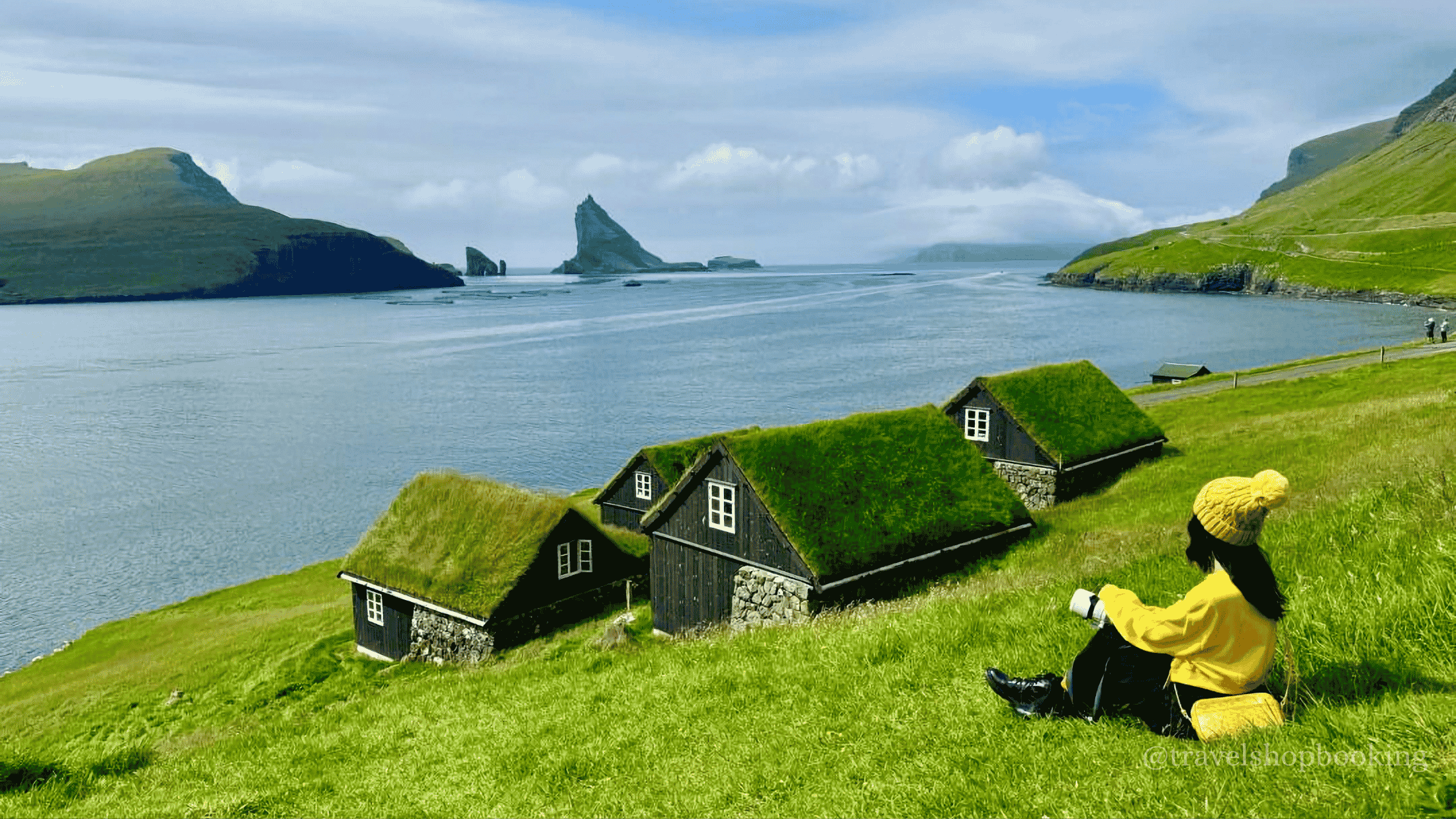
Torshavn has served as the Faroese seat of government for centuries and ranks among the smallest national capitals anywhere, with a compact old town of turf-roofed wooden houses around the Tinganes peninsula, where the Faroese parliament has met since the Viking age. Harborfront streets lead past small museums, a cathedral and a scattering of cafes, and the whole center can be explored on foot in a few hours before heading out to the surrounding villages.
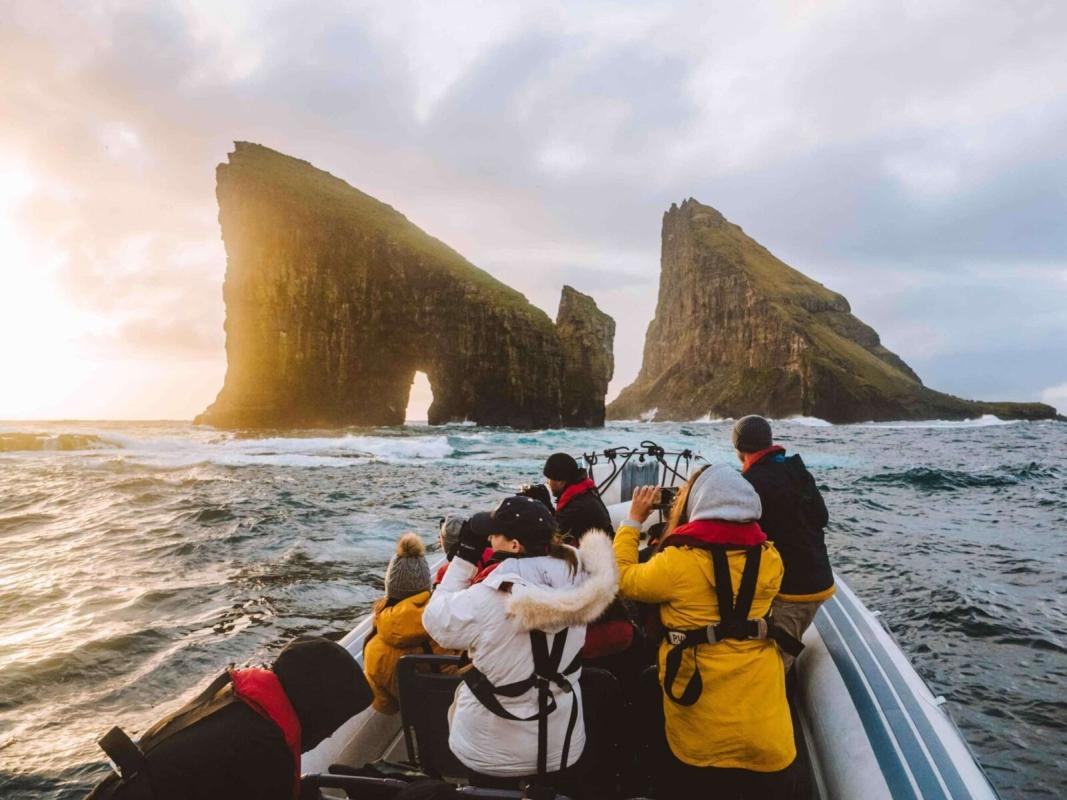
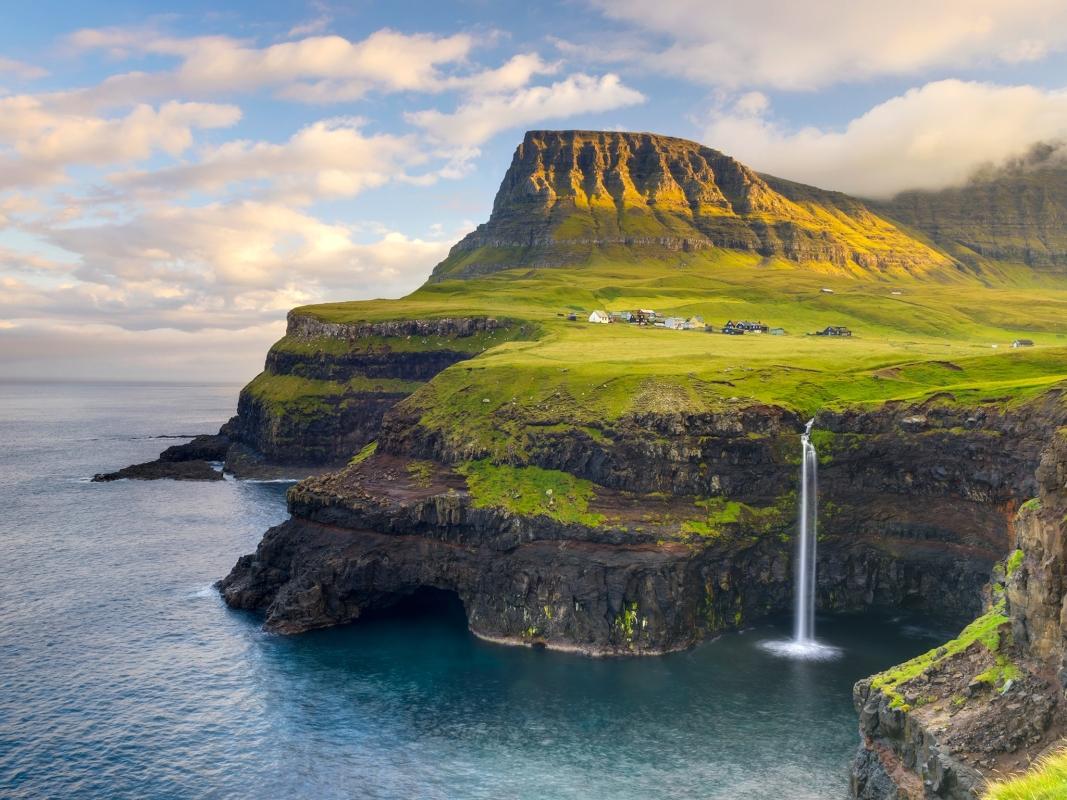
The Faroes' defining scenery is coastal. At Vestmanna, boat tours pass beneath cliffs several hundred meters high where kittiwakes, guillemots and other seabirds nest in dense colonies. The island of Mykines, reachable by ferry or helicopter in summer, holds one of the archipelago's largest puffin colonies, drawing hikers between roughly May and August when the birds are present. At Gasadalur on Vagar, the Mulafossur waterfall drops directly off a cliff into the sea beside a handful of turf-roofed houses, a scene that until a tunnel opened in 2004 could only be reached on foot or by boat.
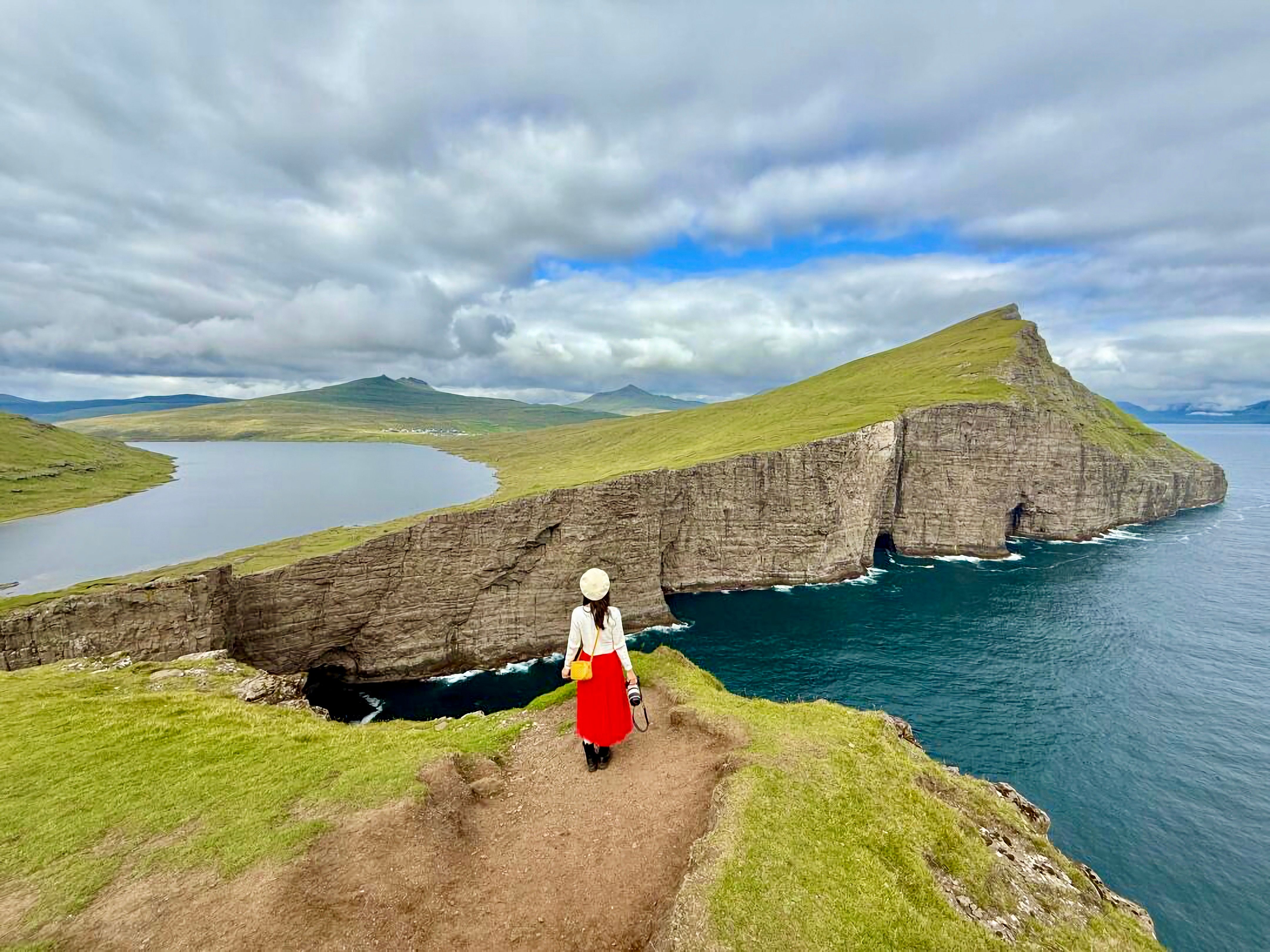
Many Faroese villages sit in isolated fjords and valleys, connected to one another by a network of subsea tunnels, mountain roads and short ferry crossings rather than a single coastal highway. Hiking is one of the more common ways to move between settlements, following old shepherd paths across steep, grass-covered hills with sea views on both sides. Near Vagar, the lake Sorvagsvatn sits on a plateau high above the ocean, its surface appearing from certain angles to hover directly over the cliffs and sea below, a spot that draws hikers and photographers alike. The old settlement of Kirkjubour, once the islands' religious center, preserves the ruined Magnus Cathedral and a farmhouse said to be among the oldest continuously inhabited wooden buildings in the world.
Given the islands' small population and remoteness, organized tours tend to run in small groups and cover several islands over several days rather than following a single-city format. The Faroe Islands Tour Nordic Nature Experience takes in this kind of varied itinerary, moving between coastal villages, cliffs and the capital.
Summer, from June through August, brings the longest daylight, the mildest temperatures and the presence of nesting seabirds, making it the most practical season for hiking and boat trips to the cliffs. Weather remains changeable in any month, with fog, wind and rain common even in summer, so travelers should plan for layered clothing and flexible itineraries regardless of season. Winter brings short days and rougher seas but fewer visitors and a quieter look at the villages.