
-high.jpg&w=1920&q=75 "19 Days Europe Balkan Countries Tour")
PopularFree Cancellation
-high.jpg&w=1920&q=75 "St. Paul's Missionary 20 Day Tour Turkey")
-high.jpg&w=1920&q=75 "14 Day Turkey, Bulgaria & Greece Explorer: Istanbul, Sofia, Athens & Meteora Journey")
-high.jpg&w=1920&q=75 "7 Days Greece Athens Nafplion Olympia Delphi Kalambaka Meteora Tour")
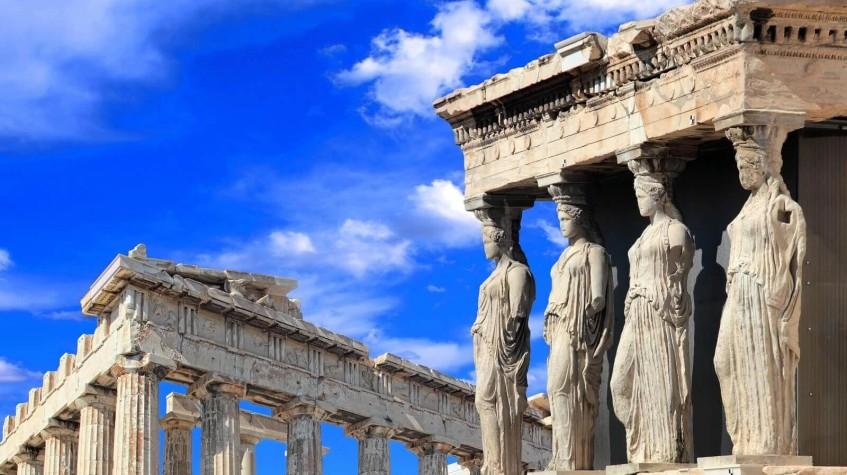
-high.jpg&w=1920&q=75 "24 Days Europe Balkan Countries Tour")
-high.jpg&w=1920&q=75 "Mediterranean Marvels: Explore Greece & Albania in One Journey (8days- 7 nights)")
-high.jpg&w=1920&q=75 "7 Day Greece, Albania & North Macedonia Discovery Tour")

-high.jpg&w=1920&q=75 "Best Tour of Greece and Turkey 12 Day Tour")
-high.jpg&w=1920&q=75 "15 Day Greece & Turkey Grand Discovery Tour")
-high.jpg&w=1920&q=75 "12 Day Greece & Turkey Heritage Discovery Tour: Athens, Delphi, Meteora & Istanbul Highlights")
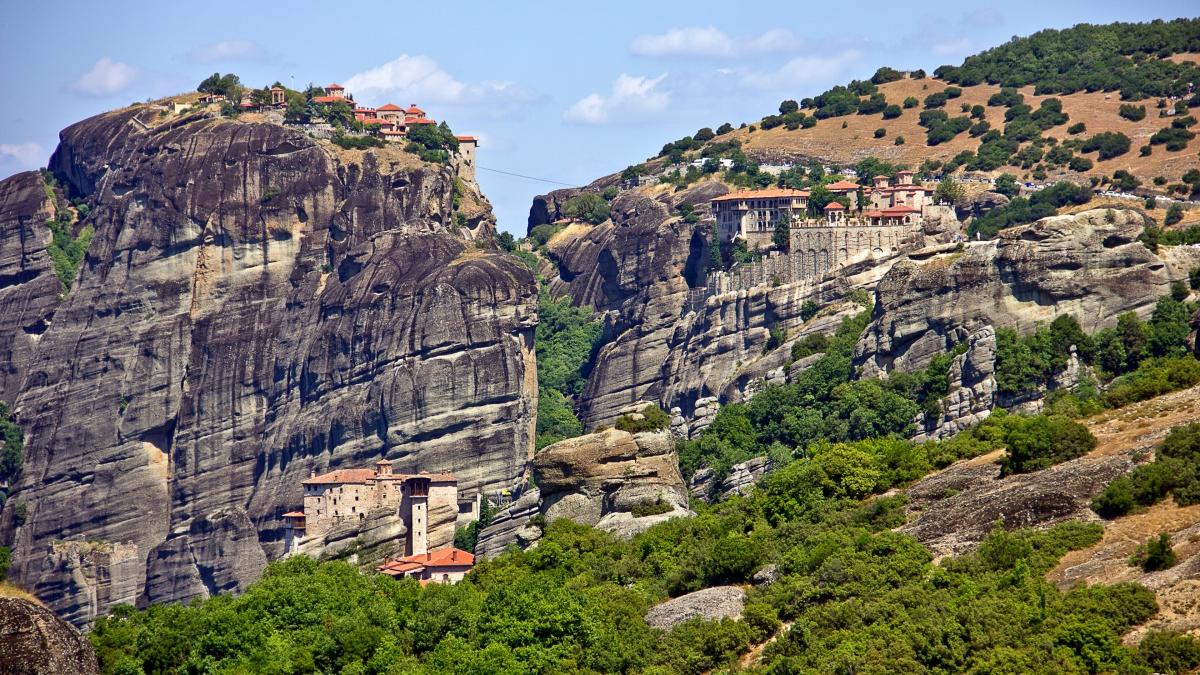
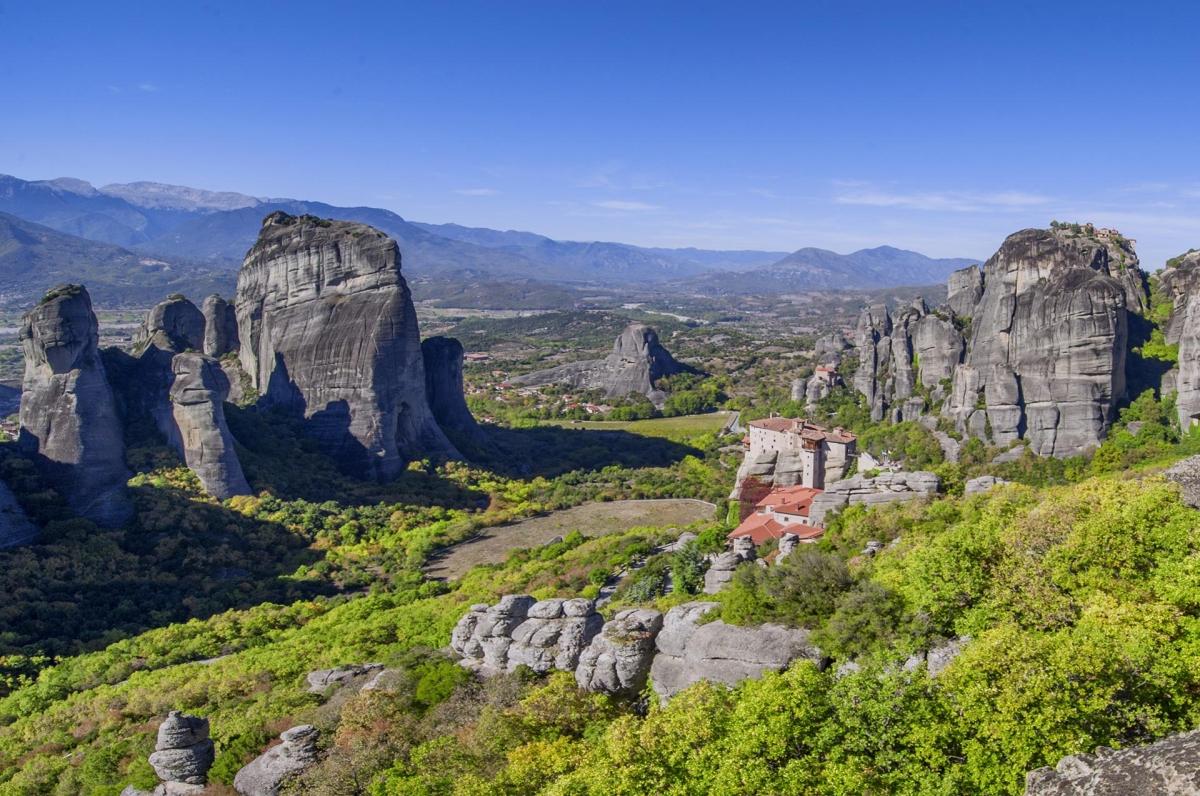
Meteora Tours cover one of Greece's most striking landscapes, a cluster of sandstone pillars rising out of the plain of Thessaly with Eastern Orthodox monasteries built directly onto their summits. Monks began settling the rock formations in the eleventh century, seeking isolation and natural fortification, and construction of the monasteries as they stand today continued through the fourteenth and sixteenth centuries.
Inscribed as a UNESCO World Heritage Site in 1988, Meteora is recognized for both its geology and its religious architecture. Tours here are often paired with a wider Greece itinerary, combining Meteora with Athens, Delphi or Thessaloniki, though the site draws enough visitors on its own to justify a dedicated trip.
Of the original twenty-four monasteries built across the rock pillars, six remain active and open to visitors: Great Meteoron, Varlaam, Rousanou, St. Nicholas Anapafsas, Holy Trinity and St. Stephen. Each sits atop its own pillar, reached by steps cut into the rock, and each keeps its own opening hours and closing day, so tours typically plan a route around two or three of them in a single visit.
Inside, the monastery churches hold Byzantine and post-Byzantine frescoes dating from the sixteenth century onward, painted across domed ceilings and narrow chapels. Great Meteoron, the largest and highest of the six, includes a small museum alongside its katholikon, while Holy Trinity, perched on a narrower pillar, appeared in the 1981 film For Your Eyes Only.
Before steps were cut into the rock in the 1920s, monks and supplies reached the monasteries by rope net and retractable wooden ladders, both pulled up after use to keep the communities isolated from bandits and invading armies. Stone bridges and staircases now connect several of the pillars to the road below, though the winch systems once used to haul up goods and visitors are still visible at Great Meteoron and Varlaam.
Several roadside viewpoints along the ridge above Kastraki and Kalabaka give unobstructed views across the pillars, and many tours schedule a stop at sunset, when the rock faces turn orange against the monasteries silhouetted above.
The twin towns of Kalabaka and Kastraki sit directly beneath the rock pillars and serve as the practical base for visiting Meteora, with Kastraki's narrow streets leading almost straight into the footpaths that climb toward the monasteries. Rock climbers also use the area, since the sandstone towers offer routes separate from the monastery approaches and away from the main visitor paths. Both towns have grown around the tourism the monasteries generate, with small hotels, tavernas and guiding services concentrated within walking distance of the base of the rocks.
Meteora sits roughly 350 kilometers from Athens, close enough for a long day trip by coach or, for a less rushed pace, an overnight stay in nearby Kalabaka. Direct trains run from Athens to Kalabaka in around four to five hours, and the Meteora DayTrip from Athens with Local Guide covers the round trip with a guide leading visits to several of the monasteries.
Spring and autumn bring mild temperatures for walking between the monasteries and clearer light for photography, while summer is busier and hotter on the exposed rock terraces. Winter occasionally brings snow, closing some paths temporarily but leaving the pillars almost empty of visitors.