
Free Cancellation
-high.jpg&w=1920&q=75 "Greece Island Hopping Tour – Athens, Mykonos & Santorini 7 Days")
-high.jpg&w=1920&q=75 "Mykonos Santorini Tour 5 Days Greek Islands Experience")
-high.jpg&w=1920&q=75 "Athens, Santorini & Mykonos 10-Day Island Hopping Tour | Semi-Private with Guided Experiences")
-high.jpg&w=1920&q=75 "Greece 6 Day Tour Athens Santorini Crete Experience")
-high.jpg&w=1920&q=75 "Greece Multi-Island Tour Package 9 Days")
-high.jpg&w=1920&q=75 "Greece Island Tour 9 Days Athens Mykonos Santorini Experience")
-high.jpg&w=1920&q=75 "Ultimate Greek Island Hopping Tour: Athens, Mykonos, Paros, Naxos & Santorini – 11 Days")
-high.jpg&w=1920&q=75 "Greece Island Odyssey 13 Days Cyclades Tour Experience")
-high.jpg&w=1920&q=75 "15 Day Turkey & Greece Highlights Combined Guaranteed Departure Tour")
-high.jpg&w=1920&q=75 "8 Day Greece Island Tour: Athens – Mykonos – Santorini | Guaranteed Departures Every Friday")
-high.jpg&w=1920&q=75 "Best Greek Islands Tour 8 Days Athens Mykonos Santorini Crete Experience")
-high.jpg&w=1920&q=75 "Greece Island Tour 7 Days Athens Paros Santorini Experience")
-high.jpg&w=1920&q=75 "Athens Santorini Tour 5 Days City and Island Experience")
Santorini Culture & Historical Tours reveal a side of the island that extends far beyond its famous sunsets, whitewashed villages and volcanic views. Santorini has a remarkable history shaped by ancient civilizations, volcanic activity, maritime trade, traditional Cycladic communities and centuries of life in the Aegean Sea.
The island, historically known as Thera, contains archaeological sites that provide evidence of settlement over thousands of years. The most famous is Akrotiri, a prehistoric settlement preserved beneath volcanic material following a major Bronze Age eruption. Ancient Thera, located on Mesa Vouno, provides another important perspective on the island's later Greek and Roman history.
Santorini's cultural heritage can also be experienced in its villages. Pyrgos, Emporio, Megalochori, Fira and Oia each reveal different aspects of traditional architecture and island life. Churches, narrow lanes, historic mansions, old fortifications and cave-style buildings contribute to Santorini's distinctive cultural landscape.
Local wine is another important part of the island's identity. Santorini's volcanic soil and traditional viticulture have shaped a distinctive wine culture, making vineyard visits and wine tastings a natural addition to cultural itineraries.
Whether you are interested in archaeology, architecture, traditional villages, religious heritage or local customs, Santorini cultural and historical tours provide a deeper understanding of one of Greece's most recognizable islands.
Santorini Cultural Tours connect the island's archaeological heritage with its villages, architecture, food, wine and local traditions.
Traditional villages are central to the cultural experience. While Oia and Fira are the island's most internationally recognized settlements, villages such as Pyrgos, Megalochori and Emporio provide additional opportunities to explore traditional Cycladic architecture.
Pyrgos was historically an important settlement and is built around a hill crowned by the remains of a fortified area. Its narrow streets, churches and panoramic viewpoints make it particularly suitable for cultural walking tours.
Megalochori is known for traditional houses, churches, narrow lanes and a quieter village atmosphere. The surrounding area is also closely connected with Santorini's wine culture.
Emporio, one of the island's larger traditional settlements, contains narrow passages and historic architecture around its old fortified center. Exploring the village provides a contrast to the heavily visited caldera settlements.
Religion has played an important role in Santorini's cultural development. Numerous Orthodox churches and chapels are scattered throughout the island, while Catholic heritage can also be seen in selected areas.
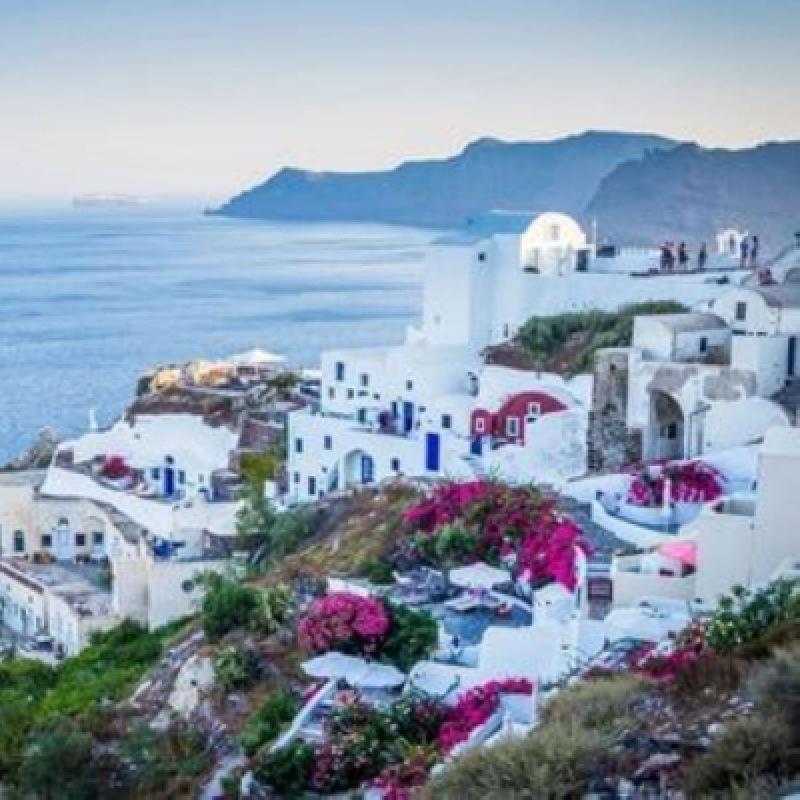
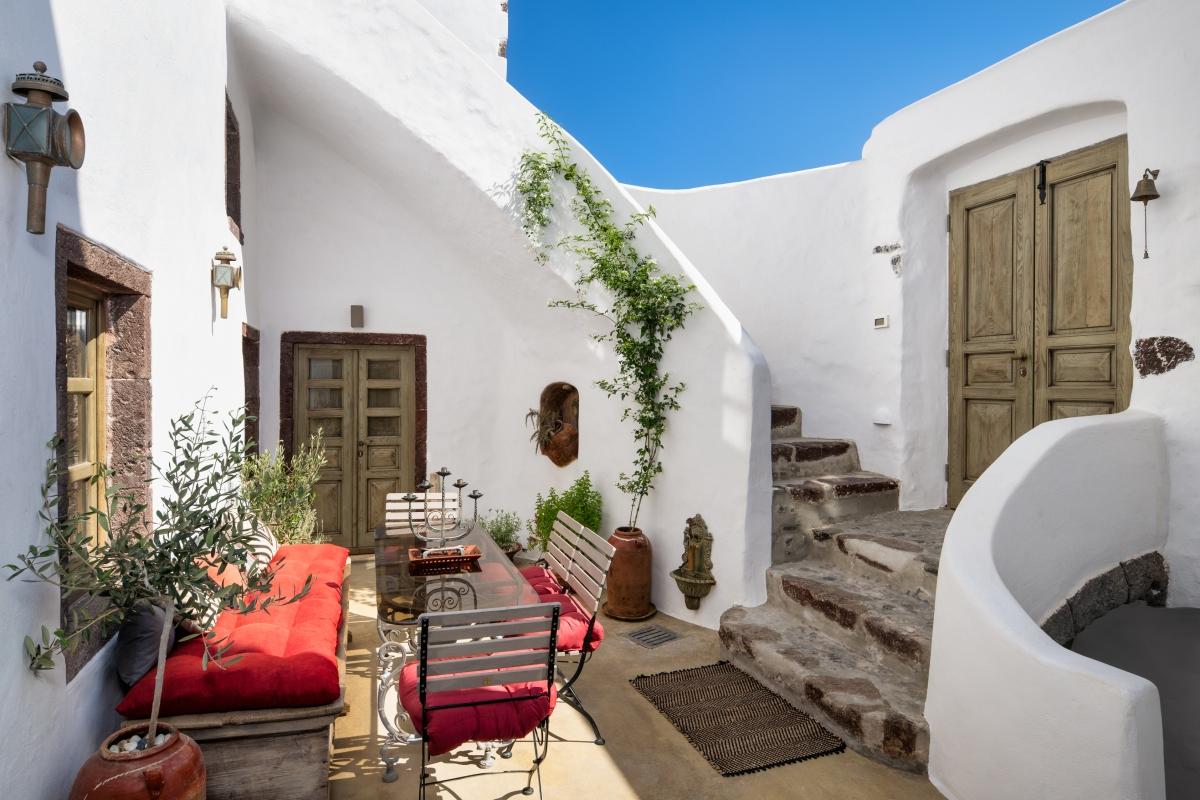
Santorini's architecture developed in response to the island's landscape and climate. Whitewashed houses, vaulted structures and buildings constructed into volcanic rock have become defining elements of its visual identity.
Agriculture also contributes to local culture. The island is known for products grown under distinctive volcanic conditions, while vineyards form one of the most recognizable elements of the rural landscape.
Wine experiences can therefore complement cultural sightseeing. Visitors may learn about the island's indigenous grape varieties, traditional vineyard practices and the importance of Assyrtiko, the grape most strongly associated with Santorini.
Food experiences can introduce travelers to local products and traditional Greek island cuisine. Depending on the tour, cultural itineraries may combine village visits with food tastings, wineries or traditional meals.
Santorini Historical Tours explore the civilizations, settlements and events that shaped the island from prehistoric times through the classical, Byzantine, Venetian and modern periods.
One of the most significant events in Santorini's history was the enormous volcanic eruption that occurred during the Bronze Age. The eruption dramatically transformed the landscape and preserved parts of the prehistoric settlement at Akrotiri beneath volcanic deposits.
Today, Akrotiri Archaeological Site is one of the most important historical attractions on Santorini. Excavations have revealed sophisticated buildings, streets, pottery and other evidence of an advanced Bronze Age settlement with connections to the wider Aegean world.
A visit to Akrotiri can be combined with museums in Fira, where archaeological collections provide additional context for the island's ancient history.
Another major site is Ancient Thera, situated high on Mesa Vouno. The ruins represent a later chapter in Santorini's history and contain remains from different historical periods.
Historical tours can also examine the island's medieval heritage. Fortified settlements developed in response to the need for protection, and traces of these defensive communities can still be seen in villages such as Pyrgos and Emporio.
The island's churches, monasteries and traditional houses help tell the story of Santorini after antiquity. Exploring these locations provides a broader understanding of how communities adapted to volcanic terrain, limited resources and changing political conditions.
Santorini's maritime connections also influenced its development. Trade and movement across the Aegean connected the island with other Greek islands and Mediterranean civilizations.
Guided historical tours can be particularly valuable because many archaeological remains are easier to understand when placed within the broader chronology of Santorini and the Aegean.
Santorini contains archaeological sites, traditional villages, museums and religious landmarks that can be combined within cultural and historical itineraries.
Akrotiri Archaeological Site
Akrotiri is Santorini's most famous archaeological site. The prehistoric settlement was preserved beneath volcanic material following the Bronze Age eruption and provides exceptional evidence of urban life in the ancient Aegean.
Excavations have revealed multi-storey buildings, streets, pottery and other objects that demonstrate the sophistication of the settlement. Some famous wall paintings discovered at Akrotiri are preserved in museum collections rather than remaining at the archaeological site itself.
Ancient Thera
Ancient Thera occupies a dramatic position on Mesa Vouno, overlooking the southeastern coast of Santorini. The archaeological site contains remains associated with several periods of the island's ancient history.
Its elevated location also provides extensive views across the island and Aegean Sea. Access conditions and opening arrangements should be checked before visiting.
Museum of Prehistoric Thera
Located in Fira, the Museum of Prehistoric Thera is particularly valuable when combined with Akrotiri. Its collections help visitors understand the prehistoric development of Santorini and include important archaeological finds from the island.
Archaeological Museum of Thera
The Archaeological Museum in Fira provides additional insight into Santorini's ancient past, with material representing periods after the prehistoric settlement of Akrotiri.
Pyrgos
Pyrgos is one of Santorini's most interesting villages for travelers interested in history and architecture. Its hillside streets lead through traditional buildings and churches toward the remains of its historic fortified center.
The village also provides panoramic views across much of the island.
Emporio
Emporio offers another opportunity to explore Santorini's fortified settlement heritage. Narrow passages, old houses and defensive architecture characterize its historic center.
Megalochori
Megalochori combines traditional Cycladic architecture with a strong connection to Santorini's wine-producing landscape. It is a useful stop for travelers interested in village culture, local architecture and wine heritage.
Fira
As the modern capital of Santorini, Fira combines museums, churches, restaurants and dramatic caldera views. The Museum of Prehistoric Thera makes the town particularly important for historical itineraries.
Oia
Oia is best known for its caldera views and sunsets, but it also has significant architectural and maritime heritage. Traditional houses, churches and the remains of historic fortifications contribute to its cultural character.
Santorini Wineries and Vineyards
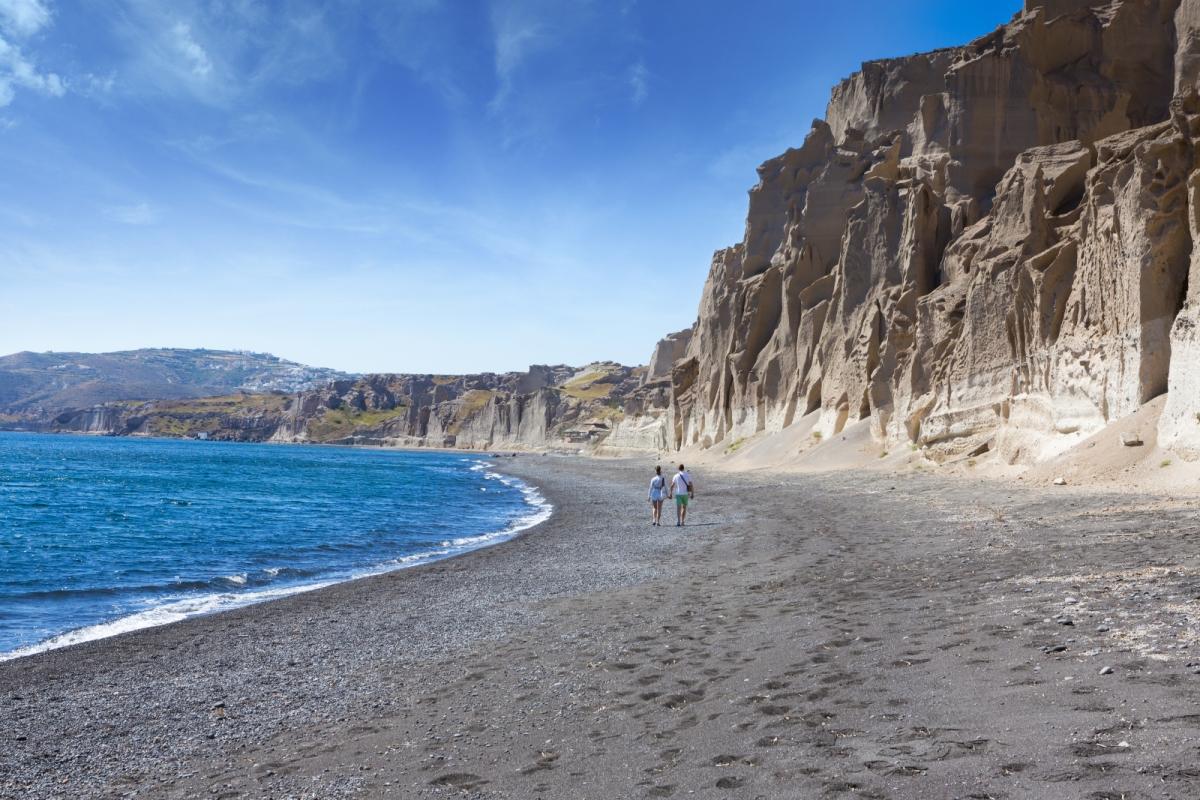
Santorini's vineyards are part of the island's living cultural landscape. Volcanic soils, strong winds and limited rainfall have influenced distinctive cultivation methods.
Wine tours can introduce visitors to Assyrtiko and other local grape varieties while explaining the history of viticulture on the island.
Churches and Monasteries
Religious buildings are found throughout Santorini and form an important part of the island's architecture and community history. Selected cultural tours may include historic churches, monasteries and religious viewpoints.