
Jordan Amman Tours
100+ tours & activities
Free Cancellation
7 Days Jordan Adventure Tours
Free Cancellation
Islamic Heritage Tour of Jordan – 7 Days / 6 Nights
Free Cancellation
8 Days Jordan Honeymoon Tour – Romance, Relaxation & Adventure
-high.jpg&w=1920&q=75 "Christian Pilgrimage Tour to Jordan 7 Days 6 Nights")
Free Cancellation
Christian Pilgrimage Tour to Jordan 7 Days 6 Nights
Free Cancellation
9 Days a Taste of Jordan
-high.jpg&w=1920&q=75 "Jordan Tour 6 Days 5 Nights Explore Petra Wadi Rum and Float in the Dead Sea")
-high.jpg&w=1920&q=75 "7 Days / 6 Nights History Culture Natural Beauty – All in One Journey to Jordan")
-high.jpg&w=1920&q=75 "2 Day Petra Tours from Amman")
Free Cancellation
2 Day Petra Tours from Amman
-high.jpg&w=1920&q=75 "3 Days Short Trip to Petra and Wadi Rum")
Free Cancellation
3 Days Short Trip to Petra and Wadi Rum
-high.jpg&w=1920&q=75 "Jordan Private Tour – 5 Days 4 Nights")
Free Cancellation
Jordan Private Tour – 5 Days 4 Nights

Free Cancellation
Jordan: See & Experience It All in 6 Days, 1St Class Custom Tours
Free Cancellation
Jordan & Egypt: Petra to the Pyramids
Free Cancellation
Jordan Highlights Tour Petra Wadi Rum and Dead Sea Experience
Free Cancellation
8 Days Jordan Tour

Free Cancellation
The Unforgettable 5 Days of Jordan
Free Cancellation
Quick Journey to Jordan
Free Cancellation
Best of Jordan 6 Days
Free Cancellation
8 Days Journey (Adventure & Fun)
Explore Jordan Amman Tours
About Jordan Amman Tours
Amman spreads across a series of hills in the hill country of northern Jordan, its downtown streets curling around a Roman theatre and a Citadel that has been occupied since the Bronze Age. The modern city is built largely of pale limestone, giving it a uniform, sunlit look from the surrounding hills, and it functions today as the political and commercial center of the kingdom.
Most visitors treat Amman as a base rather than a final destination, and the city earns that role as part of a wider Jordan Tours itinerary. Petra, Wadi Rum and the Dead Sea are each within a few hours by road, while Amman itself holds enough Roman, Umayyad and Ottoman-era sites to fill a day or two before heading south.
From Rabbath Ammon to Amman
The city's history stretches back to the Ammonite kingdom, when it was known as Rabbath Ammon, and continued under the Ptolemies, who renamed it Philadelphia after Ptolemy II Philadelphus in the third century BC. Centuries later, the Romans absorbed it into their network of Decapolis cities, the Umayyads built a palace on the same hilltop, and the Hashemite Kingdom made it the capital when Jordan gained independence in 1946.
The Citadel and the Roman Theatre
Jabal al-Qal'a
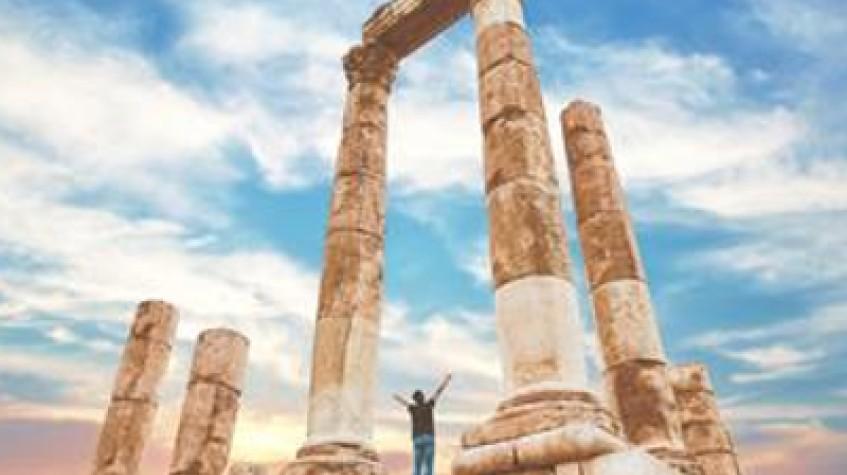
Sitting atop Jabal al-Qal'a, one of the city's original seven hills, the Amman Citadel includes the ruins of a Roman Temple of Hercules, an eighth-century Umayyad palace complex, and a small museum with finds that span several thousand years. Only a handful of massive column fragments remain from the temple, originally built with columns over 20 meters tall, which still gives a sense of the structure's scale. From the hilltop the view takes in the whole of downtown Amman and the theatre below.
The Roman Theatre and Downtown
Built into the hillside during the second century AD under Emperor Antoninus Pius, the Roman Theatre could seat around 6,000 people and is still used for concerts and events. The surrounding downtown district, with its gold souks, spice stalls and the newer cafes of Rainbow Street, is walkable in an afternoon.
King Abdullah I Mosque
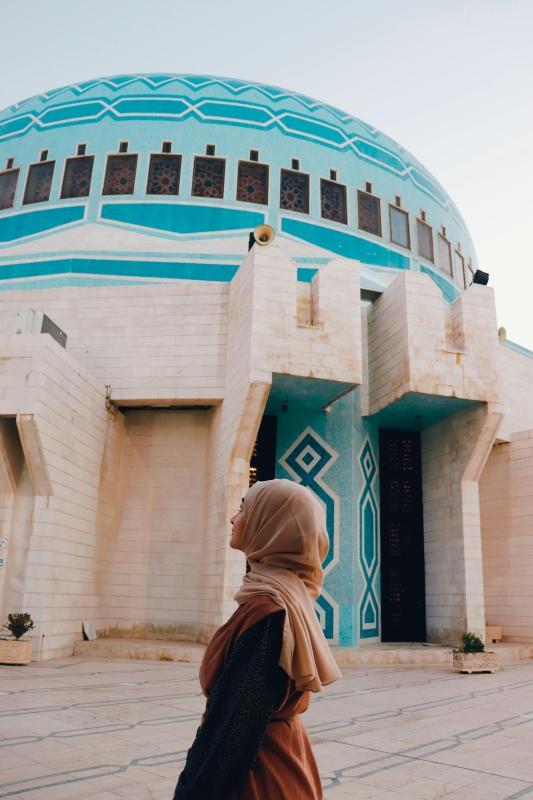
West of downtown, the blue-domed King Abdullah I Mosque was completed in 1989 as a memorial to the grandfather of the current king and can hold up to 3,000 worshippers in its main hall. Non-Muslim visitors are welcome outside prayer times, and the mosaic-tiled dome is visible from much of western Amman.
Day Trips from Amman
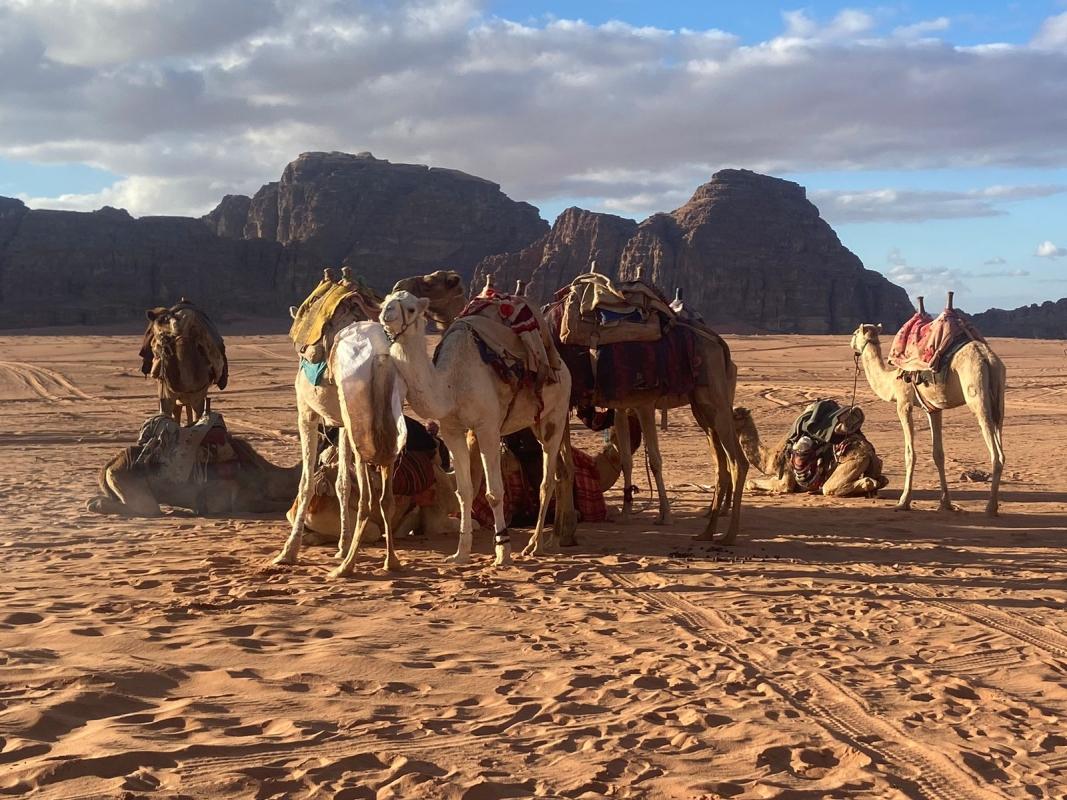
Petra lies roughly three hours south by road, close enough for a long day trip though most travelers prefer to stay a night nearby. Wadi Rum's red desert is a further hour or two past Petra, and its rock formations and Bedouin-run desert camps have drawn visitors since T.E. Lawrence wrote about the valley in the early twentieth century. The Dead Sea, the lowest point on Earth's surface at around 430 meters below sea level, is under an hour to the west; its high salt content makes floating effortless, and the mineral-rich mud along the shore is popular for informal spa treatments.
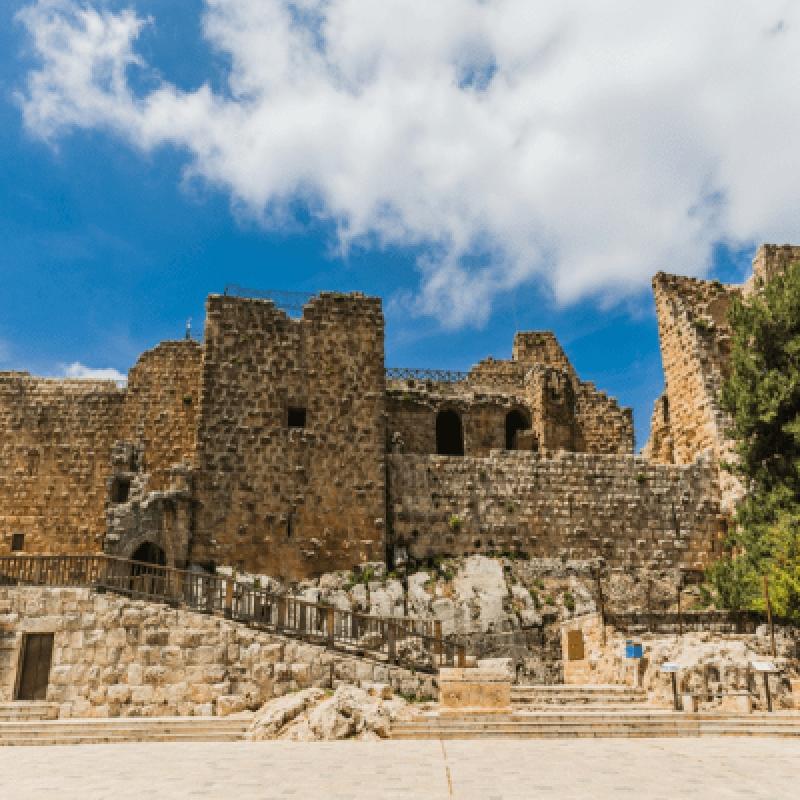
Closer to the city, Jerash holds a well-preserved Roman provincial town, with a hippodrome, colonnaded streets and two theatres, about 50 kilometers north of Amman. Mount Nebo, where Moses is traditionally said to have viewed the Promised Land, sits near Madaba and is often paired with a stop in Amman on longer itineraries. Kerak Castle, a large Crusader fortress about two hours south, is another common addition to a longer day trip out of the capital.
Food in Amman
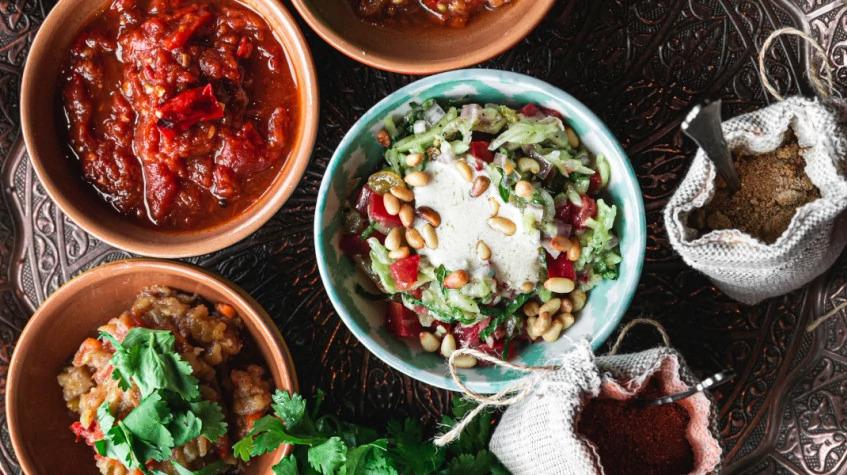
Jordanian food centers on mansaf, the national dish of lamb cooked in a fermented dried yogurt sauce called jameed and served over rice with flatbread. Amman's restaurants range from decades-old hummus and falafel counters in the downtown core to newer places on Rainbow Street serving knafeh, the sweet cheese pastry soaked in syrup that Jordan shares with its Levantine neighbors. Arabic coffee, flavored with cardamom and poured from a long-spouted dallah pot, remains a standard gesture of hospitality in homes and traditional restaurants alike, often served alongside dates.
Downtown's older quarters sit only a few kilometers from newer districts such as Abdoun and Sweifieh, where much of the city's contemporary dining and nightlife has developed in recent years.
Shopping in Amman
The city's gold souk concentrates dozens of jewelry shops within a few narrow streets near the Roman Theatre, while the nearby spice and produce markets sell dried herbs, nuts and the sumac and za'atar blends used throughout Jordanian cooking. Modern malls in western neighborhoods such as Abdoun offer a contrast for visitors who prefer air-conditioned shopping over the open-air souks.
Package Tours and Getting to Amman
Queen Alia International Airport, about 30 kilometers south of downtown, is Jordan's main international gateway and puts Amman within a short drive of the city center. That road network makes the capital a practical hub for longer circuits, and the 7 Days Jordan Adventure Tours itinerary uses exactly this layout, linking Amman with Petra, Wadi Rum and the Dead Sea over a week. Shorter city-only tours and private guided walks through the Citadel and downtown suit travelers with less time.
Best Time to Visit Amman
Spring, from March to May, and autumn, from September to November, bring mild temperatures and are the most comfortable months for walking around the Citadel and downtown. Summer days can climb well above 30 degrees Celsius, while winter is generally mild but occasionally brings rain and, on rare occasions, light snow to the higher parts of the city.