
Free Cancellation
-high.jpg&w=1920&q=75 "Balkan Itinerary 14 Day 13 Night")
---272-ft-length-%26-30-ft-wide-high.jpg&w=1920&q=75 "North Macedonia, Albania, Montenegro, Bosnia & Serbia in 11 days")
-high.jpg&w=1920&q=75 "Balkan Highlights: From Skopje to Budapest – A 12-Day Cultural & Scenic Journey")
-high.jpg&w=1920&q=75 "14 Day Turkey, Kosovo, Albania & Montenegro Tour Package")
-high.jpg&w=1920&q=75 "14 Day Wonders of Turkey and Kosovo Tour with Guaranteed Departure")
-high.jpg&w=1920&q=75 "9 Day Combined Turkey – Albania – Kosovo Tour")
-high.jpg&w=1920&q=75 "5 Day Albania & Kosovo Cultural Discovery Tour")
-high.jpg&w=1920&q=75 "7 Day Combined Turkey & Kosovo Tour")
-high.jpg&w=1920&q=75 "10 Day Combined Kosovo – Albania – Montenegro Tour")
-high.jpg&w=1920&q=75 "8 Day Turkey & Kosovo Tour")
-high.jpg&w=1920&q=75 "4 Day Kosovo Tour")
Pristina is the capital of Kosovo, Europe's youngest country, and a city whose streets carry visible layers of Ottoman, Yugoslav and post-independence history within a few blocks of each other. Ottoman minarets stand near Yugoslav-era brutalist blocks and a wave of newer cafes, a mix that gives the city center a character unlike anywhere else in the Balkans and makes it a natural starting point for a wider Kosovo itinerary.
Kosovo declared independence in 2008 after nearly a decade under United Nations administration following the 1998-99 war, and Pristina still wears that recent history openly, from monuments celebrating statehood to street names honoring the international figures involved in the process. The city's population, largely rebuilt and expanded since the war, now numbers close to 200,000, and its compact center is easy to cover on foot in a day or two.
Built in 1461 under Sultan Mehmed II shortly after the Ottoman conquest of the region, the Fatih Mosque is Pristina's oldest surviving religious building and remains an active place of worship, its single minaret visible across much of the surrounding old town.
Dating to the nineteenth century, Pristina's Ottoman clock tower once served as the city's main civic timepiece and still stands close to the Fatih Mosque, forming one of the few clusters of pre-twentieth-century architecture left in the center.
The Great Hammam, a restored sixteenth-century Ottoman bathhouse a short walk from the mosque, now operates as an exhibition space rather than a working bath, its domed chambers giving a sense of scale rarely seen elsewhere in the old town.
A complex of restored Ottoman-era stone houses arranged around a courtyard, the Emin Gjiku museum displays period furniture, traditional dress and household objects that illustrate daily life in Pristina before the twentieth century's upheavals.
The Newborn Monument, unveiled in the city center on the day independence was declared in February 2008, spells out the word in large yellow letters and is repainted with a new design each year around the anniversary, making it one of the most photographed sights in the country. Nearby, the National Library of Kosovo, completed in 1982, is instantly recognizable for its 99 domes and metal lattice facade, a design that divided opinion when it was built and still does today. The Cathedral of Mother Teresa, honoring the Kosovo-born saint, was completed in 2017 and is among the tallest structures in the city center, its twin towers visible from several of Pristina's main boulevards. Skanderbeg Square, named for Albania's fifteenth-century national hero, anchors the pedestrian core between these newer landmarks and the older streets around the mosque. Not far away, the Heroinat Memorial, a large portrait built from thousands of pinned metal badges, honors Kosovo Albanian women who lived through the 1998-99 war, and stands along one of the city's main boulevards near the University of Pristina campus.
Bill Clinton Boulevard, lined with a statue of the former U.S. president and a large photograph on a nearby building, reflects the gratitude many Kosovars still express toward the countries that backed NATO's 1999 intervention, a sentiment visitors often notice in conversation around the city. Cafe terraces line most streets in the center and stay busy from morning through late evening, carrying Ottoman, Italian and post-war influences at once in a single cup of coffee, and outdoor seating remains a fixture of the city even through the colder months. A sizeable student population, drawn by the nearby university, keeps that cafe culture running well past the end of the working day.
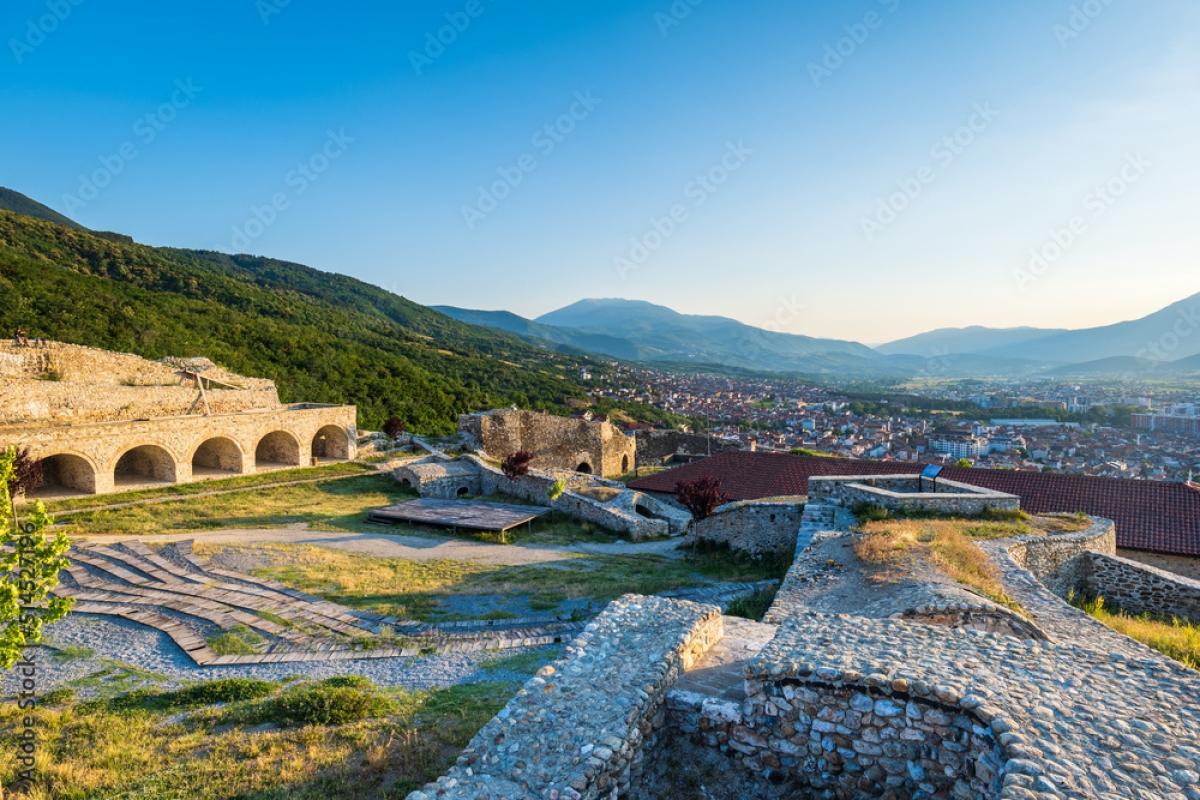
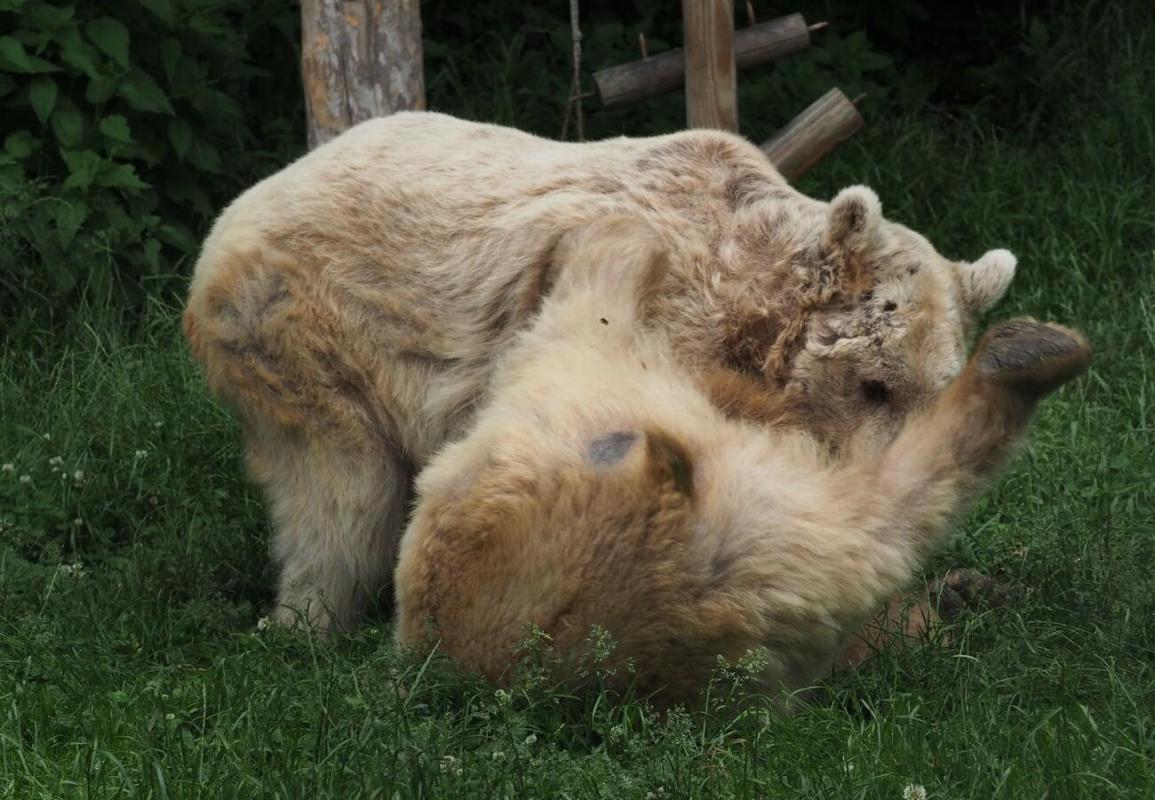
Gracanica Monastery, a fourteenth-century Serbian Orthodox site and UNESCO World Heritage Site, sits around ten kilometers from central Pristina and remains an active monastery open to visitors, its interior covered in Byzantine-style frescoes. Further afield, the historic town of Prizren, roughly ninety kilometers south, pairs its own Ottoman old town with a hilltop fortress, a stone bridge over the Bistrica River and the building that once housed the League of Prizren, a nineteenth-century Albanian political movement. Families traveling from Albania sometimes combine Pristina with a visit to Kosovo's bear sanctuary near the city, and trips such as Meet the Bears: A family daily trip from Tirana to Prishtina link the capital with the rescued brown bears now cared for outside town.
Pristina International Airport, also known as Adem Jashari Airport, connects the city to major European hubs and sits around 15 kilometers southwest of the center. Some travelers also arrive overland from Skopje in North Macedonia, a drive of around two hours across the border, or from Tirana in Albania further west. Kosovo's small size makes Pristina a workable base for exploring the rest of the country by road, with Prizren, Peja and the Rugova mountains all reachable within a few hours. Regional buses connect the capital to most other Kosovar towns from a central station east of downtown, an inexpensive option for travelers without a rental car. Taxis are plentiful and inexpensive by Western European standards, making them a practical way to reach sights on the edge of the city such as Germia, a large forested park popular with residents for hiking and picnics on weekends.