
Free Cancellation
-high.jpg&w=1920&q=75 "16 Days Baltic Adventure Tour")
-high.jpg&w=1920&q=75 "11 Days Fly & Drive Baltics Tour")
-high.jpg&w=1920&q=75 "8 Days Baltic Highlights Tour")
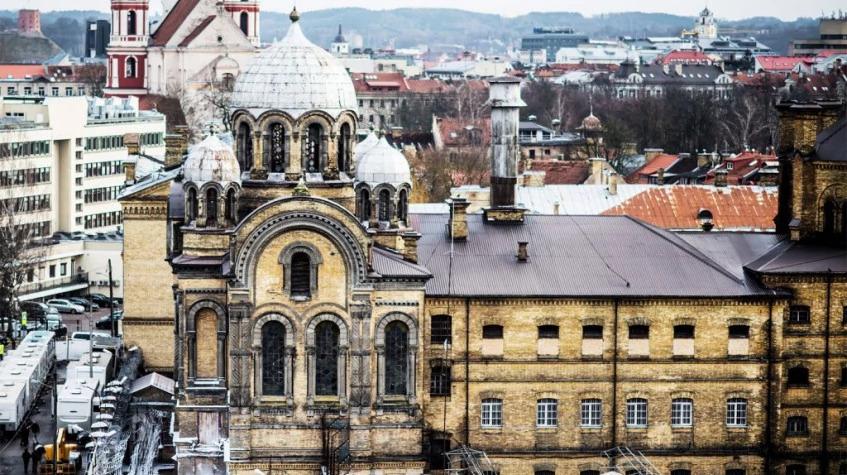
Riga is the capital and largest city in the Baltic states, set on the banks of the Daugava River a short distance from the Gulf of Riga. Its Old Town, Vecrīga, is a UNESCO World Heritage Site, recognized for a center that blends medieval streets with one of Europe's richest collections of Art Nouveau buildings. Riga remains the largest city in the three Baltic states, and its historic core packs several centuries of trade, architecture, and church building into an area small enough to explore on foot. Travelers building a wider itinerary can start with the full list of Latvia tours before narrowing down time in the capital.
Bishop Albert of Riga founded the city in 1201 as a base for trade and conversion along the Baltic coast, and it grew into a major Hanseatic League port over the following three centuries. Merchant wealth funded the guild halls and church spires that still define the skyline, while later booms in the nineteenth and early twentieth centuries added the elegant apartment blocks that spread beyond the old walls. That layered history is part of what makes Riga's center so dense with things to see in a single visit.
Riga's Old Town is compact enough to cover on foot in a day, with the House of the Blackheads, Riga Cathedral, and St. Peter's Church among its central landmarks. The Cathedral, begun in the thirteenth century, anchors a square lined with cafes and craft stalls, while St. Peter's tower has a viewing platform that looks out over the red rooftops toward the river.
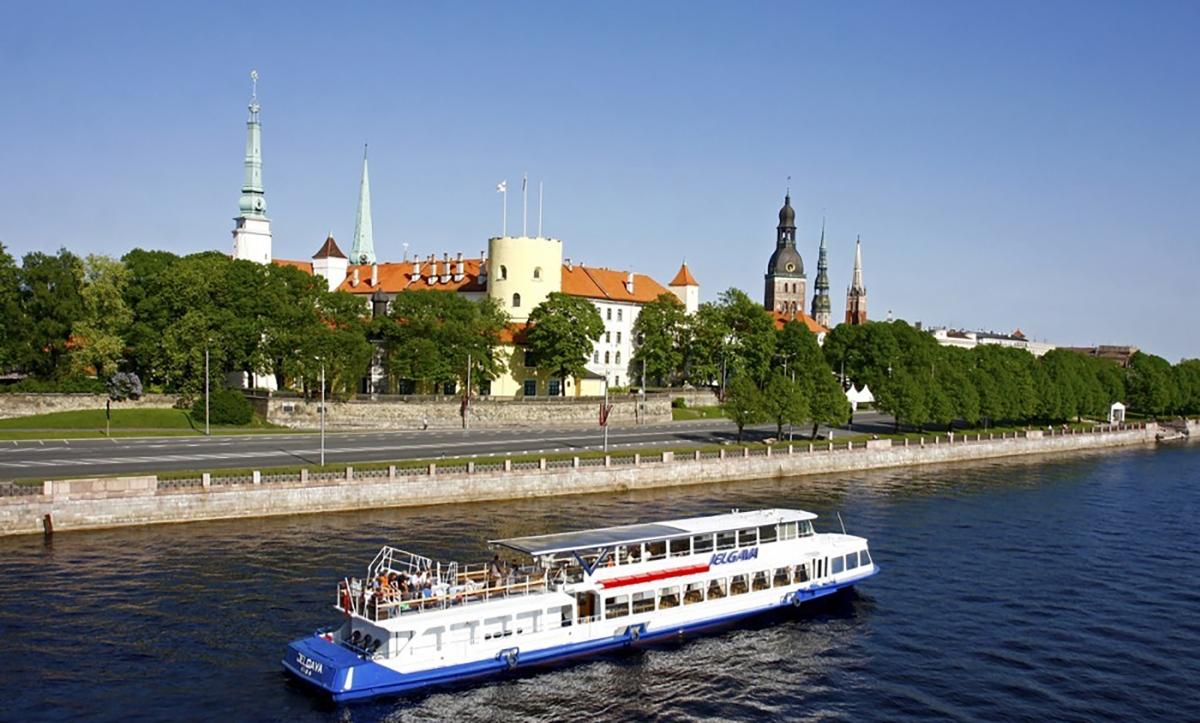
Nearby, the Three Brothers houses show three centuries of residential architecture standing side by side, from a stepped medieval facade to a Baroque doorway. Riga Castle, on the riverbank, has served as a residence for the country's rulers since the sixteenth century and is now home to the Latvian president. Narrow lanes such as Jauniela and Skarnu iela connect these landmarks without straying far from the cathedral square.
A few minutes from the Cathedral, the Freedom Monument stands on the site of an earlier tsarist-era memorial and now marks the center of Latvian independence commemorations. The Swedish Gate, tucked into the old city wall nearby, is one of the few gates from Riga's original fortification system still standing today.
Beyond the Old Town walls, streets such as Alberta iela and Elizabetes iela hold one of the largest concentrations of Art Nouveau buildings anywhere in Europe, with roughly a third of the city center built in the style. Many of the facades were designed by Mikhail Eisenstein in the early 1900s, decorated with masks, mythical figures, and sweeping floral ornament above the doorways and windows.
A dedicated Art Nouveau museum on Alberta iela recreates a period apartment, complete with original stairwell tiling, for visitors who want to see the interiors as well as the exteriors. The district sits an easy walk from the Freedom Monument, making it simple to combine with a morning in the Old Town rather than treat it as a separate outing.
The building at Alberta iela 2a is often singled out for its peacock and sphinx motifs and symmetrical facade, considered one of the most photographed examples of the style in the city. Guided walks through the district typically explain how these designs mixed local Latvian folk patterns with the wider Art Nouveau movement spreading through Europe at the time. Local architects such as Konstantīns Pēkšēns worked alongside Eisenstein, producing facades that leaned toward national romantic motifs rather than the more ornate style seen on other streets in the district.
Riga Central Market operates out of a set of former Zeppelin hangars beside the Old Town, a structure recognized by UNESCO alongside the historic center itself. Stalls inside sell produce, smoked fish, and dairy from across Latvia, and the market gives visitors a working look at the city that goes beyond its monuments.
The surrounding Kalnciema neighborhood and the riverside paths along the Daugava make for an easy extension of a market visit, with wooden architecture and small galleries replacing the stone facades of the center. Locals still do much of their weekly shopping here, so mornings tend to be the busiest and most authentic time to visit.
When it opened in 1930, the market was among the largest in Europe, and the reused hangar structures still give the halls their distinctive curved rooflines. Separate pavilions divide meat, dairy, fish, and produce, a layout that has changed little since the market's early years.
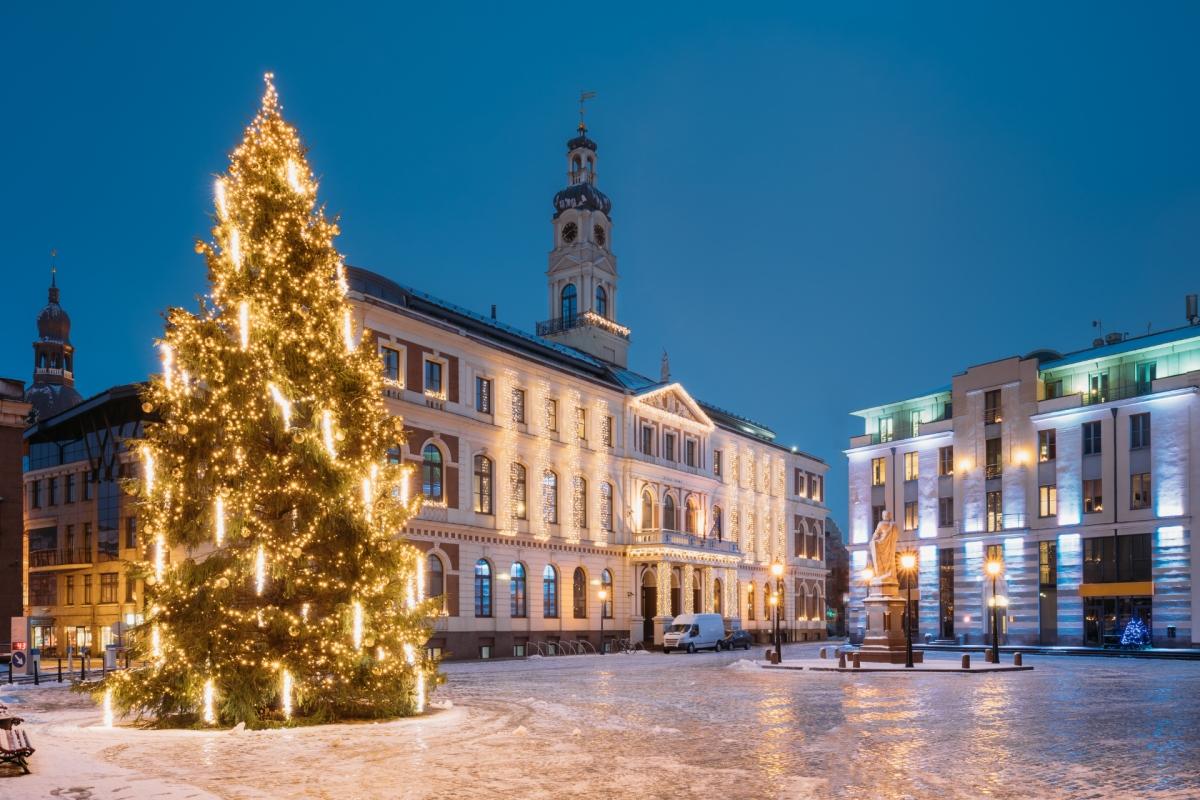
Winter turns Riga's Town Hall Square into a Christmas and New Year gathering point, with a market, a lit tree tradition the city claims dates back to the fifteenth century, and events that run through early January. Cold, short days are balanced by the warmth of mulled wine stalls and the glow of the Old Town's lit facades.
The New Year in Riga 4 Day 3 Night Tour is built around this period, pairing the Old Town's holiday atmosphere with time to see the Art Nouveau district and Central Market. Summer, in contrast, brings long daylight hours and easy access to the Baltic coast at nearby Jurmala for travelers who prefer to extend a Riga trip toward the sea.
Outside the holiday period, Riga works well as a base for day trips, with the beach resort town of Jurmala reachable by train in about half an hour and the medieval castle grounds at Sigulda a similar distance in the other direction. Both extend a Riga visit without requiring an extra overnight stay. Sigulda's forested river valley, often nicknamed Latvia's Switzerland, adds hiking trails and cable car views to its castle ruins.