
Free Cancellation
-high.jpg&w=1920&q=75 "8 Days Baltic Highlights Tour")
-high.jpg&w=1920&q=75 "16 Days Baltic Adventure Tour")
-high.jpg&w=1920&q=75 "11 Days Fly & Drive Baltics Tour")

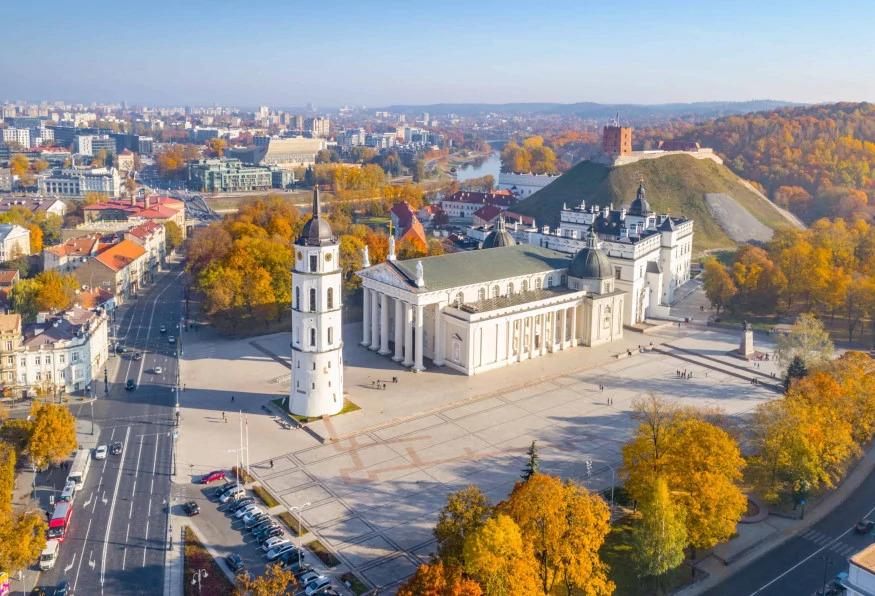
Vilnius, the capital of Lithuania, sits at the meeting point of the Vilnia and Neris rivers and holds the largest Baroque Old Town in Eastern Europe. The historic center is a UNESCO World Heritage Site, and visitors planning a broader route can check the full range of Lithuania tours before settling on how long to stay in the capital.
The city has served as the seat of the Grand Duchy of Lithuania since the fourteenth century, and centuries of Gothic, Renaissance, Baroque, and Classical building left a center where architectural styles sit close together on the same street. Vilnius University, founded in 1579, remains one of the oldest in Eastern Europe and still anchors part of the Old Town's daily life.
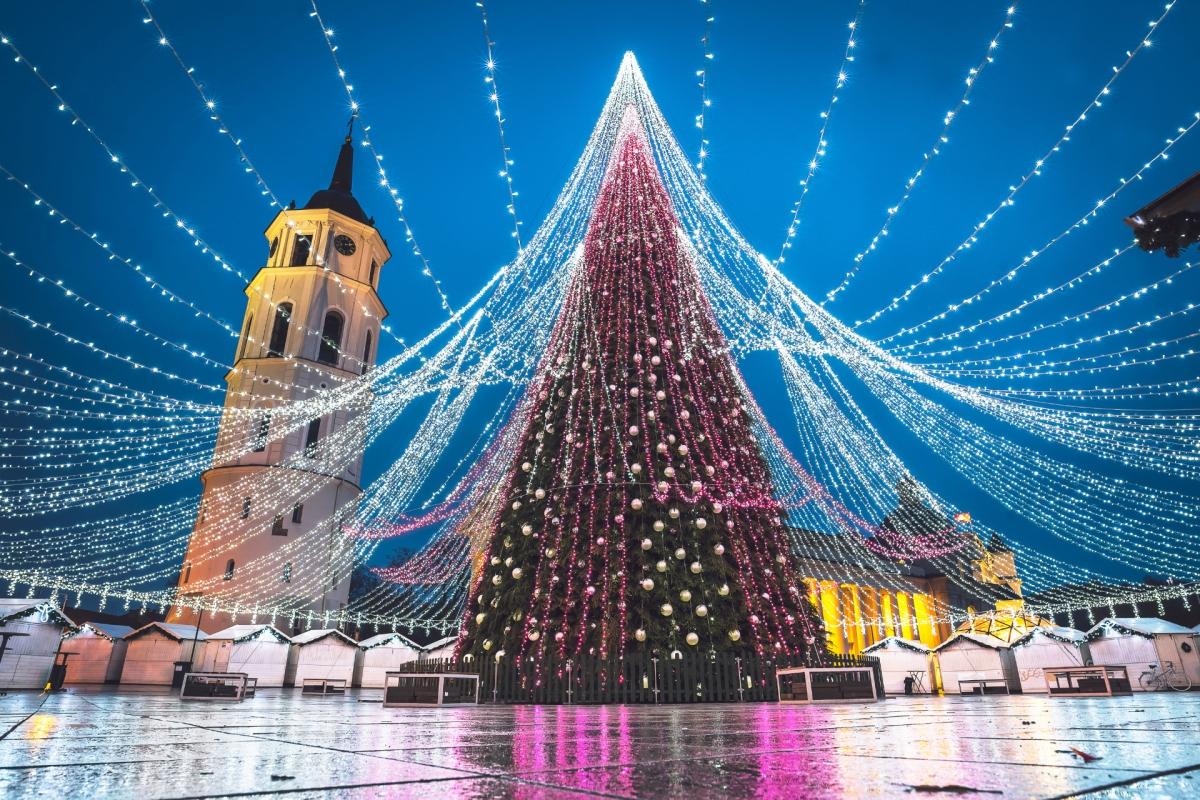
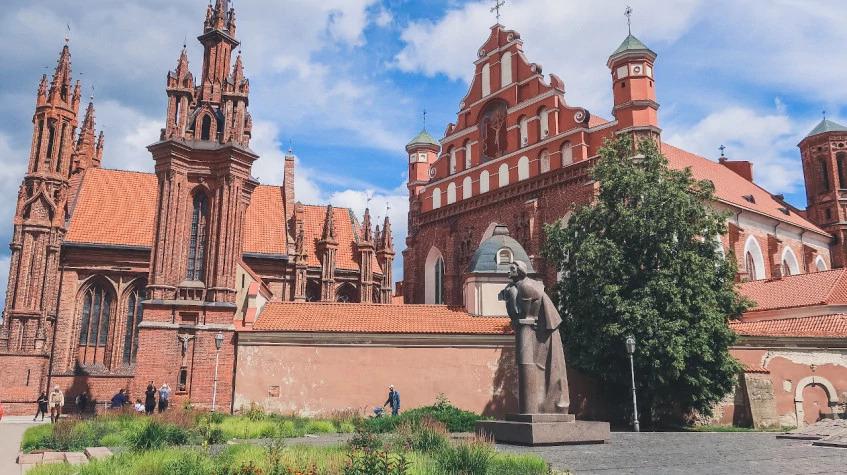
St. Anne's Church, a small Gothic building of red brick, is one of the Old Town's most recognizable landmarks and is often cited as a building Napoleon admired enough to want to carry back to Paris. Vilnius Cathedral stands at the northern edge of the Old Town on Cathedral Square, with a bell tower that visitors can climb for a view over the rooftops.
The Gate of Dawn, at the opposite end of the historic center, houses an icon of Our Lady of Mercy that draws pilgrims from across the region and remains an active place of worship rather than only a monument. Narrow streets link these sites with squares, courtyards, and the university's own network of internal passages.
Pilies Street, the main route connecting Cathedral Square to the Town Hall, is lined with amber shops, cafes, and university buildings, and it stays the busiest stretch of the Old Town at most hours of the day. The Presidential Palace, just off this route, has served political functions since the Grand Duchy period despite changing hands many times over the centuries.
Before the Holocaust, Vilnius was home to one of Europe's largest Jewish communities and was often called the Jerusalem of Lithuania for its concentration of synagogues and religious scholarship. The Choral Synagogue, the only one of the city's prewar synagogues still in regular use, and the Museum of Occupations and Freedom Fights now preserve this history for visitors.
Above the Old Town, the red brick remains of Gediminas Castle Tower mark the site traditionally linked to the city's founding legend, in which Grand Duke Gediminas dreamed of an iron wolf howling on the hill and was told by a pagan priest to build a city there. The tower now houses a small museum and an observation deck with views across Vilnius and the Neris valley.
A funicular runs up the hill for visitors who prefer not to walk, though the path itself is short and shaded. From the top, the layout of the Old Town below becomes clear, with church spires marking the different parishes that grew up around the university and the former royal palace.
Beside Cathedral Square, the Lower Castle complex has been partly reconstructed and now houses a museum covering the site's role as the political center of the Grand Duchy. On a separate hill across the river, three white crosses commemorate Franciscan monks and offer another viewpoint often paired with a visit to Gediminas Hill.
Cathedral Square itself sits above a network of vaults and a hidden fourteenth-century chapel, uncovered during restoration work and now open to visitors as part of the cathedral's museum. The scale of what lies beneath the square often surprises first-time visitors who expect only the buildings at street level.
Across the Vilnia River, the Užupis district declared itself an independent republic in 1997, complete with its own flag, a symbolic army, and a constitution posted in multiple languages on a wall along Paupio Street. The declaration is more art project than political statement, but it set the tone for a neighborhood that filled with studios, galleries, and cafes in the years that followed.
A bronze angel statue in the district's main square has become an informal symbol of the area's creative identity. Užupis rewards slow walking rather than a checklist of sights, with courtyards and street art changing from one visit to the next. Along the river, a small sand beach and footbridges give the district a relaxed, almost village feel despite sitting minutes from the Old Town's main square.
Independence Day for the district falls on April 1, when the neighborhood holds a small parade and reads its constitution aloud in public, though its cafes, ateliers, and workshops operate on ordinary days throughout the year. Former industrial buildings along the riverbank now house artist studios that are sometimes open to visitors.
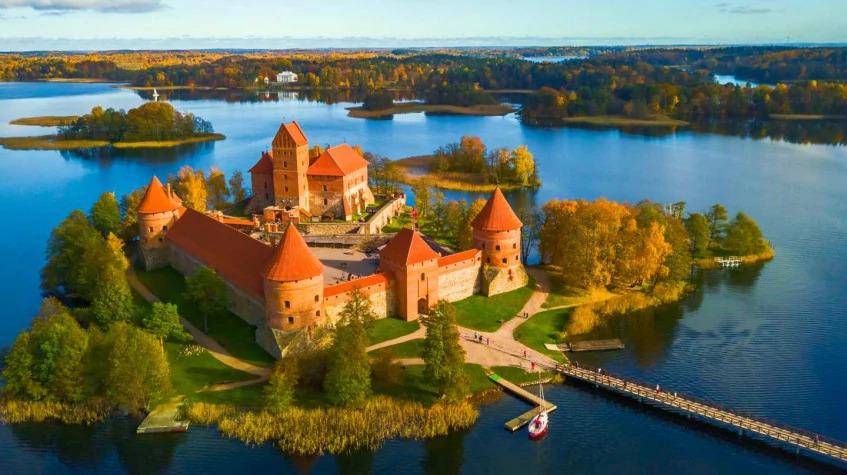
Many visitors extend a Vilnius stay to Trakai, where a red brick island castle sits on a lake about half an hour from the capital, or continue on to Kaunas, Lithuania's second city and a center of interwar Modernist architecture that held the title of European Capital of Culture in 2022. Longer routes reach north toward the Baltic coast and the Curonian Spit.
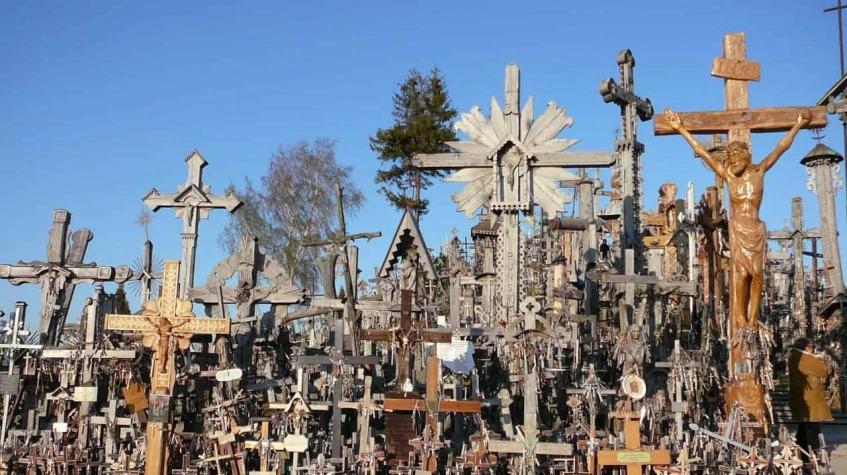
Farther north, the Hill of Crosses near Šiauliai and the dunes of the Curonian Spit, a UNESCO World Heritage Site on the Baltic coast, extend a Lithuania itinerary well past the capital. Amber gathered along that coastline has been traded from the region for centuries and remains a common souvenir across the country.
The 10 Days Lithuanian Explorer Tour follows this pattern, using Vilnius as a base before covering the rest of the country's castles, coastline, and smaller towns over a longer itinerary.