
Free Cancellation
-high.jpg&w=1920&q=75 "13 Days Yugoslavia Long Tour")
-high.jpg&w=1920&q=75 "7 Days Belgrade Zlatibor Montenegro Tour")
-high.jpg&w=1920&q=75 "Albania, Montenegro & Croatia in 5 days")
-high.jpg&w=1920&q=75 "14 Day Greece, Albania & Montenegro Grand Discovery Tour – Athens to Dubrovnik with TravelShopBooking")
-high.jpg&w=1920&q=75 "Majestic Montenegro Tour : A Journey to Lovcen Mausoleum, Njegusi and Cetinje")
Cetinje was the royal capital of Montenegro from the late 15th century until the country's absorption into Yugoslavia after the First World War, and it still carries the character of a small capital rather than a coastal resort. Set in a mountain valley below Mount Lovćen, away from the busier Adriatic towns, it holds palaces, monasteries and museums built up over centuries of national history. Tours from Cetinje connect easily with the rest of the coast and interior through our Montenegro tours.
Unlike Kotor or Budva, Cetinje draws visitors more for its history and museums than for beaches or nightlife, and it makes for an easy half-day or full-day trip from the coast. The town's low-rise streets and 19th-century buildings, many built as foreign legations when Cetinje served as a diplomatic capital, give it a quieter, more formal atmosphere than the walled towns on the water.
Cetinje also carries symbolic weight in Montenegrin national life today, still hosting some state ceremonies even though Podgorica has served as the administrative capital since the Yugoslav era. That dual status, historic capital and present-day ceremonial center, shapes much of what visitors encounter in the museums and public buildings around the town's compact center.
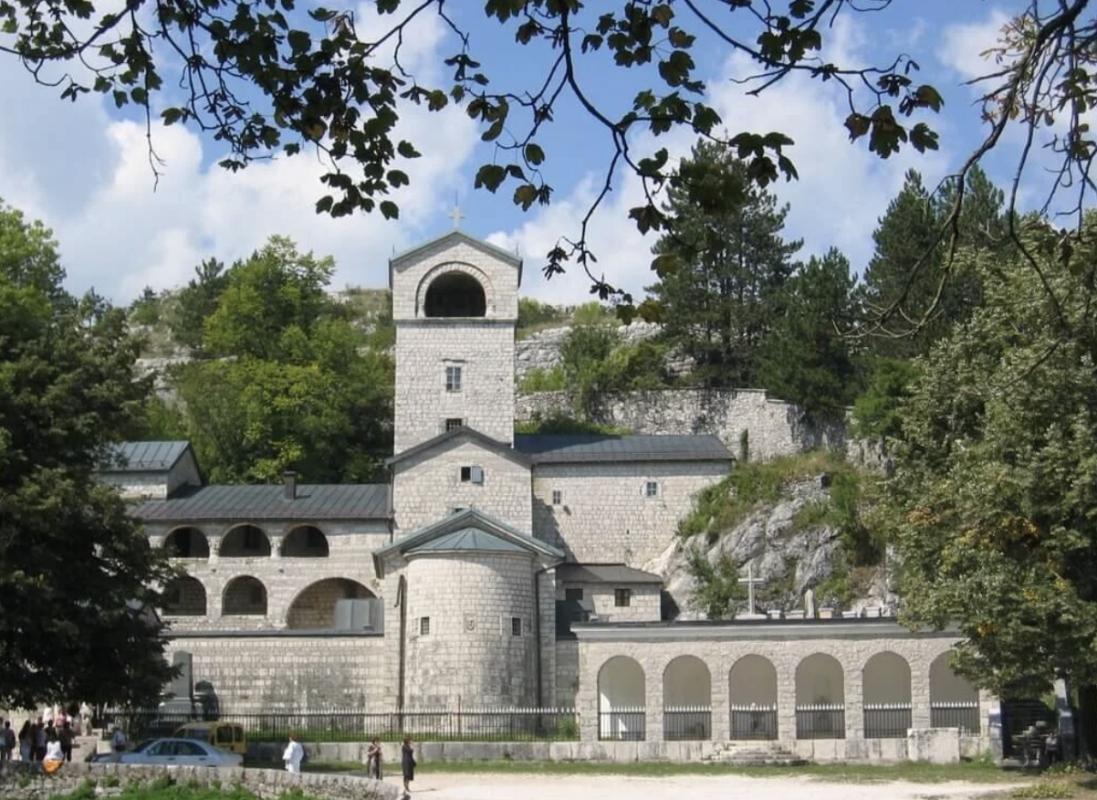
Cetinje Monastery, founded in the late 15th century by Ivan Crnojević, remains an active Orthodox monastery and one of the most visited religious sites in Montenegro. It holds relics associated with John the Baptist and a fragment believed to be from the True Cross, along with a treasury of manuscripts and religious artifacts collected over centuries. The monastery sits close to the town center and anchors much of Cetinje's identity as a historically religious and political center.
The monastery also housed Montenegro's first printing press, established in the late 15th century and among the earliest in southeastern Europe, which produced some of the first books printed in the Cyrillic script used across the region. That history places Cetinje at the center of Montenegrin literacy and religious life well before it became the country's political capital centuries later.
King Nikola's Palace, known locally as Biljarda, once housed Montenegro's last ruling monarch and now forms part of the National Museum of Montenegro alongside several other buildings in town. Former foreign legations, including buildings that once housed British, French, Russian and Italian diplomatic missions, still line Cetinje's streets, a legacy of the town's role as an internationally recognized capital in the 19th and early 20th centuries. Many of these buildings have since been converted into museum branches covering art, history and ethnography.
The Art Museum of Montenegro, housed in the former Government House, holds a collection spanning Montenegrin and Orthodox religious art, while the History Museum traces the country's path from medieval principality to modern statehood. Together with Biljarda and the monastery, these collections make Cetinje the country's main center for museum-based tourism, a role distinct from the beach and Old Town circuit along the coast.
Above the town, Lovćen National Park holds the mausoleum of Petar II Petrović-Njegoš, Montenegro's poet-ruler, reached by a long staircase cut into the mountain and set at high elevation with views over much of the country. The drive up from Cetinje winds through switchbacks that were once part of the old route to the coast, offering a different perspective on the terrain separating Montenegro's mountainous interior from its narrow coastal strip.
Njegoš remains a central figure in Montenegrin national identity, remembered as much for his epic poem Gorski Vijenac as for his rule as both bishop and prince in the mid-19th century. The mausoleum's setting, at over 1,600 meters and reached by hundreds of steps through a mountain tunnel, makes the trip as much about the landscape as the monument itself, with clear days offering views stretching toward the Adriatic and across the Montenegrin interior.
Guided tours of Cetinje typically combine the monastery, the National Museum complex and the old legation quarter into a single walk through the town's compact center. The Cetinje Royal Heritage tour covers these sites with a guide who can place the palaces and monastery within the broader story of Montenegro's path to statehood, a useful complement to time spent on the coast.
The town's compact layout means most of its sites sit within walking distance of one another, so a single guided visit can realistically cover the monastery, the National Museum buildings and the old legation quarter without long transfers between stops. That makes Cetinje one of the more efficient half-day additions to a longer Montenegro itinerary built around the coast.
Most visitors treat Cetinje as a day trip from the coast, with the town's museums keeping regular hours through the tourist season and shorter hours in winter. Spring and early autumn bring mild temperatures well suited to the staircase climb at the Njegoš Mausoleum, while summer heat can make the mountain sections of a Cetinje itinerary more demanding.