
Turkish and Islamic Arts Museum
Europe, Turkey
 1 / 3
1 / 3Museum Information
Opening Hours
09:00 – 17:30
Open Days
About Turkish and Islamic Arts Museum
Turkish and Islamic
Arts Museum
The Turkish and Islamic Arts Museum (Turkish: Türk ve
İslam Eserleri Müzesi) is located on Sultanahmet Square in the Fatih district
of Istanbul, Turkey. First opened in 1914, the museum moved in 1983 to the
Ibrahim Pasha Palace, which was built in 1524 and belonged to Pargalı Ibrahim
Pasha, the second grand vizier of Suleiman the Magnificent.The museum’s
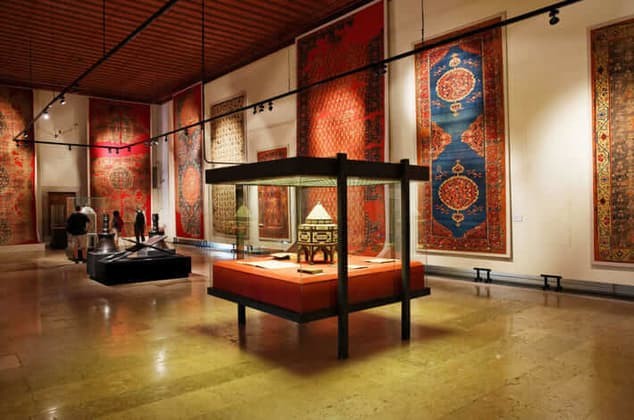
collections include outstanding examples of Islamic calligraphy, tiles,
carpets, and ethnographic objects, with a special focus on the traditional lifestyles
of various cultures in Turkey, particularly nomadic communities. Ethnographic
sections recreate historical living spaces and interiors from different regions
and periods. The area now used as the museum once served as the ceremonial hall
of the original palace. The preserved architectural character of the building
enhances the display of Islamic art, creating an impressive cultural
environment. With more than 40,000 works of art, including carpets, wooden
objects, and stone works, the museum is one of the largest museums in
Turkey.Its prominent location directly opposite the Blue Mosque adds to its
cultural significance. Since its establishment, the museum has hosted numerous
national and international temporary exhibitions and is recognized as the first
museum in Turkey to bring together all Islamic arts.
In 1984, it received the Special Jury Award in the European Council’s Museum of
the Year competition, as well as a European Council–UNESCO Award for its
efforts to promote cultural heritage education for children.
History
The museum originally opened in 1914 as the Museum of
Islamic Endowments (Evkaf-ı İslamiye Müzesi) within the Süleymaniye
Complex, designed by the great Ottoman architect Mimar Sinan in the 16th
century. Following the establishment of the Republic of Turkey in 1923, it was
renamed the Turkish and Islamic Arts Museum, reflecting a broader perspective
on Islamic art beyond the Ottoman Empire.In 1983, the museum moved to the
Ibrahim Pasha Palace, a well-preserved example of 16th-century Ottoman civil
architecture, which underwent extensive restoration between 1966 and 1983.
Throughout its history, the palace served various functions, including a
residence for grand viziers, military barracks, embassy palace, registry
office, Janissary band house, sewing workshop, and prison.
Exhibitions
The museum closed for renovation in January 2015 and
reopened in April 2015 with renewed exhibitions. The displays focus on Islamic
religious art, particularly from the Ottoman period through the 20th century.
The collections feature distinguished examples of calligraphy, tiles, carpets,
and ethnographic materials representing different cultures and regions of
Turkey.
Today
Today, the museum houses some of the finest carpets in
the Islamic world, along with more than 17,000 manuscripts, 3,000 Qur’ans, and
approximately 250,000 early Qur’anic fragments originating from the Umayyad
Mosque in Damascus. The exhibitions follow an ethnographic and thematic
approach:
- The first floor is dedicated to traditional Turkish life,
- The second floor focuses on Islamic art.