
Free Cancellation
-high.jpg&w=1920&q=75 "Private Venice Tour")
-high.jpg&w=1920&q=75 "Three Countries in On Day Tour (It Slo Cro)")
-high.jpg&w=1920&q=75 "Slovenia Private Tour 8 Days 7 Night")
-high.jpg&w=1920&q=75 "Daily Plitvice Lakes Tour")
-high.jpg&w=1920&q=75 "5 Days Slovenia Tour")
-high.jpg&w=1920&q=75 "Combine Slovenia, Italy and Croatia in 7 days")
-high.jpg&w=1920&q=75 "19 Days Europe Balkan Countries Tour")
-high.jpg&w=1920&q=75 "21 Day Europe Balkan Combined Tour")
-high.jpg&w=1920&q=75 "16 Days Grand Balkan Countries Tour")
-high.jpg&w=1920&q=75 "23 Days Balkan Countries Combined Tour")
-high.jpg&w=1920&q=75 "24 Days Europe Balkan Countries Tour")
-high.jpg&w=1920&q=75 "23 Days Asia Europe and Balkan Countries Tour")
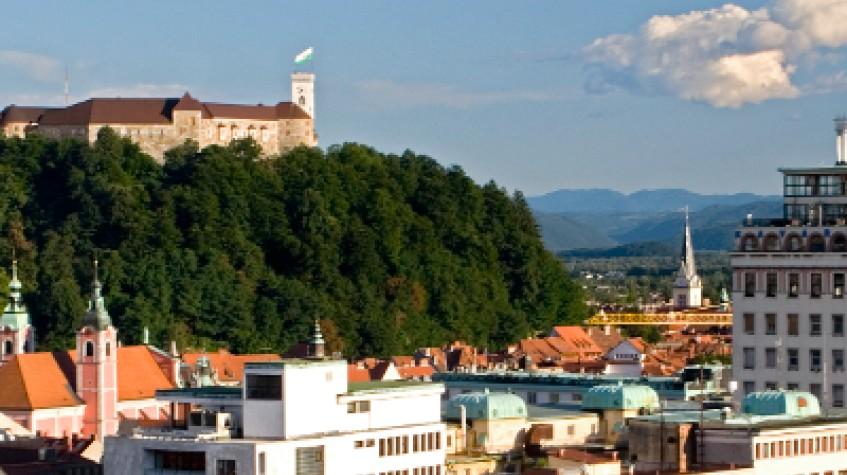
Ljubljana, Slovenia's capital, centers on the Ljubljanica River as it winds through a car-free old town lined with cafe terraces and willow trees. The architect Joze Plecnik reshaped much of the city in the early twentieth century, and his bridges, market halls, and public buildings still define how the center looks and functions today. A castle on a wooded hill overlooks the river from above, giving newcomers an easy reference point while walking the streets below. Tours grouped under Slovenia typically treat Ljubljana as the natural starting point, since it sits within an hour of both Lake Bled and the country's other main draws.
The city stays small by capital standards, with a historic core that can be crossed on foot in under half an hour, and that scale keeps Ljubljana relaxed rather than crowded even at its busiest riverside cafes. Ljubljana was named European Green Capital in 2016, a recognition tied to its car-free center and the extensive parks and green space that reach into the city from the surrounding hills.
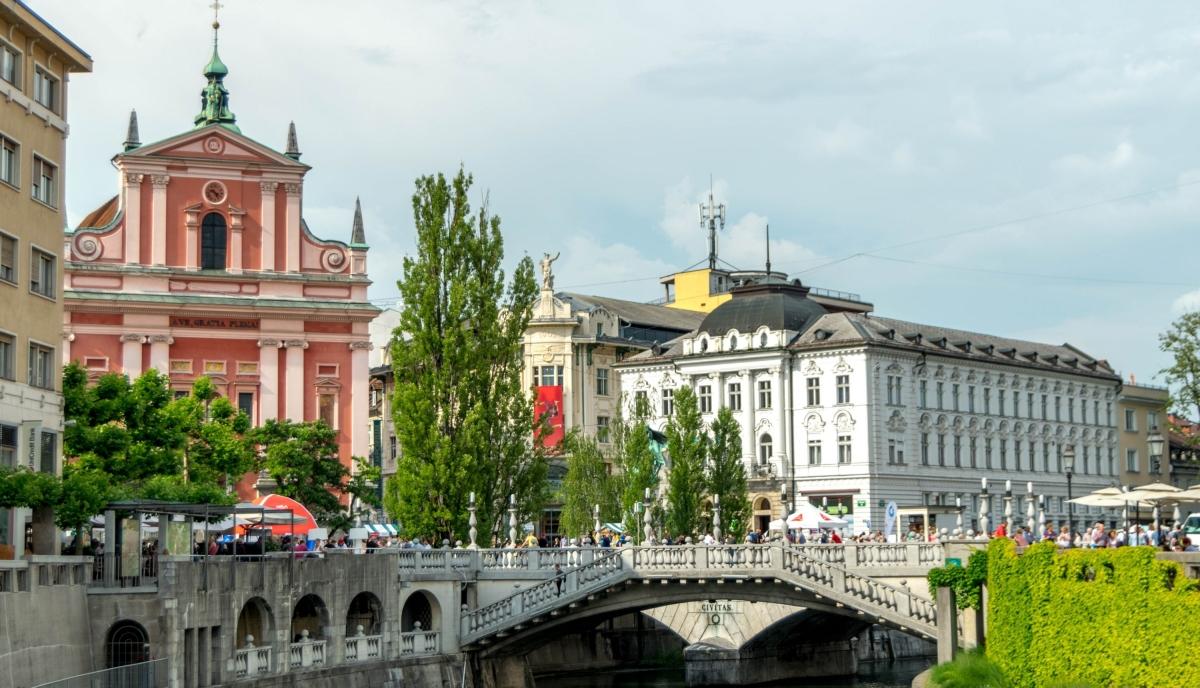
The stretch of the Ljubljanica that runs through central Ljubljana is closed to traffic, and its banks are given over to cafe terraces, market stalls, and pedestrian walkways instead. Preseren Square, at the edge of the old town, serves as the city's main gathering point, framed by the pink facade of the Franciscan Church of the Annunciation and a statue of the poet France Preseren, for whom the square is named. From there, narrow streets climb gently toward the base of Castle Hill, passing shopfronts and small squares that stay busy well into the evening.
Ljubljana Castle sits on a hill above the old town and dates in its current form mainly from the 16th and 17th centuries, though a fortified structure has stood on the site since medieval times. A funicular railway climbs from the old town to the castle grounds in a few minutes, offering an alternative to the walking paths through the surrounding park. From the castle's tower and courtyards, the view stretches over the old town's rooftops, the river below, and on clear days toward the Kamnik Alps to the north.
Plecnik's imprint on Ljubljana runs through much of the city center, starting with the Triple Bridge, a set of three linked pedestrian crossings that replace what was once a single bridge into the old town. His design for the Central Market runs along the riverbank in a long colonnade, still used daily by vendors selling produce and goods much as Plecnik intended. Nearby, the National and University Library building combines rough stone with brick in a way that was unusual for its time, and Plecnik used the building's facade and interior stairways to guide visitors toward its reading rooms. Across the river, the cast-iron Dragon Bridge, guarded by four bronze dragon statues, predates Plecnik's work but has become as closely tied to the city's identity as any of his own buildings. Completed in 1901, the bridge was among the first in Europe built using reinforced concrete, an engineering detail that drew attention when it opened.
West of the old town, Tivoli Park spreads across more than five square kilometers and gives Ljubljana its largest green space, laid out in its current form in the early 19th century and later refined with input from Plecnik himself. Wide gravel paths, ponds, and a central promenade lined with chestnut trees connect the park to the city center, and its grounds hold Tivoli Castle, now used as a gallery space, along with sports facilities used by local clubs. The park sits within easy walking distance of the old town, making it a straightforward addition to a day spent in the city center.
The National Museum of Slovenia, near Tivoli Park, holds archaeological and natural history collections that include a Bronze Age wheel found in the Ljubljana marshes, among the oldest wooden wheels discovered anywhere. The City Museum of Ljubljana, set in a Baroque palace closer to the river, covers the city's development from a Roman settlement called Emona through to its present layout. Both sit within a short walk of the old town, giving visitors an indoor option alongside the riverside walks and Plecnik architecture that define most Ljubljana itineraries.
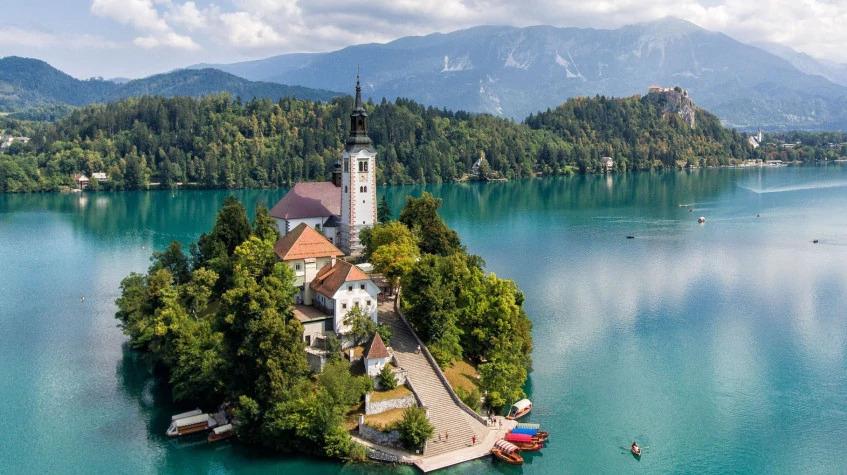
Ljubljana's location makes it a practical base for exploring the rest of Slovenia, with Lake Bled about an hour away by car or bus and the Julian Alps visible from the city on clear days. Longer itineraries such as the 5 Days Slovenia Tour use Ljubljana as a starting point before continuing on to the lake and mountain areas further north. Because the city is compact enough to see in a day or two, many visitors treat it as the first stop on a wider Slovenia itinerary rather than a standalone destination.
Near the city's rail station, the former Metelkova military barracks were taken over by artists and activists in the 1990s and turned into a self-managed cultural center covered in murals and unconventional architecture. Studio rooms, small clubs, and a hostel built into former army buildings now occupy the site, giving a different picture of Ljubljana than the Baroque and Plecnik-designed streets of the old town. The area operates informally and stays active mostly in the evenings, offering a contrast to the more polished riverside center a short walk away.