
Free Cancellation
-high.jpg&w=1920&q=75 "Thimphu Bhutan Festival 7 Day Tour")
-high.jpg&w=1920&q=75 "Holiday Experience to Bhutan 6 Day Tour")
-high.jpg&w=1920&q=75 "Wonderful Bhutan Tour 5 Days Tours")
Thimphu is Bhutan's capital and its largest city, a mountain valley town of close to 100,000 people at roughly 2,300 meters, where government offices, monasteries and markets sit within walking distance of pine-covered ridges. It remains the only national capital in the world without a single traffic light, traffic at its main junction still directed by a white-gloved officer from a raised booth.
Most travelers use Thimphu as their base for the first or last stretch of a wider Bhutan itinerary, reached by road from Paro's airport in about an hour, and spend two to three days here before continuing on to Punakha or other valleys.
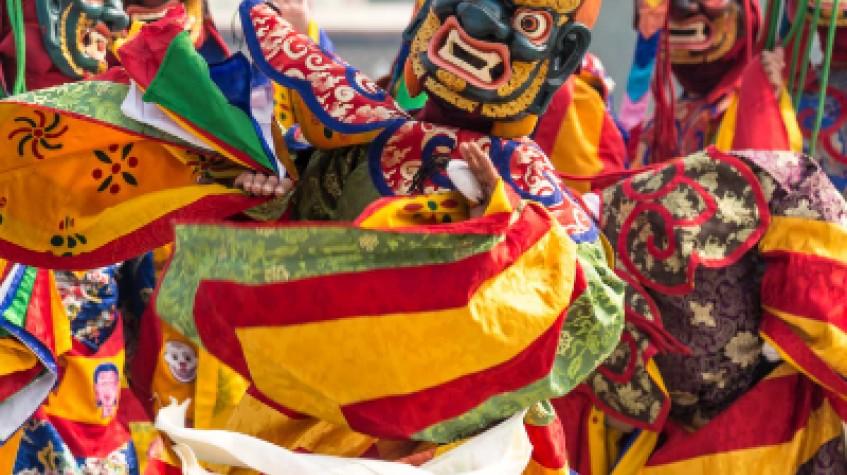
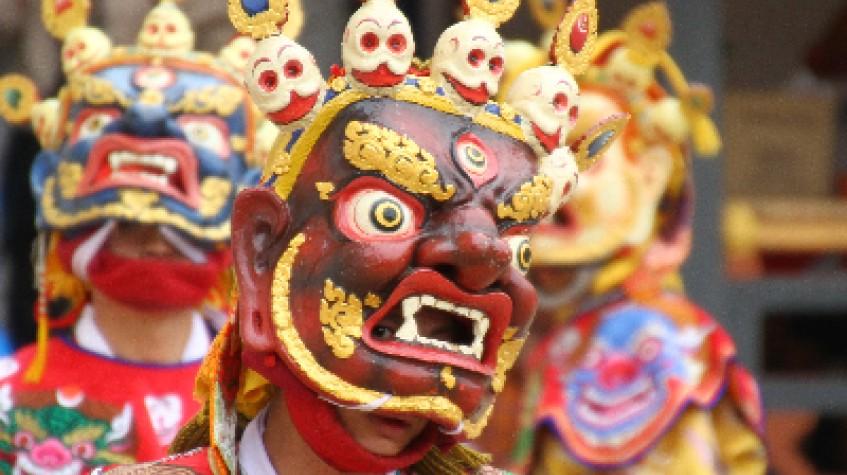
Tashichho Dzong, on the northern edge of the city along the Wang Chu river, houses the throne room of the King of Bhutan, several government ministries and the summer residence of the country's central monastic body. The fortress-monastery was rebuilt in its current form in the 1960s, and its whitewashed walls and gold-topped roofs are lit up for the Thimphu Tshechu, one of the country's largest annual festivals, held in the dzong's courtyard each autumn.
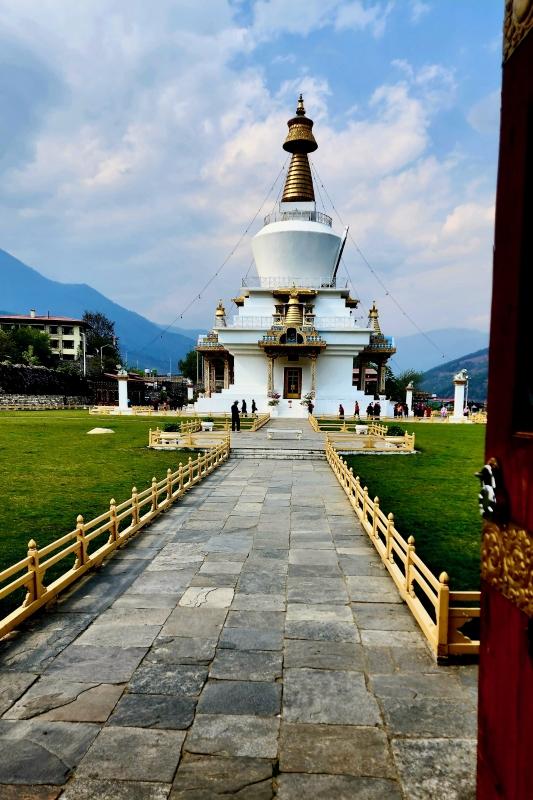
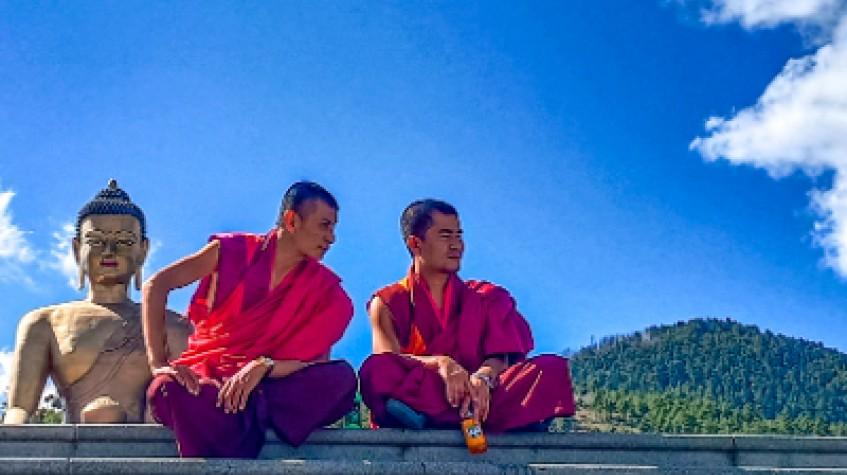
On a hillside above the southern edge of the city, the Buddha Dordenma is a bronze statue over 50 meters tall, seated above the valley and visible from much of Thimphu below. Closer to the city center, the National Memorial Chorten draws a steady stream of local residents who circle it clockwise each morning and evening, built in 1974 in memory of the third king of Bhutan and one of the more active religious sites in the capital on any given day.
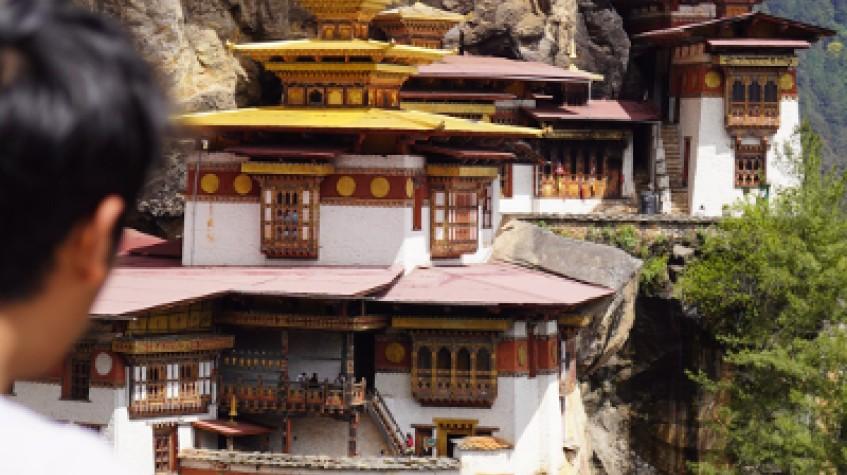
Perched on a ridge above the city, Changangkha Lhakhang dates to the 12th century and remains one of Thimphu's most visited temples, where local families traditionally bring newborns for a first blessing. The temple's courtyard also gives one of the better vantage points over the Thimphu valley, particularly in the late afternoon light.
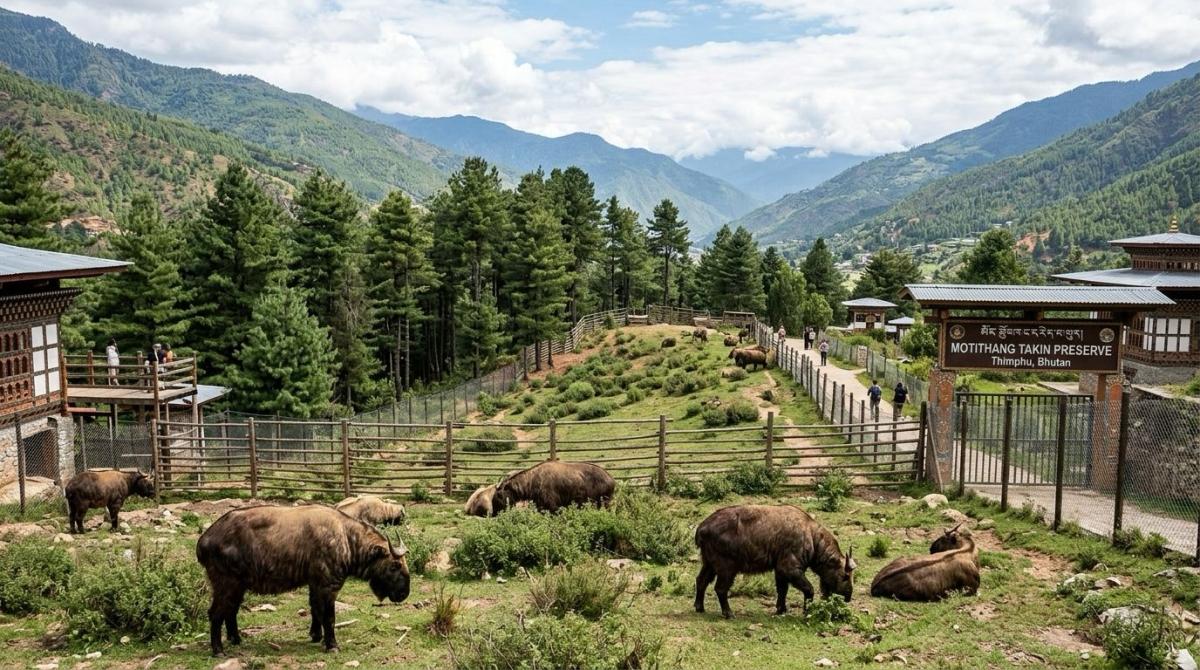
Thimphu's weekend market fills a riverside hall from Friday afternoon through Sunday, with farmers from surrounding valleys selling produce, cheese and dried chilies alongside stalls of incense and handwoven textiles. The Folk Heritage Museum, set in a traditional rammed-earth house, recreates rural Bhutanese domestic life from before electricity and paved roads reached the valleys, while the Motithang Takin Preserve keeps a small herd of the takin, Bhutan's national animal, an odd-looking goat-antelope found only in the eastern Himalayas.
Thimphu is also home to the National Institute for Zorig Chusum, known locally as the Painting School, where students spend years training in Bhutan's traditional arts and crafts, from wood carving to embroidery and thangka painting. A short distance away, the Royal Textile Academy documents the country's weaving traditions with a collection of historic fabrics, a craft still practiced in households across Bhutan.
Bhutan measures national progress partly through Gross National Happiness, a policy framework introduced in the 1970s that still shapes government planning today. On weekend afternoons, locals gather at archery grounds around the city for informal matches of Bhutan's national sport, played with modern compound bows and accompanied by singing and dancing between rounds, a scene visitors are welcome to watch from the sidelines.
As the country's political and religious center, Thimphu anchors most multi-day itineraries rather than serving as a side trip. The Walk with Native Tours itinerary builds several days in and around the capital into a wider route through Bhutan's central valleys, pairing dzongs and monasteries with walks through Thimphu's residential neighborhoods.
All flights into Bhutan land at Paro, so Thimphu is reached by a scenic hour-long drive along the Paro Chu and Wang Chu river valleys. Within the city, most sights sit close enough together to cover on foot or by short taxi ride, though day trips further out, including the climb to Dochula Pass on the road toward Punakha, typically require a private vehicle.
Spring and autumn bring the clearest weather to Thimphu, with mild days and cooler nights well suited to walking around the dzong and market. Summer brings the southwest monsoon and regular afternoon rain, while winter is dry but cold at this altitude, occasionally dropping below freezing overnight between December and February.