Free Cancellation
-high.jpg&w=1920&q=75 "4-Day Athens City Break with Athens City Tour & Acropolis & One Day Cruise")

-high.jpg&w=1920&q=75 "7 Days Greece Athens Nafplion Olympia Delphi Kalambaka Meteora Tour")
-high.jpg&w=1920&q=75 "Greece Island Hopping Tour – Athens, Mykonos & Santorini 7 Days")
-high.jpg&w=1920&q=75 "Mykonos Santorini Tour 5 Days Greek Islands Experience")
-high.jpg&w=1920&q=75 "Athens, Santorini & Mykonos 10-Day Island Hopping Tour | Semi-Private with Guided Experiences")
-high.jpg&w=1920&q=75 "Greece Multi-Island Tour Package 9 Days")
-high.jpg&w=1920&q=75 "Greece 6 Day Tour Athens Santorini Crete Experience")
-high.jpg&w=1920&q=75 "Greece Island Tour 9 Days Athens Mykonos Santorini Experience")
-high.jpg&w=1920&q=75 "Ultimate Greek Island Hopping Tour: Athens, Mykonos, Paros, Naxos & Santorini – 11 Days")
-high.jpg&w=1920&q=75 "Greece Island Odyssey 13 Days Cyclades Tour Experience")
-high.jpg&w=1920&q=75 "Best Tour of Greece and Turkey 12 Day Tour")
-high.jpg&w=1920&q=75 "8 Day Greece Island Tour: Athens – Mykonos – Santorini | Guaranteed Departures Every Friday")

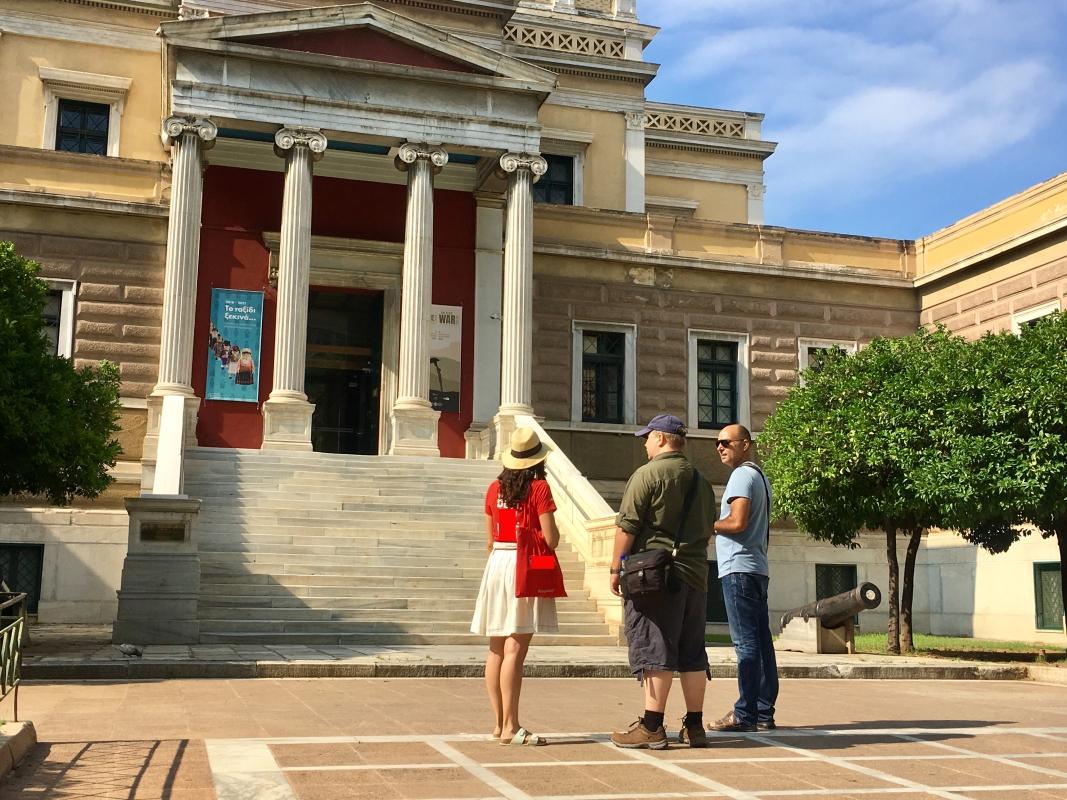
Athens Culture & Historical Tours take travelers through more than two thousand years of Greek history, from the monuments of classical Athens to Byzantine churches, Ottoman-era traces and the neighborhoods of the modern Greek capital. As one of Europe's most historically significant cities, Athens is an ideal destination for travelers interested in archaeology, mythology, architecture, philosophy and ancient Greek civilization.
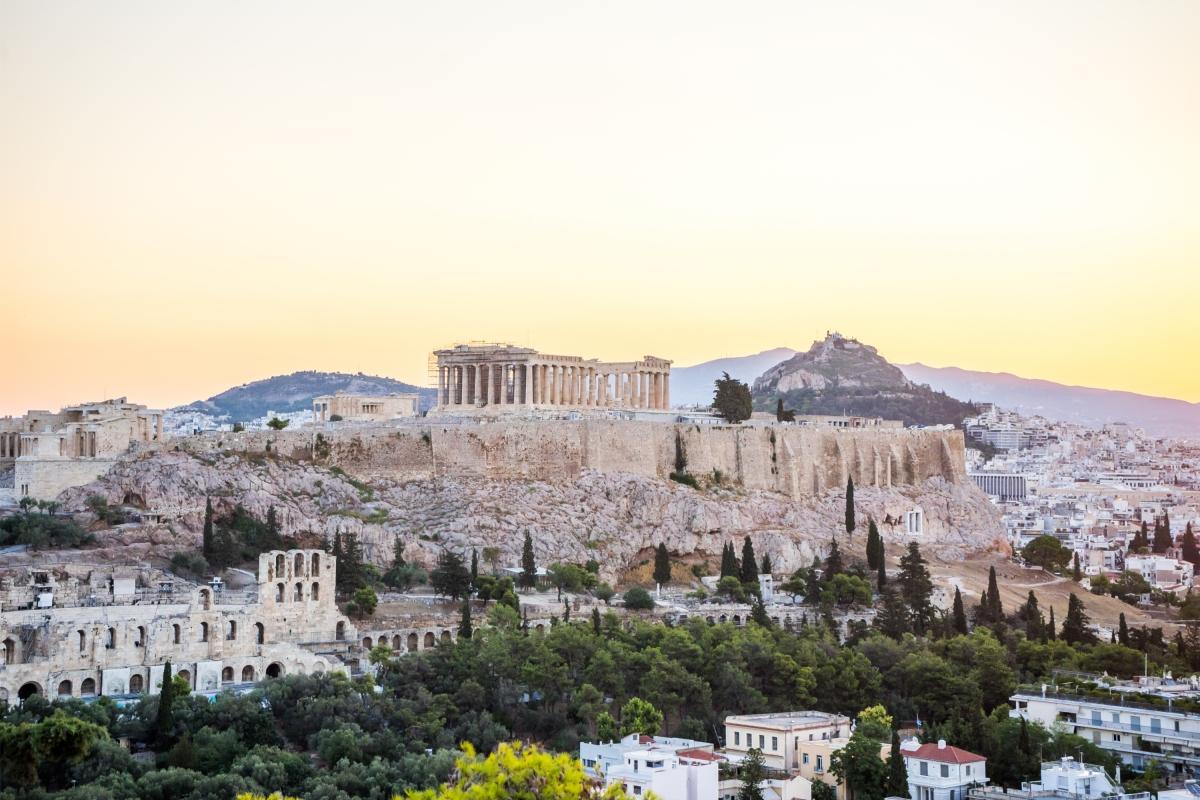
The city's most famous landmark is the Acropolis of Athens, where the Parthenon dominates the skyline. However, Athens' historical heritage extends far beyond the Acropolis. Visitors can explore the Ancient Agora, Temple of Olympian Zeus, Roman Agora, Panathenaic Stadium and some of Greece's most important archaeological museums.
Guided cultural and historical tours provide context that can be difficult to gain from sightseeing alone. Travelers can learn about the development of democracy in ancient Athens, Greek mythology, everyday life in the classical city and the political and philosophical ideas associated with figures such as Socrates, Plato and Aristotle.
Athens can also serve as the starting point for historical day trips to Delphi, Cape Sounion, Corinth, Mycenae and Epidaurus, making it possible to combine the capital with some of mainland Greece's most important archaeological destinations.
Athens Cultural Tours explore both the ancient heritage and living traditions of the Greek capital. Rather than concentrating exclusively on archaeological monuments, cultural tours can combine historic attractions with neighborhoods, food, markets, architecture and contemporary city life.
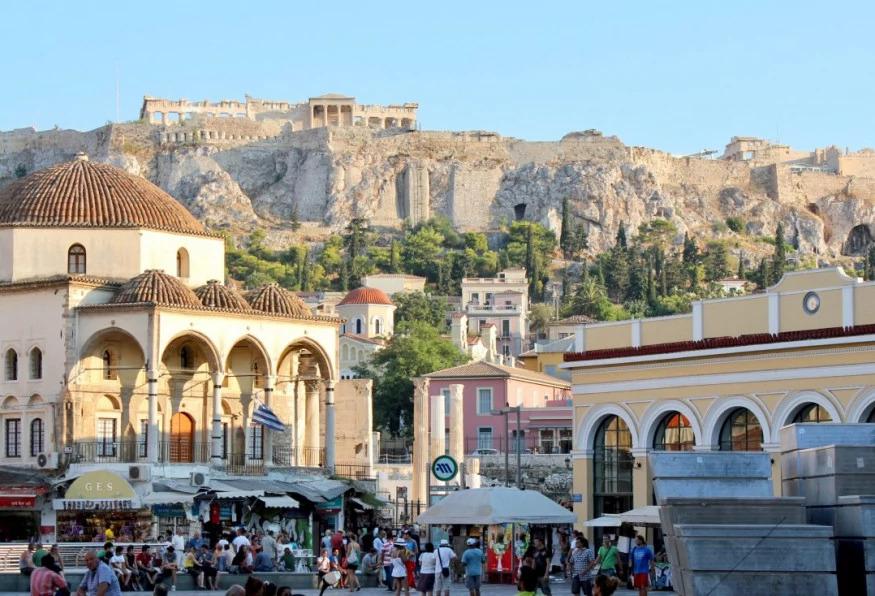
Plaka, located beneath the Acropolis, is one of the best-known areas for cultural sightseeing. Its narrow streets, neoclassical buildings, small churches, restaurants and shops create a distinctive atmosphere in the historic center.
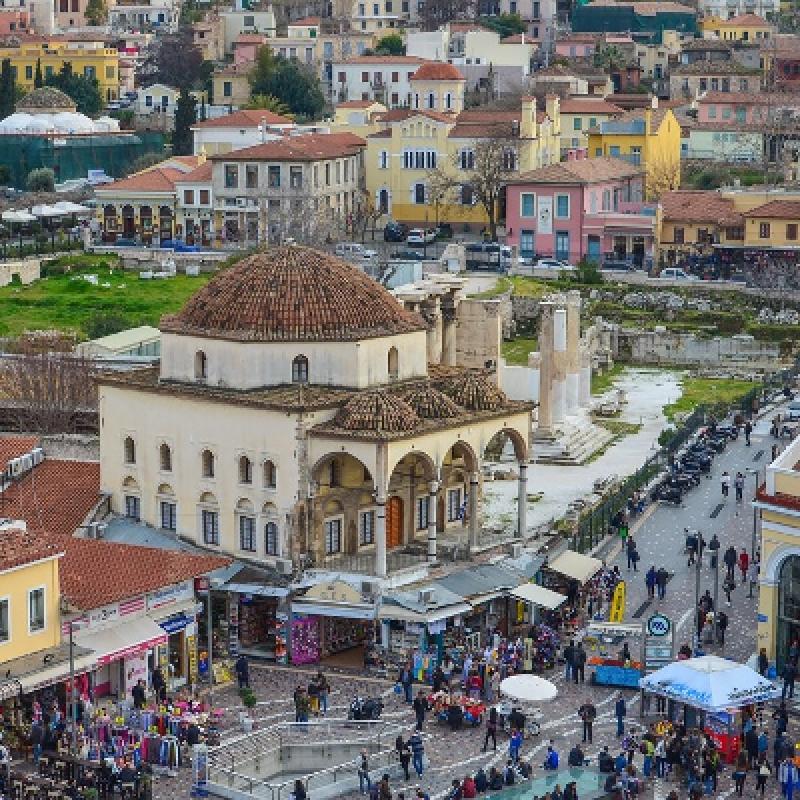
Nearby Monastiraki combines ancient remains with markets, squares, religious buildings and modern urban life. Walking between Plaka, Monastiraki and the surrounding districts allows visitors to see how different periods of Athens' history exist side by side.
Greek food can also form part of a cultural experience. Travelers may encounter traditional dishes, pastries, local cheeses, olives and Greek coffee while exploring markets and neighborhoods. Selected tours focus specifically on food and culinary traditions, while others include local tastings as part of a broader city experience.
Religious heritage provides another layer of Athens' cultural history. Byzantine churches can be found throughout the historic center, demonstrating the city's importance long after the classical period.
Museums provide further opportunities to understand Greek culture. Depending on individual interests, travelers can explore collections dedicated to archaeology, ancient art, Byzantine heritage, folk culture and different periods of Greek history.
Athens cultural tours can therefore complement archaeological sightseeing by connecting ancient monuments with the city that surrounds them today.
Athens Historical Tours focus on the events, monuments and people that shaped the city from antiquity to the modern era.
Classical Athens reached extraordinary political and cultural influence during the fifth century BC. It was during this period that many of the buildings associated with the Acropolis were constructed and Athens became closely associated with democracy, philosophy, theater, architecture and the arts.
The Acropolis is naturally the centerpiece of many historical tours. Visitors can explore the monumental complex and learn about the religious and civic importance of the hill in ancient Athens.
Below the Acropolis, the Ancient Agora provides insight into everyday public life. The area served as a center for political, commercial, religious and social activity. It is also closely associated with the development of Athenian democracy and philosophical discussion.
Athens later became part of the Roman world, leaving monuments such as the Roman Agora and Hadrian's Library. These sites demonstrate how the city continued to develop after the classical Greek period.
Byzantine, Ottoman and modern Greek history can also be explored throughout the city. This broader approach helps travelers understand Athens as a continuously inhabited capital rather than simply an open-air collection of ancient ruins.
Historical walking tours can be particularly effective because many important sites are concentrated around the historic center. Longer programs may combine several archaeological attractions with museums and neighborhoods in a full-day itinerary.
Athens contains an exceptional concentration of archaeological monuments and museums. The following sites are among the most important places to consider when planning an Athens culture and history tour.
Acropolis of Athens
The Acropolis is the defining landmark of Athens and one of the most famous archaeological sites in the world. Rising above the modern city, the complex contains several major ancient structures.
Parthenon
Dedicated to Athena, the patron goddess of Athens, the Parthenon was constructed during the fifth century BC and became one of the most influential examples of classical Greek architecture.
Erechtheion
The Erechtheion is another important temple on the Acropolis and is especially recognizable for the Porch of the Caryatids, where sculpted female figures serve as architectural supports.
Temple of Athena Nike
Located near the entrance to the Acropolis, this smaller temple was dedicated to Athena Nike and formed part of the monumental classical complex.
Acropolis Museum
The Acropolis Museum displays archaeological material discovered on and around the Acropolis. Visiting the museum alongside the archaeological site provides valuable context for understanding the sculptures, buildings and religious practices of ancient Athens.
Ancient Agora
The Ancient Agora was one of the most important public spaces in ancient Athens. Political meetings, commerce, religious activity and social life all took place in and around the area.
Temple of Hephaestus
Located within the Ancient Agora, the Temple of Hephaestus is one of the best-preserved ancient Greek temples in Athens.
Roman Agora
The Roman Agora reflects the city's development during Roman rule and includes archaeological remains from this later period of Athens' history.
Hadrian's Library
Built during the reign of Roman Emperor Hadrian, the complex demonstrates the continuing cultural importance of Athens within the Roman Empire.
Temple of Olympian Zeus
The Temple of Olympian Zeus was one of the largest temples constructed in the ancient Greek world. Although only part of the monumental structure survives today, its remaining columns provide an impression of its original scale.
Panathenaic Stadium
Built on the site of an ancient stadium and reconstructed in marble in the modern era, the Panathenaic Stadium hosted the opening and closing ceremonies of the first modern Olympic Games in 1896.
National Archaeological Museum
The National Archaeological Museum contains one of the world's major collections of ancient Greek artifacts, making it particularly valuable for travelers who want to understand Greek history beyond Athens alone.
Ancient Athens Tours focus on the period that established Athens as one of the most influential cities of the ancient Mediterranean world.
A typical ancient Athens itinerary begins at the Acropolis and Parthenon, where travelers can learn about religion, architecture and civic identity during the classical period.
The route can then continue toward the Ancient Agora. Walking through this area helps visitors understand how politics, commerce, philosophy and everyday life interacted in ancient Athens.
The development of Athenian democracy is one of the central themes of many ancient history tours. Guides can explain how political participation functioned in the ancient city while also providing historical context about who was and was not included in the political system.
Philosophy is another major theme. Athens is closely associated with Socrates, Plato and Aristotle, whose ideas had a lasting impact on Western philosophy, politics, ethics and science.
Greek mythology can also provide context for archaeological sites. Stories involving Athena, Poseidon, Zeus and other gods were deeply connected with the religious monuments and civic identity of ancient Athens.
Travelers with a strong interest in antiquity may combine the Acropolis, Ancient Agora and archaeological museums within a full-day program rather than attempting to see each site quickly.
Athens Archaeological Tours are particularly suitable for travelers who want to explore the physical remains of the ancient city in greater depth.
The Acropolis archaeological complex is usually the main starting point, but an archaeology-focused itinerary can continue through the Ancient Agora, Roman Agora, Temple of Olympian Zeus and Kerameikos.
Kerameikos was an important area of ancient Athens containing sections of the city's cemetery and defensive structures. The archaeological site provides a different perspective on ancient urban life and burial traditions.
Museums are especially valuable for archaeology-focused visitors. The Acropolis Museum helps explain the monuments of the Acropolis, while the National Archaeological Museum expands the story to civilizations and archaeological discoveries from across Greece.
An archaeological tour can also examine the different construction phases of Athens. Classical Greek, Hellenistic and Roman remains demonstrate how the city evolved over centuries rather than belonging to a single historical period.
Travelers who want to explore Greek archaeology beyond Athens can extend their itinerary to Delphi, Corinth, Mycenae or Epidaurus.
Athens Cultural & Historical Day Trips provide access to some of mainland Greece's most important ancient sites and landscapes.
Delphi
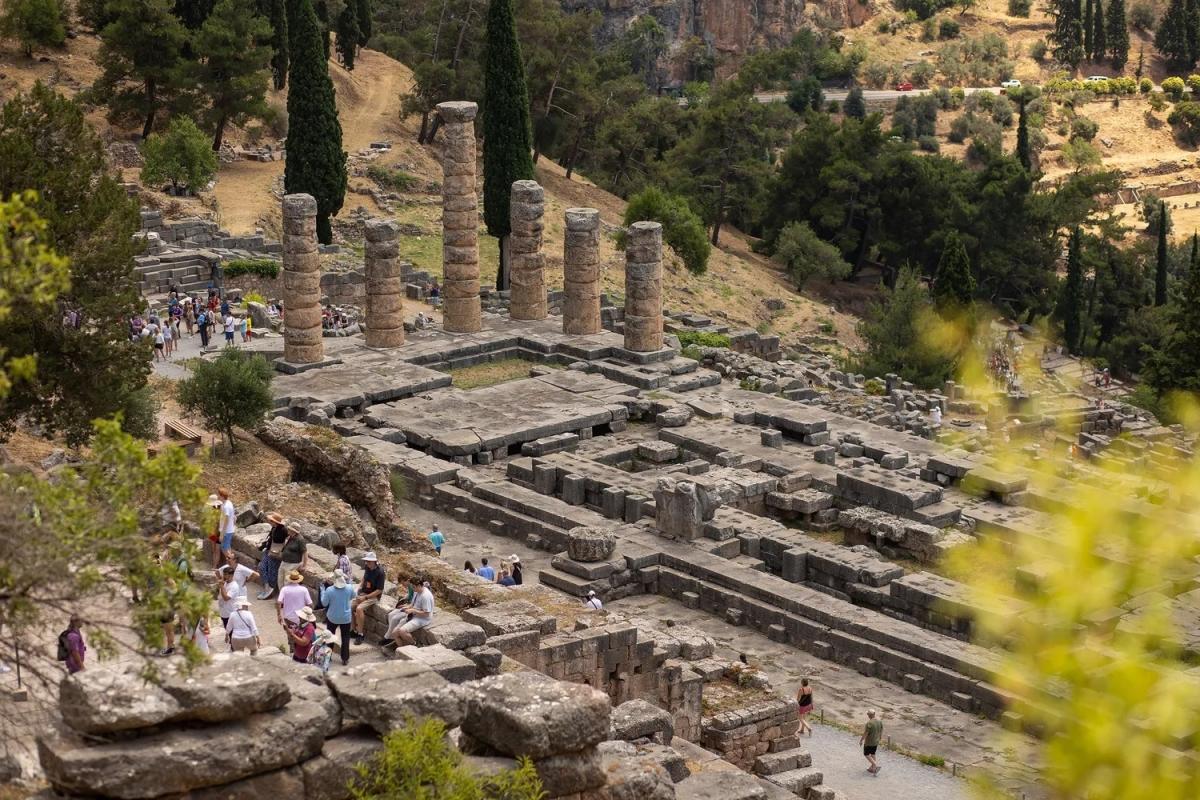
Delphi is one of the most famous archaeological destinations in Greece. In antiquity, the sanctuary was associated with Apollo and the Oracle of Delphi. Its mountain setting adds to the historical experience, and the archaeological site can be combined with its museum.
Cape Sounion
Cape Sounion is famous for the Temple of Poseidon, dramatically positioned above the Aegean Sea. Its relative proximity to Athens makes it suitable for a half-day or extended excursion, with sunset trips particularly popular.
Ancient Corinth
Corinth occupied a strategically important position connecting mainland Greece with the Peloponnese. The archaeological site provides insight into Greek and Roman history and can be combined with other Peloponnese attractions.
Mycenae
Mycenae was one of the major centers of the Late Bronze Age Greek world. Visitors can explore monumental remains including the Lion Gate and structures associated with the Mycenaean civilization.
Epidaurus
Epidaurus is famous for its ancient theater and the Sanctuary of Asklepios. The theater is particularly celebrated for its architecture and acoustics.
Nafplio
Although primarily known as a picturesque historic town rather than an ancient archaeological site, Nafplio can be combined with Mycenae and Epidaurus. Its neoclassical architecture and role in modern Greek history add another dimension to a Peloponnese day trip.
Travelers with additional time can combine several of these destinations within a multi-day mainland Greece itinerary rather than returning to Athens after every excursion.