
Free Cancellation

-high.jpg&w=1920&q=75 "9 Days Iran Culture Tour")
-Mosque%2C-Isfahan-7-high.jpg&w=1920&q=75 "14 Days Persia Classic Tour")
-high.jpg&w=1920&q=75 "Luxury Trip to Iran 8 Days")
-high.jpg&w=1920&q=75 "Compact Iran for Business Travelers 5 Day Tour")
Shiraz has been called the city of poets and gardens for centuries, home to the tombs of Hafez and Saadi and to Persian gardens that once inspired the layout of gardens as far away as India. Set at an elevation of about 1,500 meters in southern Iran, the city also serves as the gateway to Persepolis, the ceremonial capital of the Achaemenid Empire, roughly 60 kilometers to the northeast.
The city forms one leg of most Iran circuits alongside Isfahan, Yazd and Tehran, and is often visited as part of a longer Iran Tours route. Two to three days allow time for the tombs, gardens, bazaar and a half-day trip out to Persepolis.
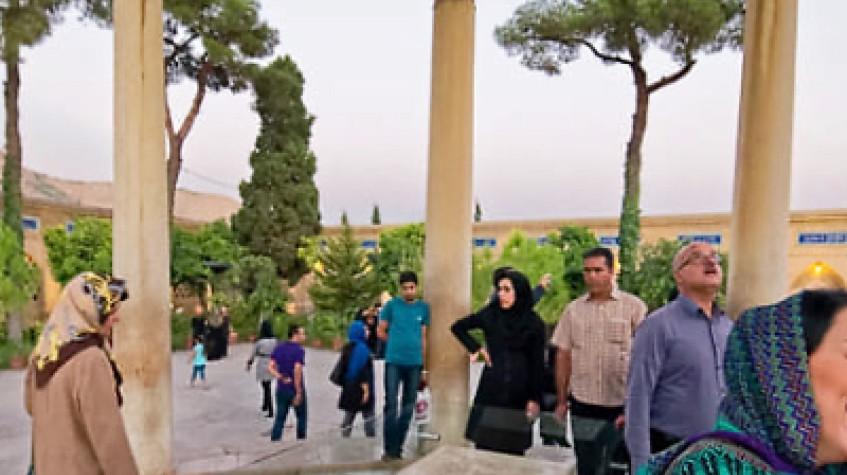
The Tomb of Hafez, or Hafezieh, sits within a garden on the northern edge of the city and marks the resting place of the 14th-century poet whose verses are still recited from memory across Iran. An open marble pavilion, added in the 1930s, shelters his tombstone, and locals commonly visit to have their fortunes read through a random verse from his collected poems, the Divan.
A short distance away, the Tomb of Saadi honors the 13th-century poet best known for the Gulistan and Bustan, works that remain part of the Persian literary canon. The mausoleum sits beside a spring-fed pool inside a colonnaded pavilion built in the 1950s, replacing several earlier structures on the same site.
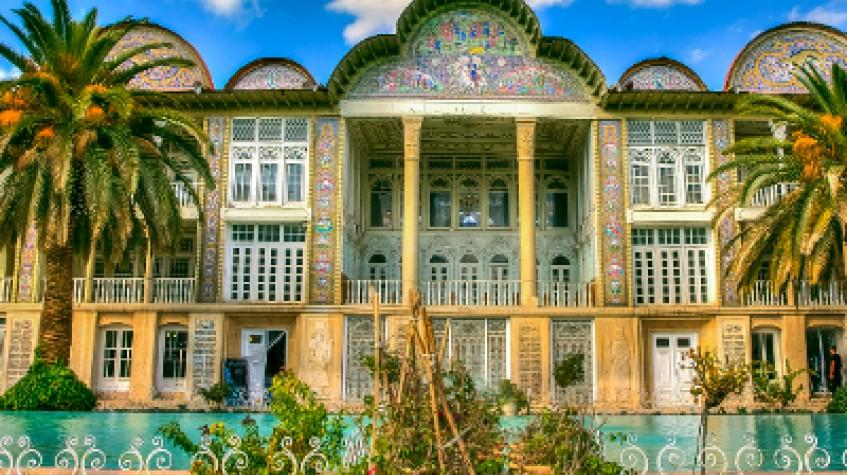
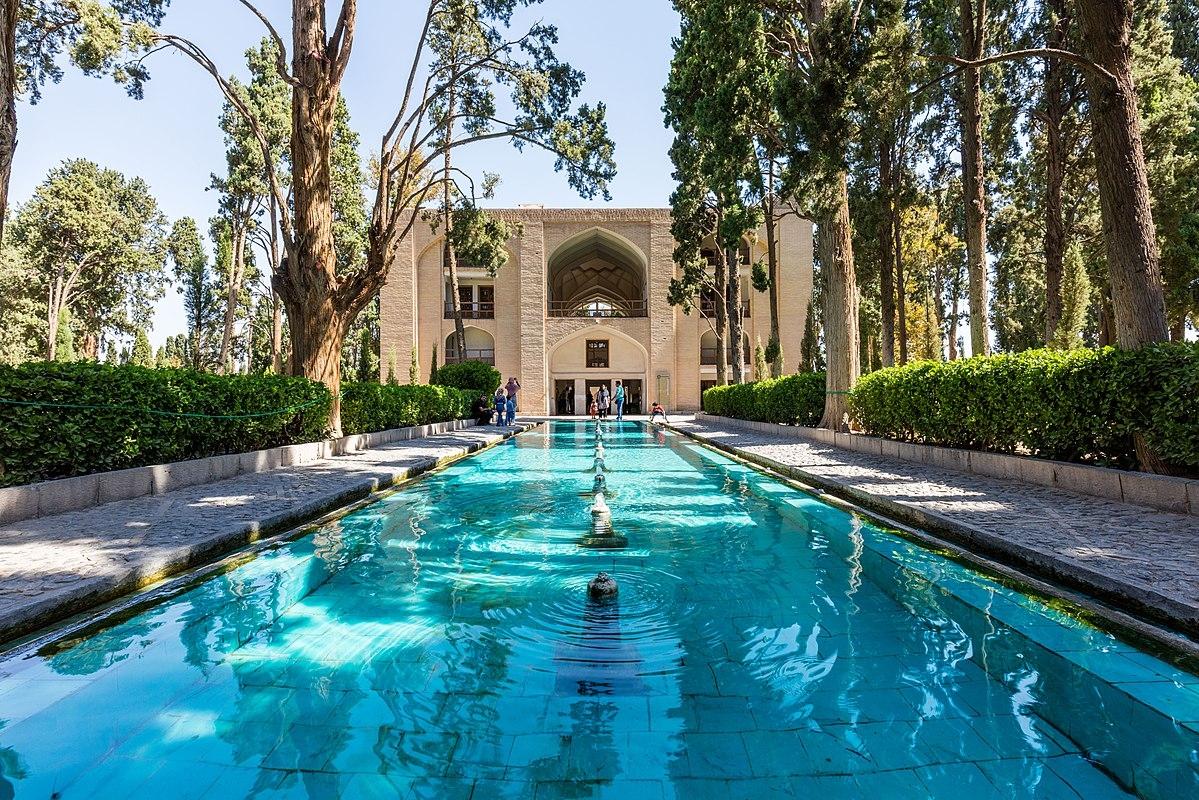
Eram Garden, a UNESCO-listed Persian garden dating in its current form to the Qajar period, combines cypress-lined avenues, citrus trees and a Qajar-era mansion at its center. Its formal design, built around a central water channel, follows the same principles found in Persian gardens across the country.
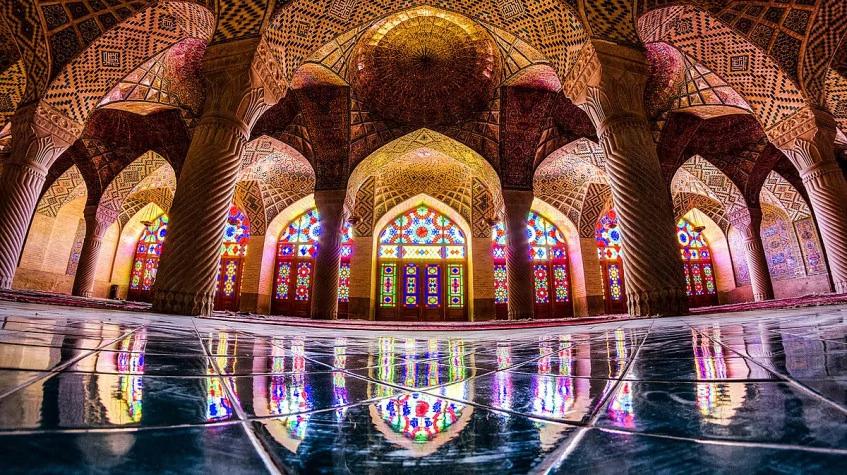
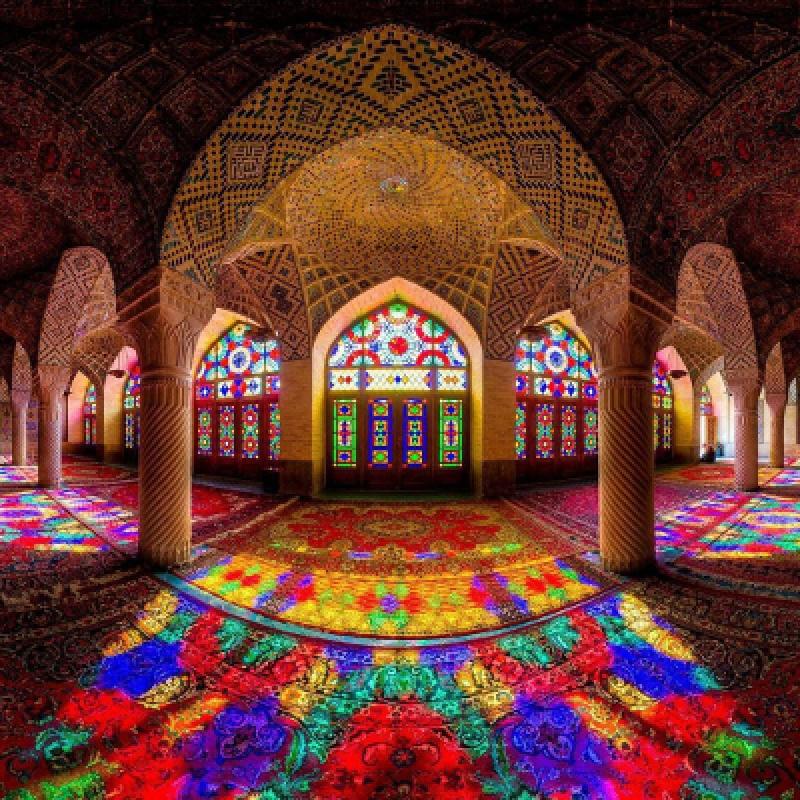
Nasir al-Mulk Mosque, completed in 1888 and widely known as the Pink Mosque, is famous for the stained glass in its western prayer hall, which scatters colored light across the carpets on clear winter mornings. Its tilework uses more pink hues than the blue typical of Isfahan's mosques, giving the building its popular name.
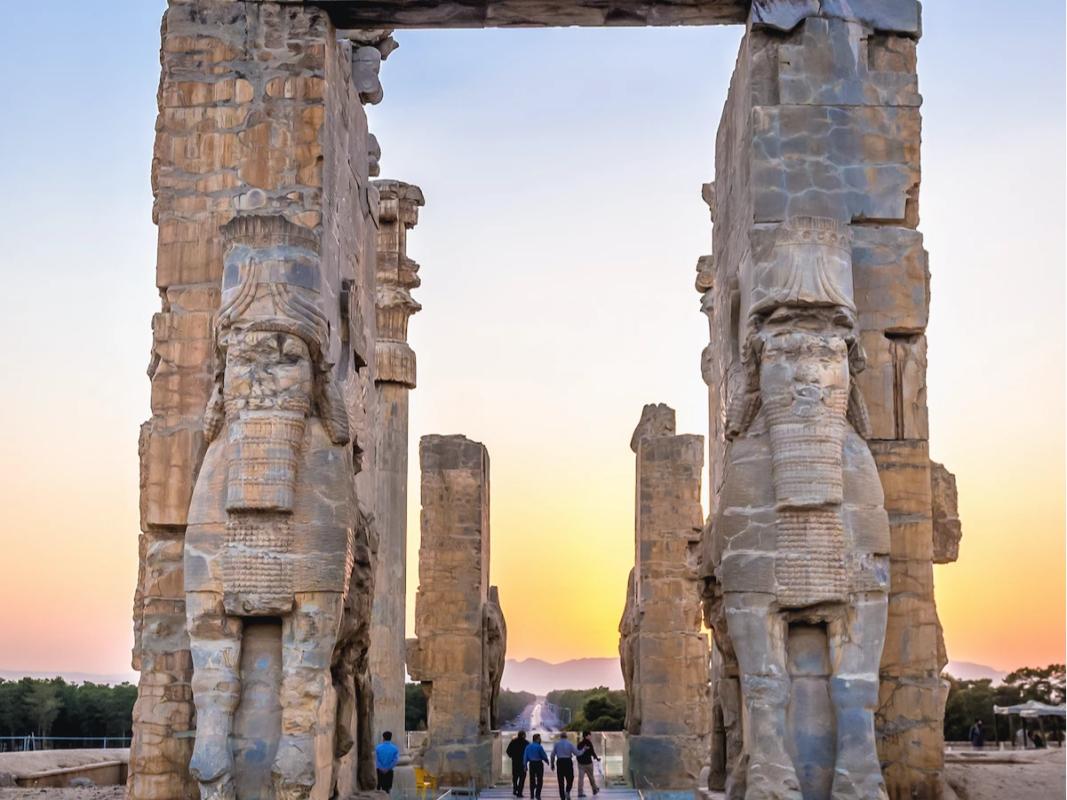
Persepolis, founded by Darius I around 518 BC as the ceremonial capital of the Achaemenid Empire, spreads across a raised stone terrace with the remains of grand audience halls, carved staircases and gate structures. Alexander the Great's forces burned much of the site in 330 BC, but its stone reliefs and columns survive in enough detail to convey the scale of the original palace complex. About 130 kilometers north of Shiraz, Pasargadae holds the simpler tomb of Cyrus the Great, the empire's founder, along with the remains of his original capital.
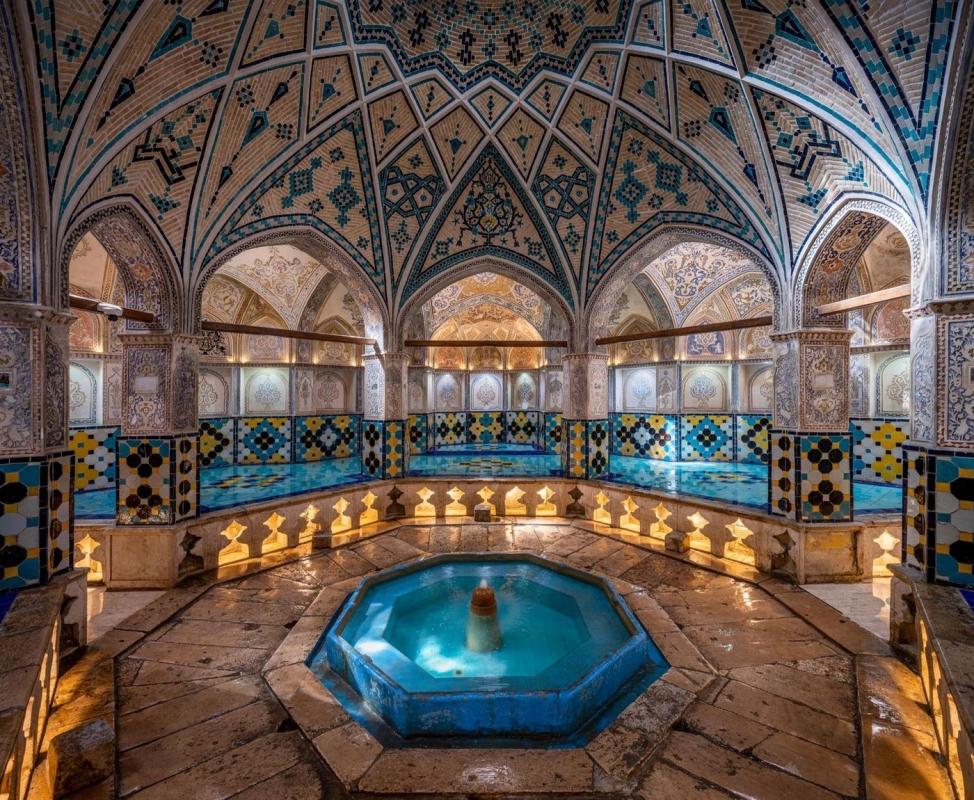
The Vakil Bazaar and the adjoining Vakil Mosque and Vakil Bath date to the 18th century, when Karim Khan Zand made Shiraz his capital and commissioned much of the city's civic architecture. Nearby, the Arg of Karim Khan, a fortress-like citadel with tall brick towers, once served as the seat of his government and now houses exhibits on the city's Zand-era history.
Shiraz International Airport handles regular domestic flights to and from Tehran, a journey of about an hour and a half, as well as connections to Isfahan. By road, Shiraz sits roughly 480 kilometers south of Isfahan, a drive of six to seven hours that most itineraries break up with a stop in Yazd. The city's own sights and its proximity to Persepolis make it a natural final or opening stop on a broader Iran route.
Shiraz gave its name to a grape variety grown today in wine regions worldwide, though local production stopped after the 1979 revolution and the historic vineyards around the city no longer produce wine. The culinary tradition that remains centers on dishes such as kalam polo, a rice dish with ground meat and cabbage, and khoresh-e mast, a chilled yogurt-based stew served in summer. Faloodeh, a frozen rosewater and noodle dessert found across Iran, is closely associated with Shiraz and sold from stalls near the bazaar and the poets' tombs.
Shirazis gather at the Tomb of Hafez in large numbers on the poet's commemoration day each October, an event that draws readers from across the country to recite his verses aloud. The city's gardens fill with visitors during the Persian New Year, Nowruz, in late March, when Eram Garden's fruit trees and roses reach their fullest bloom.
Shiraz sees its most pleasant weather in spring, when orange blossoms scent the streets and Eram Garden's roses are in bloom, and again in autumn, when temperatures ease after the summer heat. Summer days regularly exceed 35 degrees Celsius, while winters stay mild by Iranian standards thanks to the city's southern location.
A short drive north of Persepolis, Naqsh-e Rustam holds the rock-cut tombs of four Achaemenid kings, including Darius I, carved high into a cliff face above a series of Sassanid-era relief carvings depicting royal investitures and battle victories. The site is usually paired with Persepolis on the same half-day excursion, since the two together give a fuller picture of Achaemenid and Sassanid Persia than either alone.
Shiraz is a standard stop on multi-city Iran itineraries that also take in Isfahan, Yazd and Tehran, usually scheduled to include a half-day excursion to Persepolis. Travelers seeking a compact, budget-conscious route through these cities can look at Explore Iran on a Budget 6 Days, which links Shiraz with the country's other major historic centers on one trip.