
-high.jpg&w=1920&q=75 "Sacsayhuaman Inca´s temple, Tambomachay, Puca Pucara and Q'enqo Half-Day Tour")
Peru Cuzco [Cusco] Tours
100+ tours & activities
Free Cancellation
Cusco City Sightseeing & Sacsayhuaman Archeological Park Tour
-high.jpg&w=1920&q=75 "Park of Sacsayhuaman and Cusco City Full Day Tour with lunch from Sacred Valley")
Free Cancellation
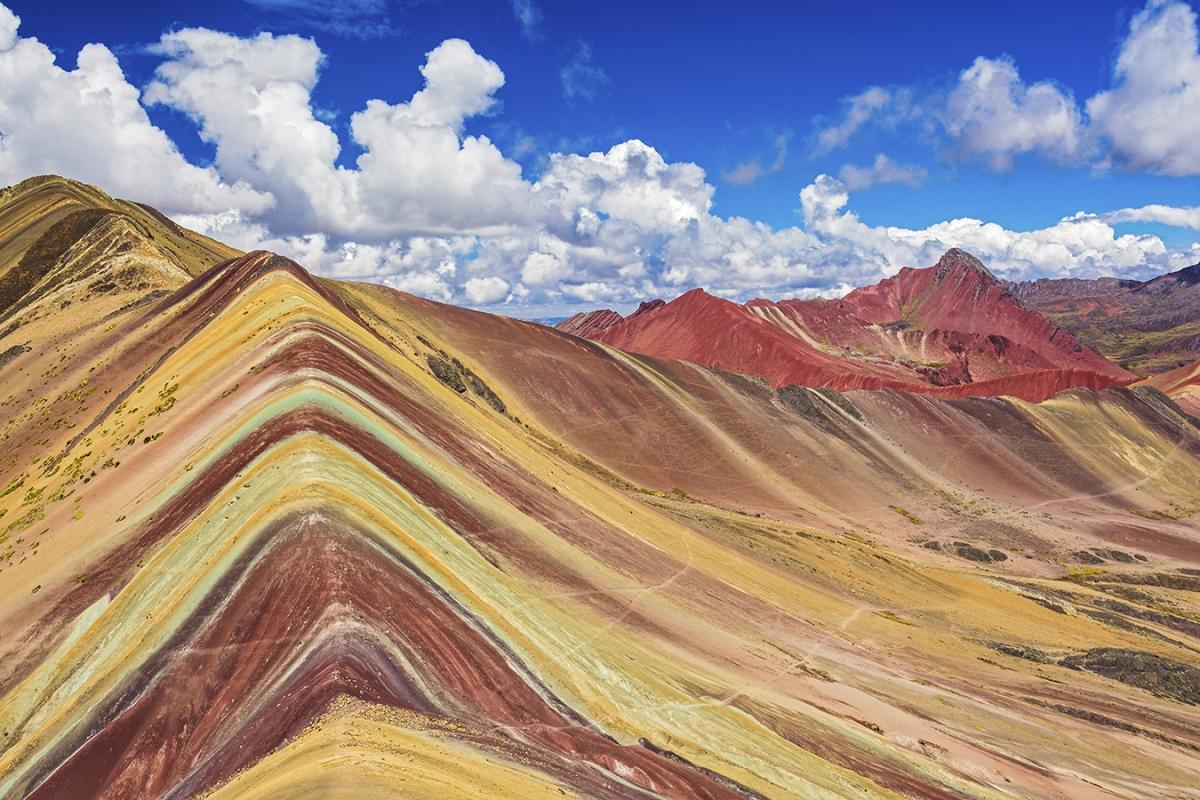
Vinicunca Rainbow Mountain Full-Day Tour from Cusco
-high.jpg&w=1920&q=75 "Discover the enchanting Moray and Salt Mines of Maras")
Free Cancellation
Discover the enchanting Moray and Salt Mines of Maras
-high.jpg&w=1920&q=75 "Sacred Valley Chinchero Inca town, Moray terraces & Ollantaytambo Full Day from Cusco")
Explore Peru Cuzco [Cusco] Tours
About Peru Cuzco [Cusco] Tours
Cuzco, spelled with a Z in some sources and Cusco in others, refers to the same city and was the capital of the Inca Empire before Spanish conquest reshaped it into a colonial center built directly over Inca foundations. Walking through the historic center still shows this layering today, with Spanish churches and mansions resting on stone walls the conquistadors chose to keep rather than demolish. These Peru tours cover the city's historic center in depth, along with the wider Sacred Valley and Machu Picchu region beyond it.
Under Inca rule, Cuzco served as the center from which the empire's four suyu, or regions, radiated outward, giving the city its name, generally translated as "navel of the world" in Quechua. The emperor Pachacuti is credited with rebuilding much of the city in the 15th century, laying out the urban plan and directing construction of its major temples. That layout, though altered by colonial construction, still shapes the historic center's street grid today.
Colonial Cuzco Built Over Inca Stone
The clearest example of this layering sits at Coricancha, where the Convent of Santo Domingo was built directly onto the temple's Inca foundations, and earthquakes over the centuries have repeatedly damaged the Spanish colonial construction while leaving the Inca stonework beneath largely intact. The city's Cathedral, on the Plaza de Armas, stands on the site of Kiswarkancha, once the palace of the Inca ruler Wiracocha, and took nearly a century to complete after construction began in the mid-16th century. Throughout the historic center, ground-floor walls made of precisely fitted Inca stone frequently support upper floors of Spanish colonial brick and adobe, a pattern repeated on many streets radiating from the plaza.
Plaza de Armas and the Historic Center
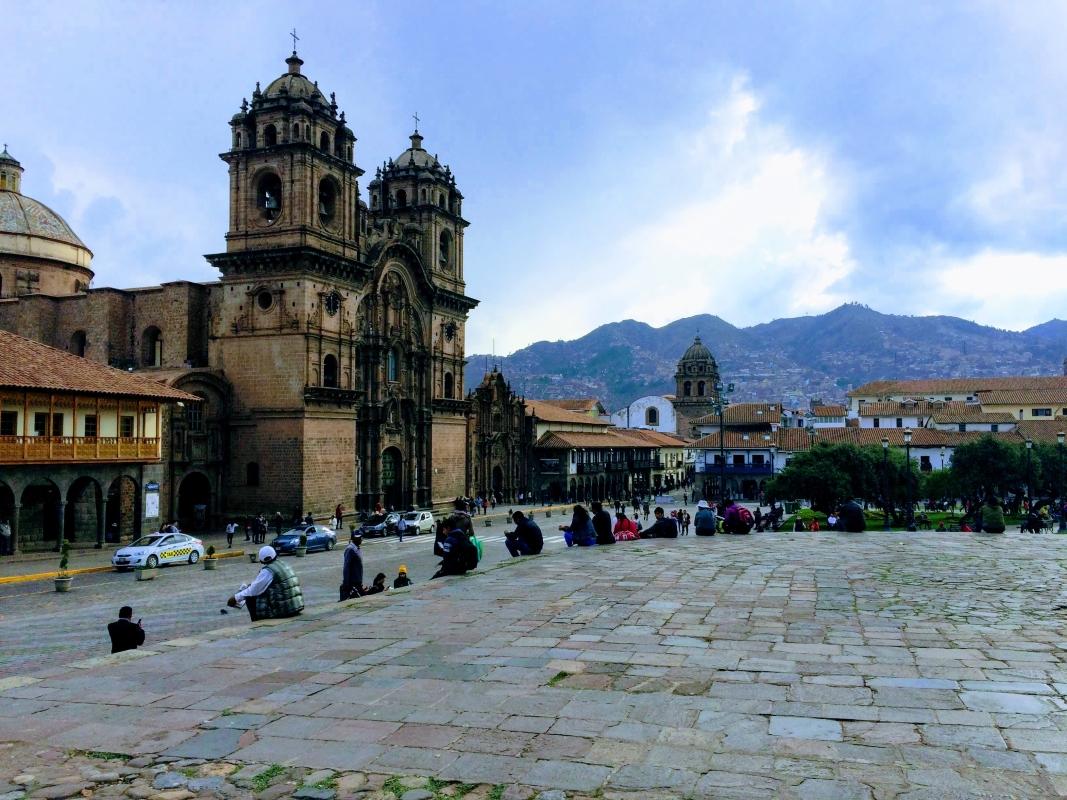
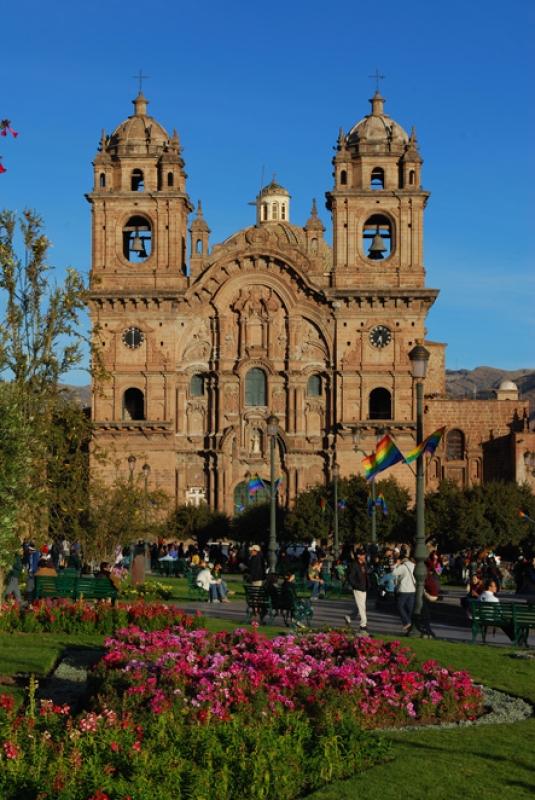
The Plaza de Armas occupies roughly the site of the Inca's ceremonial Huacaypata, the empire's central gathering square, and today is bordered by the Cathedral and the Church of the Society of Jesus, both built in the colonial period. Arcaded walkways line the square, now filled with cafes and shops, while the surrounding streets hold some of the best-preserved examples of Inca stonework anywhere in the city, including the twelve-angled stone set into a wall just off the plaza. Evenings here draw both visitors and locals, with the illuminated Cathedral facade serving as an informal gathering point.
San Blas, the Artisan Quarter
San Blas climbs the hillside above the Plaza de Armas along steep, narrow streets that predate the colonial grid below, and the neighborhood has long served as home to Cuzco's painters, woodworkers, and silversmiths. The Church of San Blas holds a carved wooden pulpit considered one of the finest examples of colonial woodwork in Peru, made from a single tree trunk according to local tradition. Small workshops and galleries throughout the quarter continue crafts passed down through generations, and the steep walk up rewards visitors with views over the city's terracotta rooftops.
The Inca Empire's Four Regions
Cuzco organized the Inca Empire, known to its own people as Tawantinsuyu, into four suyu extending outward from the city: Chinchaysuyu to the northwest, Antisuyu to the northeast toward the Amazon, Collasuyu to the southeast toward Lake Titicaca and beyond, and Contisuyu to the southwest along the coast. This administrative structure allowed the empire to govern a territory that stretched across much of western South America from a single highland capital. Remnants of the road network built to connect these regions, the Qhapaq Ñan, can still be traced in sections around the Sacred Valley beyond the city.
Corpus Christi and Cuzco's Religious Calendar
Corpus Christi, held in Cuzco roughly nine weeks after Easter, ranks among the city's largest religious events, when statues of saints from parish churches across the city are carried in procession to the Cathedral and displayed together for several days. The tradition dates to the colonial period, when Spanish authorities organized the celebration partly to redirect Inca ceremonial practices toward Catholic observance, and it remains one of the clearest surviving examples of how colonial and indigenous traditions merged in the city. A local stew called chiriuchu is prepared specifically for the occasion and sold around the historic center during the festival.
Museums Inside Colonial Cuzco
Several of the city's museums occupy former colonial mansions built, like much of the historic center, on Inca stone foundations. The Museo Inka, housed in an early colonial building near the Cathedral, displays ceramics, textiles, and metalwork spanning the pre-Inca and Inca periods. Casa Concha, a restored colonial house not far from the Plaza de Armas, exhibits artifacts recovered from Machu Picchu during Hiram Bingham's early 20th-century expeditions, returned to Peru after decades in the United States. Both museums add historical context that complements a walk through the streets outside.
Extending the Trip Beyond Cuzco
Given how much of the empire's history connects back to this one city, many visitors extend their stay beyond the historic center to cover more of the surrounding region than a short visit allows. The 8-Day Cusco & Machu Picchu Tour adds Rainbow Mountain and Humantay Lake to the standard Sacred Valley and Machu Picchu route, along with a stop at the Qeswachaka rope bridge, one of the last hand-woven Inca suspension bridges still rebuilt annually using traditional techniques. Grouping these excursions with the historic center into one itinerary avoids the logistics of arranging separate transport and permits for each stop, and gives a fuller sense of the empire that once radiated outward from this single highland capital.