
Free Cancellation
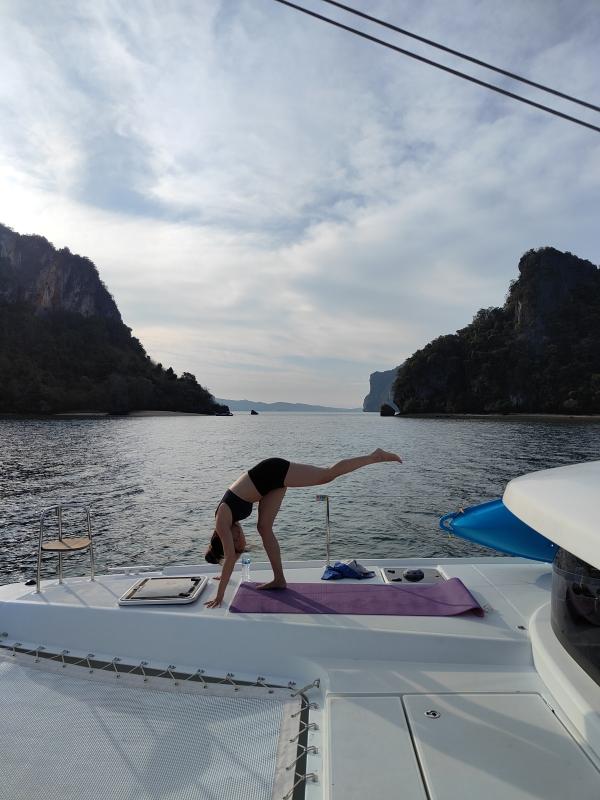
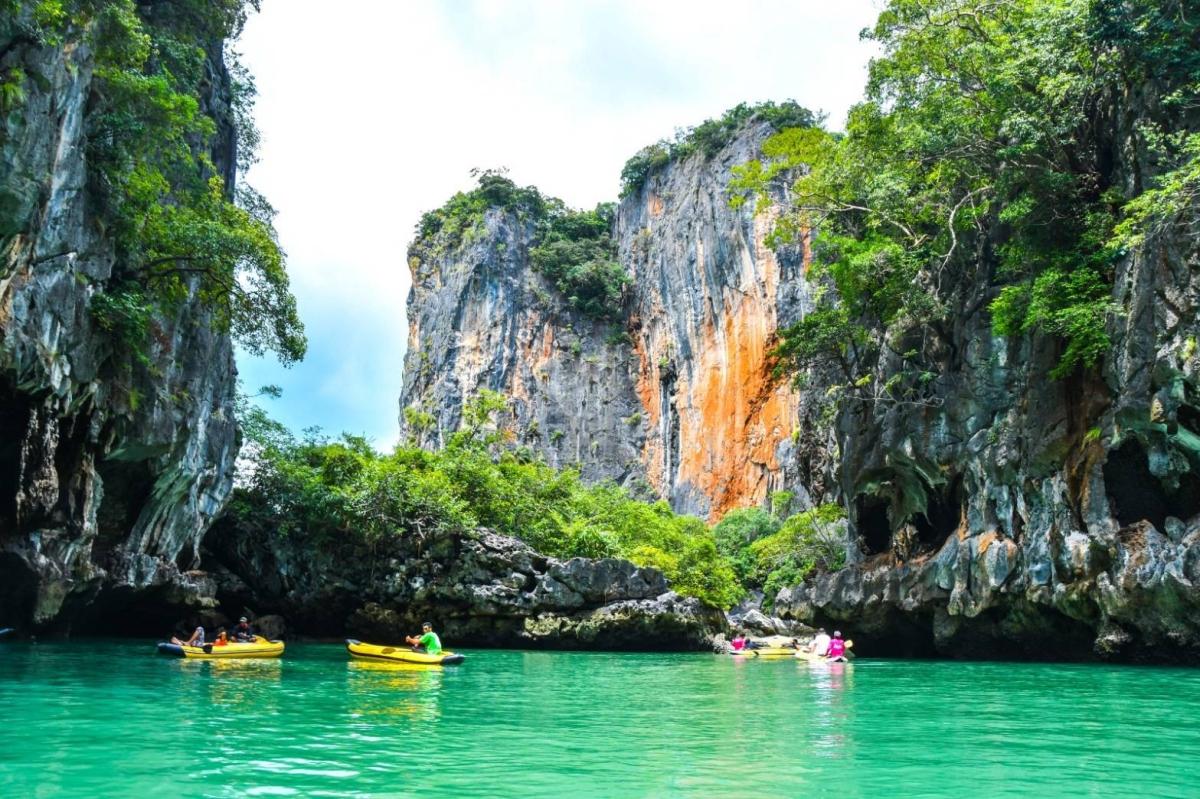
Phang Nga Bay lies between Phuket and Krabi, a stretch of sheltered water inside Ao Phang Nga National Park where limestone towers rise straight out of the sea. The karsts here formed from ancient coral reefs pushed upward and then eroded into steep, isolated pillars, some capped with jungle, some hollowed into caves and tunnels that boats pass through at the right tide. Nearly all visits run as guided boat tours out of Phuket or Krabi rather than independent travel, since the bay's islands have no regular ferry service of their own.
The bay's well-known formations sit within easy reach of both coasts, which is why most operators run it as a single day out. For a wider view of tours across the country, the Thailand Tours page covers destinations beyond Phang Nga Bay.
Most tour boats depart early in the morning, since the bay's karst formations and Ko Panyi's floating restaurants get considerably busier by midday as boats from both Phuket and Krabi converge on the same handful of stops.
Beyond its limestone islands, the bay holds one of Thailand's larger remaining mangrove forests, threading through tidal channels that support fishing communities and a range of birdlife, from herons to kingfishers, alongside the karst scenery most tours focus on.
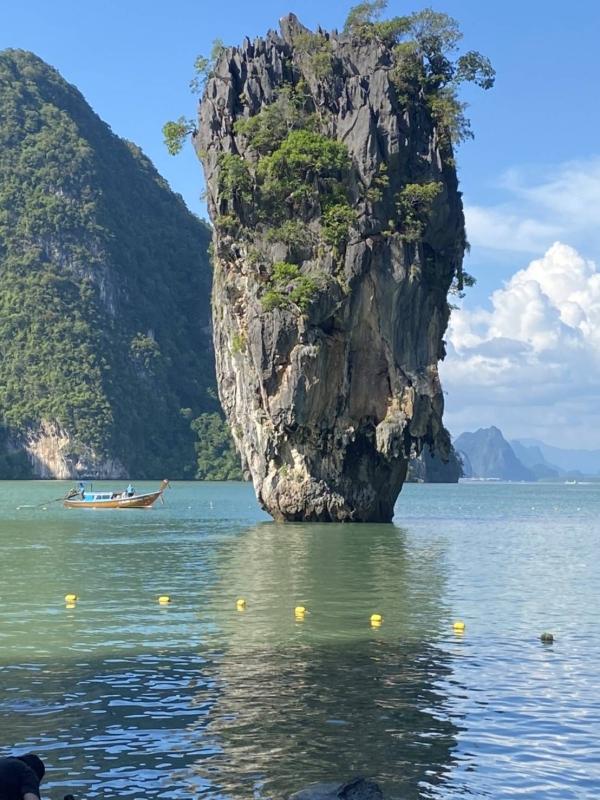
Ko Tapu, a narrow limestone spike rising from the sea near Ko Phing Kan, became known internationally after appearing in the 1974 film The Man with the Golden Gun, and the area is now widely referred to as James Bond Island. Boats stop at the adjoining beach for photographs of the spire and the surrounding karst scenery, one of the more recognizable sights in the bay.
Beside Ko Tapu, the beach of Ko Phing Kan is also called Nail Island for its shape, and swimming directly off its sand is no longer permitted after years of erosion from tour boat traffic; visitors view the spire from a marked area instead.
The wider bay includes dozens of similar limestone islands beyond the well-photographed Ko Tapu, many named for shapes seen in their eroded rock, though few draw the same crowds as the spire made famous on film.
Visitor numbers to the bay grew substantially after the film's release, prompting the national park protections that now govern boat traffic and landing rules across the area.
Ko Panyi is a fishing village built almost entirely on stilts around the base of a limestone outcrop, established generations ago by Muslim fishing families with little flat land to build on. Homes, a mosque and a school stand on platforms over the water, connected by wooden walkways, and the village's floating football pitch, built by local children on salvaged planks, has drawn visitors over the years.
Many day tours stop here for lunch, often at floating restaurants serving seafood.
The village's population is largely descended from Indonesian and Malay fishermen who settled the outcrop generations ago, and its economy today runs heavily on the seafood restaurants and souvenir stalls that serve visiting tour groups alongside its original fishing trade.
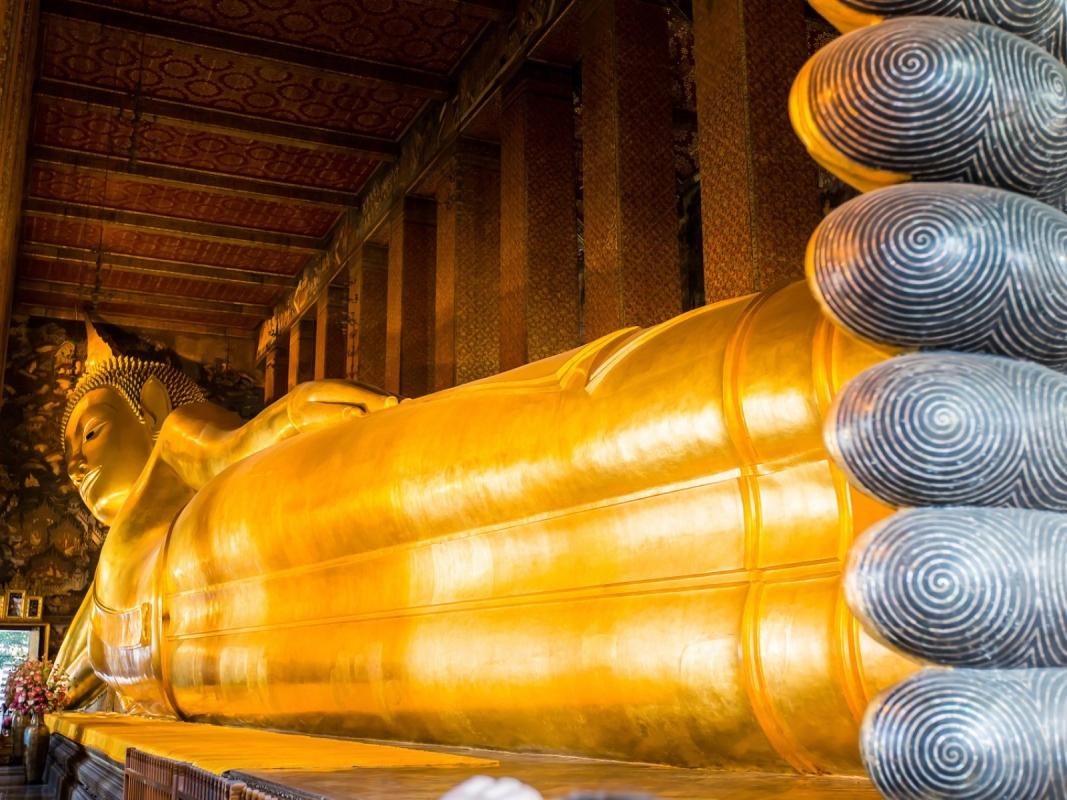
Inland, the province's namesake town holds Wat Suwan Kuha, a cave temple built around a large reclining Buddha and populated by macaques that gather near the entrance, an easy add-on for visitors extending their day beyond the standard boat tour.
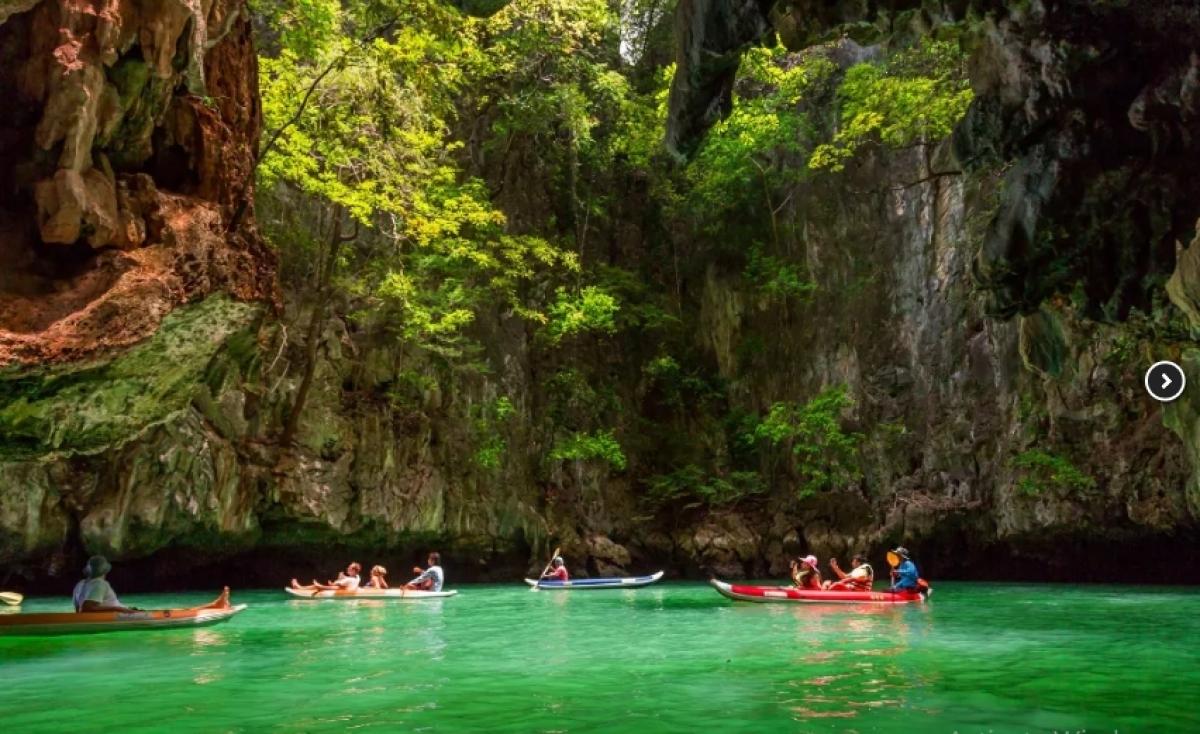
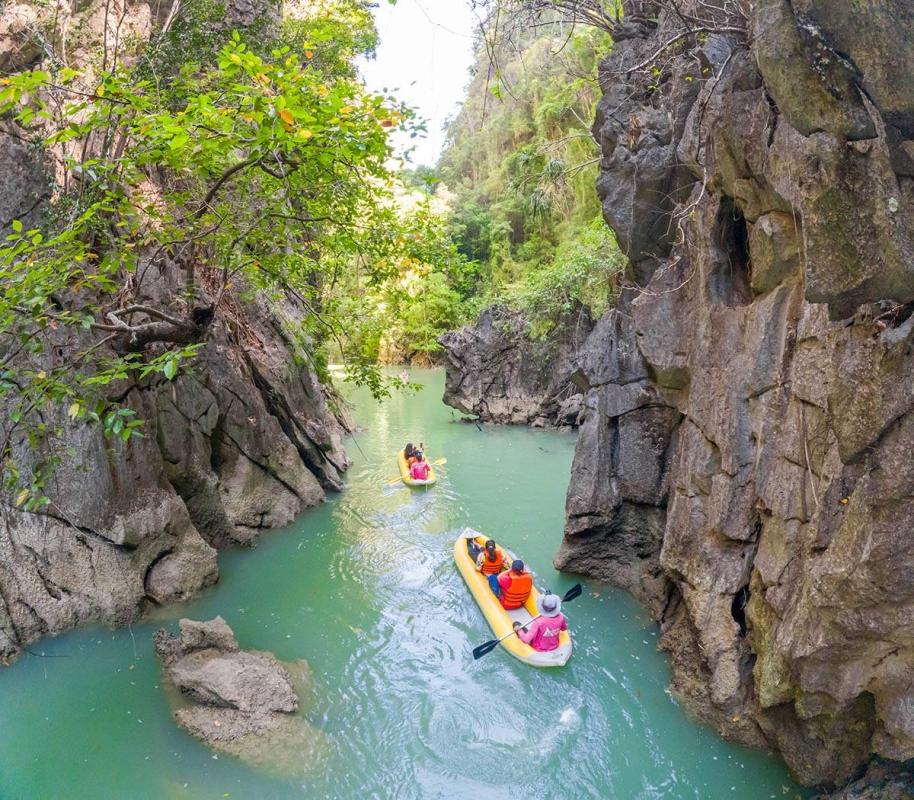
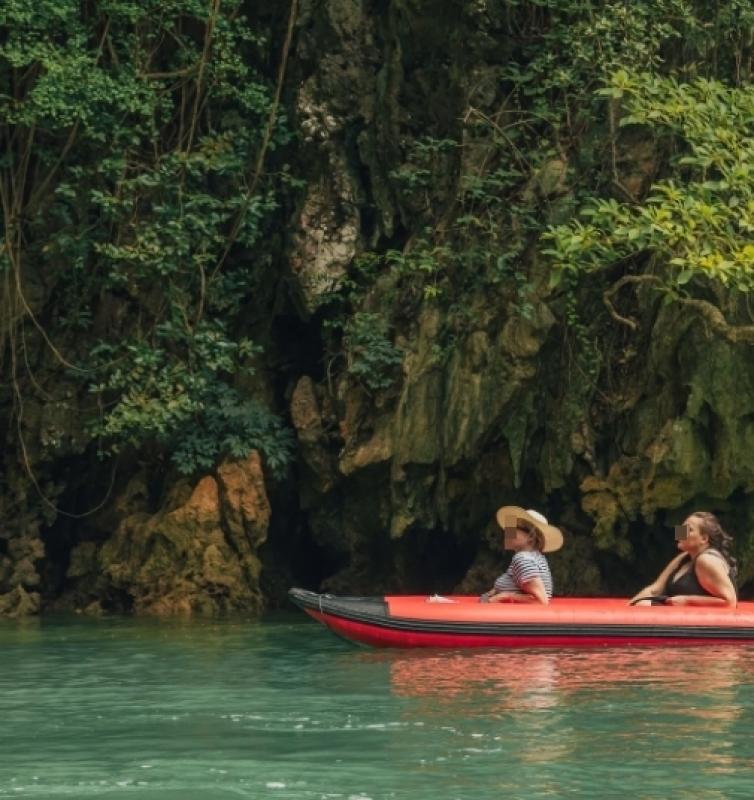
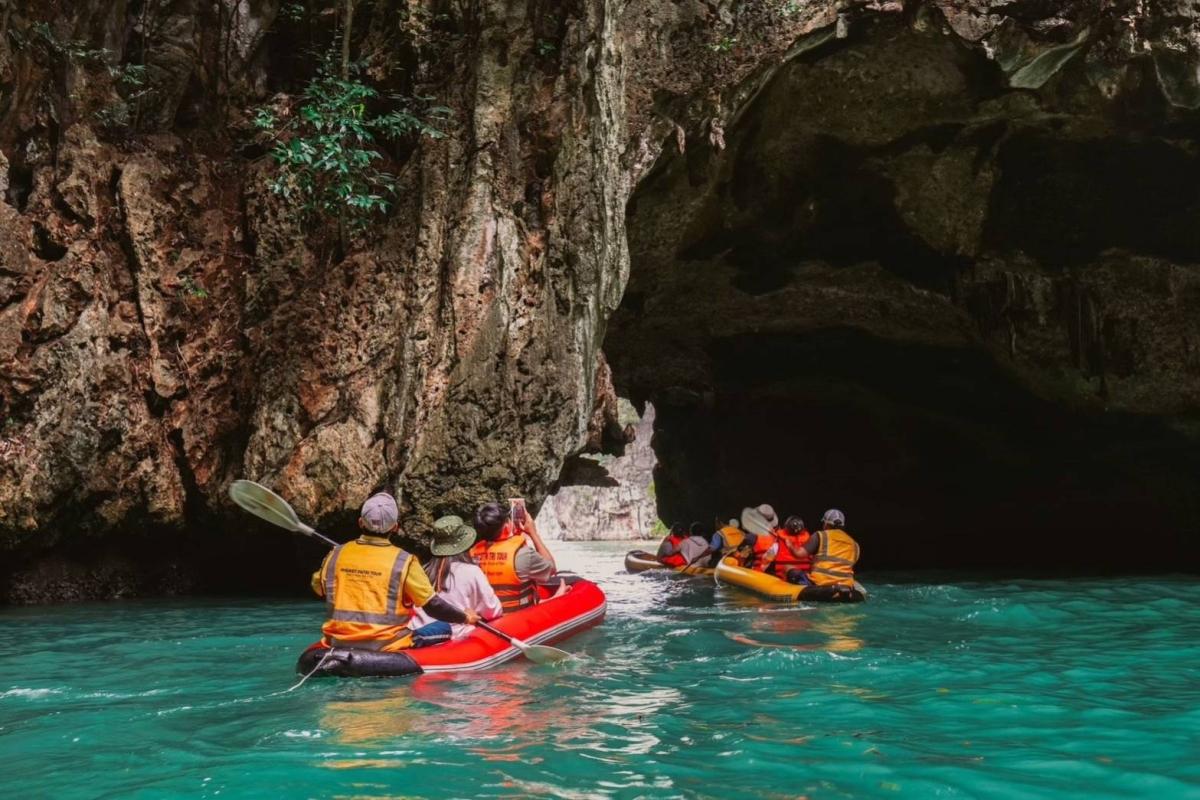
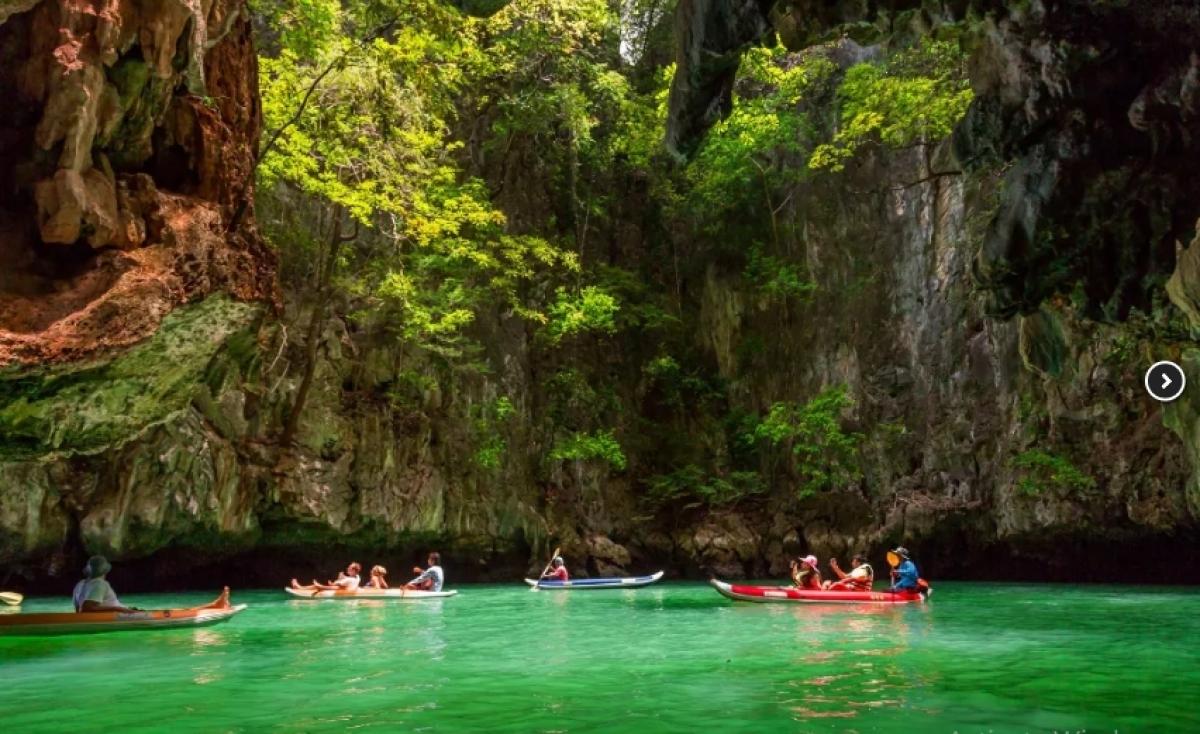
Some of Phang Nga Bay's karsts are hollow, holding lagoons known locally as hongs, accessible only by small inflatable canoe through low cave openings that flood at high tide. Guides paddle visitors through tunnels lined with stalactites into these enclosed pools, where mangroves and limestone walls block outside noise entirely.
Timing depends on tide levels, since some hong entrances are passable only within certain hours of the day. The Phang Nga Bay & James Bond with Canoeing by Big Boat tour combines a stop at Ko Tapu with a canoe trip into one of the bay's hongs, covering both in a single day from Phuket.
Geologists trace the bay's limestone towers to an ancient seabed uplifted and then eroded over millions of years, leaving the harder rock standing as pillars while the surrounding softer stone wore away.
Some operators use local paddlers to steer the canoes through the narrow cave mouths, since currents and low ceilings inside the tunnels can be difficult to navigate without knowledge of the tides.
Private longtail or speedboat charters can also be arranged for visitors wanting to set their own pace through the bay, moving between James Bond Island, Ko Panyi and a hong at times that avoid the busiest tour-boat windows.
The dry season from November to April offers the calmest water for both the main boat routes and the canoe trips into the hongs, along with better visibility for photographs of the karsts. Rain becomes more frequent during the monsoon season from May to October, bringing choppier water, though the bay's sheltered position means trips are canceled less often here than on more exposed island routes further offshore.
Afternoon winds can pick up chop on the open crossings between Phuket or Krabi and the bay's interior, so operators generally schedule the return leg before conditions worsen later in the day.
Boats generally still run through short rain showers common in the shoulder months, since squalls in the bay tend to pass quickly without disrupting a full day's itinerary.