
Free Cancellation
-high.jpg&w=1920&q=75 "Best of Bucharest Private Tour 2h")
-high.jpg&w=1920&q=75 "11 Days Offer Tour in Romania")
-high.jpg&w=1920&q=75 "7 Days Discover in Transylvania")
-high.jpg&w=1920&q=75 "8 Days Offer Experience Transylvania")
-high.jpg&w=1920&q=75 "Bulgarian Sea Side 2 Days")
-high.jpg&w=1920&q=75 "4 Days Dracula City Break Tour")
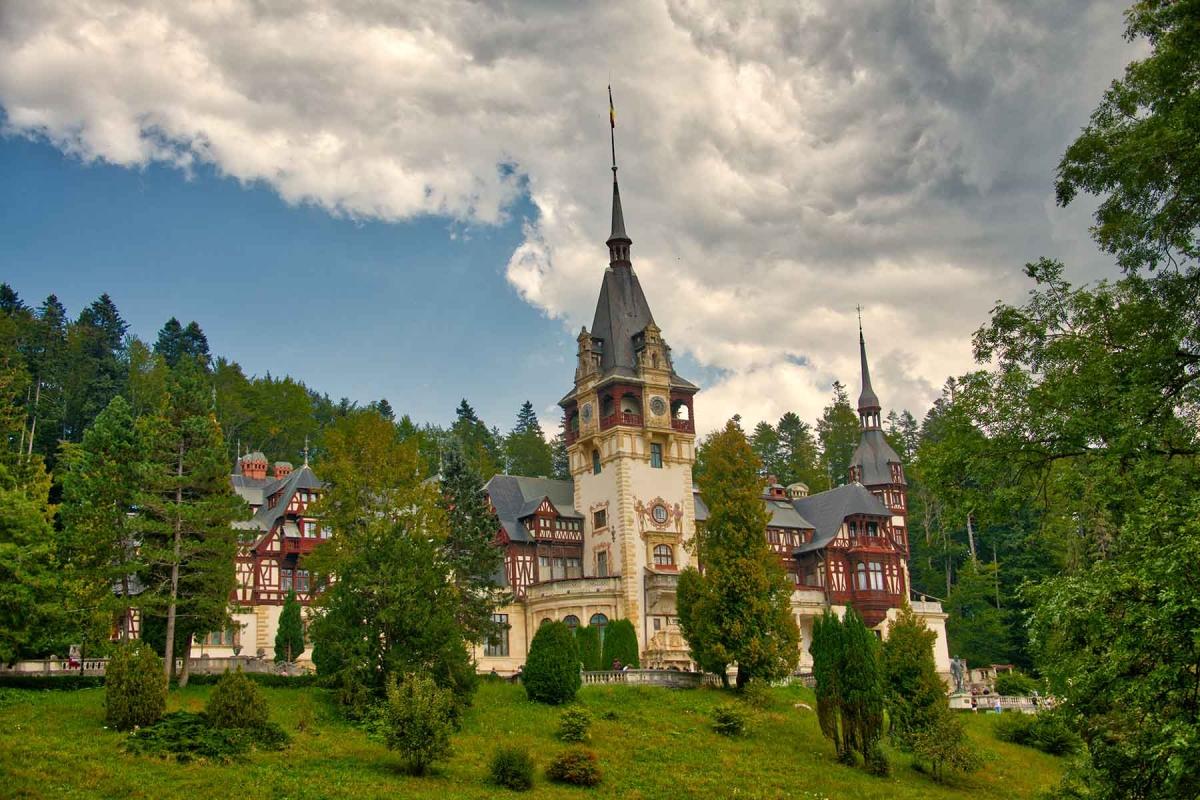
Bucharest earned the nickname "little Paris" in the early 20th century for its belle-epoque boulevards, ornate villas and a triumphal arch modeled on its French counterpart, a period of urban planning that reshaped the city under King Carol I and his successors. That era sits alongside a very different chapter of the city's history, visible in the Palace of Parliament, a communist-era building so large it remains one of the heaviest structures on earth. Most visits begin here as part of a wider Romania tour, with Bucharest serving as the country's main international gateway.
Romania's capital sits on the Wallachian plain south of the Carpathian mountains, a flatter and more urban counterpoint to the fortified Saxon towns further north. Decades of redevelopment under Nicolae Ceausescu reshaped large parts of the city center in the 1980s, and the contrast between surviving belle-epoque streets and the scale of communist-era construction is part of what makes Bucharest worth a dedicated stop rather than a quick overnight before heading to Transylvania.
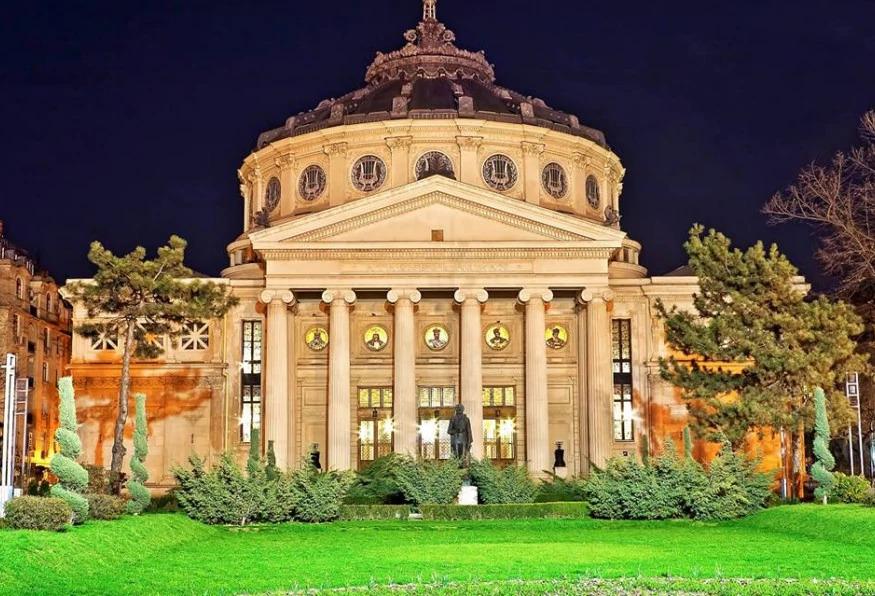
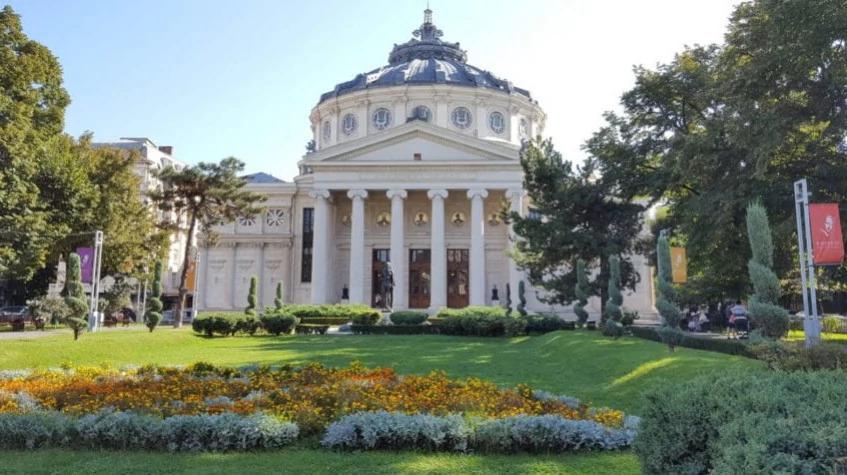
The Calea Victoriei corridor and the streets around Cismigiu Gardens preserve the architecture that gave Bucharest its "little Paris" reputation, including the Romanian Athenaeum concert hall and a series of early 20th-century banks and mansions built by a wealthy merchant class. Arcul de Triumf, built to commemorate Romania's role in the First World War, stands at the northern end of this district and echoes the Parisian monument it was designed to recall. The CEC Palace, an ornate former savings bank on Calea Victoriei completed in 1900, is another landmark from this period, its glass dome visible along much of the surrounding boulevard. This period of architecture reflects a deliberate push by Romanian elites of the time to align the capital with Western European capitals rather than its Ottoman-influenced past, with wide boulevards radiating from public squares in a layout modeled on Haussmann's Paris.
Commissioned by Nicolae Ceausescu in the 1980s, the Palace of Parliament required the demolition of a large section of the historic city center to clear space for its construction. The finished building holds the record for the heaviest administrative building in the world and remains one of the largest by floor area anywhere, with hundreds of rooms finished in Romanian marble and wood. Construction relied on a large workforce and consumed a significant share of the country's building material output through the decade it took to complete. Guided tours cover a portion of the interior and give context on both the construction project itself and the neighborhood it replaced.
Nearby, the People's Salvation Cathedral, completed in the 2010s, adds a large modern Orthodox landmark to the same part of the city, a reminder that Bucharest's large-scale construction projects continued long after the communist era ended. Seeing both buildings on the same visit gives a sense of how the city has approached monumental architecture across two very different political periods.
Bucharest's Old Town, known locally as Lipscani, has been restored into a walkable district of narrow streets, cafes and surviving merchant houses from the city's trading era. Stavropoleos Church, tucked among the district's streets, is one of the most intact examples of Brancovenesc architecture, a Romanian style that blends Byzantine and Ottoman influences, built in 1724 by the Greek monk Ioanikie Stratonikeas. The Old Princely Court nearby marks the site of a former royal residence linked to Vlad the Impaler, the historical figure behind the Dracula legend that looms larger further north in Transylvania. Manuc's Inn, a restored 19th-century caravanserai a short walk from the court, gives a sense of the trading-post character the district held before its belle-epoque makeover.
Away from the old town, the National Museum of Art of Romania occupies the former Royal Palace on Revolution Square and holds the country's largest collection of Romanian and European painting, while the open-air Village Museum on the shore of Herastrau Lake reassembles traditional houses gathered from across Romania's regions. Cismigiu Gardens, laid out in the 1860s and among the oldest public parks in the city, remains a central gathering spot within walking distance of the Old Town. Herastrau Park itself gives Bucharest its largest green space, with walking paths around the lake that offer a break from the density of the center. These sites round out a visit to Bucharest beyond the Old Town and Palace of Parliament.
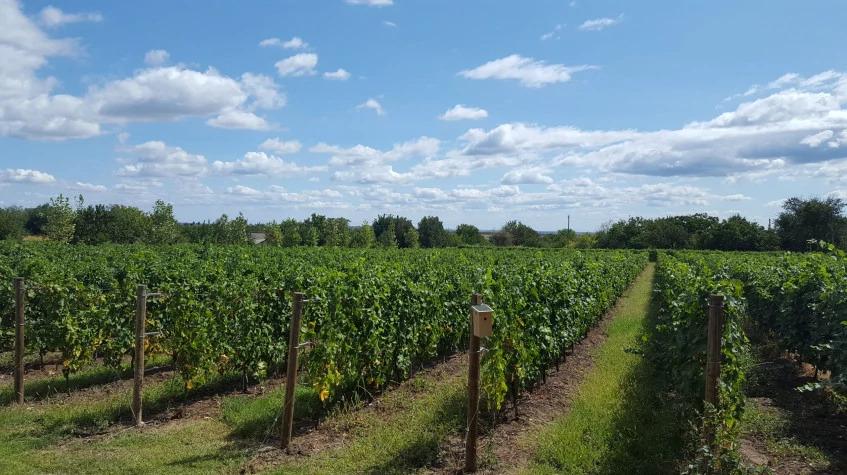
Most multi-day Romania itineraries treat Bucharest as the starting or ending point of a route that continues north into Transylvania, using the city's rail and road connections to reach Brasov, Sibiu and Sighișoara. The surrounding region also produces wine, and vineyards within reach of the capital give visitors an option to explore Romanian wine country without leaving on a multi-day trip. For travelers looking to add a half-day outside the city itself, the Wine Tasting Tour from Bucharest covers this side of the region. Within the city, the metro connects the airport, the main rail stations and the city center directly, making Bucharest straightforward to navigate before or after a longer trip north.
Spring and early autumn bring mild weather for combining a day or two in Bucharest with the start of a longer route north, while summer heat on the Wallachian plain can be intense compared to the mountain towns ahead. Winter is quieter and colder, with Christmas markets around the city center adding a seasonal reason to begin a trip here in December. Autumn foliage in Cismigiu Gardens and Herastrau Park adds a further seasonal highlight for visitors passing through in October.