
Free Cancellation
Cape Verde Tours cover an archipelago of ten volcanic islands roughly 570 kilometers off the coast of West Africa, a former Portuguese colony that gained independence in 1975. The islands split into two groups, Barlavento in the north and Sotavento in the south, each with a distinct landscape shaped by centuries of volcanic activity and trade winds off the Atlantic.
Cape Verde sits within a wider Africa itinerary for some travelers, though its geography and Portuguese Creole culture set it apart from the mainland. Most trips focus on one or two islands rather than the full archipelago, given that inter-island travel relies mainly on short domestic flights.
Sal and Boa Vista are Cape Verde's main beach destinations, both known for long stretches of white sand and steady Atlantic winds that draw windsurfers and kitesurfers throughout the year. Boa Vista's dunes extend further inland than on most of the other islands, while Sal's resorts around Santa Maria are built around some of the archipelago's most consistent conditions for water sports.
Fogo takes its name, Portuguese for fire, from the active volcano at its center, which last erupted in 2014 and 2015. The crater sits at roughly 2,829 meters, and the hike to its rim passes through Chã das Caldeiras, a settlement inside the volcano's outer caldera where vineyards grow in the volcanic soil despite the surrounding lava fields.
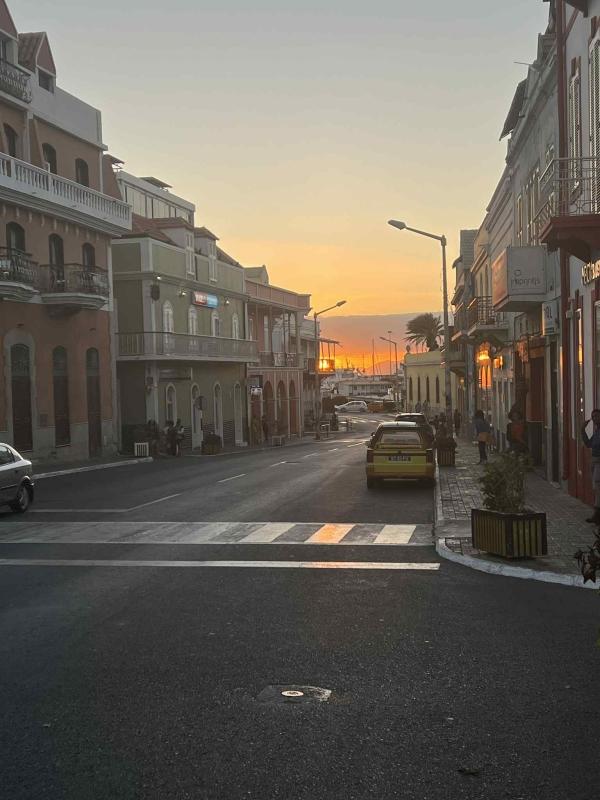
São Vicente's main town, Mindelo, is the cultural center of Cape Verde and the birthplace of morna, the musical style made internationally known by singer Cesária Évora. Live music venues around the town's colonial-era streets and harbor keep that tradition active, alongside a February carnival considered one of the largest in West Africa. The São Vicente Island Tour covers the island's coastline and Mindelo in a single full day, combining beaches with the town's music and colonial architecture.
Santiago is the largest island and home to Praia, Cape Verde's capital, along with Cidade Velha, the country's oldest town and a UNESCO World Heritage Site dating to the earliest years of Portuguese settlement in the fifteenth century. Its markets and mountainous interior offer a different pace than the beach islands to the north, with African cultural influences more visible than on the more Portuguese-oriented islands of Sal and São Vicente.
Given the distances between islands, most tour operators build itineraries around short flights or ferries connecting two or three islands, typically pairing a beach base on Sal or Boa Vista with a more active stop on Fogo or Santo Antão, known for its hiking trails through volcanic valleys. Beach packages that stay on a single island are also common for travelers whose main goal is sun and water sports rather than covering multiple destinations.
Cape Verdean cuisine centers on cachupa, a slow-cooked stew of corn, beans and whatever fish or meat is available, considered the country's national dish. Music runs alongside food as a defining part of island life, with morna's slower rhythms in the north giving way to the faster funaná and coladeira styles more common on Santiago and the southern islands.
Cape Verde's dry season runs from November to July, with warm temperatures year-round due to its tropical latitude and moderating Atlantic winds. The brief rainy season between August and October brings occasional showers, mainly to the more mountainous islands such as Santiago and Fogo, while the beach islands of Sal and Boa Vista stay largely dry throughout the year.