
Free Cancellation
Gabon Tours introduce travelers to a Central African country where rainforest covers more than 80 percent of the land, one of the highest forest cover ratios of any country in the world. Straddling the equator on the Atlantic coast, Gabon built much of its tourism around thirteen national parks established in 2002, protecting lowland gorillas, forest elephants and a stretch of coastline where wildlife regularly reaches the sand itself.
As part of a wider Africa itinerary or as a dedicated wildlife trip, Gabon Tours are led by specialist guides rather than followed independently, since the country's parks lie deep in forest with limited infrastructure. Most visits are organized around one or two parks rather than an attempt to cover the country broadly.
Loango National Park, on the central Atlantic coast, is Gabon's most recognized protected area, known for forest elephants that walk out of the tree line onto open beaches and for hippos that wade and sometimes swim in the ocean surf, a habit that has earned them the nickname "surfing hippos." Lowland gorillas and forest buffalo also inhabit the park's mix of rainforest, lagoon and savanna, though sightings depend on tracking with local guides rather than fixed viewing points.
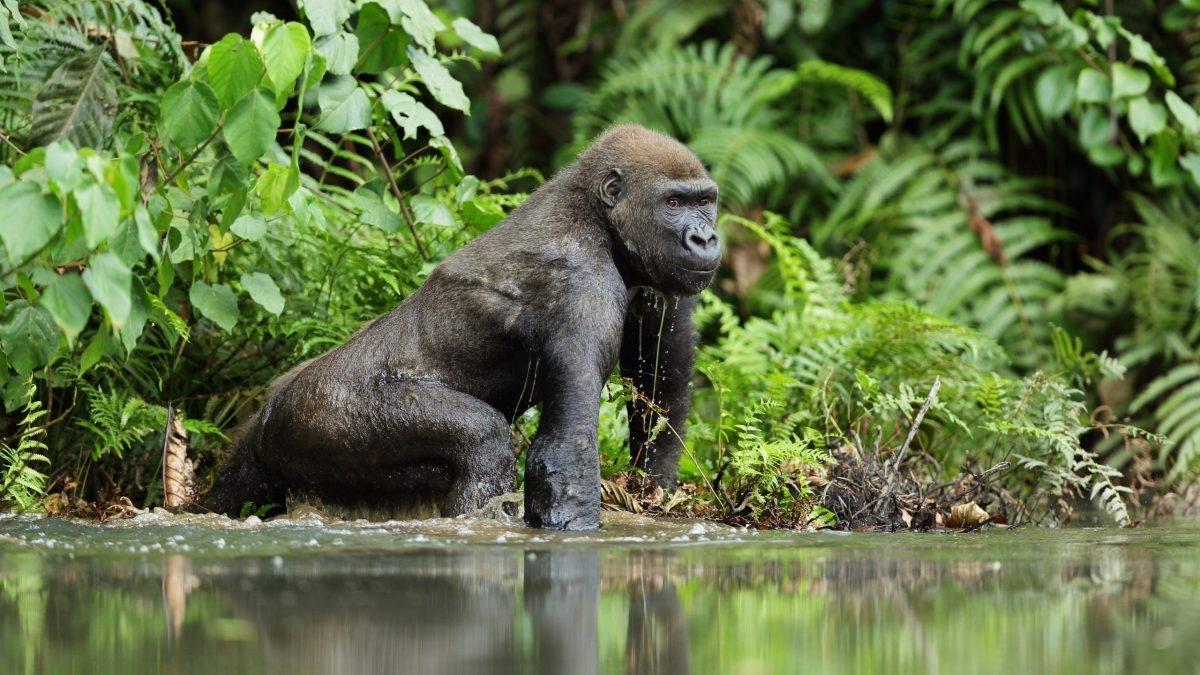
Gabon's forests hold one of the largest populations of forest elephants remaining in Africa, a smaller and more forest-adapted relative of the savanna elephant found further east and south on the continent. Western lowland gorillas live in dense, humid forest across several of the country's parks, and tracking them typically involves walking with trackers who follow fresh signs rather than habituated groups used to regular visitors. Outside the parks, Gabon's coastline and river systems support additional populations of hippos, crocodiles and marine turtles that nest on undeveloped beaches away from Loango itself.
Libreville, Gabon's capital and largest city, sits on the estuary of the Komo River and serves as the country's main international gateway. Founded in 1849 as a settlement for freed slaves, the city today functions mainly as a starting and ending point for wildlife trips into the interior rather than as a destination in itself.
Given the country's limited independent infrastructure, Gabon Tour Packages generally bundle domestic flights or boat transfers, park permits and guiding into a single itinerary. The Gabon: Gorillas and More – 5 Days covers gorilla tracking alongside the country's other wildlife over a five-day itinerary, a typical length for a focused visit to one or two parks.
Gabon's national park network was created in 2002 partly in response to steep declines in Central African forest elephant and gorilla populations from poaching and logging elsewhere on the continent. Tourism remains small in scale compared to East African safari destinations, and entry to the parks depends on permits arranged in advance through licensed operators rather than walk-up access.
Gabon sits on the equator and stays warm and humid throughout the year, with two drier stretches, roughly June to August and December to February, that make forest tracking and beach access easier. The wetter months bring heavier rainfall, particularly from March to May, when some park roads become harder to pass.