Free Cancellation
-high.jpg&w=1920&q=75 "2 Days the Ultimate Virtual Tour of Bulgaria Tour")
-high.jpg&w=1920&q=75 "6-Day Bulgaria Adventure: Discover Culture & History")
-high.jpg&w=1920&q=75 "15 Days Bulgaria Greek Island Combined Tour")
-high.jpg&w=1920&q=75 "11 Days Bulgaria Greece Combined Tour")
-high.jpg&w=1920&q=75 "9 Days Bulgaria Greece Combined Tour")
-high.jpg&w=1920&q=75 "Ultimate 4-Day Bulgaria Tour: History, Culture & Scenic Views")
-high.jpg&w=1920&q=75 "Bulgaria in 8 Days: A Journey Through Heritage & Nature")
-high.jpg&w=1920&q=75 "Explore Bulgaria in 5 Days: Ultimate Tour Experience")
-high.jpg&w=1920&q=75 "8 Days Highlights of Bulgaria Tour")
-high.jpg&w=1920&q=75 "7 Days Bulgaria Tour Package")
-high.jpg&w=1920&q=75 "Bulgaria Highlights: Sofia, Rila, Plovdiv & Veliko Tarnovo – 9-Day Private Tour")
-high.jpg&w=1920&q=75 "11 Days Bulgaria Holiday Package")
-high.jpg&w=1920&q=75 "11 Days Grand Balkan Tour Starting from Bulgaria")
Sofia Tours introduce travelers to Bulgaria's capital and largest city, set on a high plain at the foot of Vitosha Mountain in the western part of the country. Few European capitals combine as many layers of history in one compact center: Thracian and Roman foundations, a Byzantine church that gave the city its name, Ottoman-era mosques and baths, and grand early twentieth-century buildings from the years after Bulgarian independence. As the country's political and economic hub, Sofia also serves as the natural starting point for a longer Bulgaria itinerary.
The city was founded by the Thracians and later developed as the Roman city of Serdica, a name still used for the Roman ruins uncovered in the modern center. Its position at a crossroads between Central Europe, the Balkans and the Black Sea kept Sofia relevant through Byzantine, Ottoman and modern Bulgarian rule, and much of that history is visible within walking distance of the main squares. The city became Bulgaria's capital in 1879, shortly after the country gained autonomy from Ottoman rule, and much of its current center was laid out in the following decades.
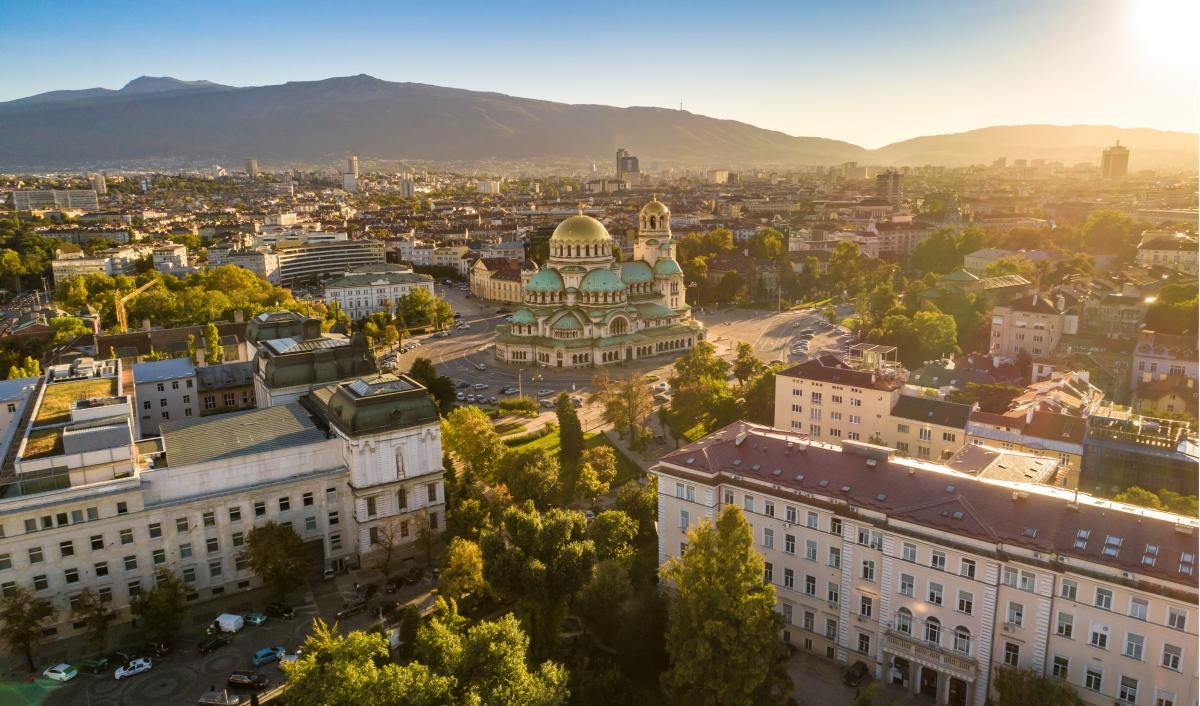
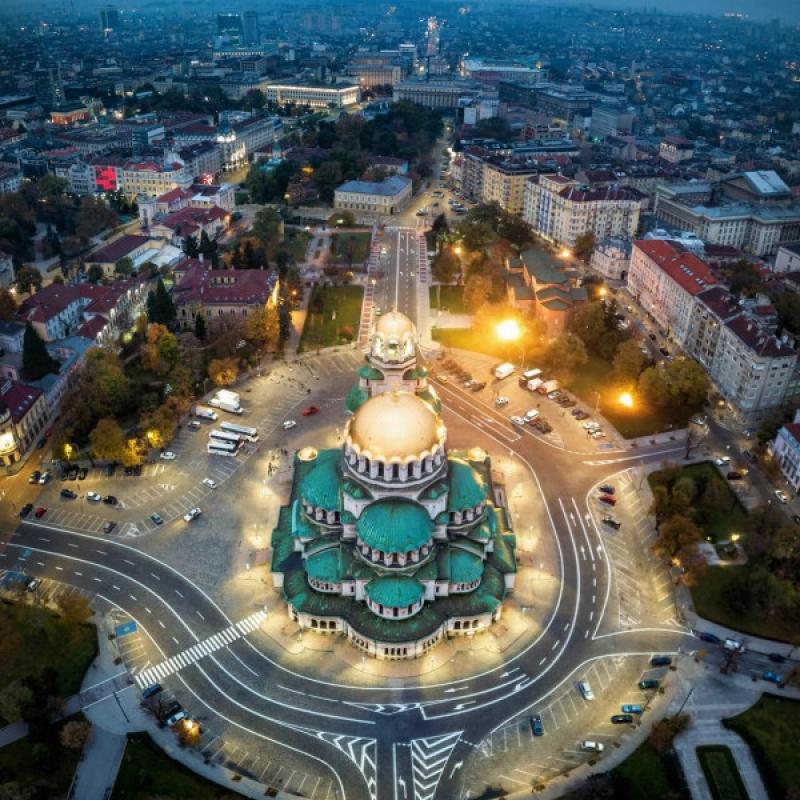
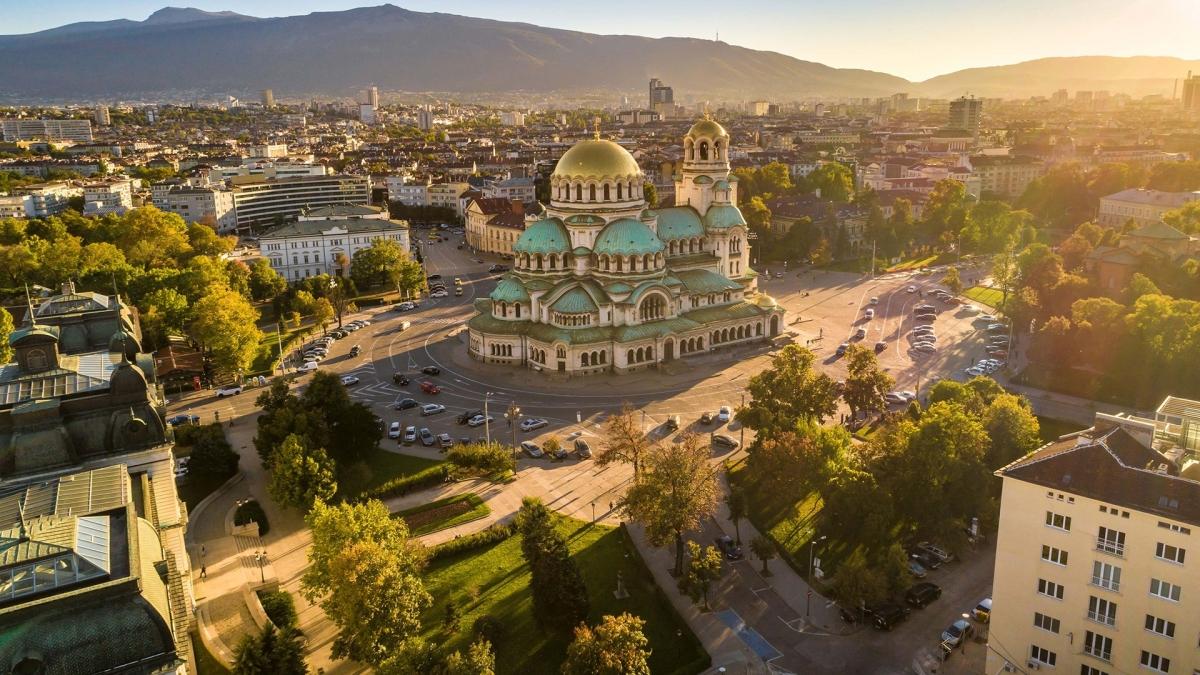
Built in the early twentieth century to honor Russian soldiers who died during Bulgaria's war of liberation, this neo-Byzantine cathedral is the largest of its kind in the Balkans and remains the most recognized symbol of the city, with a crypt housing a collection of Bulgarian religious icons.
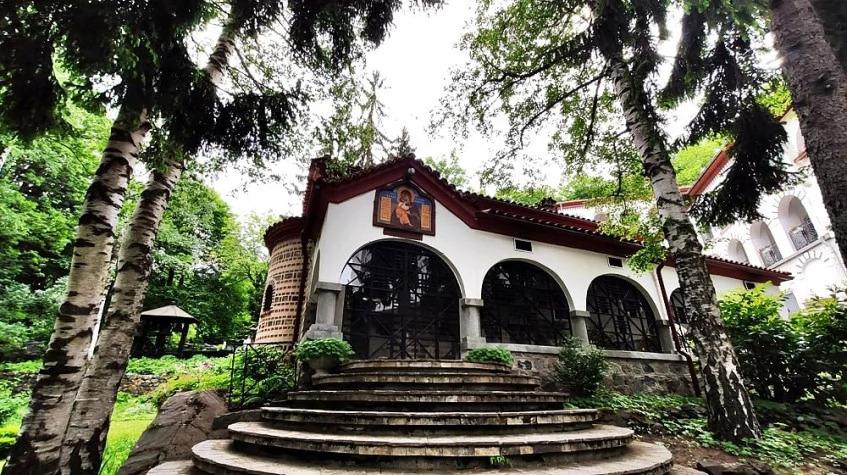
Located on the slopes of Vitosha at the edge of the city, Boyana Church is a UNESCO World Heritage Site known for medieval frescoes dating to the thirteenth century, considered among the best-preserved examples of Eastern European medieval art.
Excavated during the construction of Sofia's metro system, the ruins of Roman Serdica now sit in an open-air display in the city center, surrounded by later Ottoman and Bulgarian buildings and connected directly to a metro station entrance.
This sixth-century Byzantine church gave the city its present name and stands near Alexander Nevsky Cathedral, marked outside by an eternal flame commemorating Bulgaria's unknown soldiers.
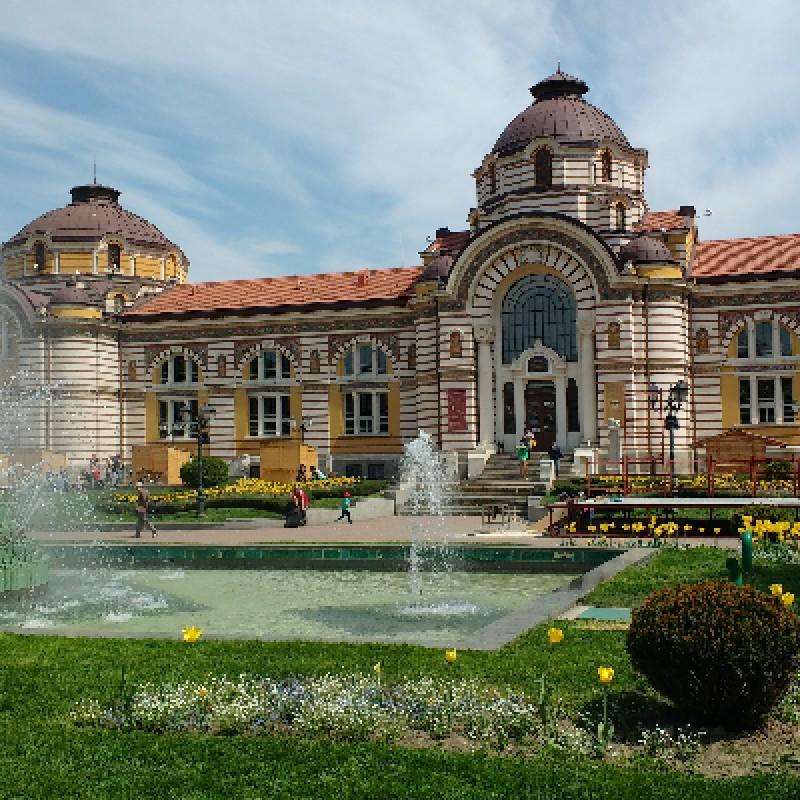
Banya Bashi Mosque, built in the sixteenth century, stands near the city's historic mineral baths and remains an active place of worship. The former Central Mineral Baths building next to it, decorated with colorful tilework, now houses the Sofia History Museum, while public taps nearby still draw natural hot water that residents collect for daily use. The baths themselves date to Roman times, when Serdica was already known as a spa town built around the same thermal springs that still surface in the modern city center.
Rising directly above the southern edge of Sofia, Vitosha Mountain gives the capital an unusual advantage among European cities: hiking trails, mountain huts and a ski area are reachable within roughly half an hour of the center. Cable cars and chairlifts operate for both summer walkers and winter skiers, and clear days offer views back over the entire city from the upper slopes.
The National Archaeological Museum occupies a former mosque building close to the Serdica ruins and displays finds ranging from Thracian gold to Roman sculpture. Nearby, the National History Museum holds a broader collection covering Bulgaria's medieval kingdoms through the twentieth century, and both institutions work well as an introduction before exploring the archaeological sites scattered through the city center.
Vitosha Boulevard, the main pedestrian street running south from the National Palace of Culture, is lined with shops and cafes and forms the modern commercial spine of Sofia. A short walk away, the Ladies' Market on Stefan Stambolov Boulevard has operated as an open-air produce and goods market for more than a century, offering a more local counterpoint to the boulevard's shopping.
Rila Monastery, founded in the tenth century and inscribed as a UNESCO World Heritage Site, sits around two hours south of the capital in the Rila Mountains and is the most common day excursion from Sofia. Its frescoed courtyard and striped stone tower are considered a high point of Bulgarian religious architecture, and the monastery complex also includes a museum of monastic artifacts and manuscripts.
Sofia tour packages typically combine the historic center with excursions into the surrounding mountains, pairing city sightseeing with active options such as the 2 Days Sofia Adventure Vitosha Mountain Tour, which extends a city stay into the adjoining mountain.
Sofia's metro network, along with trams and buses, connects the airport, the city center and outlying districts, while the historic core itself is compact enough to explore on foot between the cathedral, Serdica ruins and Vitosha Boulevard. Sofia Airport, the country's main international gateway, sits a short distance east of the center and links directly to the city by metro, so most visitors reach the historic core without arranging a separate transfer. The base station for the Vitosha cable cars lies a short drive from the center, making the mountain easy to reach without a rental car, and the same tram and metro lines extend out toward the main railway station for onward travel elsewhere in Bulgaria.
April through June and September through October bring mild temperatures suited to walking tours of the center and day trips into the mountains. Winter turns Vitosha into a functioning ski destination close to the capital, while July and August are the warmest months in the city itself.