
Italy Pompei Tours
100+ tours & activities

Free Cancellation
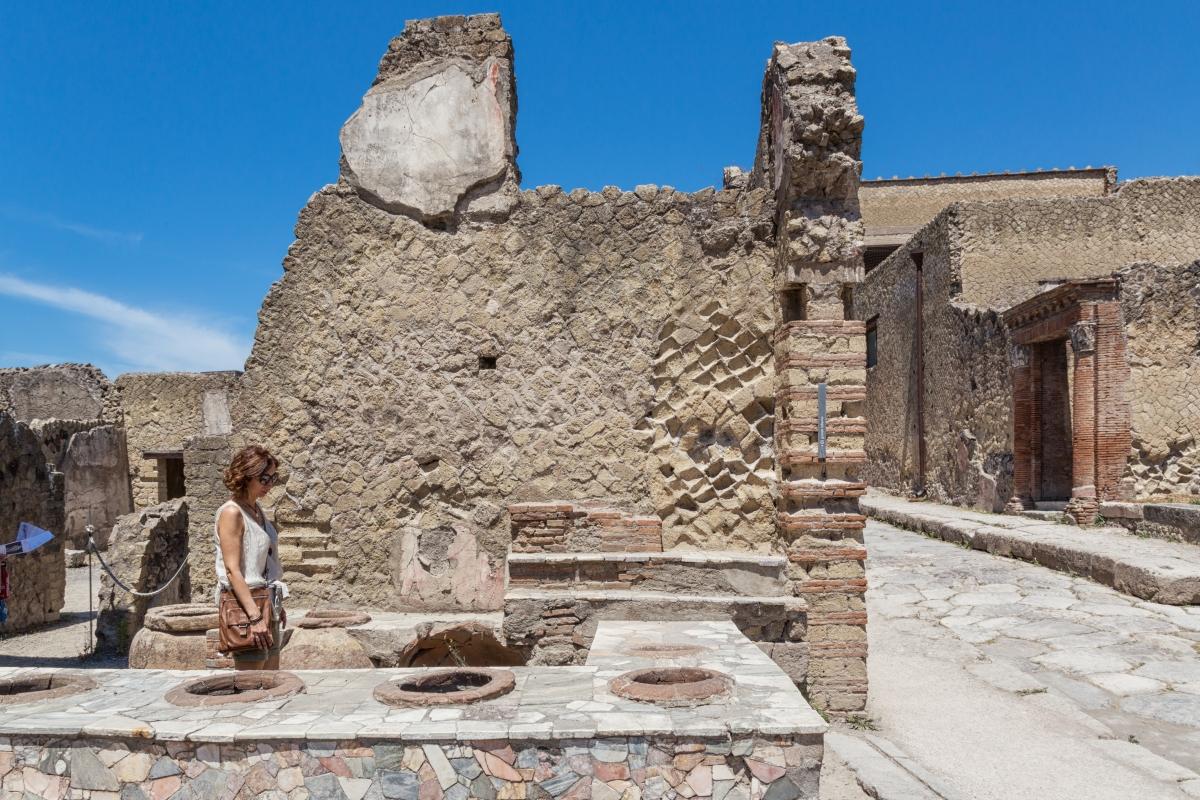
Discover Pompeii: Buried City Walking Tour
Free Cancellation
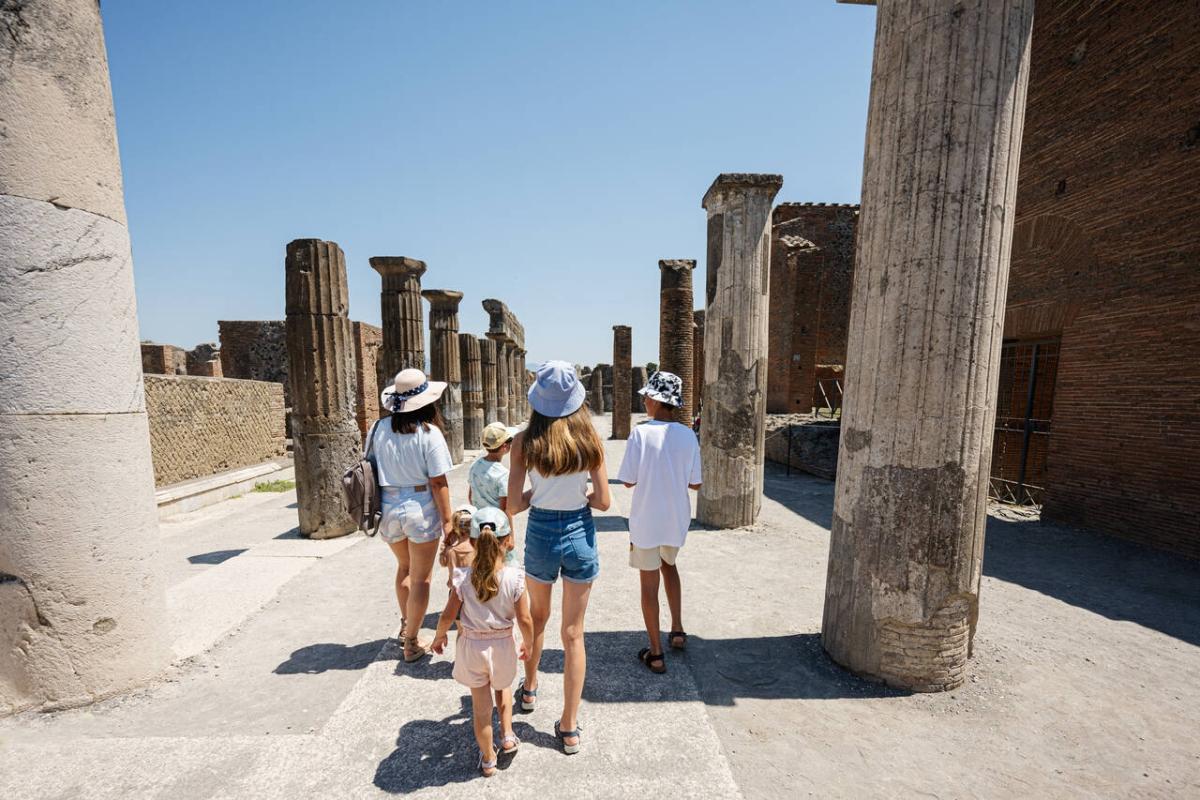
Pompeii: Smart Audio Guide & Skip-the-Line Ticket
-high.jpg&w=1920&q=75 "3 Days Napoli City Italy Break Tour")
Free Cancellation
3 Days Napoli City Italy Break Tour
Free Cancellation
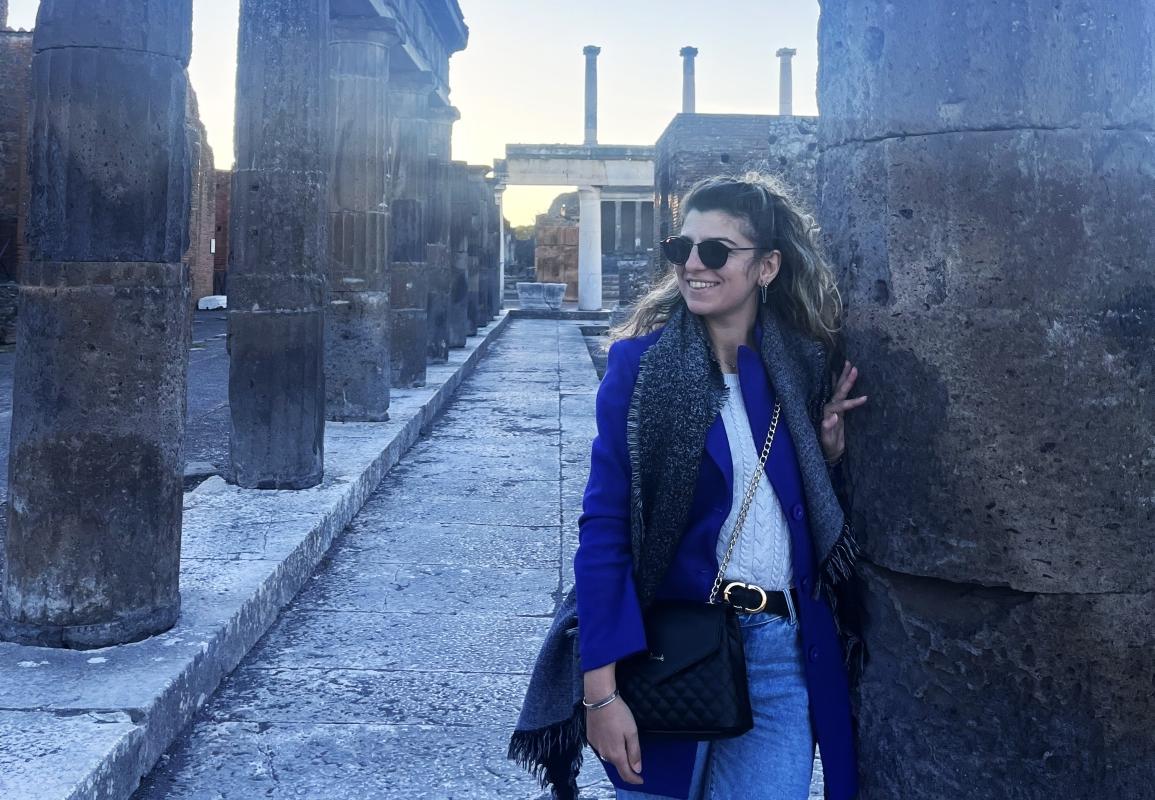
Transfer Tour: Visit Pompeii on Your Way to Matera from Naples
-high.jpg&w=1920&q=75 "13 Day The Jewels of the South Italy and Sicily Tour")
Free Cancellation
13 Day The Jewels of the South Italy and Sicily Tour
-high.jpg&w=1920&q=75 "9 Day Central and South of Italy Tour")
Free Cancellation
9 Day Central and South of Italy Tour
Free Cancellation
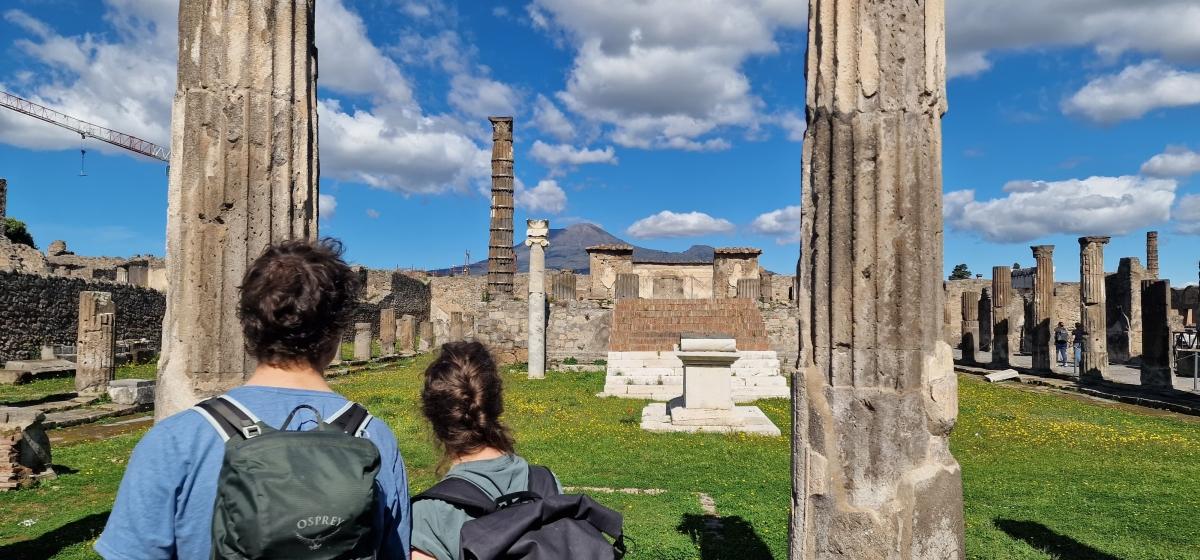
From Naples: Pompeii daily shared tour
Free Cancellation
Best of Naples Amalfi Coast 4 Days
-high.jpg&w=1920&q=75 "From Naples: Amalfi Coast & Pompeii Guided Tour with lunch – shared group")
-high.jpg&w=1920&q=75 "Full-Day Pompeii and Mt. Vesuvius Tour with Tickets and Lunch from Naples")
Free Cancellation
Day tour from Naples to Capri and Pompeii - shared tour
-high.jpg&w=1920&q=75 "Three Day Tour of Rome And Pompei")
Free Cancellation
Three Day Tour of Rome And Pompei
Free Cancellation
Amalfi Coast and Pompeii Tour from Naples
Free Cancellation
Excursion from Rome to Amalfi and Pompeii
Free Cancellation
Shuttle Bus Naples Pompeii
Explore Italy Pompei Tours
About Italy Pompei Tours
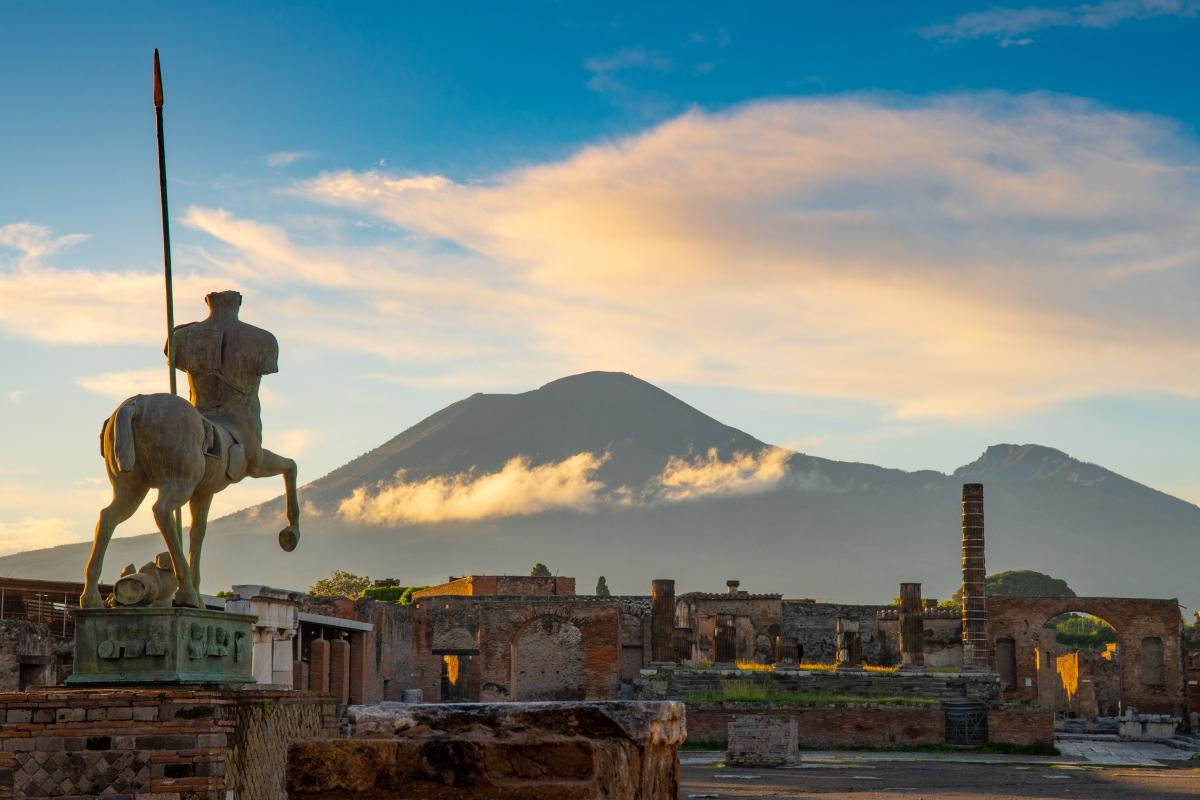
Pompei preserves a Roman city buried by the eruption of Mount Vesuvius in 79 AD, sealed under volcanic ash and pumice so quickly that streets, homes and everyday objects survived largely intact for nearly two thousand years. The ruins sit close enough to Naples that visits are often arranged as part of a longer Italy Tours route through the region.
Pliny the Younger watched the eruption from across the bay and left the only surviving eyewitness account, describing a cloud shaped like an umbrella pine rising over the mountain before ash began falling on the city. Modern volcanological study has reconstructed the eruption in two main phases, an initial fall of pumice that gave residents time to flee followed by fast-moving pyroclastic flows that killed those who remained, including at nearby Herculaneum. Excavations began in the 18th century and continue today, with roughly two-thirds of the 44-hectare site uncovered so far. The site takes its name from the ancient city itself, distinct from the modern town of Pompei that grew up around the ruins in the 19th century, anchored by the Pontifical Shrine of the Blessed Virgin of the Rosary. At the time of the eruption, Pompei is thought to have had a population of somewhere between ten and twenty thousand people, a mix of merchants, farmers, enslaved laborers and wealthy landowners whose villas ringed the city.
The Forum and Public Buildings
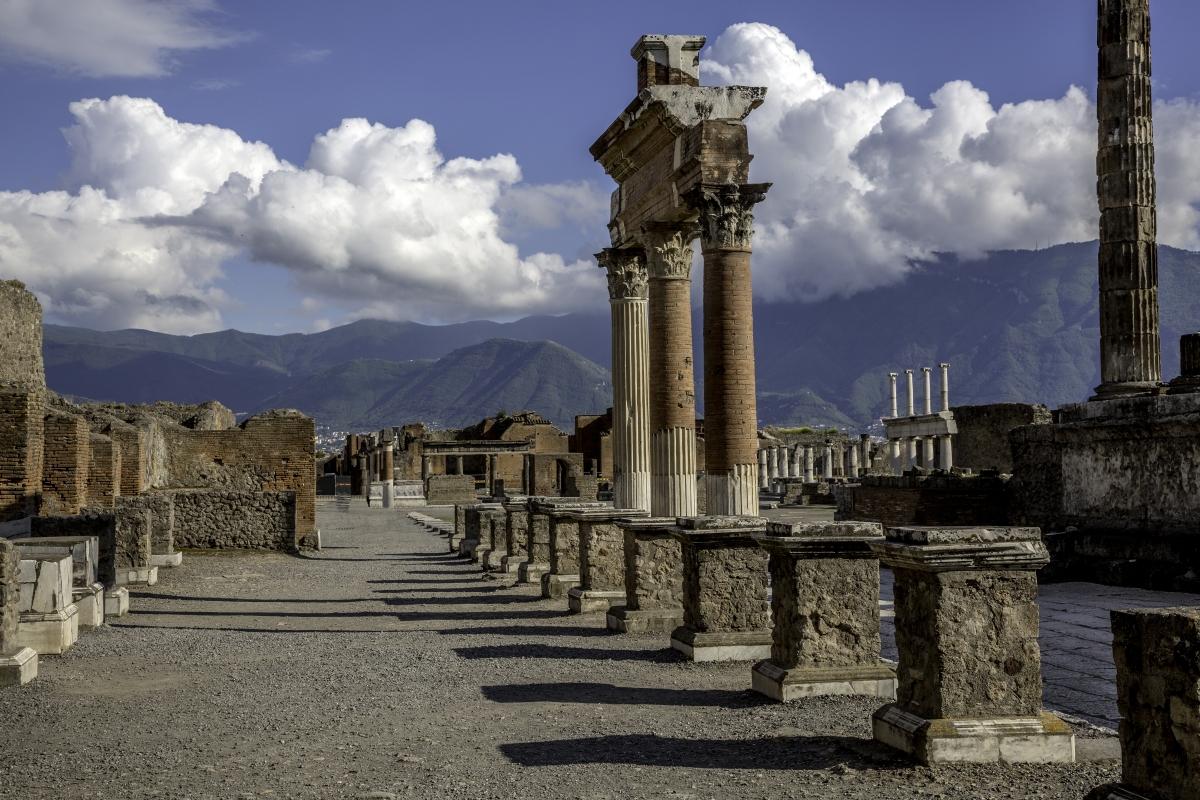
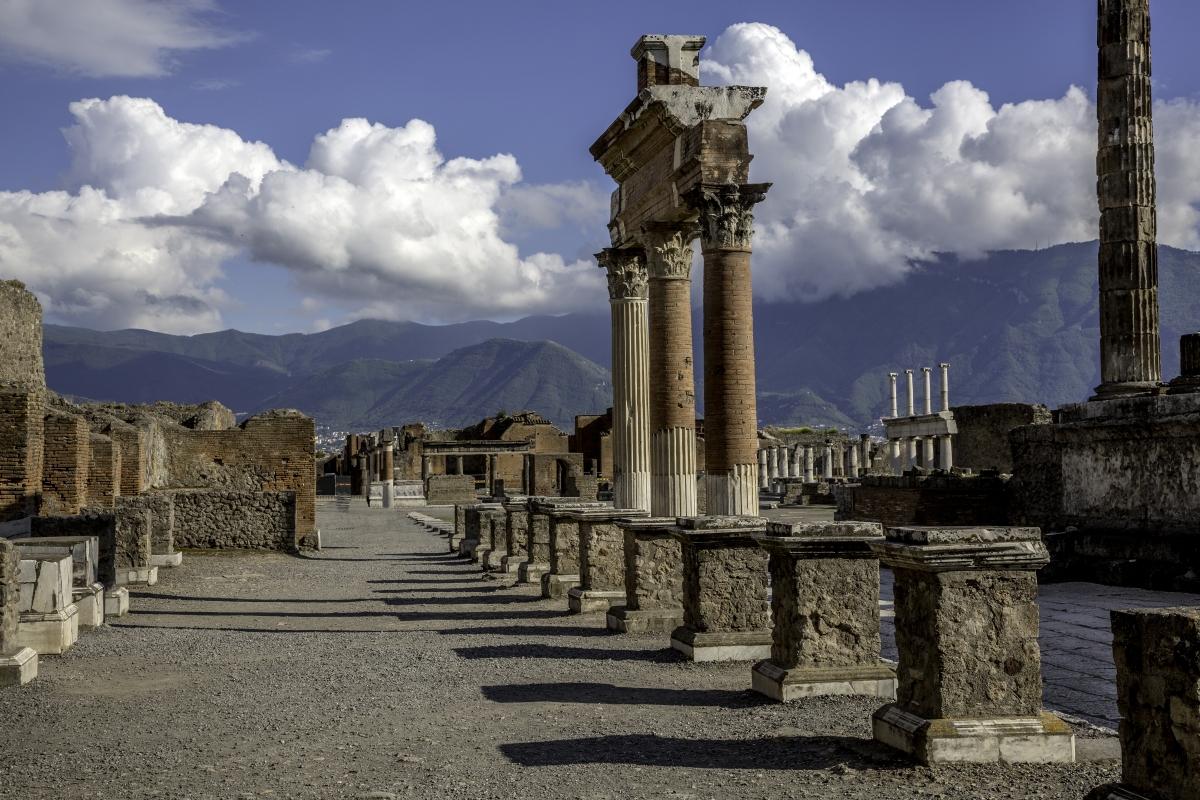
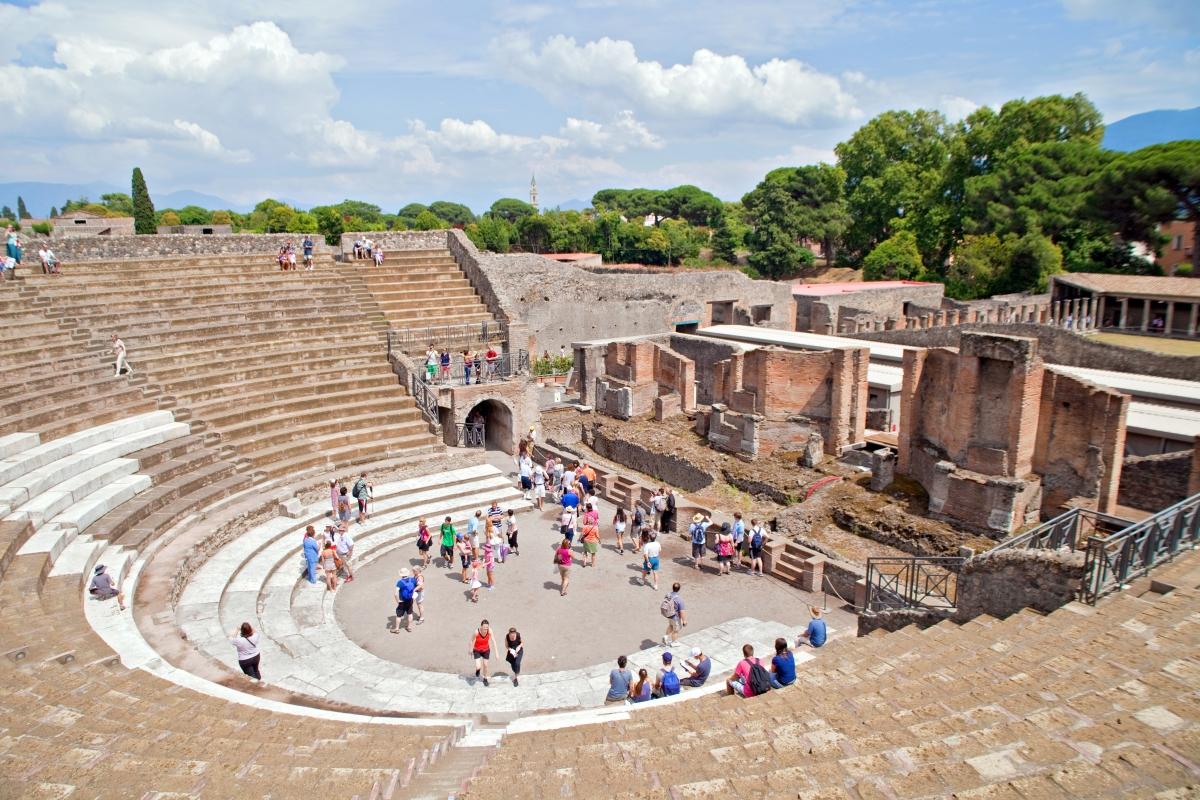
Pompei's forum formed the civic and religious center of the city, framed by the Temple of Jupiter, a basilica used for legal and commercial business, and covered markets that once supplied its households. The Temple of Apollo, standing at the edge of the forum, predates Roman control of the city and reflects Pompei's earlier Samnite and Greek influences before it became a Roman colony in 80 BC. Nearby, the amphitheater, built around 70 BC, ranks among the oldest surviving Roman amphitheaters and could seat roughly 20,000 spectators for gladiatorial games, well before Rome's Colosseum was built. In 59 AD, a violent brawl between Pompeian and visiting Nucerian spectators broke out inside the amphitheater and was recorded by the historian Tacitus, an incident that led Rome to ban gladiatorial games in the city for several years. West of the forum, the Stabian Baths preserve a complete Roman bathing complex, with separate men's and women's sections, underfloor heating channels and stucco ceilings that survived the eruption largely intact.
Houses, Frescoes and the Villa of the Mysteries
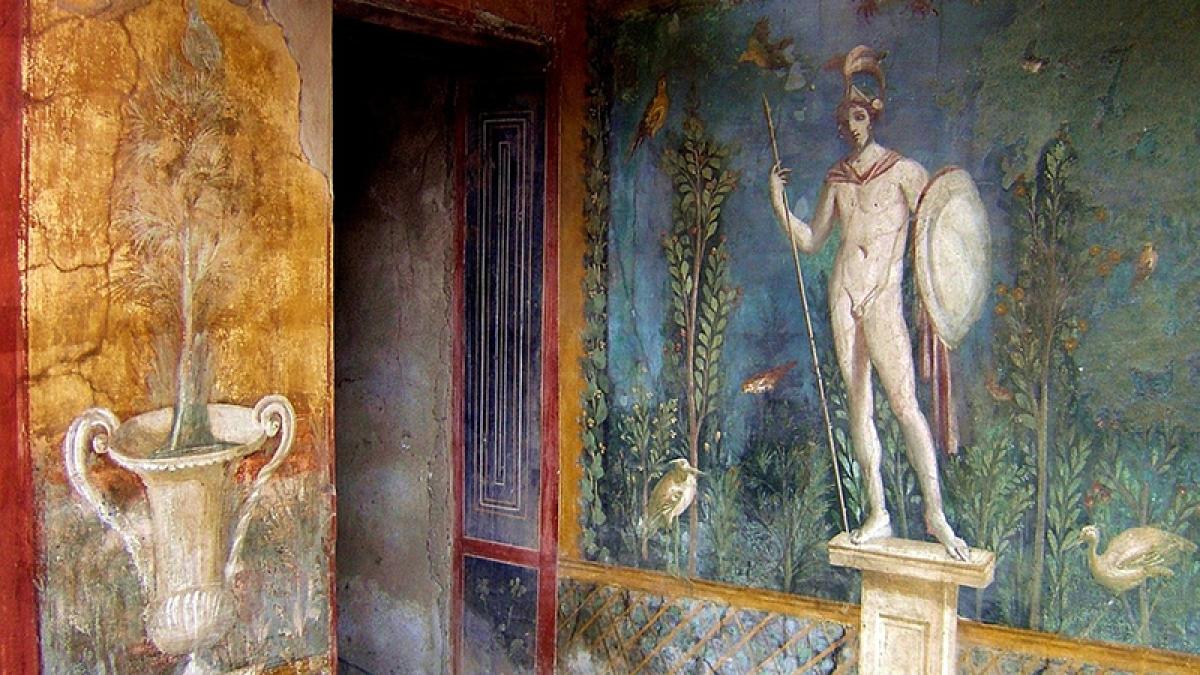
Wealthier residents built elaborate homes decorated with mosaics and wall paintings, and several survive well enough to show how they once looked. The House of the Faun takes its name from a bronze statue found at its entrance and contains the Alexander Mosaic, depicting a battle between Alexander the Great and Darius III. Elsewhere, the House of the Vettii, reopened to the public after a long restoration, preserves some of the site's brightest frescoes, including mythological scenes painted in the deep red now known as Pompeian red. Just outside the city walls, the Villa of the Mysteries holds a nearly complete cycle of frescoes thought to depict initiation rites into a Dionysian cult, among the most intact paintings to survive from the ancient world. The villa itself dates to the 1st century BC, predating the eruption by more than a century, and functioned as a working farm alongside its residential quarters.
The Plaster Casts
In 1863, archaeologist Giuseppe Fiorelli developed a technique of pouring plaster into the voids left in the hardened ash by decomposed bodies, capturing the final positions of victims at the moment of death. These casts, displayed at several points around the site, remain some of the most striking evidence of the eruption's speed and force, showing figures curled or shielding their faces in their last moments. One group of thirteen casts, found together in what is now called the Garden of the Fugitives, shows a family who died attempting to flee along a garden wall at the edge of the city. Similar casts were later made of dogs, furniture and wooden doors, since Fiorelli's method captured any void left by an object that had decayed inside the hardened ash, not human remains alone.
Visiting the Ruins
The ruins are reached easily from Naples or Sorrento on the Circumvesuviana train line, which stops directly outside the main entrance. Given the size of the site and the heat of an uncovered archaeological park in summer, a guide helps make sense of which houses and streets are worth prioritizing; a Guided walking tour in Pompeii with guide and ticket included covers the main sites with entry included, removing the need to queue separately for tickets. Many of the site's most valuable mosaics and frescoes, including the original Alexander Mosaic panel, have been moved to the National Archaeological Museum in Naples for preservation, with replicas or empty spaces left at the original locations. The site itself is largely uncovered gravel and stone paving with few benches or facilities inside, so comfortable shoes and water matter as much as a good guide. A large-scale conservation effort funded partly by the European Union, known as the Great Pompeii Project, ran through the 2010s and stabilized dozens of structures while opening new areas of the site to visitors, including Regio V in the northern section. Morning visits in spring or autumn avoid both the worst heat and the largest crowds, since the site offers little shade across its open streets.