
Free Cancellation
-high.jpg&w=1920&q=75 "7 Days Magnificent Sicily Tour Packages")
-high.jpg&w=1920&q=75 "13 Day The Jewels of the South Italy and Sicily Tour")
-high.jpg&w=1920&q=75 "9 Day Central and South of Italy Tour")
Palermo is the capital of Sicily, a city of Phoenician, Greek, Roman, Arab, Norman and Spanish layers stacked into one street grid on the island's northern coast. Many visitors reach it as part of a wider Italy Tours route through Sicily, pairing the capital with towns further along the coast or inland.
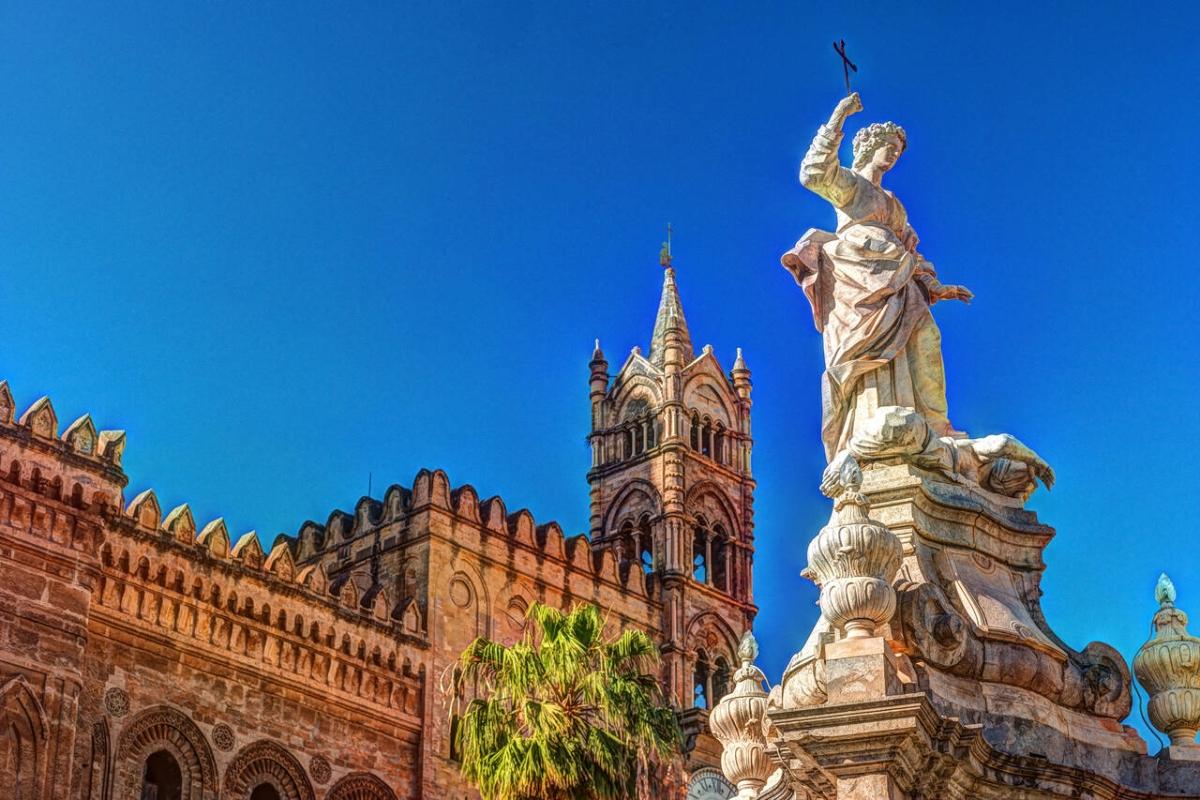
Founded by Phoenician settlers in the 8th century BC and later ruled by Arab emirs and Norman kings, Palermo carries more architectural variety than most Italian capitals its size. Sicily's location between North Africa and mainland Italy made it a prize for successive powers, and Palermo's architecture reads like a record of who held the island and when. That mix is most visible in its Arab-Norman monuments, a group of buildings recognized together by UNESCO in 2015 alongside the cathedrals of Monreale and Cefalu.
The Palazzo dei Normanni, seat of the Sicilian regional government, houses the Cappella Palatina, a royal chapel completed in 1140 whose walls are covered in gold Byzantine mosaics set beneath a wooden Arab muqarnas ceiling. Palermo Cathedral, begun in 1185, mixes Norman, Gothic, Baroque and neoclassical additions accumulated over eight centuries, while the cloister at the Church of San Giovanni degli Eremiti keeps its red domes as one of the clearest surviving traces of the city's Arab period. The Norman kings who built these monuments, most notably Roger II in the 12th century, drew on Arab administrators, Byzantine craftsmen and Latin clergy at the same court, a blend historians often cite as unusual for its era. Frederick II, Holy Roman Emperor and king of Sicily, later made Palermo his own court in the early 13th century, drawing scholars, poets and scientists from across the Mediterranean in a period sometimes called the Sicilian Renaissance. Outside the main cathedral circuit, the Zisa, a 12th-century pleasure palace combining Arab garden design with Norman construction, is also part of the UNESCO listing and shows how the court once lived away from official ceremony.
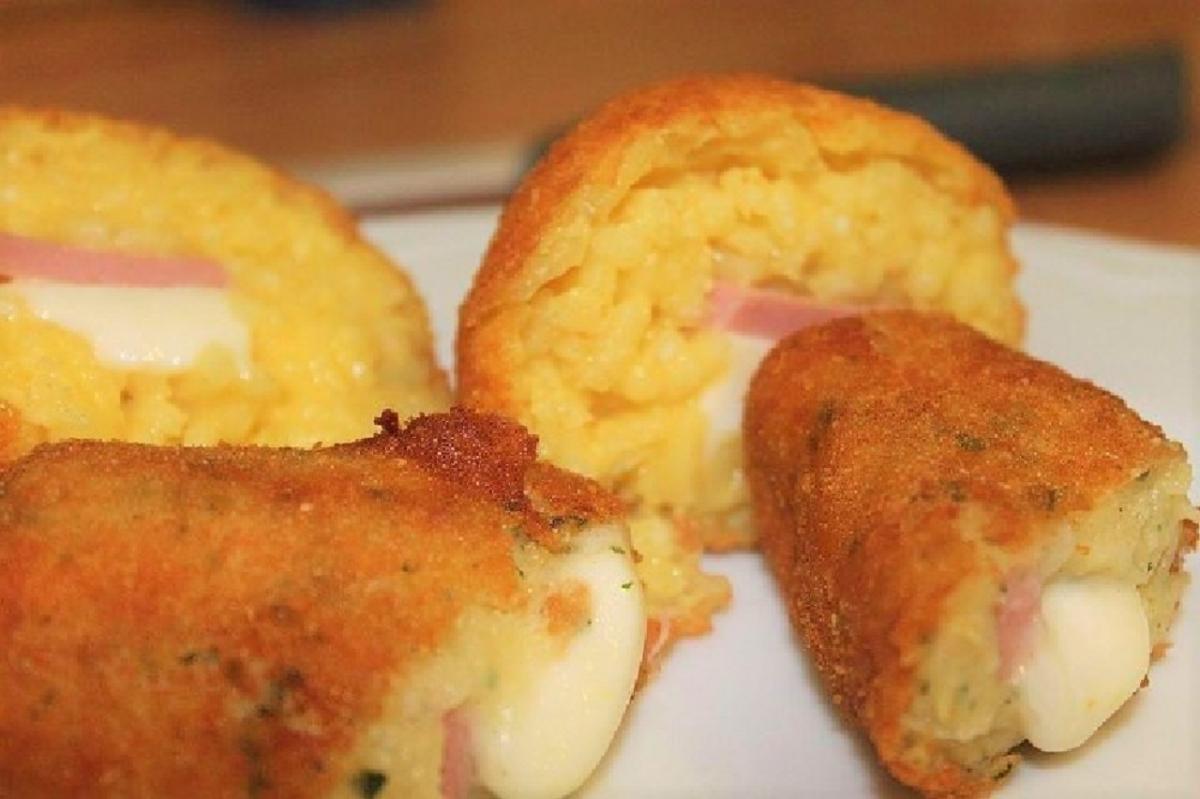
Palermo's markets remain central to daily life rather than staged for visitors. Ballaro, the oldest, spreads through the Albergheria district with stalls selling produce, fish and spices, while Vucciria and the Capo market run through equally old neighborhoods nearby. Street food defines the city as much as its monuments: panelle, chickpea fritters served in bread, pane ca meusa, a sandwich of stewed spleen, and arancine, fried rice balls, are all sold from small counters that have operated for generations. Sicilian specialties such as sfincione, a thick spongy street pizza topped with tomato, onion and breadcrumbs, and cannoli, fried pastry tubes filled with sweetened ricotta, both trace back to the island's markets and pastry shops. The Vucciria market inspired La Vucciria, a well-known 1974 painting by Sicilian artist Renato Guttuso that captures the market's crowded stalls and produce in vivid detail. Ballaro in particular has run on roughly the same site since the Arab period, its vendors' calls mixing Sicilian dialect with occasional Arabic-derived words that predate the Normans by centuries.
Teatro Massimo, completed in 1897, is the largest opera house in Italy and third largest in Europe, its facade familiar to many from the closing scenes of The Godfather Part III. Around it, the Quattro Canti crossroads marks the historic center's four quarters with matching Baroque facades, each decorated with a Spanish king, a patron saint and a symbol of the season. Nearby, Piazza Pretoria holds a large 16th-century fountain ringed with nude marble figures, nicknamed the Fountain of Shame by local residents when it was installed. A short trip up Mount Pellegrino, once described by Goethe as the most beautiful headland in the world, gives views back over the city and the bay. Traditional Sicilian puppet theater, known as the Opera dei Pupi and recognized by UNESCO as intangible cultural heritage, tells stories of medieval knights and can still be seen in small theaters around the historic center. The Capuchin Catacombs, holding thousands of mummified remains preserved from the 16th century onward, offer a starker counterpoint for visitors interested in the city's history beyond its churches and theaters.
Falcone Borsellino Airport sits about 30 minutes from the center and connects Palermo to major Italian and European cities. A City Sightseeing Palermo tour is a straightforward way to cover the cathedral, the Norman palace and the historic markets in a single day for travelers with limited time. Cefalu, with its Norman cathedral and beach beneath a limestone headland, and Monreale, whose cathedral cloister and mosaics rival Palermo's own, both make practical half-day additions to a Palermo-based stay for travelers with extra time. Ferries from the port also reach smaller islands off Sicily's coast, including Ustica, a compact volcanic island popular for diving that sits about an hour offshore. Within the historic center, most sights are close enough to cover on foot, though summer heat makes early morning or late afternoon the more comfortable times for longer stretches of walking. Spring and early autumn bring the mildest weather for walking the old center, while July's Festino di Santa Rosalia, a five-day street festival honoring the city's patron saint, fills the streets with processions and fireworks and is worth planning around whether attending or avoiding the crowds.